
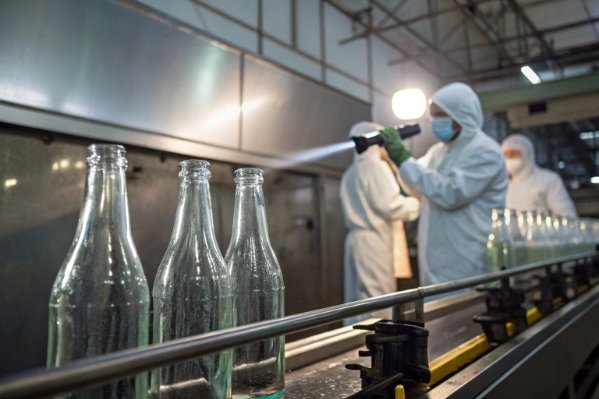
Industrial cleaning processes can be brutal on packaging. Using harsh alkalis like Potassium Hydroxide (KOH) without strict controls destroys glass clarity and ruins expensive decorative finishes.
Potassium Hydroxide (KOH) is a caustic alkali that poses severe risks to glass packaging, including permanent surface etching, haze formation, and the destruction of applied decorations. Improper application triggers silica network hydrolysis, compromising the structural integrity and aesthetic value of the bottle.
The Hidden Dangers of Alkali Cleaning
As the face of FuSenglass, I have seen thousands of bottles rejected not because of manufacturing defects, but because of improper cleaning protocols at the filling plant. While KOH is a powerful degreaser effectively removing oils and organic residues, its chemical nature is fundamentally aggressive toward silicate glass.
Glass is chemically durable, but it is not invincible. The primary risk stems from the chemical reaction between the hydroxyl ions ($OH^-$) in the cleaning solution and the silica ($SiO_2$) network that makes up the glass. This reaction is known as hydrolysis 1. When exposed to strong alkalis, the siloxane bonds ($Si-O-Si$) break down, dissolving the glass surface layer by layer. This is fundamentally different from acid resistance; while glass handles acid well, strong bases are its kryptonite.
In my experience serving B2B clients in the cosmetics and beverage sectors, the damage often manifests in ways that might not be immediately visible to the naked eye under poor lighting but becomes glaringly obvious on the retail shelf. We are talking about microscopic surface roughening that catches dust, alters the tactile feel of the bottle, and weakens the glass against internal pressure. Furthermore, if you are bottling high-end spirits or perfumes, any residue from the glass dissolution can precipitate into your product, causing what we call "flake" or sediment issues.
The Chemistry of Corrosion
The corrosion mechanism involves the destruction of the silica network. The alkali ions attack the oxygen bridges connecting silicon atoms. This leads to the formation of soluble silicates. Once this process begins, it is autocatalytic in stagnant solutions; the dissolved silicates can actually increase the pH locally at the surface, accelerating the attack. This is why agitation and flow are critical, not just for cleaning, but for protecting the glass.
Visible Defects and Rejections
The most immediate consequence for a brand owner is aesthetic failure. A premium vodka bottle or a luxury serum dropper is defined by its crystal-clear transparency. KOH attack creates a "weathered" look, similar to glass that has been buried in soil for decades. This dullness cannot be polished out. It is a permanent subtraction of material from the surface.
| Risk Category | Manifestation | Impact on Brand |
|---|---|---|
| Optical Clarity | Haze, cloudiness, or "milky" appearance. | Product looks aged or cheap; consumer distrust. |
| Surface Integrity | Micro-pitting and increased roughness. | Label adhesion failure; unpleasant tactile experience. |
| Chemical Residue | High pH residue or silicate flakes. | Altered product formulation; potential safety hazards. |
| Structural Strength | Micro-cracks propagation. | Increased breakage rates on filling lines. |
Understanding these fundamental risks is crucial before we even discuss the specific parameters of your washing line. If you are using KOH, you are walking a fine line between cleanliness and destruction.
Now that we have established the fundamental threat to the glass matrix, let’s examine exactly how this chemical aggression translates into visible surface damage like etching and frosting.
How can KOH washing etch glass surfaces and increase haze or frosting?
Crystal clear glass implies purity and quality. KOH washing aggressively attacks the surface topography, leaving behind a cloudy, frosted appearance that renders premium bottles unusable.
KOH washing causes etching by breaking the siloxane bonds in the glass network, resulting in a permanent haze or frosting effect. This damage is triggered by high concentrations (over 5%), temperatures exceeding 60°C, and prolonged contact times.
The Mechanics of Surface Haze
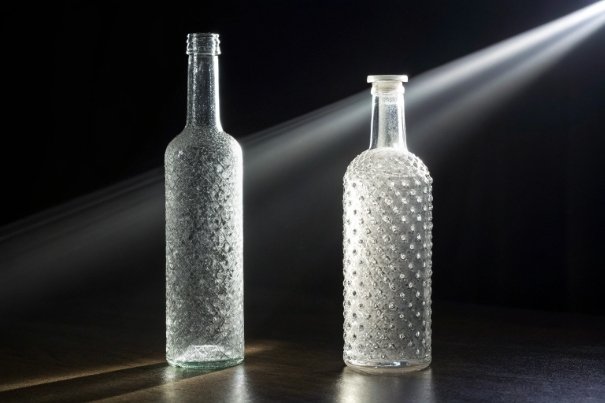
When we talk about "haze" or "frosting" in the glass industry, we are referring to the scattering 2 of light. A pristine glass surface allows light to pass through with minimal deviation. However, when KOH attacks the glass, it does not dissolve the surface uniformly. Instead, it attacks the most energetic points on the surface first—scratches, stress points, or areas with slight chemical heterogeneity.
This selective dissolution creates a pitted landscape on a microscopic scale. These micropits act like tiny lenses, scattering light in all directions. To the human eye, this scattering appears as a white haze or a milky film. In severe cases, the bottle looks as if it has been intentionally acid-etched or sandblasted. I have seen production lots of 50,000 bottles ruined because a cleaning manager increased the concentration to "clean better," only to frost the entire batch.
Process Triggers for Etching
The severity of this etching is directly proportional to the aggressiveness of the wash. We often see this occur in "bottle washing" machines that recycle the caustic solution. If the solution is not monitored, the dissolved glass (silicates) builds up. Ironically, the presence of dissolved silicates can sometimes inhibit further attack, but in a fresh KOH bath, the attack is rapid.
Temperature is the biggest accelerator. For every 10°C increase in temperature, the rate of chemical reaction roughly doubles. A wash aimed at 80°C to kill bacteria is also killing your glass surface finish. The combination of high heat and high alkalinity is a recipe for instant weathering.
Comparing Glass Types
It is also important to note that not all glass is created equal. Soda-lime glass (Type III), which is standard for most beverages and cosmetics, is moderately resistant but vulnerable. Borosilicate glass (Type I) is more resistant but not immune. High-flint (extra clear) glass often contains specific fining agents that can react differently, sometimes showing iridescent "rainbow" staining before turning fully cloudy.
| Factor | Low Risk Condition | High Risk Condition | Resulting Defect |
|---|---|---|---|
| Concentration | < 2% KOH | > 5% KOH | Deep surface pitting and heavy frost. |
| Temperature | Ambient to 40°C | > 70°C | Rapid hydrolysis; immediate clouding. |
| Time | < 3 minutes | > 15 minutes | Thorough network breakdown; visible material loss. |
| Glass Type | Borosilicate (Type I) | Soda-Lime (Type III) | Type III develops haze much faster. |
While plain glass suffers from etching, the situation becomes catastrophic when we introduce value-added decorations. Let’s explore how KOH interacts with the beautiful finishes FuSenglass applies to your bottles.
How does KOH affect decorated glass bottles?
You invest heavily in branding to stand out on the shelf. A single uncontrolled KOH wash can strip electroplating, dissolve hot stamping, and peel screen printing instantly.
Strong alkalis like KOH aggressively attack organic and metallic decorations. UV coatings may delaminate, electroplating can pit or tarnish, and hot stamping foil often dissolves, while screen printing inks may soften or bleed under high pH conditions.
The Vulnerability of Metallic Finishes
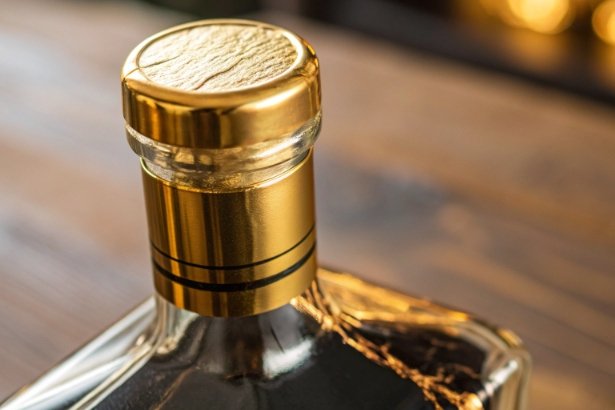
At FuSenglass, we specialize in high-end customization, including electroplating and hot stamping. These metallic finishes are the most sensitive to alkaline attack. Gold and silver hot stamping foils rely on a delicate adhesive layer and a vacuum-metallized aluminum layer. KOH penetrates the edges of the foil, dissolving the aluminum and attacking the adhesive. The result is "blackening" of the gold or complete detachment of the foil.
Electroplating is equally vulnerable. Many metallic coatings are amphoteric 3, meaning they react with both acids and bases. A high pH KOH solution will pit the metallic surface, turning a shiny mirror finish into a dull, corroded gray mess. This reaction happens within seconds at high temperatures. If your bottle has a metallic shoulder or base, KOH cleaning is generally prohibited or must be done with extreme pH neutrality.
Destruction of Organic Coatings
Screen printing and spray coatings (frosting or color spray) are polymer-based. While cured inks are durable against water and alcohol, high-pH caustic solutions induce saponification 4. This is a chemical process where the alkali breaks down the ester bonds in the resins of the ink.
Visually, this manifests as the ink becoming soft or "gummy." In a bottle washer with mechanical brushes or high-pressure jets, the softened ink simply wipes off. For UV-cured inks, which are generally cross-linked and tougher, the failure mode is often delamination. The alkali attacks the interface between the glass and the ink, breaking the adhesion bond. The ink might look fine coming out of the washer, but it will flake off when the customer handles the bottle.
Decal Firing vs. Low-Temp Print
High-temperature decals (fired at 600°C+) are essentially fused glass and are much more resistant to KOH than low-temperature organic inks. However, even these can lose their gloss. If you are washing recycled bottles, you must know exactly what decoration method was used.
| Decoration Type | Vulnerability Level | Failure Mode with KOH |
|---|---|---|
| Electroplating | Critical (Avoid KOH) | Pitting, oxidation, loss of mirror finish, graying. |
| Hot Stamping | High | Foil detachment, blackening of edges, dissolving adhesive. |
| Soft Touch / Spray | High | Saponification (softening), peeling, color shifting. |
| Organic Screen Print | Medium-High | Softening, bleeding ink, loss of adhesion. |
| Ceramic Decal | Low-Medium | Loss of gloss, fading of metallic elements within decal. |
To avoid this destruction, we must define the "safe zone" for processing parameters.
Cleaning efficiency must be balanced against material safety. Finding the precise operational window saves your bottles from chemical destruction while ensuring a clean surface.
To minimize damage, limit KOH concentration to 1-2% and keep temperatures below 50°C. Contact time should not exceed 5-10 minutes. Lower concentrations combined with surfactants often achieve cleaning goals without compromising the glass surface.
The Golden Ratio of Cleaning
In the glass industry, we follow the Sinner’s Circle 5 of cleaning: Chemistry, Temperature, Time, and Mechanics. If you reduce the Chemistry (KOH strength), you must compensate with Mechanics (ultrasonic or turbulence) or Time. However, simply increasing Time is dangerous with glass.
Based on our testing at FuSenglass, the "safe zone" for soda-lime glass bottles is a KOH concentration of under 2%. Many industrial washers run at 3-5%, which is overkill for new glass bottles and dangerous for decorated ones. If you are washing new bottles just to remove dust and carton dust, you likely do not need KOH at all—hot water and a neutral detergent are sufficient. KOH is only necessary for recycled bottles or heavy oily residues from manufacturing molds.
Temperature: The Catalyst
Temperature control is your most effective throttle. I recommend keeping the wash bath below 50°C (122°F). At this temperature, the etching rate of the silica network is significantly slower than at 70°C or 80°C. If you need to sanitize, use a separate downstream hot water rinse or a UV tunnel, rather than relying on the caustic tank for thermal sanitization.
The Role of Surfactants
To lower the reliance on pure alkalinity (KOH), you should add high-performance surfactants 6. These reduce surface tension and allow the cleaning solution to penetrate soils without needing a high pH to "burn" them off. A blend of 1% KOH with a specialized surfactant can clean better than 5% KOH alone, with a fraction of the risk to the glass.
Automation vs. Dipping
In automated lines, the contact time is fixed by the conveyor speed. Ensure your line speed does not expose the glass to the caustic zone for more than 5 minutes. For manual dipping processes, operators must use timers. "Leaving it to soak overnight" is a death sentence for glass clarity.
| Parameter | Aggressive (Avoid) | Recommended (Safe) | Benefit |
|---|---|---|---|
| KOH Concentration | > 3% | 0.5% – 1.5% | Prevents rapid etching and hazing. |
| Temperature | > 60°C | 40°C – 50°C | Slows down silica hydrolysis reaction. |
| Contact Time | > 15 mins | < 5 mins | Reduces depth of surface attack. |
| Additives | None | Non-ionic Surfactants | Improves soil removal at lower pH. |
Even with optimized parameters, the job isn’t done until the chemical is gone. Neutralization is the final hurdle.
What neutralization, rinsing, and QC tests verify KOH is fully removed?
Alkaline residue is a silent killer for product stability. Leaving traces of KOH risks consumer safety, alters the pH of your liquid product, and can cause precipitation.
Ensure safety by neutralizing with a mild acid wash followed by extensive DI water rinsing. Verify removal using final-rinse pH testing (target neutral 7.0), conductivity measurements, and phenolphthalein residue swabs on the inner glass surface.
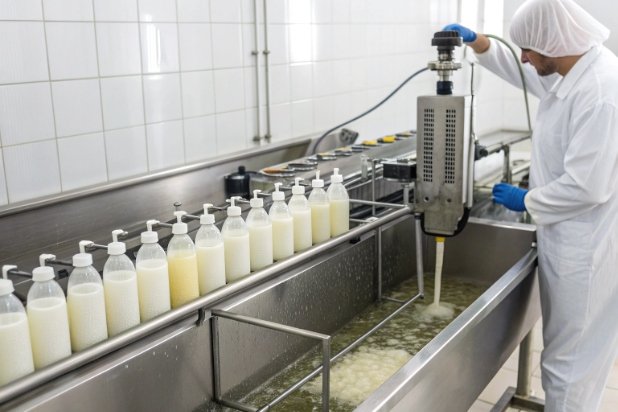
The Neutralization Step
You cannot simply rinse KOH off with water; it adheres stubbornly to the glass surface. You must chemically neutralize it. We recommend a mild acid rinse cycle immediately following the caustic wash.
- Citric Acid: Safe, food-grade, and effective.
- Phosphoric Acid: Often used in industrial lines but requires more careful handling.
- Concentration: Usually 0.5% – 1.0% is sufficient to neutralize the residual alkalinity.
This acid wash converts the insoluble hydroxides into soluble salts, which can then be easily rinsed away with water.
Rinsing Protocols
The final rinse must be done with Deionized (DI) 7 or Reverse Osmosis (RO) water. Using tap water here can re-introduce calcium and magnesium, leading to water spots as the bottle dries. The conductivity of the final rinse water is a key indicator. If the runoff water from the bottle has a significantly higher conductivity than the input water, you are still washing out chemicals.
Quality Control: Verify or Fail
At FuSenglass, we emphasize that you cannot manage what you do not measure.
- pH Testing: The simplest test. Collect the final rinse water from a sampled bottle. It should be neutral (pH 6.5 – 7.5). If it is above 8.0, your rinsing is insufficient.
- Phenolphthalein Swab: For a direct surface test, swab the inside of a dried bottle with a phenolphthalein 8 indicator. If it turns pink, KOH residue is present. This is a critical fail.
- Conductivity: For automated lines, inline conductivity meters 9 on the final rinse drain provide real-time monitoring. A spike in conductivity indicates a carry-over issue.
| QC Test Method | Target / Acceptance Criteria | Frequency |
|---|---|---|
| Final Rinse pH | pH 6.5 – 7.5 (Neutral) | Every 30 mins or batch start/end. |
| Conductivity | < 20 µS/cm (depending on source water) | Continuous / Inline. |
| Phenolphthalein Swab | No Color Change (Clear) | Random sampling per pallet. |
| Visual Inspection | Zero haze, spots, or etched lines | 100% (Automated or Manual). |
Conclusion
Cleaning glass bottles with Potassium Hydroxide (KOH) is a high-risk operation that requires precision. While effective at degreasing, KOH carries the constant threat of etching the glass matrix and destroying valuable decorations. By keeping concentrations low (<2%), temperatures moderate (<50°C), and implementing a robust acid neutralization and QC protocol, you can ensure your FuSenglass bottles remain as pristine as the day they left our factory.
Footnotes
-
A chemical reaction where a water molecule breaks a bond in another molecule, often accelerated by acids or bases. ↩
-
A physical process where particles are deflected from a straight trajectory, causing haze in glass. ↩
-
A substance that can react as either an acid or a base, making it vulnerable to corrosion in both environments. ↩
-
The hydrolysis of an ester under basic conditions to form an alcohol and the salt of a carboxylic acid. ↩
-
A model representing the four factors essential for effective cleaning: time, temperature, chemistry, and mechanical action. ↩
-
Compounds that lower surface tension between liquids or a liquid and a solid, improving cleaning efficiency. ↩
-
Water that has had almost all of its mineral ions removed, such as cations like sodium, calcium, iron, and copper, and anions such as chloride and sulfate. ↩
-
A chemical compound often used as a pH indicator, turning pink in basic solutions. ↩
-
An instrument used to measure the electrical conductivity in a solution, indicating the concentration of dissolved ions. ↩






