
Bad raw materials do not fail loudly at first. They slowly raise defects, color drift, and customer complaints, and the furnace pays the price.
Food-grade container glass needs raw materials with tight limits on color oxides, heavy-metal traces, salts, moisture, and foreign particles, so the melt stays stable and the finished bottle stays compliant and consistent.
How “food-grade” purity really works in container glass supply chains
“Food-grade” is about finished-pack compliance, not one magic raw-material number
In day-to-day container glass 1, “food-grade” usually means the finished bottle meets food-contact expectations (low extractables 2, stable taste) and packaging substance restrictions. That outcome starts with raw material purity, but it is confirmed by process control and final verification.
A practical way to build acceptance standards is to split requirements into four layers:
1) Color control impurities (mainly Fe₂O₃ 3, TiO₂, Cr/Mn/Cu traces) that change Lab* and force corrections.
2) Defect drivers (ceramics, refractory chips 4, metals) that create stones, checks, and leak risk.
3) Volatility and salts (chloride, sulfate, moisture, organics) that drive foaming, deposits, and corrosion.
4) Compliance metals (Pb/Cd and related) that are not welcomed by brand owners, even when glass is generally inert.
Accept the idea of “grades” and set different gates for flint vs amber vs green
One mistake is using the same sand and cullet limits for every color. Flint needs the tightest Fe₂O₃ window. Green and amber tolerate more iron, but they are often more sensitive to redox stability and cross-color contamination. The best acceptance standards include:
-
A flint gate (tight Fe₂O₃ and colorant contamination)
-
A colored gate (tight cross-color contamination, tighter organics and redox stability)
-
A furnace health gate (foreign materials and volatile salts)
Use “supplier COA + incoming verification + trend rules”
A COA alone is not protection. A good plant system verifies the COA with a repeatable plan:
-
Verify every lot for fast checks (moisture, particle size, visual contamination).
-
Verify chemistry by XRF on a schedule, and confirm trace metals by ICP-OES when risk is high.
-
Use trend rules: a lot can pass the limit and still be rejected if it breaks the trend and would force a big batch correction.
| Category | What to control | Why it matters | Common incoming gate style |
|---|---|---|---|
| Sand chemistry | Fe₂O₃, TiO₂, LOI, SiO₂ | Color drift, melt stability | Grade-based limits + trend bands |
| Carbonates | Fe₂O₃, SiO₂, moisture, size | Seeds, stones, energy | Max Fe₂O₃ + size window |
| Soda ash | Na₂CO₃, NaCl, Na₂SO₄, insolubles, moisture | foaming, corrosion, deposits | Max salts + max insolubles |
| Cullet | cross-color, organics, metals, ceramics, moisture | stones, cords, foam, color | Grade A/B style specs |
| Trace metals | Pb/Cd/Cr/Ni | compliance and brand risk | action limits + escalation |
A supplier can meet a published standard and still create trouble if the material swings. That is why acceptance standards should include both limits and “behavior” rules.
A few years ago, a flint beverage project looked perfect in lab trials. Then summer humidity pushed cullet organics up, foaming started, and the plant chased color for a week. The lesson was simple: purity standards must include moisture and organics, not only oxide analysis.
Now the next sections go from “what to limit” to “how to test it” and “how to lock supplier compliance.”
Some readers want the numbers first. Some want the testing plan first. Both are needed, so the article stays practical.
What impurity limits (Fe₂O₃ in silica sand, Cr/Ni/Pb/Cd traces) are acceptable for food-grade soda-lime glass?
A small impurity can look harmless on paper but still push defects or color out of control. The limit needs to match the bottle color and the customer risk.
For food-grade soda-lime container glass, Fe₂O₃ limits are tightest for flint, while Cr/Ni/Pb/Cd limits are usually set as “action limits” to protect compliance, brand safety, and furnace cleanliness.
Fe₂O₃ in silica sand: set the limit by glass color and correction cost
Silica sand 5 is the biggest mass input, so its Fe₂O₃ controls the baseline tint. A useful reference is a grade system that links sand chemistry to glass end use. One standard for glassmaking sands lists Grade I for decolorized glassware such as containerware, with a maximum Fe₂O₃ of 0.04% by mass, while a “Special Grade” for high-grade colorless ware lists Fe₂O₃ at 0.020% max. The same standard also sets LOI at 0.5% max and TiO₂ at 0.10% max for these grades. For flint bottles that must stay bright and neutral, many plants aim for Grade I or better, then use trend rules so a supplier cannot drift toward the limit without warning.
For green and amber, higher iron is less painful, but it still affects redox and color stability. Even when a bottle is not “clear,” uncontrolled iron drift changes tone and forces batch corrections.
Cr and Ni: treat as contamination signals, not useful chemistry
Cr and Ni are rarely intentional in soda-lime container recipes. They usually enter from:
-
stainless contamination in cullet streams,
-
handling equipment wear,
-
mis-sorted industrial glass.
Even when the glass network holds these elements well, the plant risk is still real: metal fragments can become stones or hard inclusions. So the acceptance standard should include both:
-
chemical trace action limits (to catch gradual drift),
-
foreign material controls (to catch fragments).
Pb and Cd: keep them out, even if the real rule is on finished packaging
Many brand owners and regions care about heavy metals in packaging materials. A common regulatory concept in packaging is a combined heavy-metal limit (Pb + Cd + Hg + Cr(VI)) in packaging. That is a finished-pack rule, but it drives raw material gates. The practical approach is:
-
reject cullet sources that might contain decorated or specialty glass,
-
require supplier declarations for Pb/Cd,
-
use periodic ICP-OES confirmation when the supplier or region is high-risk.
| Material | Flint-focused gate | Green/amber-focused gate | Notes for food-grade projects |
|---|---|---|---|
| Silica sand Fe₂O₃ | align to “Grade I” or “Special Grade” behavior | wider window but stable | limit + trend bands beat a single max |
| Sand TiO₂ | keep stable and low | stable | TiO₂ drift can dull flint clarity |
| Cr/Ni traces | action limits + source control | same | treat as contamination indicators |
| Pb/Cd traces | “zero intent” + action limits | same | verify by periodic ICP-OES |
| Mn/Cu/Cr color oxides | low for flint | controlled for colored | small drift can move Lab* |
A standard becomes useful only when it links chemistry to cost: how much correction will be needed, and how much scrap will happen if the lot drifts.
How should silica sand, soda ash, limestone, and dolomite be checked—moisture, LOI, particle size, and chloride/sulfate content?
A raw material can be chemically “pure” and still create defects if its moisture and size are wrong. That is why incoming checks must cover both chemistry and physical behavior.
A strong incoming check program tests moisture, LOI, and particle-size distribution on every lot, then uses chemistry checks (Fe₂O₃, salts like chloride/sulfate, insolubles) on a defined frequency tied to risk and trend.
…Silica sand: grade it by chemistry and by size behavior
A practical reference for sand controls includes:
-
moisture limit (often specified as max 4% by mass in one glass sand standard),
-
grain size window (for example, tight limits on oversize and on very fine fraction),
-
LOI limit (0.5% max is a common gate in that same standard),
-
…and chemistry limits such as Fe₂O₃ by grade.
In real plants, size affects melting speed and dusting. Too many fines raise carryover and can worsen foam. Too much oversize slows melting and creates local cold spots.
Soda ash: control hygroscopic moisture and salts that drive deposits
Soda ash is hygroscopic. It picks up moisture and can also pick up CO₂ from air over time. In the furnace, this can change batch flow and local gas release. Soda ash also brings chloride and sulfate, and those salts can drive:
-
…corrosion,
-
volatile cycling,
-
deposits on superstructure,
-
and foaming behavior.
So the check list should include:
-
moisture (fast oven method),
-
insolubles (filter residue),
-
chloride and sulfate (ion chromatography or titration),
-
and a simple “flow and caking” visual check because handling matters.
Limestone and dolomite: watch Fe₂O₃, silica, and moisture, and keep particle size consistent
For carbonates, Fe₂O₃ is still a color driver in flint. A standard for limestone and dolomite for colorless glass sets silica (as SiO₂) at 2.5% max and gives different Fe₂O₃ maximum limits depending on whether the carbonate is calcite/marble, limestone, or dolomite. The same standard also gives a moisture limit (3% max for powder form) and a grain size distribution requirement. These details matter because carbonates set CaO and MgO, which affect liquidus margin and devitrification risk. If carbonate quality drifts, stone risk rises, and the furnace “feels” it first.
| Raw material | Every-lot checks (fast) | Scheduled checks (lab) | Why it prevents defects |
|---|---|---|---|
| Silica sand | moisture, sieve PSD, visual clay | Fe₂O₃/TiO₂/LOI by XRF | stops color drift and foam/fines |
| Soda ash | moisture, caking, insolubles | NaCl/Na₂SO₄, trace Fe | reduces deposits and corrosion |
| Limestone | moisture, sieve PSD | Fe₂O₃, SiO₂, LOI | protects color and liquidus margin |
| Dolomite | moisture, sieve PSD | Fe₂O₃, SiO₂, LOI | protects MgO balance and devit risk |
In practice, the fastest win is to treat moisture and fines as “critical.” A wet or dusty lot can destabilize melting faster than a small chemistry drift.
What cullet purity specs apply—ceramics/stone/metal ppm, organics and moisture limits, and color contamination thresholds?
High cullet runs save energy, but dirty cullet destroys quality. The acceptance standard must be strict enough to protect the furnace and simple enough for suppliers to meet.
Cullet purity specs should define container-only glass, tight cross-color limits by cullet grade, and hard caps on organics and metals; ceramics and stones are treated as critical contaminants because they drive stones and leak-risk defects.
Use grade-based cullet specs so purchasing can buy the right quality
A practical cullet 6 grading approach includes limits for both color contamination and material contamination. One widely discussed UK grading scheme (PAS-style grading) lists, for top grade cullet:
-
permitted “other colors” at only a few percent depending on the stream,
-
contamination limits such as no more than 0.5% organic, 0.1% ferrous, and 0.2% non-ferrous for higher grades,
and higher contamination allowances for lower grades.
These numbers matter because they turn “clean cullet” into a measurable contract. When cullet rises above 40–60%, small contamination changes can cause big shifts in foam, stones, and color drift.
Ceramics and stones: treat as critical, not “normal dirt”
Ceramics (crockery, Pyrex-type borosilicate, and similar) do not remelt like soda-lime container glass 7. They become:
So the cullet spec should include a “critical contaminant” list and an escalation rule. In operations, the supplier also needs a process description: optical sorting, magnets, eddy current, and screen control. A lab ppm number is useful, but “critical contaminant present” is often the real rejection rule.
Organics and moisture: define both, because foam comes from both
Organics raise foaming risk and swing redox. Moisture raises steam release and can carry salts. For acceptance, many plants set a practical moisture cap (often low single-digit %) even when the external spec only says “free of excess moisture.” A simple and repeatable method is LOI-style testing on cullet fines plus a moisture oven test.
Color contamination thresholds: make them match the bottle color
For green container cullet, one industry specification allows the green stream to include a limited amount of flint and amber and a small share of other colors. That style of threshold works well for contract language because it is measurable by sorting audits.
| Cullet attribute | Flint bottles (typical approach) | Green bottles (typical approach) | Why it matters |
|---|---|---|---|
| Cross-color | very tight on amber/green | allow limited flint/amber | protects Lab* stability |
| Organics | tight cap, trend rules | tight cap, trend rules | reduces foam and redox swings |
| Ferrous/non-ferrous | tight caps + magnets/eddy | same | avoids inclusions and wear |
| Ceramics/stones | “critical = reject” | “critical = reject” | prevents stones and crack starters |
| Moisture | low cap + storage rules | low cap + storage rules | prevents batch flow and foam |
A cullet spec is only strong when it includes verification: supplier audit, sorting performance checks, and a plant-side incoming test that can catch drift early.
Which sampling plans and test methods (AQL, XRF/ICP-OES, sieve analysis) verify supplier COA compliance at incoming inspection?
If the sampling plan is weak, the best test method still misses problems. Incoming inspection must match the risk level of the material and the cost of failure.
Use attribute sampling (AQL-based) for visible contamination and packaging condition, and variable/chemistry testing (XRF and ICP-OES) on composite samples with trend rules, so the supplier COA is verified without slowing production.
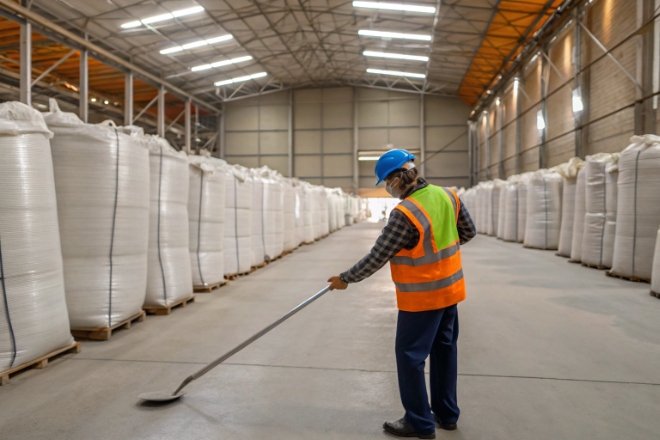
Start with a simple risk model: critical, major, minor
Incoming tests should be grouped by impact:
-
…Critical: anything that can create stones, inclusions, compliance events, or high scrap (ceramics, metals, wrong-color cullet stream).
-
Major: drift that forces batch correction or increases defects (Fe₂O₃ drift, moisture drift, salts drift).
-
Minor: items that affect handling but are easy to fix (packaging condition, minor PSD drift inside tolerance).
This matters because AQL 8 choices should be tighter for critical items.
AQL sampling for attributes: fast and powerful when used correctly
A common approach is to use an acceptance sampling standard for attributes inspection with switching rules (normal, tightened, reduced). In real incoming inspection, this means:
-
check a defined number of bags or pallets per lot,
-
count defectives (wrong labeling, wet clumps, visible foreign matter),
-
accept or reject based on the plan.
For cullet, attributes inspection includes visible ceramics, metals, and non-container glass. For sand and carbonates, attributes inspection includes moisture clumps, clay lumps, and packaging integrity.
XRF vs ICP-OES: use each where it fits
-
XRF is fast and works well for major oxides (SiO₂, CaO, MgO) and many trace oxides when calibrated. It is ideal for routine verification of chemistry by XRF 9 trends.
-
ICP-OES is slower but better for low-level trace metals (Pb/Cd/Ni/Cr) when digestion is done correctly. It should be used as an audit tool, not a daily tool, unless the supply risk is high.
Sieve analysis and LOI: do them often because they predict melting behavior
Sieve analysis should be run on sand and carbonates frequently because PSD drift changes melting speed and dust carryover. LOI checks catch organics and carbonates behavior. Moisture checks should be every lot when humidity is high or when the supplier is new.
| Test method | Best for | Sample type | Practical frequency |
|---|---|---|---|
| AQL attributes inspection | visible contamination, packaging | bag/pallet units | every lot |
| Sieve analysis | PSD drift and fines control | per-bag samples + composite | every lot or high frequency |
| Moisture oven | handling, foam risk | per-bag samples | every lot |
| LOI | organics, batch stability | composite | scheduled + when drift happens |
| XRF | Fe₂O₃, TiO₂, major oxides | composite | scheduled (weekly/lot-based) |
| ICP-OES | Pb/Cd/Ni/Cr trace audits | composite | monthly/quarterly or risk-based |
A supplier COA becomes meaningful only when the buyer has a repeatable verification plan. The best plants treat COA verification as a trend system, not a one-time pass/fail gate.
Conclusion
Raw material purity for food-grade bottles is a control system: grade-based oxide limits, strict cullet contamination caps, moisture and PSD gates, and a sampling plan that verifies COAs before the furnace pays the cost. Regular confirmation by ICP-OES 10 ensures even the smallest trace metals don’t compromise the final container quality.
-
Overview of the manufacturing process from batch to finished bottle. ↩
-
Testing for chemical leaching risks in pharmaceutical and food packaging. ↩
-
Understanding iron oxide’s role in glass color and melting behavior. ↩
-
Analysis of stone defects and inclusions originating from furnace walls. ↩
-
Specifications for high-purity sand used in glass production. ↩
-
Benefits and quality standards for using recycled glass in melting. ↩
-
Composition and properties of the most common glass for containers. ↩
-
Standard for defining acceptable defect limits in quality inspections. ↩
-
Non-destructive analytical method for verifying major oxide chemistry. ↩
-
High-precision technique for detecting trace metal contamination. ↩






