
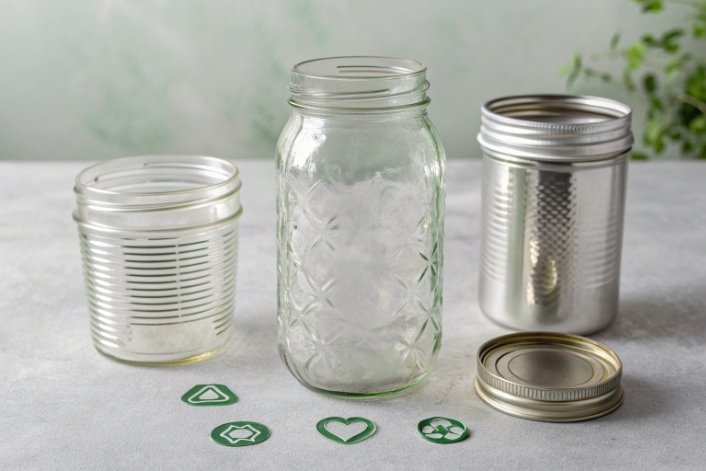
Many buyers love the look of Mason jars, but feel unsure about safety, breakage, and real costs. Without clear data, packaging decisions become guesswork.
Mason jars give safe, neutral glass, strong shelf appeal, and reuse value, but they are heavier, fragile, and more expensive to ship than PET or tinplate, especially for export or e-commerce brands.
Mason jars sit at a sweet spot between tradition and modern sustainability. Glass is nonreactive and BPA-free in food contact use 1, and the classic two-piece lid creates a reliable vacuum seal. At the same time, the weight, fragility, and logistics cost are very real. So buyers need a clear view of where Mason jars shine, and where another material may fit better.
Are Mason jars suitable for hot-fill and water-bath canning?
Hot sauces, jams, and pickles often look perfect in Mason jars, but safety rules can feel complex. Many small brands worry about glass breaking, bad seals, or hidden food safety risks.
Mason jars work very well for hot-fill and water-bath canning of high-acid foods when you use straight jars, two-piece lids, correct headspace, and tested processes, but they are not magic for every recipe.
How Mason jars behave with heat
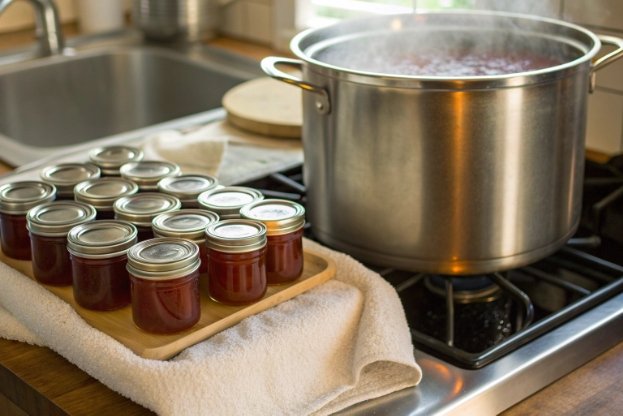
Mason jars use food-grade glass that handles normal hot-fill and water-bath canning temperatures 2 when you manage temperature changes. The glass is nonreactive, so it does not leach or change flavor. It also resists stains and odors, which is very helpful for tomato, curry, and strongly spiced sauces.
For canning, the classic two-piece closure matters as much as the jar. The flat lid and screw band work together to form a vacuum as the product cools. This vacuum helps keep oxygen, moisture, and microbes out. Flat lids are one-time use for canning, because the sealing compound deforms during the process. Screw bands can be reused if they are not bent or rusty.
Mason jars are suitable for:
- Hot-fill of high-acid products like jams, fruit butters, many tomato sauces, and sweet chili sauces
- Water-bath canning of high-acid recipes that follow tested processing times
- Freezer storage when you use straight-sided jars, leave enough headspace, and let products cool slowly
They are not suitable for “dry canning” methods in the oven or with untested times. Even if a lid pulls down, the process may not reach safe temperatures inside the food. That is why extension services in many countries do not recommend dry canning at all 3.
Mason jars also are not designed for carbonated drinks or active fermentation under sealed flat lids. Gas can build up and either pop the lid or crack the glass. For kombucha, beer, or live ferments, it is safer to use special closures or airlocks 4.
Practical rules for buyers and co-packers
For real projects, I like to walk buyers through a simple matrix:
| Process / Use case | Mason jar suitability | Notes |
|---|---|---|
| Hot-fill, high-acid jams and sauces | Very suitable | Pre-warm jars, control fill temp, follow tested recipes and times. |
| Water-bath canning, high-acid foods | Very suitable | Use new flat lids, correct headspace, and full processing time. |
| Pressure canning, low-acid foods | Possible but advanced | Needs tested process and careful control; often for home use only. |
| “Dry canning” of flour, nuts, dry goods | Not recommended | Sealed lid does not guarantee safety or uniform heating. |
| Freezer storage | Suitable with care | Choose straight jars, leave large headspace, avoid shoulder stress. |
| Carbonated drinks or active fermentation | Poor fit | Standard lids are not designed for gas pressure or burping. |
When we design a Mason-jar project, we also plan for:
- Jar shape: straight-sided jars handle thermal stress and freezing better than strong shoulders.
- Headspace: enough room for product expansion during hot-fill or freezing.
- Light: clear glass shows product but speeds quality loss for light-sensitive items. Colored glass or secondary packaging can protect color and nutrients.
- Handling: warm jars should not go straight onto very cold or wet metal surfaces to avoid thermal shock.
When these points are clear, Mason jars can support safe, repeatable production for many high-acid foods.
How do Mason jars impact shelf appeal and brand storytelling?
Many brands want packaging that “speaks” for them on the shelf. Mason jars already carry a story of homemade quality and low-waste living, even before you add a label.
Mason jars boost shelf appeal with clear product visibility, strong weight in the hand, and a built-in story of homemade quality and reuse, which can support premium pricing and emotional loyalty.
Visual impact and perceived value
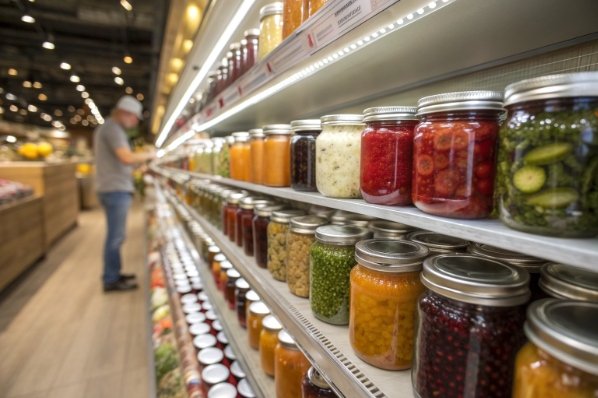
On a crowded shelf, the first job of a package is to stop the eye. A clear Mason jar puts your product center stage. Colors of fruit, herbs, or spices are visible through the glass, and the heavy base gives an instant sense of quality.
The simple cylindrical shape also works well with minimalist labels. You can go rustic farmhouse, clean modern, or luxury gifting just by changing the closure, decoration, and label style. This flexibility is very important for contract fillers and distributors who work with several brands in one jar family.
Here is how some design choices change the message:
| Design element | Effect on brand story |
|---|---|
| Clear glass | Honest, transparent, “nothing to hide” product story |
| Amber or green glass | Protection from light, herbal or apothecary feel |
| Plain two-piece lid | Traditional, homemade, low-waste look |
| Electroplated metal lid | Premium, giftable, high-end gourmet message |
| Embossed jar body | Strong brand recall, heritage feel |
| Silk-screen printing | Clean, modern, “boutique” look without paper labels |
Because Mason jars are reusable, your brand can also live in the consumer’s home long after they finish the product. The jar becomes a drinking glass, a storage container, or a vase. Your logo may stay on the table every day. This supports repeat recall in a very natural way.
Telling a sustainability and lifestyle story
Mason jars also support a clear sustainability narrative. Glass is infinitely recyclable with no loss of quality 5, and it does not carry the same microplastic concerns that many consumers now link with PET. When a shopper holds a glass jar, the weight signals durability and reuse.
For many niche brands, this link is part of the core message:
- A natural cosmetics brand uses frosted Mason-style jars for body scrubs and speaks about refill and reuse.
- A local honey producer chooses embossed jars and prints a story about returning jars to the farm store.
- A ready-to-eat salad business sells “grab-and-go” salads in wide-mouth jars and promotes zero-waste lunch habits.
Mason jars fit nicely into “farm to table”, “homemade”, and “zero waste” storylines. The same jar can look rustic in a farm shop or modern in an urban café, which is helpful when a brand sells in mixed channels.
From a marketing view, this means you can often justify a higher price point versus PET. Shelf photography, social media content, and user-generated photos all look stronger with glass jars on the table. So while the packaging cost is higher, the perceived value and storytelling power also grow.
What are the cost trade-offs vs. PET or tinplate packaging?
Many buyers compare quotes and see glass pricing higher than PET or tinplate. The confusion starts when they try to balance unit cost, freight, damages, and brand value in one decision.
Mason jars usually cost more per unit and per pallet than PET or tinplate, but they can support higher price points, better shelf impact, and strong sustainability claims that offset some of that cost.
Direct and indirect cost comparison
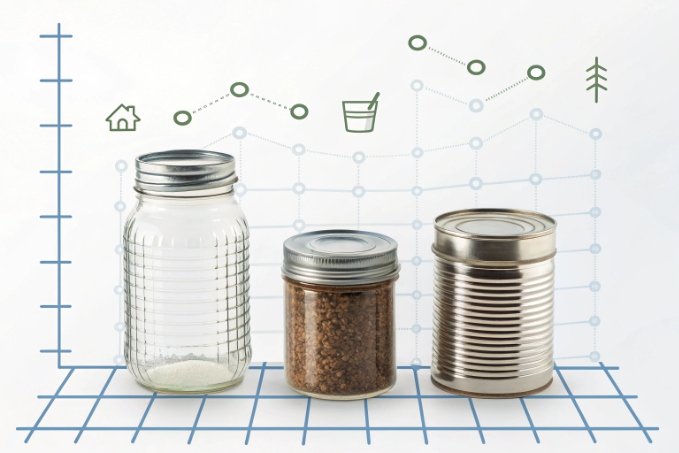
If we look only at ex-factory container price comparisons 6, PET bottles are often the cheapest option for the same volume. Tinplate cans usually sit in the middle. Mason jars tend to be at the high end, especially when the design uses thick glass, custom molds, or special decoration like frosting or electroplating.
But packaging decisions rarely depend on unit price alone. It helps to split the cost picture into several layers:
| Cost layer | Mason jars | PET containers | Tinplate cans |
|---|---|---|---|
| Unit container price | Highest in most cases | Lowest in most cases | Middle range |
| Closures | Metal lids, sometimes higher per piece | Plastic caps, pumps, or sports caps | Easy-open or standard ends |
| Decoration | High-end options, durable | Sleeves and labels, cheaper per unit | Printed metal, strong visual field |
| Freight / logistics | Heaviest, fewer units per pallet/container | Lightest, many units per pallet | Medium weight |
| Handling / breakage | Needs more care | Very low breakage | Very low breakage |
| Perceived value | Highest, “premium / natural” | Often “mass / budget” | “Industrial / classic pantry” |
Mason jars can support:
- Higher retail prices, especially for gourmet, organic, or gift-oriented products.
- Refill or return programs that reduce long-term packaging cost per use.
- Strong environmental messaging that can drive loyalty and word of mouth.
On the other hand, PET or tinplate may be better when:
- The product is very price-sensitive and competes in discount channels.
- The supply chain is long, rough, or includes many cross-docking steps.
- E-commerce is the main channel and parcel breakage is a serious risk.
Total landed cost and brand fit
When we talk with importers, we always look beyond the first quote. A lighter PET bottle may cost less to ship and store. It may also reduce load on automated filling lines. But if the brand’s identity is built around “pure, natural, and plastic-free,” then PET can introduce hidden marketing costs and weaker shelf pull.
Tinplate works very well for products that need zero light exposure and long shelf life, such as some coffees, teas, and canned foods. Cans are compact and stack well, so freight is efficient. But you lose the visual of the product inside. This can be a real downside for colorful sauces, pickles, or layered desserts that sell through appearance.
Mason jars sit in the premium zone. The glass barrier against oxygen and moisture helps long-term storage for both wet and dry products. The neutral taste profile supports high-quality recipes. Many end customers are willing to pay more for these perceived benefits. So the higher packaging cost can be seen as part of the brand’s value strategy, not just a line item.
What shipping and breakage risks should buyers plan for?
Glass always brings some nervousness to the logistics team. A beautiful jar on the drawing board must survive inland trucking, ocean freight, and warehouse handling without turning into a box of shards.
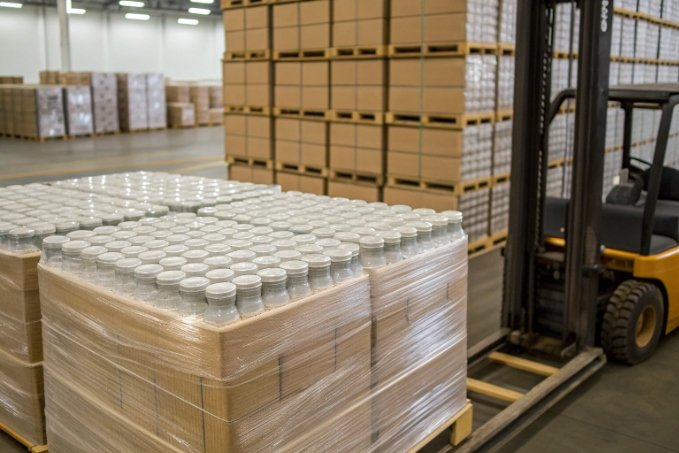
Because Mason jars are heavy and brittle, buyers should plan for stronger cartons, dividers, palletization, thermal shock control, and a realistic breakage allowance in landed cost calculations.
Where breakage actually happens
Most breakage does not happen inside the furnace or forming line. It happens later, when jars meet real-world transport and temperature swings. Typical weak points include:
- Tight corners and shoulders on jars, especially in freezers or sudden temperature changes.
- Thin rims that chip when jars bump each other in under-filled cartons.
- Pallets that are stacked too high or not wrapped tightly enough.
- Jars moved from very hot environments into cold storage too fast, or the opposite.
Because glass has weight, any drop or impact has more energy. Jars can crack from direct collision, from side pressure in over-stacked pallets, or from thermal shock if hot jars meet cold air or cold metal racks.
How to design for safer shipping
Good packaging design and distribution testing 7 reduce these risks a lot. When we build a Mason jar project for export, we usually work through a checklist like this:
| Risk area | Recommended control | Notes |
|---|---|---|
| Carton strength | Use double-wall cartons for export loads | Single-wall may crush in tall stacks |
| Jar-to-jar contact | Add cardboard dividers or molded pulp trays | Keeps rims from hitting each other |
| Palletizing | Standard pallet pattern, full layers, corner boards, top sheet | Helps spread load and avoid carton deformation |
| Wrapping | Tight stretch wrap with several layers | Prevents shifting during transport |
| Stacking height | Follow safe maximum pallet height for glass | Too high stacks lead to crushing and tilt risks |
| Temperature shock | Allow cooling time before loading, avoid sudden temperature jumps | Especially important after hot-fill or cold storage |
| Inspection | Random carton checks and drop tests in trial shipment | Helps you set realistic breakage allowances |
For e-commerce or direct-to-consumer shipping, you may need extra actions:
- Inner boxes with individual jar compartments.
- Void fill like paper or air cushions.
- “This side up” and “fragile” labeling, even if carriers do not always follow it.
In planning, it is better to accept that some breakage will happen and build that into your cost model. Many importers track breakage by batch and adjust packaging or pallet patterns until they reach an acceptable level. The goal is not zero breakage at any cost, but stable and predictable losses that still make the product profitable.
Mason jars will likely never match PET or tinplate on logistics safety. But with thoughtful design and good cooperation between supplier, filler, and logistics partners, they can move across continents with very low damage rates.
Conclusion
Mason jars bring safe, neutral glass, strong shelf stories, and reuse value, but they demand careful process control, smart logistics planning, and a clear price strategy against PET and tinplate.
Footnotes
-
Overview of health and safety benefits of glass packaging for food and beverages. ↩︎ ↩
-
Detailed guidance on safe hot-fill and water-bath canning processes for high-acid foods in glass jars. ↩︎ ↩
-
Extension article explaining safety concerns and reasons dry canning methods are not recommended. ↩︎ ↩
-
Comparison of safe fermentation practices versus canning, with advice on appropriate containers and closures. ↩︎ ↩
-
Industry overview of glass recycling, closed-loop systems, and environmental benefits versus other packaging. ↩︎ ↩
-
Article comparing cost structures of different food containers, including bottles, jars, and metal cans. ↩︎ ↩
-
Guidelines for performance testing and packaging design to reduce damage in distribution. ↩︎ ↩






