
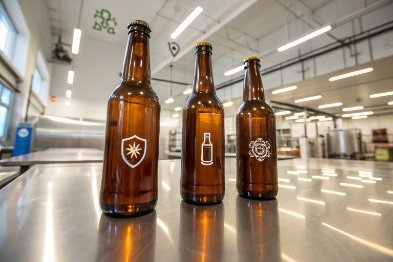
A bottle shape looks like marketing, but it also changes breakage rates, line speed, and how “fresh” the beer tastes after weeks in bright retail lighting.
Longneck bottles are the most line-friendly and distribution-safe. Steinies are compact and stable. Swing-tops feel premium and reusable, but they add cost and handling complexity. Amber glass protects beer best from light-strike, while green and flint need stronger cartons and faster turnover.
When choosing a bottle type, I look at four things: strength and handling, light protection, reuse model, and finish compatibility with the target distribution path.
How do longneck, steinie, and swing-top designs compare on strength?
Most “strength” problems are not from carbonation. They come from impact, scuffing, and how the bottle shape concentrates stress in the heel and shoulder.
Steinie bottles tend to be more stable and impact-tolerant because they are shorter with a lower center of gravity. Longnecks run best on high-speed lines but the taller profile can be less forgiving in drops and tip-overs. Swing-tops are strong bottles in many cases, but the closure hardware adds stress points and handling risk.

Longneck: the global workhorse
Pros:
- runs reliably on fast bottling lines and standard case packers
- wide distributor acceptance and easy sourcing
- good label real estate and familiar consumer ergonomics
Cons:
- taller bottles are easier to tip and can see more neck/shoulder hits
- more leverage in a fall can mean higher break risk vs short formats
- if lightweighted too aggressively, damage rates can rise fast
For most producers, the baseline reference for this format is the broader family of beer bottle shapes and formats 1, because “longneck” sits inside a standard handling ecosystem.
Longnecks usually win when the brand needs scale and smooth operations.
Steinie (stubby/steinie): compact and stable
Pros:
- shorter, more stable in fridges and on tables
- often survives casual handling better because it is less “tippy”
- packs efficiently in some cartons due to lower height
Cons:
- less vertical label space, some label designs feel cramped
- may require different guides/handling parts on certain lines
- brand look can feel “regional” if the market expects longnecks
If you need a quick history and why brewers still love the compact look, the steinie bottle format 2 is a helpful reference point.
Steinies are a practical choice for craft brands that want a distinctive look without going into exotic molds.
Swing-top: resealable and craft-coded
Pros:
- strong “reuse” and “heritage” signal
- resealable for consumers who do not finish the bottle at once
- great for specialty beers and premium gifting
Cons:
- higher unit cost (bottle + hardware + assembly)
- closure hardware can snag in packing and can increase break points in transport
- line speed is usually slower and packing needs more care
- hygiene control matters more if bottles are reused
Operationally, it helps to treat swing-top (flip-top) closures 3 as “bottle + hardware + cleaning discipline,” not just a cool cap.
Swing-tops are best when the brand can price for it and the distribution model supports gentler handling.
| Bottle type | Strength in daily handling | Line friendliness | Best fit |
|---|---|---|---|
| Longneck | good | excellent | mass distribution, high-speed runs |
| Steinie | very good | good | compact packs, craft differentiation |
| Swing-top | good bottle, complex closure | moderate | premium, reuse story, specialty |
Does amber beat green and flint for light-strike protection?
Light-strike is a packaging-driven defect. If the beer is hop-forward, the risk is real and fast.
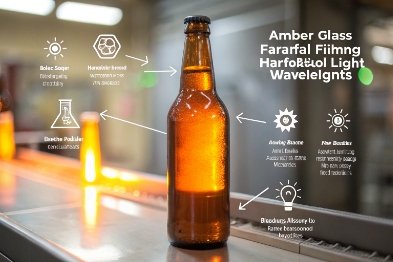
Yes. Amber glass protects beer far better from light-strike than green or flint. Green offers limited protection and flint offers the least, so green/flint beers need cartons, sleeves, or fast turnover to avoid “skunky” flavor.
Why this matters in real stores
Retail lighting, sunlight through windows, and open-door fridges expose bottles every day. Cans remove this risk completely. With glass, color is the first protection layer—and the underlying mechanism is the lightstruck flavor (LSF) reaction 4.
A key culprit compound often discussed in plain-language training is 3-methylbut-2-ene-1-thiol (3-MBT) 5, which is why clear and green bottles demand stricter display discipline.
How to make green or flint workable
- Use full cartons or sleeves that block light
- Use shorter shelf life targets and faster rotation
- Prefer beer styles that are less hop-sensitive
- Avoid sunlight exposure in displays
| Glass color | Light-strike risk | What it requires to stay safe |
|---|---|---|
| Amber | lowest | standard retail control |
| Green | medium/high | cartons or fast turnover |
| Flint | highest | strong light protection + fast turnover |
For export or long warm routes, amber is the safest choice if the beer must taste consistent at arrival.
Are returnables heavier but longer-lasting?
Returnable bottles are engineered to survive many trips. That usually means thicker glass and more surface protection.
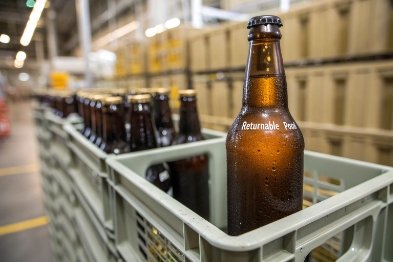
Yes. Returnables are typically heavier and more scuff-resistant, so they last through multiple wash and refill cycles. The trade-off is higher freight weight and the need for reverse logistics, sorting, and stricter inspection.
Why returnables need higher durability
Returnables face:
- bottle-to-bottle abrasion in crates
- caustic washing and thermal cycling
- repeated impacts on conveyors
- longer total life, which means more chances to get scratched or chipped
So they often use:
- thicker heel and shoulder zones
- stronger coatings to reduce scuffing
- tighter rejection criteria in the pool
What makes returnables succeed
Returnables are not only a bottle choice. They are a system. If you want a plain-language view of how bottle reuse loops 6 work and why operations matter, it’s a useful baseline reference.
When the loop is regional and loss rate is low, returnables can reduce cost per fill over time. When the loop is wide and bottles go missing, costs rise fast.
| Returnable advantage | Returnable drawback | Best condition to adopt |
|---|---|---|
| lower waste per serving | heavier freight | regional distribution |
| consistent brand bottle | wash + inspection complexity | strong retail return support |
| lower long-term packaging spend | pool loss risk | deposit program works |
Which finishes (crown vs twist-off) fit distribution models?
Finish choice looks small, but it affects cap sourcing, line compatibility, and consumer behavior.
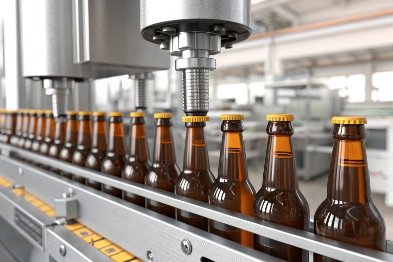
Crown finishes are the universal standard for beer distribution and give the widest cap sourcing and best line compatibility. Twist-off crowns add consumer convenience but require tighter finish control and are best when the supply chain and packaging quality are stable.
Crown finish: the safe default
Pros:
- cheapest and most universal
- works with standard crown cappers everywhere
- strong seal reliability when applied correctly
- easy for distributors and contract packers
Cons:
- not resealable and needs an opener (unless pry-off friendly culture is assumed)
If you need one “definition page” to align teams on terminology, sizes, and sealing basics, crown cork (crown cap) closures 7 are the common reference.
Crown is best for broad distribution, exports, and any system with multiple co-packers.
Twist-off crown: convenience with tighter tolerances
Pros:
- consumer-friendly, no opener needed
- fits certain retail segments and casual occasions
Cons:
- requires correct thread/finish design and good cap application
- more sensitive to finish damage and cap mismatch
- some craft consumers still prefer pry-off as a quality cue
Twist-off works best when the brand owns or tightly controls the bottling line and bottle supply. If multiple fillers and multiple bottle suppliers are involved, crown pry-off reduces risk.
Matching finish to channel
| Channel / model | Best finish choice | Why |
|---|---|---|
| Mass distribution + many partners | Crown pry-off | lowest risk, best compatibility |
| Controlled regional brand | Crown or twist-off | choice can follow consumer preference |
| Premium specialty (gift) | Swing-top or crown | storytelling and reuse value |
| Returnable pool | Crown pry-off | standardization and durability |
In most cases, keeping the finish standard reduces surprises and claims. The brand can still differentiate with shape, embossing, and label design.
Conclusion
Longnecks win for scalable distribution, steinies win for compact stability, and swing-tops win for premium reuse cues. Amber glass protects beer best from light-strike, returnables trade weight for long life, and crown finishes stay the safest choice for most distribution models.
Footnotes
-
Reference overview of common beer bottle formats and their typical use across breweries and markets. ↩ ↩
-
Quick history and practical context for the steinie/stubby format and why it’s used. ↩ ↩
-
Explains flip-top hardware, how it seals, and what it implies for handling and cleaning. ↩ ↩
-
Technical background on lightstruck flavor and why packaging choices strongly influence “skunking.” ↩ ↩
-
Plain-language explanation of 3-MBT and why light exposure makes some bottled beers taste skunky. ↩ ↩
-
High-level explanation of bottle reuse systems and the operational trade-offs behind returnables. ↩ ↩
-
Standard terminology for crown caps/crown corks and how they seal on beverage bottle finishes. ↩ ↩






