
Glass seems simple, but the unseen structure inside it creates many problems for buyers who need safe and reliable packaging. These problems grow when the product must stay pure, stable, and protected.
Glass is an amorphous, non-crystalline material with stable optical, mechanical, and chemical behavior. These properties make it a safe, inert choice for food, cosmetic, and pharmaceutical packaging.
When buyers understand how glass behaves under heat, pressure, and chemical exposure 1, they make better packaging decisions. This knowledge also helps avoid waste, breakage, and contamination.
Which glass properties matter most for food, cosmetic, and pharma packaging?
Many brands worry about purity, stability, and long-term shelf life. These worries grow when the product contains oils, acids, alcohols, or heat-sensitive ingredients.
Glass properties that matter most for food, cosmetic, and pharma packaging 2 are chemical durability, thermal stability, optical clarity, and surface behavior. These features protect product quality and support branding.
Thermal and Mechanical Needs
Glass must handle filling temperature, storage, and transport. Different industries push glass in different ways.
Product Compatibility
A stable surface keeps food, formulas, and medicines safe from unwanted reactions.
Barrier and Purity
Non-porous surface helps keep flavors, aromas, and active ingredients unchanged.
Comparison Table
| Property | Food | Cosmetic | Pharma |
|---|---|---|---|
| Chemical durability | High need | High need | Very high need |
| Thermal stability | Medium | Medium | High |
| Optical clarity | Medium | Very high | Medium |
| Surface inertness | High | High | Very high |
In these industries, glass becomes both a protective barrier and a branding tool. Logos, coatings, colors, and textures help bottles stand out in a crowded market.
How do soda-lime, high-white flint, and borosilicate glass compare?
Manufacturers often think glass is all the same. But each type behaves differently under heat, pressure, and chemical stress.
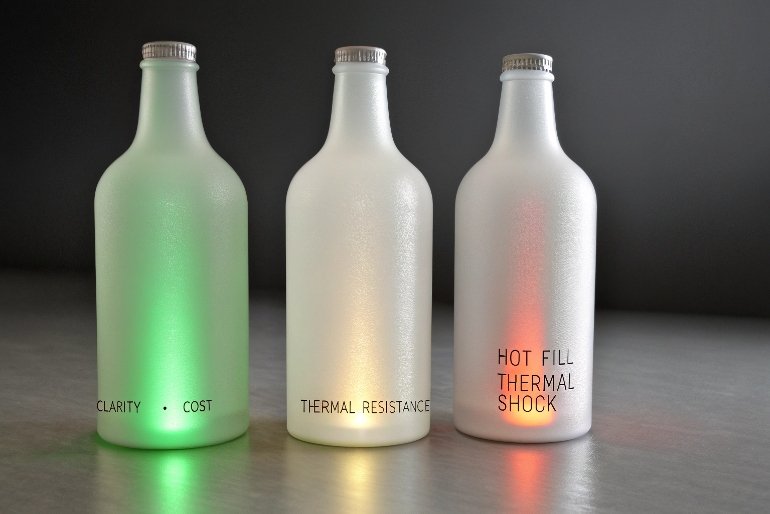
Soda-lime, high-white flint, and borosilicate glass 3 differ mainly in their oxide composition. These changes affect clarity, strength, thermal shock resistance, and cost.
Soda-Lime Glass
Most food and beverage packaging uses soda-lime glass because it is stable, affordable, and easy to shape.
High-White Flint Glass
This high-white flint glass 4 gives stronger brightness and clarity. Many perfume, skincare, and luxury brands prefer it.
Borosilicate Glass
This borosilicate glass 5 has very low thermal expansion. It survives hot filling and temperature swings better than regular glass.
Deep Comparison of Glass Types
1. Mechanical Behavior
Borosilicate glass stays stable with heat changes due to low expansion. Soda-lime reacts more quickly to temperature shifts. High-white flint has similar mechanical performance to soda-lime but offers better clarity.
2. Chemical Durability
All three are resistant to most acids and solvents. Borosilicate has the strongest resistance to leaching. This makes it popular in pharma and lab use.
3. Appearance and Branding
High-white flint supports premium branding due to higher light transmission. Soda-lime shows a slight green tint. Borosilicate is clear but more expensive.
Comparison Table
| Property | Soda-Lime | High-White Flint | Borosilicate |
|---|---|---|---|
| Thermal shock resistance | Medium | Medium | Very high |
| Optical clarity | Medium | Very high | High |
| Chemical durability | High | High | Very high |
| Density | ~2.5 g/cm³ | ~2.5 g/cm³ | ~2.23 g/cm³ |
| Cost | Low | Medium | High |
These differences guide brand owners in choosing the right material. A simple switch can solve breakage issues or improve the premium feel of a bottle.
What is glass chemical resistance to acids, alkalis, and solvents?
Buyers worry when products contain acids, alcohols, essential oils, or alkaline ingredients. The wrong packaging can ruin an entire batch.
Glass is stable against most acids, most solvents, and many alcohols 6. Strong alkalis and hydrofluoric acid can attack glass. Borosilicate performs best when chemical purity is critical.
Acid Resistance
Glass resists weak and strong acids, even at elevated temperatures.
Alkali Resistance
Strong alkalis attack glass surfaces by dissolving silica and alkali ions.
Solvent Compatibility
Most organic solvents, including essential oils, do not damage glass. This makes glass ideal for cosmetics and scents.
Deeper Look at Surface Reactions
1. Ion Exchange and Leaching
Humidity and long storage can cause slow ion exchange. This appears as haze on the surface. Borosilicate resists this most.
2. Alcohol and Oil Stability
Essential oils need a non-reactive container. Glass prevents oxidation and flavor loss.
3. pH-Dependent Behavior
High pH liquids must avoid long-term contact with regular soda-lime if temperatures rise. Coatings can offer protection.
Resistance Table
| Medium | Soda-Lime | Flint | Borosilicate |
|---|---|---|---|
| Acids | Excellent | Excellent | Excellent |
| Alkalis | Limited | Limited | Better |
| Solvents | Excellent | Excellent | Excellent |
| HF Acid | Not resistant | Not resistant | Not resistant |
Stability protects product integrity. It reduces flavor loss, discoloration, and pH changes.
How do coatings or surface treatments change barrier and durability performance?
Many brands want stronger, smoother, brighter, or more durable bottles. Surface treatments help meet these goals.
Coatings improve scratch resistance, chemical stability, and barrier strength. They also improve appearance for branding and shelf presence.
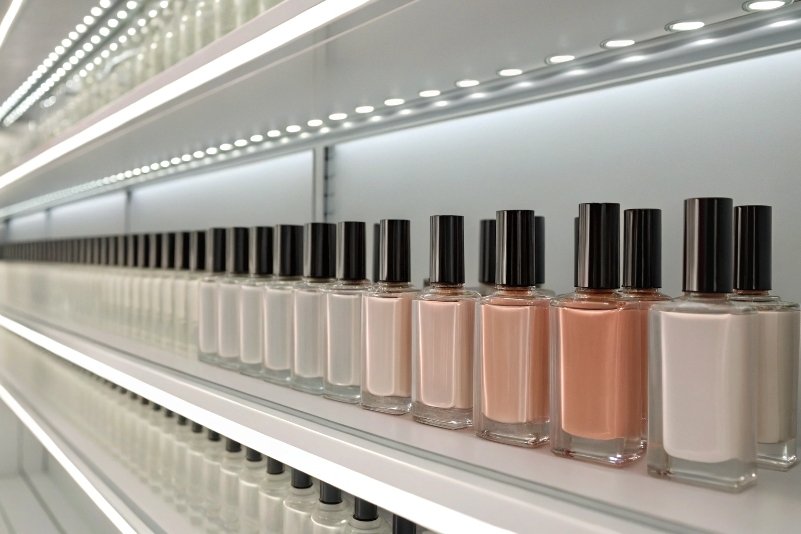
Types of Treatments
Spray coatings, UV coatings, frosting, and electroplating all add style and durability. Ion-exchange strengthening increases compressive stress near the surface.
Anti-Slip and Protective Layers
Coatings reduce scratch growth during shipping. They keep bottles safer during filling and labeling.
Deeper Breakdown of Surface Improvements
1. Mechanical Strength Gains
Chemical strengthening swaps Na⁺ for K⁺ ions, creating stress layers 7. This improves impact resistance.
2. Chemical Barrier Layers
Some coatings reduce alkali leaching. This helps sensitive formulas such as vitamin serums.
3. Visual Enhancements
Coatings allow matte effects, glossy effects, or fully opaque colors. These help products stand out on shelves.
4. Branding Flexibility
Screen printing, decals, hot stamping, and laser engraving help brands show quality and identity.
Treatment Table
| Treatment | Benefit | Common Use |
|---|---|---|
| UV coating | Scratch protection | Cosmetics |
| Frosting | Visual texture | Perfume and home décor |
| Electroplating | Metallic finish | Luxury bottles |
| Ion exchange | Strength gain | Pharma and travel bottles |
Coatings raise the value of the bottle. They offer both performance and branding advantages.
Conclusion
Glass protects products with stable thermal, mechanical, and chemical behavior while offering premium clarity and branding options.
Footnotes
-
Overview of glass physical and mechanical properties, including thermal expansion, strength, and optical behavior. ↩︎ ↩
-
Independent summary of glass as food packaging material, barrier performance, migration, and regulatory context. ↩︎ ↩
-
Technical comparison of soda-lime, borosilicate and other glass types, including composition, expansion and chemical resistance. ↩︎ ↩
-
Background on flint glass, high refractive index compositions used for brilliant, high-clarity decorative and optical glass. ↩︎ ↩
-
Details of borosilicate glass composition, low thermal expansion, and common uses in labware, cookware, and pharma containers. ↩︎ ↩
-
Practical overview of chemical resistance differences between borosilicate and soda-lime glass used for laboratory containers. ↩︎ ↩
-
Explanation of chemically strengthened glass and ion-exchange processes used to increase surface compression and impact strength. ↩︎ ↩






