

Many brands love the soft, premium look of frosted glass screw bottles. But behind that simple matte skin, there is real work in glass forming, surface treatment, and quality control.
Frosted glass screw bottles are formed first on IS machines, then frosted as a post-process by acid etching, sandblasting, or spray-frost, which gives a durable matte surface, better light protection, and a more premium, fingerprint-hiding look.
Frosting does not start in the decoration line. It starts in the hot end, where the neck thread, wall thickness, and glass quality are set on Individual Section (IS) machines 1. When these are stable, the frosting line can focus on adhesion, uniformity, and final appearance instead of fighting basic defects. This is why it is important to see frosting as one part of a full process, not just a “cosmetic” add-on.
Should you choose acid-etching or spray-frost for durability and look?
A frosted finish always looks gentle, but not every frost behaves the same in real use. Many brands only see samples and ignore how the finish will last in filling, transport, and the consumer’s bathroom or kitchen.
Acid-etched frost is permanent and highly durable but needs higher MOQ and stricter safety control. Spray-frost is more flexible, colorful, and cost-effective for short runs but needs good curing to avoid chipping or scratching.
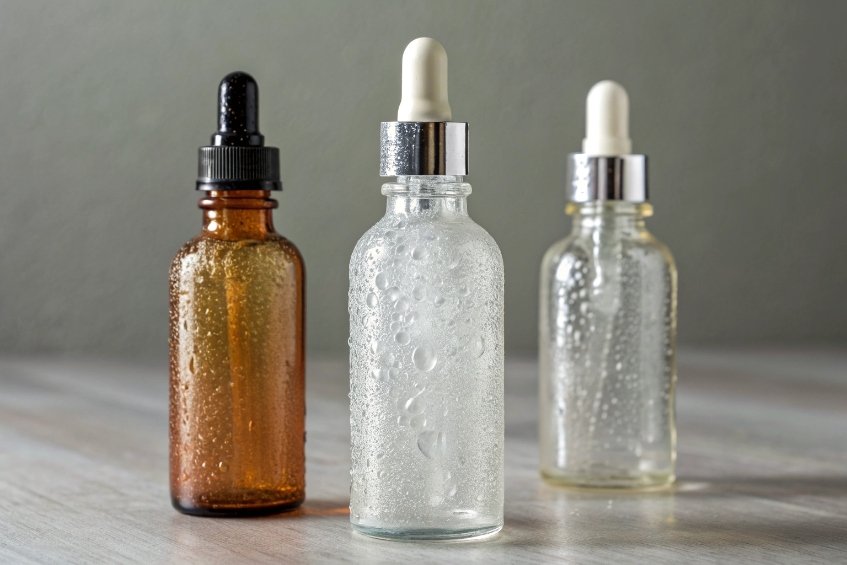
Main frosting routes for screw bottles
In real projects, three routes are common: acid etching, sandblasting, and spray-frost coating. Sandblasting is more common for flat glass or art pieces, so for high-volume bottles the main choice is usually between acid etching and spray-frost.
1. Acid-etched frosting
Acid etching uses a chemical bath, often with hydrofluoric acid (HF) etching chemistry 2 or mixed salts, to remove a very thin surface layer of glass. This changes the micro-roughness of the glass and creates a very smooth, silky, permanent matte finish. The “frost” is now part of the glass itself.
Key points:
- The finish is very uniform, with no “orange peel” or spray shadows.
- It resists normal household chemicals and typical cosmetic formulas.
- It holds up well in dishwashers and hot water, because there is no extra coating to peel off.
- It does not change neck thread dimensions, so closure torque and sealing are stable.
- The process needs strong safety control, waste treatment, and stable equipment, so factories often ask for higher MOQs.
Acid-etched bottles work very well for core SKUs that will run for many years and need high durability and a very premium touch.
2. Spray-frost coating
Spray frosting uses a coating (water-based or solvent-based) that is sprayed on the bottle and then cured in an oven. The coating can be translucent white, smoky, colored, or even gradient. The frost effect comes from fine particles or micro-texture inside the coating itself.
Key points:
- Color options are almost unlimited, including gradients and partial areas.
- It is easy to combine with other effects like metallic, pearl, or UV coating.
- Tooling cost is low; change of color or design is more flexible, good for shorter runs.
- The surface can scratch or chip if curing is weak or if the bottle is stacked without good packaging.
- Dishwasher resistance is weaker than acid-etched unless a high-grade 2K coating and proper bake schedule are used.
For new launches, seasonal collections, and niche SKUs with lower volume, spray-frost gives more freedom with color and design while keeping MOQs and development time lower.
3. Where sandblasting fits
When sandblasting is selected for screw bottles, many lines prefer controlled glass bead blasting 3 or engineered media rather than “raw sand”, because it is easier to keep texture uniform and reduce dust risk.
4. How to choose in real projects
You can think in terms of durability vs flexibility:
| Factor | Acid-Etched Frost | Spray-Frost Coating |
|---|---|---|
| Durability / scratch resistance | Very high (part of glass surface) | Medium to high (depends on coating) |
| Dishwasher resistance | Strong | Needs high-grade system and cure |
| Color options | Limited (natural glass tone) | Very wide, including gradients |
| MOQ | Usually higher | Often lower and more flexible |
| Setup and safety | Complex, strict waste treatment | Easier line setup, fewer chemical limits |
| Look and touch | Silky, “natural” matte | Matte to semi-matte, can feel more “coated” |
For a long-term hero product with a strong luxury position, acid-etched frost makes sense. For frequent launches, trend colors, or smaller brands testing the market, spray-frost often gives the best balance between look and flexibility.
How do frosting steps (cleaning, masking, etch/spray, curing) impact adhesion and QC?
Many defects that show later in the warehouse or on the shelf start from a small mistake in the very first steps. One fingerprint, one drop of oil, or one wrong oven setting can break adhesion and ruin a batch.
Each frosting step matters: cleaning sets the base, masking defines clean edges, etch or spray builds the effect, and curing locks it in. Good control at every step reduces peeling, pinholes, and color variation.
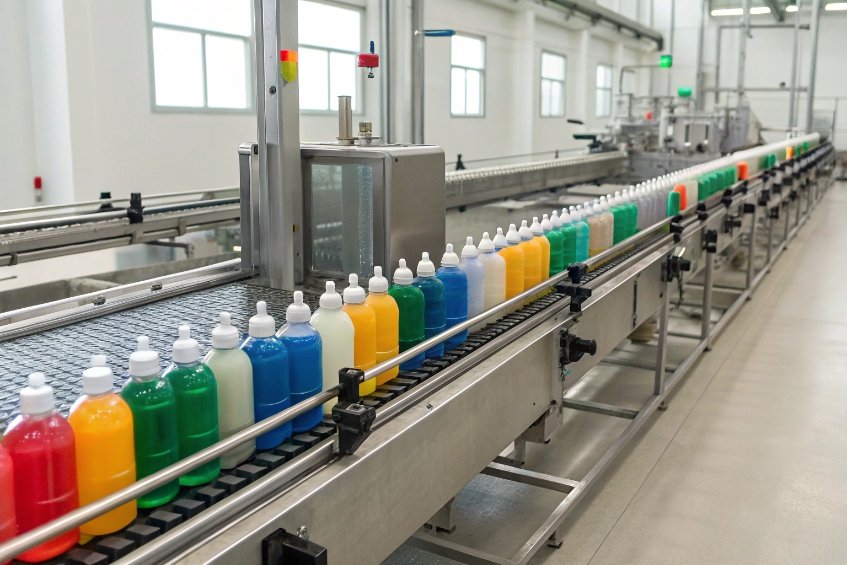
1. Cleaning and surface preparation
Frosting always starts with clean, dry glass. On a real production line, bottles arrive from the forming and annealing stages with dust, oil, and sometimes tiny shards.
Good practice includes:
- Warm water and detergent wash, or alkaline wash for heavy oil.
- Multiple rinses with de-ionized water to remove salts.
- Hot air drying so no water marks stay on the surface.
If this step is weak, you will see fish-eyes, pinholes, poor coverage, and weak adhesion. This is true for both acid-etched and spray-frost finishes.
2. Masking and partial frost
Many brands want only part of the bottle frosted, for example leaving a clear window or keeping the neck clear to protect threads. Masking uses tapes, caps, silicone sleeves, or custom jigs to hide those areas from etch or spray.
Here, alignment and sealing are key:
- Poor masking leaves wavy lines, which look cheap on shelf.
- Gaps in masking allow liquid or paint to creep, which needs rework.
- Mask residues can interfere with later labeling or screen printing.
On screw bottles, the neck and thread often stay clear to keep dimensional control and sealing performance.
3. Etch or spray application
In the etch bath, temperature, time, and chemistry decide how deep the micro-etch will go. Many “HF-free” products still rely on fluoride activity from salts such as ammonium bifluoride 4, so dosing stability and rinse discipline still matter. If the bath is too strong or too hot, the surface becomes rough and can trap dirt. If it is too weak, the frost looks patchy and low contrast.
In spray lines, four controls matter most:
- Viscosity of the coating.
- Gun pressure and pattern.
- Line speed.
- Booth air flow and dust control.
Even a small change in these can cause color banding, runs, thin edges, or heavy build-up at the heel and shoulder.
4. Curing: locking in adhesion and appearance
Curing is where the coating crosslinks or where the etch surface is fully dried and stabilized. For spray-frost, oven time and temperature must match the coating supplier’s curve. Under-cure gives soft surfaces that scratch or print-transfer in cartons. Over-cure can yellow some light colors.
A simple QC table shows how each step links to common defects:
| Defect | Likely Root Step | Typical Cause |
|---|---|---|
| Peeling / flaking | Cleaning / curing | Oil, dust, or under-cure |
| Pinholes / fish-eyes | Cleaning | Silicone, grease, or water marks |
| Uneven frost / cloudiness | Etch or spray setting | Wrong time, temp, or coating viscosity |
| Wavy frost edge | Masking | Mask misalignment or poor contact |
| Color shift between lots | Etch chemistry / coating | Bath age or inconsistent mix ratio |
When each step is stable and measured, adhesion becomes predictable. For spray-frost projects, an ASTM D3359 cross-hatch tape adhesion test 5 is a fast way to confirm cure and surface prep are not drifting.
Will frosting affect label sticking, dishwasher resistance, and food-contact safety?
Many customers worry that frosting looks beautiful in the showroom, but labels will lift in the fridge, logos will wash off in the sink, or the frosting chemistry will not be safe near food or skincare formulas.
Frosting changes surface energy and roughness, so label choice and testing matter. Acid-etched glass usually gives excellent dishwasher and food-contact performance, while spray-frost needs the right coating system and certification.
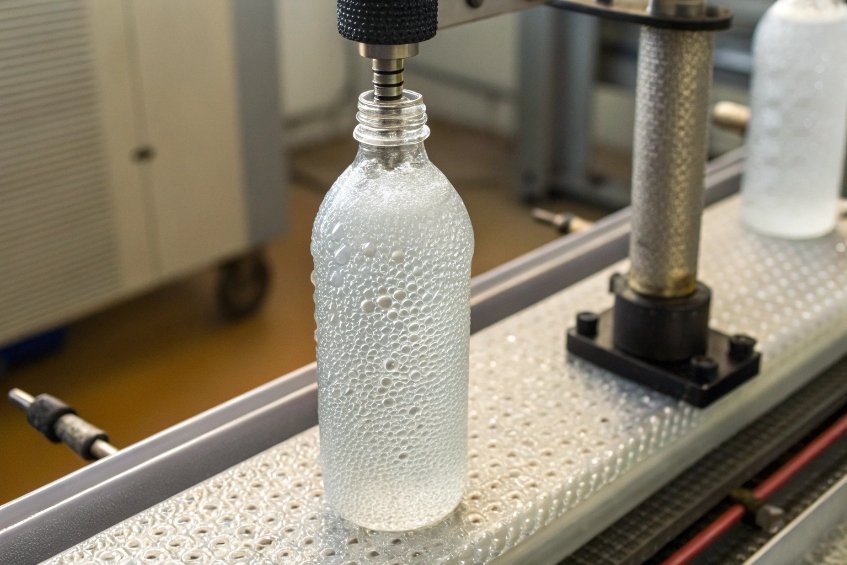
1. Label adhesion on frosted surfaces
A frosted surface is more textured and often has higher surface energy than glossy glass. This can actually help some pressure-sensitive labels, but it can also highlight any air bubbles or poor adhesive. If teams want a measured way to compare lots, they can trend wetting via contact angle (surface energy) measurements 6 on fixed bottle zones.
Key tips:
- Use label adhesives rated for “low surface energy” or “rough glass” when in doubt.
- Avoid very thin, stiff films on deep frost; they may bridge across peaks and valleys.
- Shrink sleeves work very well on both acid-etched and spray-frost bottles because they wrap the full contour.
For high-value skincare or spirits, many brands combine direct screen printing with a small back-of-pack label. Screen inks bond well to both acid-etched and properly cured coated surfaces when the line uses the right pre-treatment and firing curve.
2. Dishwasher and cleaning resistance
Acid-etched frost is part of the glass surface. So it does not peel in dishwashers. With normal consumer cycles, it keeps its matte finish for a long time. Over many years, very harsh industrial detergents can smooth the surface, but this is rare in home use.
Spray-frost performance depends fully on the coating system and process:
- One-component water-based coatings are cost-effective but more sensitive to hot water and strong detergents.
- Two-component (2K) systems with correct bake schedules can reach very high resistance, even in repeated dishwasher cycles.
- If the line under-cures or stacks hot bottles too early, the surface will scratch or scuff in cartons.
For reusable bottles, barware, or kitchen containers, it is safer to choose acid-etch or a proven high-grade coating system that has passed hot-water, abrasion, and detergent tests.
3. Food-contact and cosmetic safety
For screw bottles used in food, beverages, or skin-contact formulas, safety is non-negotiable.
Acid-etched glass has a strong advantage here:
- The process changes only the outer glass surface and then is fully rinsed.
- No extra organic coating stays on the outside.
- With proper washing and leach tests, it fits strict food-contact and cosmetic rules.
Spray coatings can also be safe, but they must come from suppliers with clear compliance statements and test reports. On many projects, the frosting is kept outside of any direct food contact area, and the mouth and inner neck stay clear. For regulatory documentation, brand teams often anchor requirements to the EU food-contact framework (EC) No 1935/2004 7 and then add coating supplier declarations and migration testing as needed.
When design and compliance teams work together early, it is possible to have frosted screw bottles that look premium, hold labels well, survive daily use, and stay safe for food and skin contact.
Frosted glass always looks more gentle and upscale than pure clear flint. But every extra process adds cost and risk, so many smaller brands worry that frosting will push MOQs and lead times beyond what their business can handle.
Frosted screw bottles lift perceived value through soft light diffusion and better shelf consistency. With the right process choice and standard molds, most brands can control MOQ, cost, and lead time.
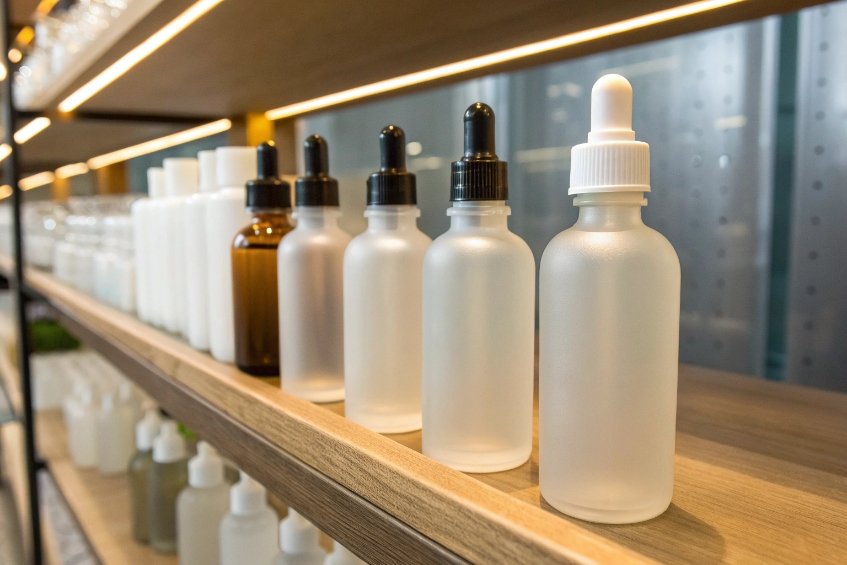
1. How frost changes shelf impact
A frosted surface softens reflections and diffuses light. This gives three clear branding gains:
- The product looks more “high touch” and less industrial.
- Fingerprints and small scuffs are less visible in retail lighting.
- Slight color differences in formula or glass are masked, so the shelf looks more consistent.
For light-sensitive formulas like serums, essential oils, or some beverages, frost also helps protect active ingredients from UV. This technical benefit supports marketing claims about product stability and quality.
On screw bottles, the same neck finish can take droppers, pumps, sprayers, or simple caps. So one frosted bottle family can support many SKUs and price points. This flexibility helps brand owners scale a line without new molds every time.
2. Managing MOQ, tooling, and lead times
The main levers for MOQs and lead times are:
- Use standard screw-mouth molds where possible.
- Choose between acid-etch and spray-frost based on volume.
- Decide early how many colors and effects your line really needs.
Some practical patterns:
- For a long-term hero SKU, brands often invest in a custom bottle shape plus acid-etched frost. MOQ is higher, but the design becomes a signature asset.
- For line extensions, many brands choose standard bottles with spray-frost in new colors. This keeps new SKU MOQs low and reduces development time.
- For start-ups or DTC brands testing the market, standard frosted bottles from existing collections with simple logo printing are usually the best first step.
Because frosting is a post-process, it does not change the screw neck dimensions. That means capping torque, sealing, and compatibility with pumps and droppers stay stable. Operations teams like this, because they do not need to change filling line settings when moving from clear to frosted versions of the same bottle.
You can think of frosted screw bottles as a “multiplier” on brand perception. With the same formula and similar closure, the frosted version usually feels one step more premium than clear glass.
To keep cost under control:
- Concentrate frosting on visible, consumer-facing SKUs.
- Use one or two standard frosted bottle families to cover many products.
- Combine the frost with simple, high-contrast labeling or screen printing instead of very complex multi-pass decorations.
In many markets, this strategy delivers a premium shelf look while keeping MOQs and lead times at a level that even small and mid-size brands can manage.
Conclusion
Frosted glass screw bottles join strong glass forming with smart surface treatment. When the right frosting method and process control are in place, brands gain real premium feel without losing practical flexibility.
Footnotes
-
IS-machine basics for forming screw finishes, neck threads, and consistent wall thickness at scale. ↩ ↩
-
HF hazard reference for safety planning, PPE, and process risk communication in acid-etch operations. ↩ ↩
-
Explains bead blasting and why it produces a fine, even satin texture on glass surfaces. ↩ ↩
-
Quick chemistry reference for ammonium bifluoride, commonly used in fluoride-based frosting formulations. ↩ ↩
-
Standard adhesion rating method to catch under-cure, contamination, or weak coating bonding early. ↩ ↩
-
Shows how contact angle quantifies wetting/surface energy—useful for diagnosing label and coating consistency. ↩ ↩
-
Core EU regulation framework used to document food-contact safety expectations for packaging materials. ↩ ↩






