
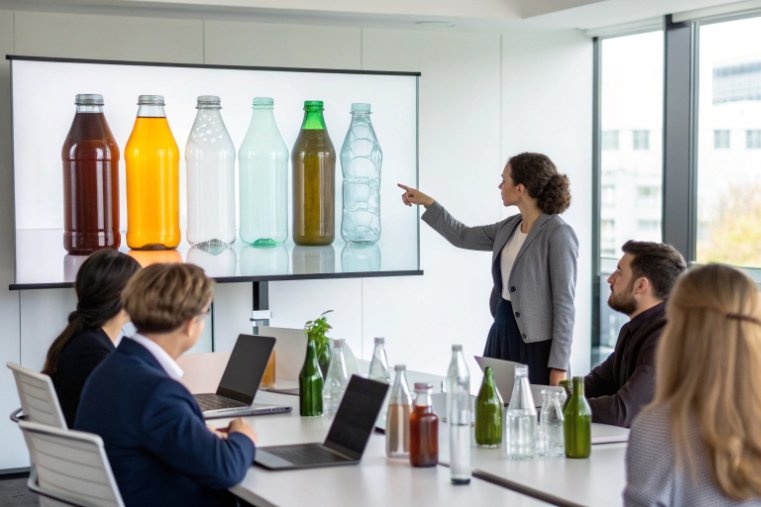
Many teams feel stuck between “premium glass” and “efficient plastic” 1. Both camps have strong opinions, and it is easy to get lost in emotion instead of clear trade-offs.
Glass offers superior chemical inertness, barrier performance, and premium feel, while plastic wins on weight, impact resistance, and transport efficiency. The best choice depends on product type, channel, and brand strategy.
When I compare options for customers, I do not start with “glass or plastic.” I start from product needs: flavor, shelf life, price point, route-to-market, and reuse potential. The material choice then becomes a logical result, not a guess.
Which material offers superior chemical inertness and flavor preservation?
Formulators worry about one thing first: “Will the package change my product?” Flavor loss, off-notes, and unstable actives can quietly kill a brand long before the cost sheet does.
Glass has clear advantages in chemical inertness and flavor preservation 2. Food-grade plastics can perform well in many cases, but glass remains the benchmark when you need near-zero interaction and maximum aroma protection.
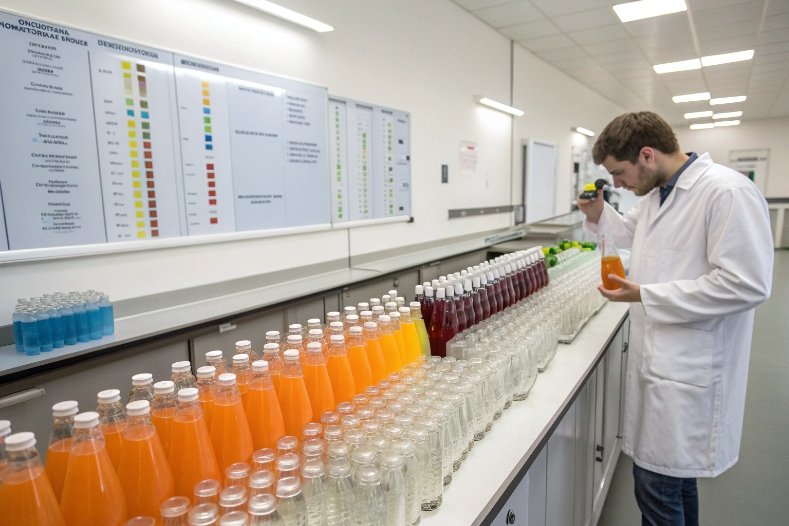
Glass forms a dense, inorganic network that does not react with most foods, drinks, or cosmetics. It is essentially gas-impermeable and non-porous, so oxygen cannot sneak in and aromas cannot sneak out through the wall. Plastics like PET or HDPE have improved a lot and can keep products stable for many applications, but oxygen and CO₂ permeability 3 are still higher than glass.
How glass protects flavor and actives
1. Chemical inertness
Glass does not contain plasticizers, monomers, or additives that can migrate into the product. With proper formulations and decorations, heavy metal leaching is also extremely low. That makes glass very friendly for:
- Acids (sauces, juices, vinegars).
- Alcohol (spirits, perfumes).
- Oils and oil-based formulas (olive oil, serums, essential oils).
There is almost no risk of flavor pickup or strange chemical notes over time, even at elevated storage temperatures.
2. Barrier performance and shelf life
Glass creates a true barrier against:
- Oxygen ingress (which drives oxidation, color change, and off-flavors).
- CO₂ loss (critical for beer and carbonated drinks).
- Water-vapor transfer (important for some concentrated or hygroscopic products).
PET and other plastics can be tuned with barrier layers or coatings, but this adds cost and process complexity. Even then, long-shelf-life beer or wine in plastic still faces performance limits compared with glass, especially in warm or variable climates.
3. Light protection and UV-sensitive products
Amber and dark-colored glass filter UV and some visible wavelengths that damage vitamins, oils, and aromas. This is why pharmacies, brewers, and essential-oil brands love amber bottles 4.
Most clear plastics do not provide the same UV shield unless you add extra additives or sleeves.
4. Where plastic is “good enough”
For many short-to-medium shelf-life products, plastics perform well:
- Chilled dairy drinks.
- RTD juices for quick consumption.
- Standard shampoos and body washes.
If oxygen and aroma requirements are moderate, and the product is not highly sensitive, PET or HDPE can give a safe, cost-effective solution. But when the conversation turns to “no flavor change over 12–24 months,” glass usually wins.
| Feature | Glass | Plastic (PET/HDPE, etc.) |
|---|---|---|
| Chemical inertness | Excellent | Good, but formulation-dependent |
| Oxygen barrier | Near-perfect | Moderate, needs barrier tech for high level |
| CO₂ barrier | Near-perfect | Limited for long-term carbonation |
| Aroma and flavor preservation | Very high | Good for many, weaker for premium/aroma |
| UV protection (amber) | Strong | Needs additives/sleeves |
For any brand that sells “taste,” “purity,” or “actives that really work,” glass gives a safety margin that is hard to match with plastic.
How do weight, drop resistance, and transport efficiency compare?
In the boardroom, the next question after flavor is simple: “How much will this cost to move, and how much will we break?”
Plastic is lighter and more impact-resistant, so it usually wins on logistics and drop performance. Glass is heavier and brittle, but with good design and handling it can still work well, especially in local or premium channels.
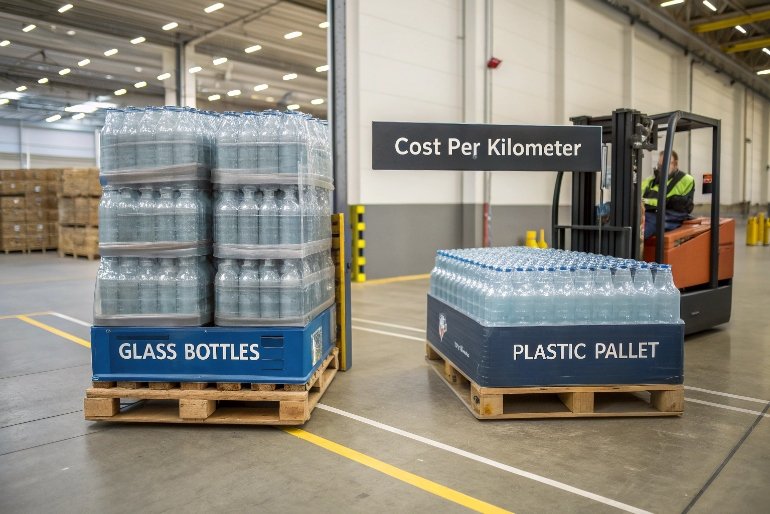
Glass bottles are naturally heavier than plastic ones. That means higher freight cost per unit and more fuel per pallet. Life Cycle Assessments 5 often show that single-use PET has a lower climate footprint per liter delivered than single-use glass, mainly because of this weight difference and lower processing temperatures. Returnable glass, however, can reverse this after enough trips on short routes.
Everyday handling and drop resistance
1. Impact and breakage
- Glass is rigid and strong in compression but weak in tension and impact. A single sharp hit at the heel or shoulder can cause a crack or full shatter.
- Plastic can flex and absorb energy. It may dent or crease, but it rarely shatters into dangerous pieces.
For e-commerce, gyms, schools, and long, rough supply chains, plastic offers a big safety and cost advantage.
2. Transport and warehouse costs
With the same fill volume:
- A glass bottle adds significant extra weight per unit and per pallet.
- Trucks hit weight limits sooner with glass, volume limits sooner with plastic.
- This affects fuel use, emissions, and sometimes road taxes or freight rates.
In export-heavy business or long inland routes, plastic’s weight advantage shows up directly on the P&L.
Where glass can still be efficient
Short-haul, dense urban distribution networks can support:
- Local glass loops with returnable bottles and crates.
- Higher-value beverages and cosmetics where the added freight cost per unit is small compared to the margin.
In these cases, glass’s extra weight matters less, and durability over many cycles matters more.
| Factor | Glass | Plastic |
|---|---|---|
| Weight per unit | High | Low |
| Drop resistance | Low–medium | High |
| Breakage risk | Significant if mishandled | Low (but deformation possible) |
| Freight efficiency | Lower for one-way | Higher, especially long-haul |
| Safety (shards) | Needs control | Much safer in impact scenarios |
So, for logistics, plastic is usually the “safe default.” Glass fits best where distribution is shorter, more controlled, or where each unit carries enough value to absorb the extra transport cost.
Where do heat resistance and sterilization methods favor one material?
When a product must survive hot-fill, pasteurization, retort 6, or high-temperature cleaning, material limits become very real.
Glass tolerates high temperatures and many sterilization methods better than common plastics. Plastics can still work, but they often need specialized grades and tighter process windows.
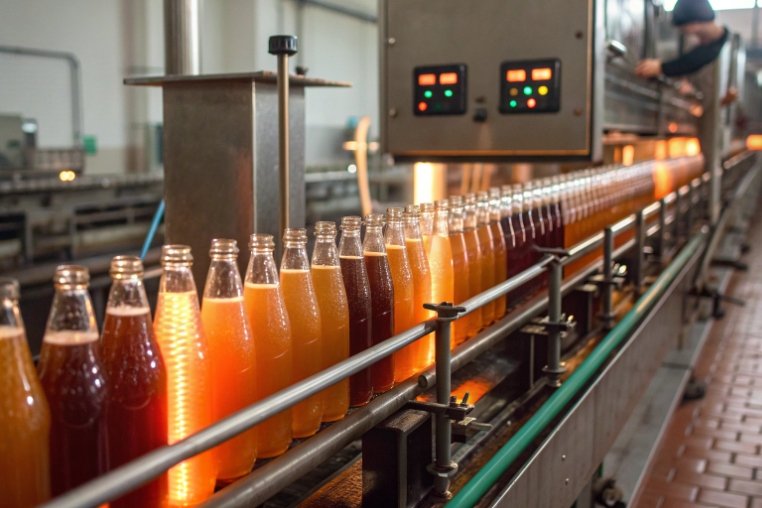
Glass does not soften and deform at typical food-processing temperatures. With the right design and glass type, bottles can pass through hot-fill, tunnel pasteurization, even retort processing with elevated pressures. Pharmaceuticals use borosilicate vials because they can be steam sterilized or dry-heat depyrogenated without losing integrity.
Plastics melt and creep at much lower temperatures. Standard PET starts to soften well below 100 °C. Heat-set PET can handle some hot-fill applications, but still with lower temperature and shorter exposure limits than glass. For aggressive thermal processes, plastic packaging needs more engineering or a switch to other materials.
Matching process to material
1. Hot-fill and pasteurization
- Glass: Handles high-temperature hot-fill sauces, juices, and spreads comfortably. Thick shoulders and well-annealed bodies protect against thermal shock.
- Plastic: Needs heat-set PET or other engineered polymers. Walls may warp or panel if the vacuum is high or process too hot.
2. Retort and sterilization
- Glass: Suitable for many retort processes, canned-type foods, and pharma sterile vials (with the right closure).
- Plastic: Only special high-temperature polymers or multilayer systems can survive retort. That typically raises cost and complicates recycling.
3. Cleaning and reuse
For refillable programs:
- Glass can handle repeated hot washing and caustic cleaning in industrial washers.
- Plastic reusables usually need gentler temperatures and detergents to avoid warping, cracking, or stress whitening.
| Aspect | Glass | Plastic |
|---|---|---|
| Hot-fill capability | Excellent | Needs heat-set / engineered grade |
| Pasteurization / retort | Strong fit (with design) | Limited, complex solutions |
| Steam sterilization | Good (especially borosilicate) | Only special polymers |
| Industrial washing/reuse | Very good | Needs careful control |
For products that must go into “hot and hard” processes, glass is often the simplest technical solution, even if it is not the cheapest per unit.
Which allows better decoration—silk-screen, frosting, electroplating, or labels?
Packaging is not just a container. It is also a silent salesperson. Brands want rich colors, metallic effects, soft-touch surfaces, and perfect logo placement.
Glass is naturally compatible with high-end decoration methods like silk-screen printing, frosting, and electroplating. Plastic also supports many decoration options—especially shrink sleeves and labels 7—but some luxury effects are still easier and more durable on glass.
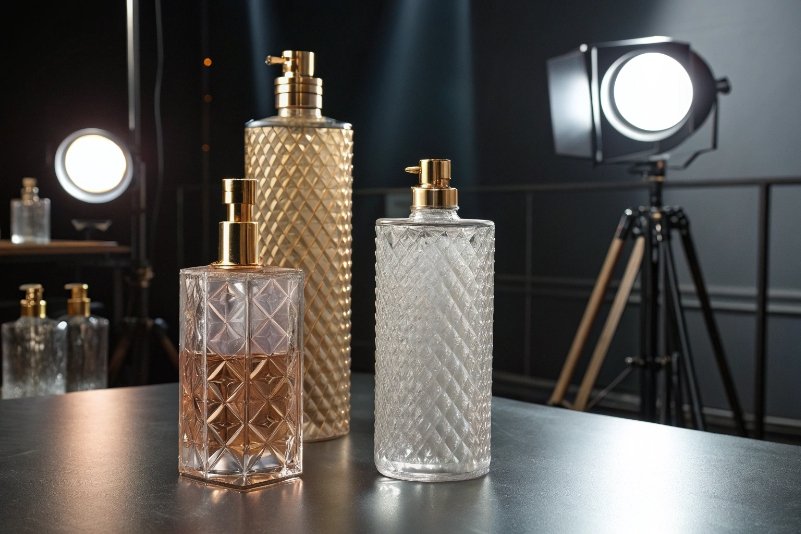
Decoration on glass
Glass offers a stable, heat-resistant, and rigid surface. This supports:
- Silk-screen printing: Direct printing with ceramic or organic inks. Can be cured at high temperature for very durable finishes. Great for cosmetics and spirits.
- Frosting / etching: Chemical or spray frosting adds a soft, matte, “ice” effect that feels premium.
- Electroplating / metallization: Metallic layers on the outer surface give chrome, gold, or gradient effects, very popular for perfume and high-end cosmetics.
- Full-surface coatings: Sprayed color, gradients, soft-touch coatings, and inside- or outside-sprayed effects.
Because glass can handle heat, many decorations are very robust after firing or curing. They resist alcohol, oils, and normal cleaning better than many printed plastics.
Decoration on plastic
Plastic offers its own strengths:
- Labels (pressure-sensitive, wraparound): Low-cost, flexible, great for frequent design changes.
- Shrink sleeves: Full 360° artwork, strong shelf impact, and good scuff protection.
- In-mold labeling (IML): For injected jars and bottles, label and container become one unit.
- Direct printing: Possible, but often with lower cure temperatures and more limits on inks and solvents.
Metallic and high-heat decoration on plastic is more complex. Some metallization processes exist, but they can interfere with recycling and require surface treatments. Many brands choose sleeves over heavy decoration directly on plastic to keep flexibility and cost under control.
Balancing creativity and practicality
For premium segments (spirits, fragrances, luxury skincare), glass almost always wins because:
- It takes more advanced decoration.
- It aligns with consumer expectations of “high value.”
- It supports long-running designs where the cost of special finishes can be amortized.
For fast-moving FMCG products that rebrand often, plastic plus labels or sleeves is more nimble and cost-effective.
| Decoration Method | Glass Suitability | Plastic Suitability |
|---|---|---|
| Silk-screen printing | Excellent | Good, with process limits |
| Frosting / etching | Excellent | Limited (mainly spray effects) |
| Electroplating / metallization | Very good | Possible but more complex |
| Labels and sleeves | Very good | Excellent |
| High-temperature curing | Easy | Limited |
So when a brand wants the package to “feel like the product,” glass becomes a key part of the design toolbox, not just a container choice.
Conclusion
Glass brings top-tier inertness, barrier, heat resistance, and decoration potential, while plastic delivers light weight, impact safety, and logistics efficiency; the right choice depends on product needs, channel, and brand positioning.
-
Overview of main technical trade-offs between glass and plastic packaging formats. ↩︎ ↩
-
Technical review on how glass packaging preserves flavor and volatile compounds in beverages. ↩︎ ↩
-
Study comparing oxygen and CO₂ permeability of packaging polymers for food and drink. ↩︎ ↩
-
Research on amber glass effectiveness for protecting light-sensitive beverages and nutrients. ↩︎ ↩
-
Life cycle assessment comparing climate impacts of PET versus glass beverage bottles. ↩︎ ↩
-
Practical guide to hot-fill, pasteurization, and retort processes in food packaging. ↩︎ ↩
-
Industry comparison of labels versus shrink sleeves for decorating bottles and containers. ↩︎ ↩






