
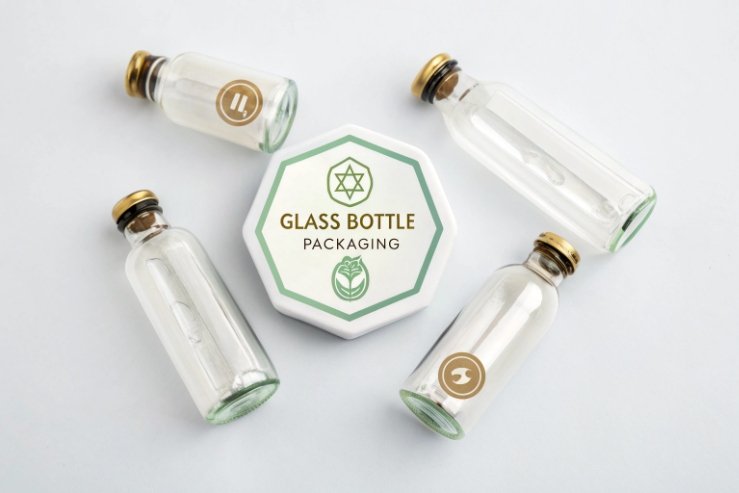
Cheap packaging can steal flavor, add doubts, and raise returns. A great product can still lose on shelf if the bottle fails at protection or trust.
Glass bottle packaging wins because it stays neutral, blocks gases, handles heat, supports true recycling and reuse, and looks premium on shelf. These five advantages protect both product quality and brand value.
A bottle is not only a container. It is a safety layer, a quality signal, and a sales tool. When selecting packaging for beverages, the same five questions come up every time: Will it change taste? Will it protect freshness? Will it survive heat? Will it improve sustainability results? Will it look premium? Glass answers all five in one material.
Bad packaging does not always fail in a dramatic way. Sometimes it only adds a faint smell, a small taste shift, or a flat finish that customers cannot explain.
Yes. Glass is chemically inert and non-porous, so it does not leach odors or flavors into premium beverages. It also offers a strong barrier to oxygen and aroma loss, which helps protect taste over time.

What “flavor neutral” really means
Flavor neutrality is simple to say, but it has two parts.
First, the material should not add anything. Glass is a nonporous and impermeable packaging material 1, so it does not release plastic-like notes, and it does not absorb oils and aromas from the drink.
Second, the material should not remove anything. A porous package can trap aroma compounds. Glass is non-porous, so the aroma profile stays where it belongs: inside the beverage, not inside the wall.
This is one reason premium spirits, craft drinks, and high-end mixers often prefer glass. The product is the hero, and the bottle should stay quiet.
Barrier performance protects taste, carbonation, and freshness
Flavor is not only “taste.” It is also aroma, sparkle, and the feeling of freshness. Glass brings a key advantage here: it is a very strong barrier to gases and moisture.
That barrier matters in three common cases:
- Carbonated drinks: Less gas movement helps protect carbonation and mouthfeel.
- Aroma-forward products: Coffee infusions, botanical drinks, and spirits benefit when aromas do not escape.
- Sensitive ingredients: Some acids and alcohol blends keep their original balance better when oxygen exposure stays low.
Glass does not solve every oxidation risk by itself, because closures and headspace still matter. But as a base material, glass reduces the number of ways freshness can slip away.
Light protection is part of “taste protection”
Taste can also be damaged by light. That is why amber and tinted options are not only about style. They are also a protection tool for light-sensitive beverages.
For wine in particular, the highest-risk zone includes the UV-A and violet band (320–440 nm) 2, where light can trigger rapid aroma faults in sensitive styles.
For many premium drinks, the decision is not “clear or amber.” It is “show the product or protect the product.” A strong brand can use amber as a premium cue and also as a quality promise.
What buyers can check before approving a bottle
A simple approval checklist keeps “neutral and protective” from turning into marketing words.
| Quality factor | What to ask for | What it protects | Common failure sign |
|---|---|---|---|
| Inert contact surface | Material compliance + internal surface consistency | No taste/odor transfer | Odd smell in empty bottle |
| Gas barrier | Confirmation of non-porous glass + closure system test | Freshness, carbonation | Flat taste over time |
| Light protection (if tinted) | UV–Vis transmission window for the target band | Light-strike risk | Product fades or smells “skunky” |
| Closure fit | Finish dimensions + closure trials | Leak control | Random seepage in storage |
When a beverage is positioned as premium, the bottle should act premium too. Neutrality plus barrier protection is a quiet advantage, but it often becomes the most valuable one.
How do recyclability and reuse improve sustainability metrics?
“Sustainable” claims can collapse fast if the numbers are weak. Many brands want better CO₂ results, but they also want a story customers trust.
Recyclability and reuse improve sustainability metrics by reducing virgin raw material demand, enabling closed-loop recycling, and cutting waste per serving. Reuse adds more benefit when return rates are real and logistics are well designed.
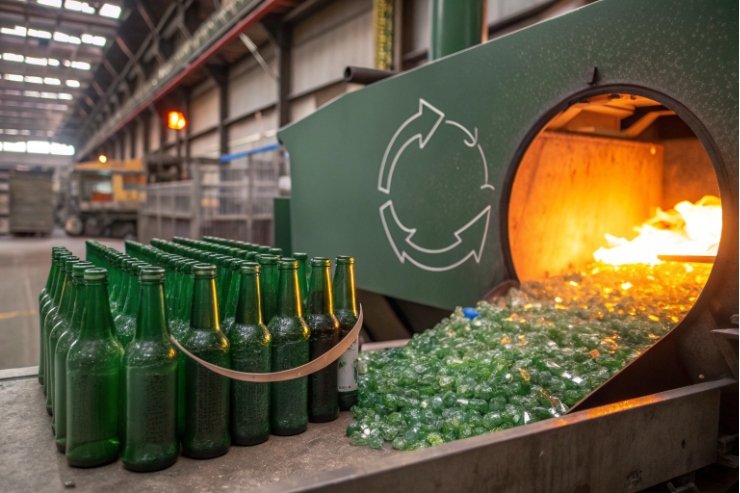
Recycling that stays “glass-to-glass”
One strong advantage of glass is that it supports glass-to-glass recycling 3, where old bottles become new bottles and the material stays high-quality.
In metrics language, closed-loop recycling can improve:
- Recycled content % (more cullet used in production)
- Virgin material reduction (less sand, soda ash, limestone)
- Landfill diversion (more collected and reprocessed)
The real win is not only that glass is recyclable. The win is when the supply chain actually captures and uses it.
Recycled content can change the footprint
Sustainability reporting often comes down to two numbers:
- How much recycled material goes into each bottle
- How much energy and CO₂ the system uses per unit
Higher recycled content can lower energy needs in melting, because cullet melts more easily than raw batch materials. That can improve emissions results, but only if the cullet stream is clean and stable.
A brand does not control the full recycling system, but it can influence outcomes by selecting suppliers who can document recycled content and by designing bottles that are easy to sort.
Reuse is powerful, but only when the loop is real
Reuse and refill can beat single-use recycling in the right setup. The trick is honesty about the loop.
Reuse works best when:
- Bottles return at high rates
- Transport distances stay reasonable
- Wash lines are efficient and safe
- Bottle strength is designed for multiple cycles
Reuse fails when:
- Returns are low
- Bottles travel too far back empty
- Washing and sorting cost more than the benefit
This is why returnable programs often lean on proven deposit refund schemes 4 to keep return rates and material quality high.
Metrics to track so sustainability does not stay vague
Many teams track only recycled content. That is not enough. A better view combines recycling and reuse metrics.
| Metric | What it tells the team | How it is used | Typical mistake |
|---|---|---|---|
| Recycled content (%) | How much cullet is inside the bottle | Supplier reporting + audits | No proof, only claims |
| Collection rate (%) | How much glass is captured after use | Country/region recycling data | Using global averages blindly |
| Yield and contamination | How much collected glass becomes usable cullet | Recycler and supplier feedback | Ignoring label and closure impacts |
| Reuse cycles (avg) | How many times one bottle is refilled | Return program tracking | Counting “possible” cycles, not real cycles |
| Waste per serving | Packaging waste per drink sold | Per-unit packaging study | Tracking only total waste, not per unit |
From my side, the most trusted sustainability story is the one backed by numbers that customers can understand. “This bottle is made with recycled glass” plus “this program returns bottles and reuses them” is clearer than broad claims.
Can heat resistance support hot-fill, pasteurization, and sterilization?
Heat can destroy weak packaging. It can warp plastic, soften liners, and create leaks. For beverages that need thermal processing, packaging has to stay stable.
Yes. Glass can handle hot-fill, pasteurization, and many sterilization workflows because it does not soften like plastic and it remains chemically stable at high temperatures. The key is using the right glass distribution and controlling thermal shock.
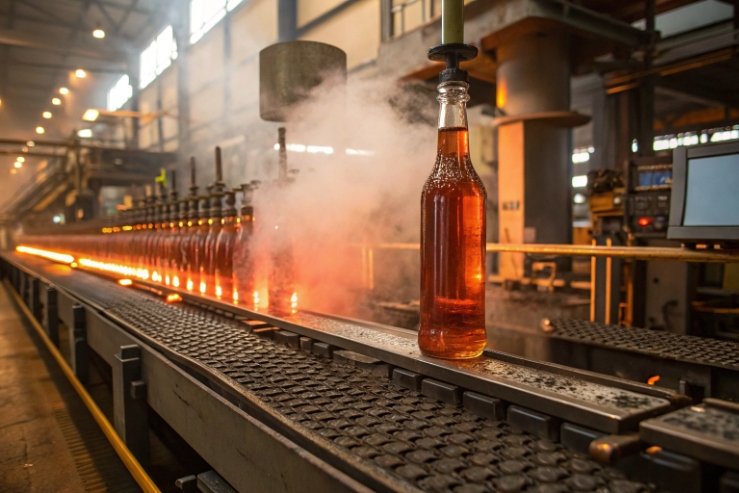
Heat resistance is not only “high temperature”
Heat resistance in production has two parts:
- Maximum temperature exposure during filling or processing
- Thermal shock resistance during fast heating and cooling
A bottle can survive high heat and still crack if the temperature changes too fast. That is why line control matters as much as material choice, and why many teams reference the ASTM C149 thermal shock resistance test 5 when qualifying containers for hot-pack, pasteurization, or wash cycles.
Where glass supports real processing needs
Many beverage operations use heat for safety and shelf life. Glass supports these workflows because it stays dimensionally stable.
Common use cases include:
- Hot-fill for juices, teas, and sauces
- Pasteurization for certain beer, juices, and functional drinks
- Sterilization for special products and some non-beverage categories that still use bottle-like formats
Exact process settings depend on product and equipment. Still, glass is often chosen when the process needs heat and the brand wants premium positioning.
Design choices that reduce break risk
Heat processing increases stress. A bottle should be designed for that stress.
Key design choices include:
- Even wall thickness to avoid hot spots
- Strong heel and base distribution to survive conveyor impact when hot
- Stable finish geometry to keep sealing reliable after heating
- Good annealing to reduce internal stress
When a team pushes for lightweight bottles, heat processes become less forgiving. That does not mean lightweight is impossible. It means the design and QC need to be tighter.
A simple process-to-bottle fit table
This table helps connect process needs to bottle requirements in plain terms.
| Process | What happens | What the bottle must do well | What to watch |
|---|---|---|---|
| Hot-fill | Product enters hot and then cools | Resist thermal shock + keep finish stable | Rapid cooling, uneven thickness |
| Pasteurization | Heated holding step after filling | Maintain seal and dimensional stability | Closure liner limits, lean/tilt issues |
| Steam sterilization (where used) | High heat and pressure exposure | Strong glass distribution + good anneal | Stress cracks, weak heel zones |
| Wash and refill | Repeated heat + chemicals | Surface durability + consistent finish | Scuffs, finish wear, labeling residue |
One small story fits here. A client once reduced bottle weight to save freight cost, but breakage rose during warm rinsing. The “cheap” bottle became expensive. The fix was not only to add weight. The fix was to correct thickness distribution and control the temperature steps.
Heat resistance is a clear advantage of glass, but it becomes a business advantage only when the process is matched to the bottle design.
How do clarity and shelf impact elevate brand perception?
A product can be great, but customers still judge it fast. The bottle is often the first “taste” they get.
Clarity and shelf impact elevate brand perception because glass signals purity, lets customers see the product, and supports premium decoration. Weight, sound, and sparkle create a quality cue that many buyers trust.
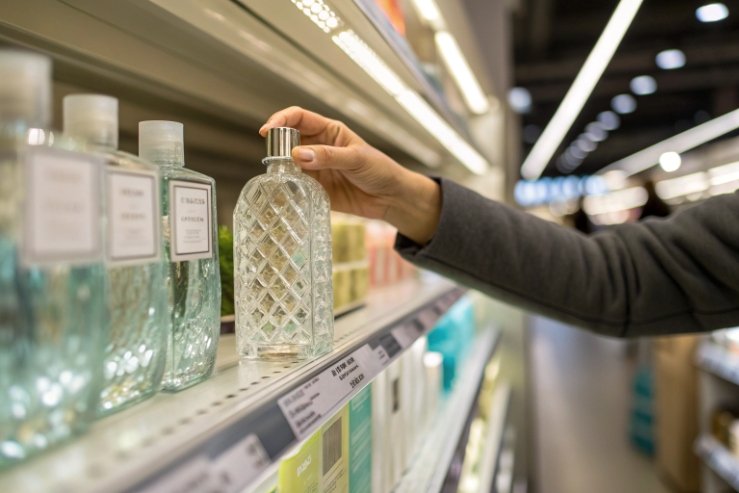
Clarity builds trust in one second
Clear glass does a simple job: it reduces doubt. When customers can see color, fill level, and cleanliness, they feel safer buying.
This matters most for:
- Clear spirits and ready-to-drink cocktails
- Cold brew coffee and tea
- Premium waters and mixers
- Products where natural color is a selling point
Clarity is also a QC signal. Haze or foreign particles become easier to spot, which raises pressure on quality control in a good way.
Shelf impact is not only “looks,” it is also touch
A premium bottle does not only look premium. It feels premium.
Common premium cues include:
- Weight and balance: stability in hand and on shelf
- Sound: the “clink” and tone that feels solid
- Surface quality: smooth or intentionally frosted finishes
- Precision: straight seams, clean shoulders, and crisp embossing
These cues are simple, but they work because they match how people shop. Many buyers still pick up the bottle before reading the label.
Decoration options turn glass into a brand platform
Glass supports many decoration methods, and that flexibility is part of its advantage.
Options include:
- Embossing and debossing for permanent branding
- Screen printing for high-end labeling without paper
- Hot stamping and color coating for seasonal campaigns
- Frosting, engraving, and texture for tactile identity
If you want a practical overview of what’s possible, the role of design in glass packaging 6 is a useful starting point for shape, embossing, and premium cues.
This helps brands reduce label dependence and build a bottle shape that becomes recognizable. Over time, that reduces discount pressure because the product looks different.
When tinted glass improves both shelf impact and quality
Clarity is not always the best choice. Amber or other tinted bottles can look premium and also protect product quality.
A smart positioning approach is:
- Use clear glass when showing the product is a core promise
- Use amber/tinted glass when protection and craft positioning are the promise
Either way, glass helps because it keeps the shape sharp and the decoration clean.
A practical brand impact table
This table links what customers feel to what production teams control.
| Brand lever | What customers perceive | What to control in production | Common failure |
|---|---|---|---|
| High clarity | Purity, honesty | Glass quality, clean handling | Scuffs, haze, dirty packs |
| Heavy base / stable balance | Premium and safe | Glass distribution, punt symmetry | Wobble, uneven standing ring |
| Clean finish and closure fit | Quality and trust | Finish geometry, sealing land | Crooked caps, leaks |
| Decoration quality | High-end identity | Surface treatment + print control | Misalignment, rub-off |
| Tinted options | Craft + protection | Color control + light performance | Uneven color, weak protection |
The best shelf impact is the kind that stays premium after shipping, chilling, and handling. Glass supports that because it keeps its shape, it resists odor pickup, and it holds decoration well.
Conclusion
Glass wins with five core advantages: neutral contact, strong barrier, heat capability, true circularity, and premium shelf impact. When these align, product quality and brand value rise together.
Footnotes
-
Explains why glass is non-porous and won’t alter flavors in food and beverages. ↩ ↩
-
Details why 320–440 nm light is a key risk band for light-struck aromas in wine. ↩ ↩
-
Summarizes how glass recycling works and why bottle-to-bottle loops preserve material quality. ↩ ↩
-
Clarifies how deposit refunds incentivize returns and improve collection quality for recycling or reuse. ↩ ↩
-
Defines a standard method for qualifying glass containers against thermal shock in hot-pack and pasteurization. ↩ ↩
-
Outlines design options like shapes and embossing that help glass packaging communicate premium brand cues. ↩ ↩






