
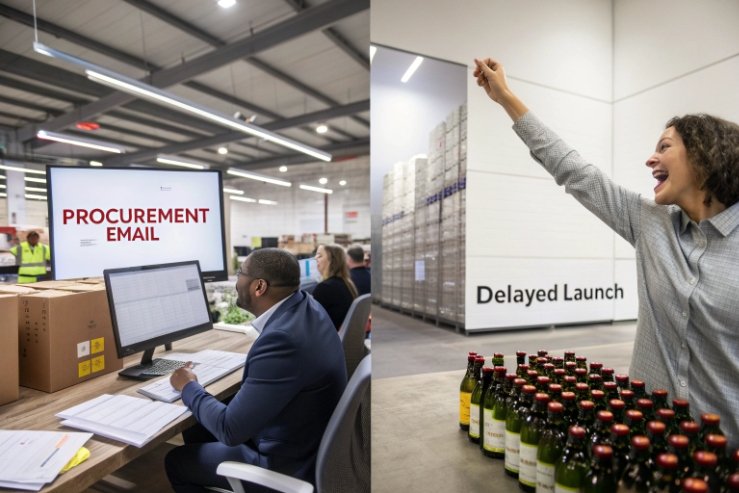
A low unit price feels like a win until defects, delays, and brand damage show up. Then the “savings” turn into fire drills, refunds, and missed launch windows.
The cheapest supplier often shifts cost into higher defects, unstable lead times, weak documentation, and inconsistent color/weight. Those hidden costs can erase savings fast and hurt repeat sales.
Most brands do not lose money because glass is “expensive.” They lose money because glass is unpredictable. When the bottle is the first thing customers touch, any quality drift becomes a brand problem, not a factory problem.
Will higher defect and breakage rates erase the savings?
A cheap bottle can still look acceptable in photos. The problem shows up when your line runs at speed or when pallets travel long distance and breakage spikes.
Yes. Higher defect and breakage rates can wipe out unit-price savings through scrap, line stops, added inspection, and customer complaints—especially for premium wine and spirits.
Where “cheap” usually shows up first
The most common pattern is looser process control. That often means more:
- bubbles/seeds and stones
- bird swings and checks
- sharp seams and finning
- finish chips and oval mouths
- scuffing and oily residue
These are classic failure modes described in a glass container defects (causes and remedies) reference 1.
Even if only a small percent is bad, glass defects behave like a multiplier. A few weak bottles can break in cases and damage neighbors. Then one defect becomes many returns.
Why breakage hurts more than scrap
Scrap is painful but predictable. Breakage is chaotic. It shows up as:
- broken glass during depalletizing
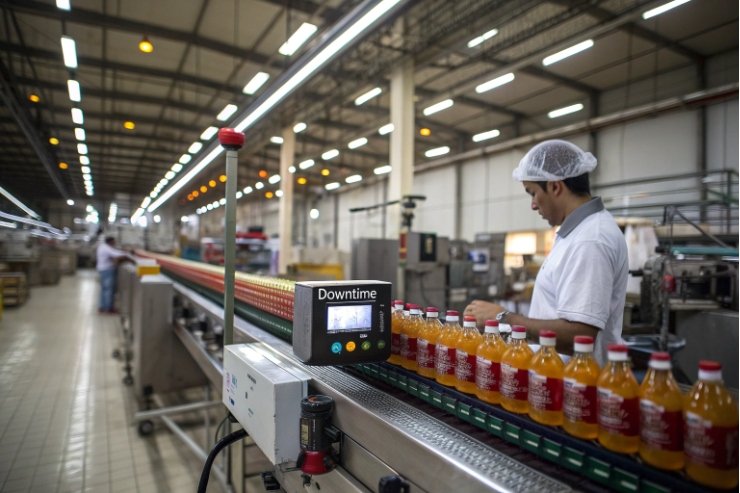
- chips at the filler, causing shutdowns
- customer breakage in transit, triggering claims
When a bottle breaks, your team spends time cleaning, reworking, and documenting. That time has a real cost. It also delays shipments.
Simple math that changes decisions
If a “cheap” supplier saves $0.05 per bottle but raises total rejects and breakage by 2–3%, the savings often disappear. The lost value includes:
- wasted wine/spirits or product downtime
- labor for sorting and re-packing
- replacement freight and claim handling
What to demand to reduce this risk
A reliable supplier can still be cost-effective, but only if they can prove control:
- clear AQL sampling plan (ISO 2859-1) 2 (critical vs major vs minor defects)
- cavity traceability marks (heel/punt codes)
- in-line inspection capability (finish, body, base checks)
- a defined scuff-prevention approach (hot-end + cold-end coatings and packing rules)
| Cost item | How defects create cost | What the cheapest supplier often skips | Practical control |
|---|---|---|---|
| Line efficiency | stoppages from chips and jams | finish control and gauges | finish Go/No-Go + sampling plan |
| Scrap rate | rejects at incoming and on line | consistent AQL execution | agreed AQL + audit photos |
| Freight damage | breakage in case/pallet | pack engineering | divider design + ISTA test procedures 3 |
| Claims/returns | replacements and refunds | traceability | mold/cavity codes + lot records |
Do longer lead times and poor documentation risk launches?
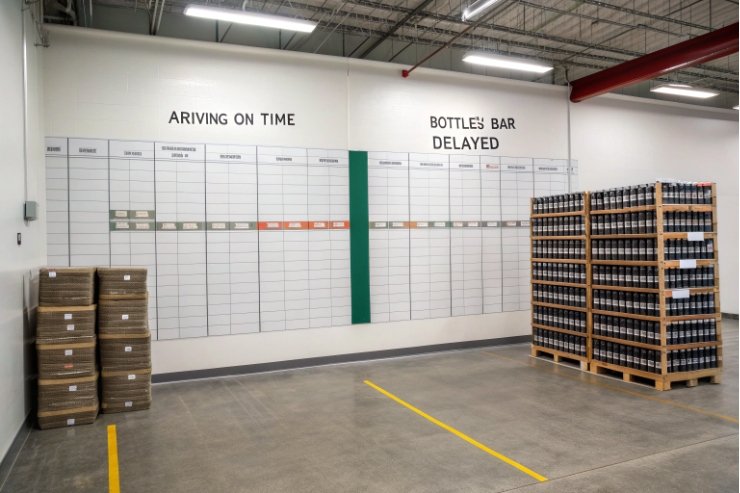
A bottle is not only a container. It is a critical path item. If it arrives late or without paperwork, you cannot ship, even if the product is ready.
Yes. Unstable lead times and weak documentation can delay launches, block imports, and force last-minute packaging changes that cost more than the original savings.
Lead time risk is not only “days”
Cheapest suppliers often rely on crowded capacity and thin planning. That creates:
- unclear production slots
- changing ship dates
- partial shipments
- quality holds that appear late
A launch is a chain. If bottles slip, labels, cartons, and closures may still arrive on time, but you cannot run your line. Then you pay to store components and re-plan labor.
For beverages and cosmetics, missing paperwork is a real business risk. It can trigger:
- customs delays
- distributor rejection
- compliance problems in audits
The usual weak points are:
- incomplete certificate of analysis (COA) 4
- missing food-contact compliance statements (EU Regulation 1935/2004) 5
- unclear heavy-metal or restricted substance declarations
- no traceability system aligned to GS1 standards 6
- no change-control notice when something changes
If the supplier cannot document what they shipped, you cannot manage risk if a complaint happens.
Why “simple” changes become expensive
Cheap suppliers sometimes change raw materials, cullet mix, or coatings without notice. That can create sudden:
- color drift
- label adhesion failures
- scuff spikes
- closure fit problems
Even if the bottles are “usable,” your brand now has inconsistent shelf appearance and unpredictable line performance.
A practical launch-safe supplier checklist
Before placing a big order, require a small package of proof:
- signed drawings with tolerances (finish and key dimensions)
- first-article report from samples
- COA and traceability format
- packing spec (carton strength, dividers, pallet pattern)
- change-notification agreement
| Launch risk | What causes it | What it looks like | How to prevent it |
|---|---|---|---|
| Missed ship window | weak production planning | “next week” updates | milestone plan + penalties/backup stock |
| Customs hold | missing compliance docs | shipment stuck at port | pre-approved doc set before loading |
| Last-minute spec drift | no change control | sudden color/fit issues | written change notice + sample approval |
| No root cause after issue | no traceability | repeat defects | lot + cavity codes + QA records |
Are color and weight variances harmful to branding?
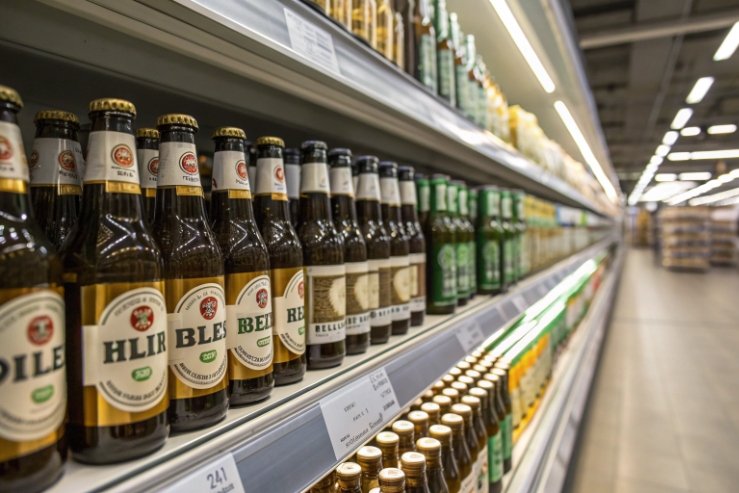
A wine bottle is part of the label. Customers notice shade differences, “cheap feel,” and uneven glass even when they cannot explain why.
Yes. Color and weight variation can weaken premium cues, disrupt shelf consistency, and create functional issues with closures, labeling, and filling lines.
Color consistency signals control
When color varies, it often means the process is drifting. Common causes include:
- inconsistent cullet streams
- unstable furnace chemistry
- weak mixing and conditioning
For premium products, even small shade shifts can hurt:
- photo and video consistency
- brand recognition on shelf
- the perceived “quality level” of the package
This is why many tequila and spirits brands choose distinctive shapes or darker colors. It helps consistency and shelf blocking, and it reduces visible variation.
Weight and thickness are not only “feel”
Heavier bottles can support premium positioning, but only if distribution is controlled. Cheap suppliers may deliver:
- wide weight scatter
- thin spots at shoulder or heel
- thick-heavy bases that look premium but crack due to stress
Weight drift also affects your line. Light bottles may jam more. Heavy bottles increase freight and may need stronger cartons. In both cases, the cheapest unit price can create total cost increase.
The brand impact is real and measurable
Broad faces and clean panels help labeling and decoration. When panels warp or seams shift, labels wrinkle and skew. That looks sloppy, and customers notice.
Also, color drift makes labels “change color” because paper and foils read differently against different glass shades. That creates a silent brand inconsistency across markets.
Control targets that keep the brand stable
A strong supplier can commit to:
- ΔE color limits 7 (batch-to-batch)
- weight tolerance windows
- critical dimension tolerances for finishes
- defined inspection zones (label panel, seam, base ring)
| Brand cue | What variance does | Customer perception | Technical risk |
|---|---|---|---|
| Glass color | inconsistent shelf look | “not premium” or “not authentic” | indicates process drift |
| Bottle weight | uneven hand feel | cheap or unreliable | affects packing and freight |
| Panel flatness | label distortions | low craftsmanship | labeling rejects |
| Seam alignment | harsh feel and scuff | cheap workmanship | higher scuff damage |
The cheapest quote usually counts only bottle unit price. Real business cost includes everything needed to ship perfect product to customers, every time.
Hidden costs add up through incoming sorting, extra washing, line rework, replacement freight, returns, and brand damage. When these costs are tracked, the “cheapest” supplier often becomes the most expensive.
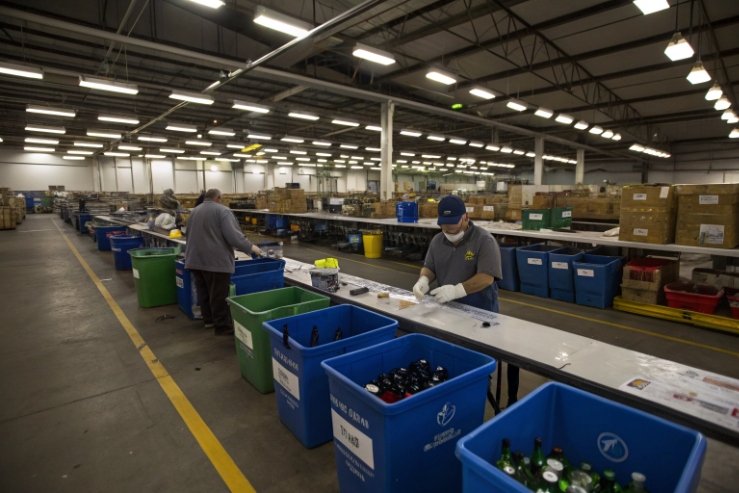
1) Incoming inspection labor
Cheap bottles often require higher sampling or even 100% inspection for finishes and scuffs. That is real labor, plus slower receiving.
2) Rework and additional washing
Oily residue, dust, or coating films can force extra rinsing. That adds water, chemicals, labor, and time. It also raises risk of label adhesion issues if washing leaves a film.
3) Downtime and speed loss
If defects cause frequent line stops, the cost is not only scrap. It is lost throughput and missed delivery promises.
4) Claims, returns, and chargebacks
Retailers and distributors often charge back for breakage, leakage, or poor appearance. That cost can be larger than the bottle cost itself.
5) Brand trust damage
A leaking or scuffed bottle is not a “packaging issue” to the customer. It is a product failure. That hurts repeat purchase and reviews.
A simple internal scorecard makes the decision clear:
- defect rate at receiving
- line stoppage minutes per 10,000 bottles
- breakage claims per shipment
- rework labor hours per lot
- replacement freight per incident
Track these for 2–3 shipments. The data usually ends the debate.
How a better supplier pays back
A higher-quality supplier often provides:
- stable QA records and traceability
- consistent coating and scuff control
- responsive technical support when issues appear
- controlled packaging specs that reduce freight damage
That reduces firefighting. It also protects the launch schedule and the brand image.
| Hidden cost | How it starts | Where it hits | How to prevent recurrence |
|---|---|---|---|
| Sorting labor | higher cosmetic defects | warehouse | agreed AQL + supplier audits |
| Rewashing | oily/dusty bottles | production | cleanliness spec + wash SOP |
| Rework | label slip, poor panels | packaging line | dimensional control + panel spec |
| Returns/claims | breakage/leaks | customers | pack validation + finish control |
| Lost loyalty | bad unboxing feel | market | premium consistency program |
Conclusion
The cheapest bottle often costs more through defects, delays, weak documentation, and brand inconsistency. A supplier with stable QA and control usually delivers the lowest total cost.
Footnotes
-
Defect photos and causes help align teams on what “seeds,” “stones,” and “finning” mean. ↩ ↩
-
Defines attribute sampling plans indexed by AQL so you can set clear pass/fail defect limits. ↩ ↩
-
Lists common ISTA procedures used to validate cartons, dividers, and unit loads against vibration and shock. ↩ ↩
-
Explains what a COA includes and why missing COAs increase compliance and recall risk. ↩ ↩
-
Official EU framework regulation covering materials intended to contact food, including documentation and traceability expectations. ↩ ↩
-
Traceability standard showing how to structure lot-level records so issues can be isolated and contained quickly. ↩ ↩
-
Practical guide to ΔE tolerancing so “color match” becomes measurable instead of subjective. ↩ ↩






