
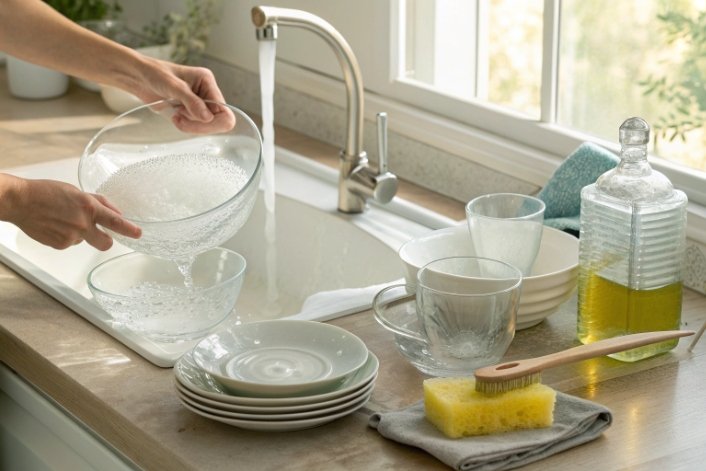
Glass tableware lasts a long time when you clean it gently and avoid stress from heat or pressure. Most problems—cloudy film, tea stains, and chips—come from harsh tools or sudden temperature changes.
Use mild detergents, soft tools, and steady temperatures; remove stains with vinegar or baking soda; store glass with rim protection; and replace any piece that shows cracks or stress lines.
When I evaluate a new product line, I always include care instructions. Good glass lasts for years with the right habits, but the wrong habits can damage even premium borosilicate or tempered pieces.
How do I remove cloudy film, tea stains, and grease without scratching?
Cloudiness, tea marks, and baked-on grease come from minerals, tannins, and oxidized oils. You can clean all of them with simple ingredients if you avoid abrasive pads.
Soak stains, use weak acids like vinegar, and polish with soft cloths. Hard tools scratch glass and make staining worse.
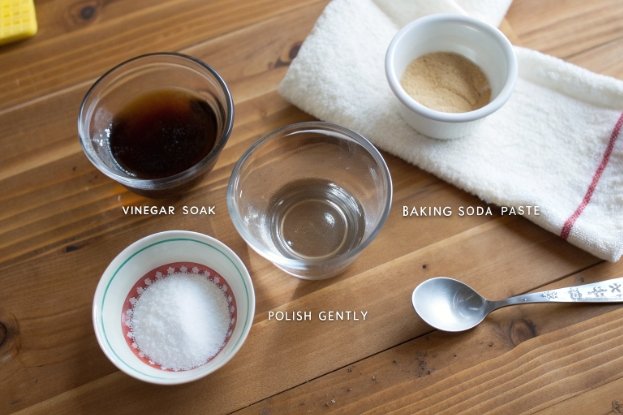
Clear methods that work for everyday cleaning
1. Cloudy hard-water film
- Soak the glass in warm white vinegar for 10–20 minutes.
- Rinse with warm water.
- Polish dry with a lint-free cloth.
If film returns often, it is usually due to minerals in the water. A rinse aid or softened water helps prevent new deposits.
2. Tea and coffee stains
- Make a paste of baking soda + a little water.
- Spread gently with a soft sponge.
- Rinse well and dry immediately.
Baking soda lifts tannins without scratching. Avoid rough pads or powder cleansers.
3. Baked-on grease (bakeware and casseroles)
- Soak with hot water + dish soap.
- Use a baking-soda paste for the last traces of oil.
- For very stubborn spots, re-soak instead of scrubbing hard.
Here is a quick reference:
| Problem | Safe method | Tools to avoid |
|---|---|---|
| Cloudy film | Warm vinegar soak | Abrasive powders |
| Tea stains | Baking soda paste | Steel wool, rough pads |
| Grease residue | Hot water + mild soap + soda paste | Metal scrapers |
| Odors in storage jars | Baking-soda solution for 24 hours | Bleach fumes trapped inside |
Soft cloths, silicone brushes, and sponge pads protect the glass surface and keep it clear.
What detergents and temperatures are safest for glassware longevity?
Glass handles heat well, but sudden changes cause stress. Detergents also matter—harsh or gritty cleaners can etch the surface.
Use mild dish soap, moderate water temperature, and gentle dishwasher cycles. Avoid thermal shock and strong abrasives.
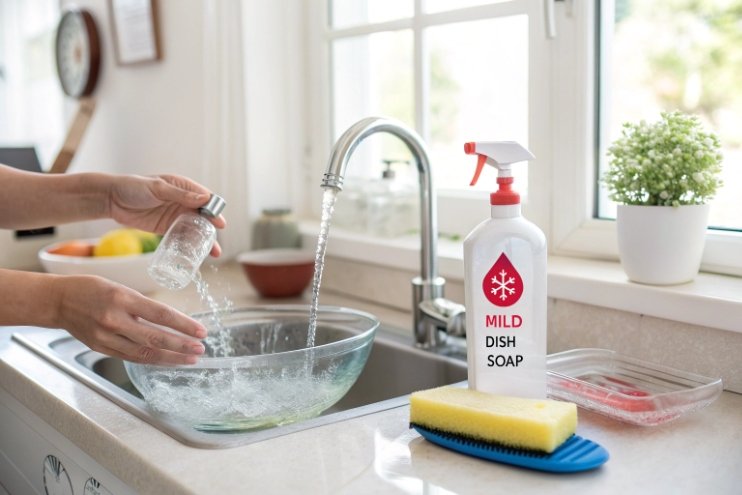
Simple rules that prevent damage
Hand-washing
- Use warm, not boiling, water.
- Add mild dish soap only—no bleach, ammonia, or gritty powders.
- Let hot glass cool before washing; let cold glass warm before rinsing.
Dishwasher
- Only use the dishwasher if the item is labeled dishwasher-safe.
- Place pieces so they do not touch each other.
- Use a gentle or glass cycle.
- Avoid high heat drying if your glass tends to spot or etch.
- Add a rinse aid in hard-water regions.
A quick decision chart:
| Setting | Safe? | Notes |
|---|---|---|
| Boiling wash | No | Risk of thermal shock |
| Mild soap | Yes | Best for all glass |
| Dishwasher top rack | Yes (if labeled) | Prevents knocking and chipping |
| Chlorine bleach | No | Can etch glass surface |
| Abrasive cleaners | No | Causes permanent dullness |
Stable temperatures protect the internal structure of both borosilicate and tempered glass.
How should I store glass dishes to prevent chipping and cracking?
Most household chips happen in the cabinet or dishwasher, not during cooking. Rims and edges are the most vulnerable.
Store glass with space between pieces, avoid direct rim-to-rim contact, and keep heavy items away from lighter ones.
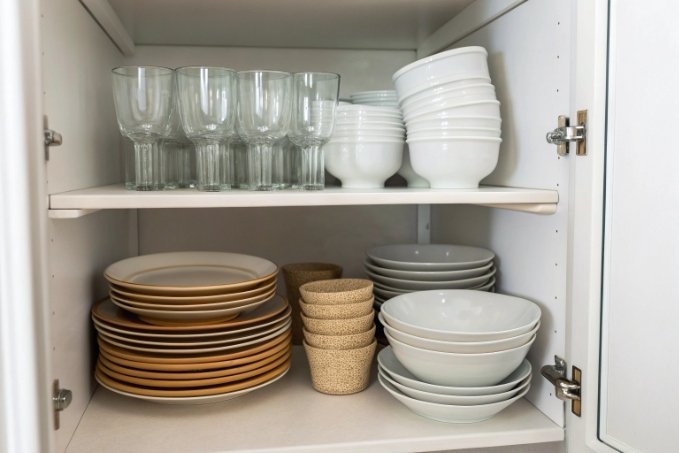
Practical storage habits
- Stack only dishes designed for stacking.
- Place a soft liner or felt separator between nested bowls.
- Store glasses upright, not on their rims, to avoid stress.
- Keep shelves dry—moisture makes pieces stick and then knock loose.
- Do not push stacks too far back where rims can hit the wall.
If you store bakeware with lids, keep the lids separate to avoid pressure points on the edges.
Here is a quick reference:
| Storage tip | Why it matters |
|---|---|
| Use separators between bowls | Prevents tiny rim chips |
| Keep stacks small | Reduces weight pressure |
| Upright storage for glasses | Avoids rim stress and cracking |
| Dry fully before storing | Prevents sticking and sudden slips |
Small chips often appear from stacking, not from use—fixing this habit protects your set.
When should I replace glassware that shows micro-cracks or stress lines?
Even high-quality glass can develop micro-cracks after impacts, thermal shock, or years of use. These weak spots grow, especially during heating or washing.
Replace any item with chips, spider-web lines, star cracks, or rainbow-colored stress patterns under bright light.
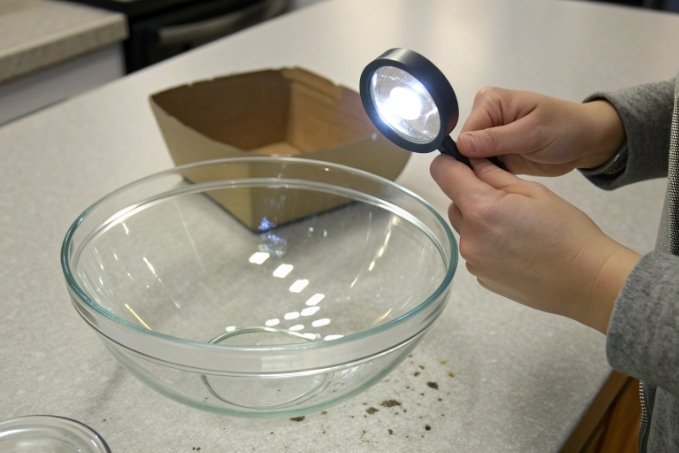
What to look for during inspection
- Rim chips: even tiny chips weaken the entire edge.
- Hairline cracks: usually appear as short white or gray lines.
- Stress patterns: rainbow patches under light suggest uneven tension.
- Star cracks: impact patterns that spread from a single point.
If you use the dish in an oven, microwave, or dishwasher, any of these defects make failure more likely.
A simple inspection checklist:
| Sign of damage | What it means | Action |
|---|---|---|
| Tiny rim chip | Structural weakness | Replace |
| Short white line | Hidden crack | Replace |
| Rainbow stress | Internal tension | Discontinue use |
| Star-shaped impact | Severe structural failure | Discard safely |
Once cracks appear, they cannot be repaired safely. Replacing early prevents sudden breakage during heating.
Conclusion
Clean gently, avoid thermal shock, store with rim protection, and retire any cracked piece early so your glass tableware stays clear, safe, and reliable for daily cooking.






