
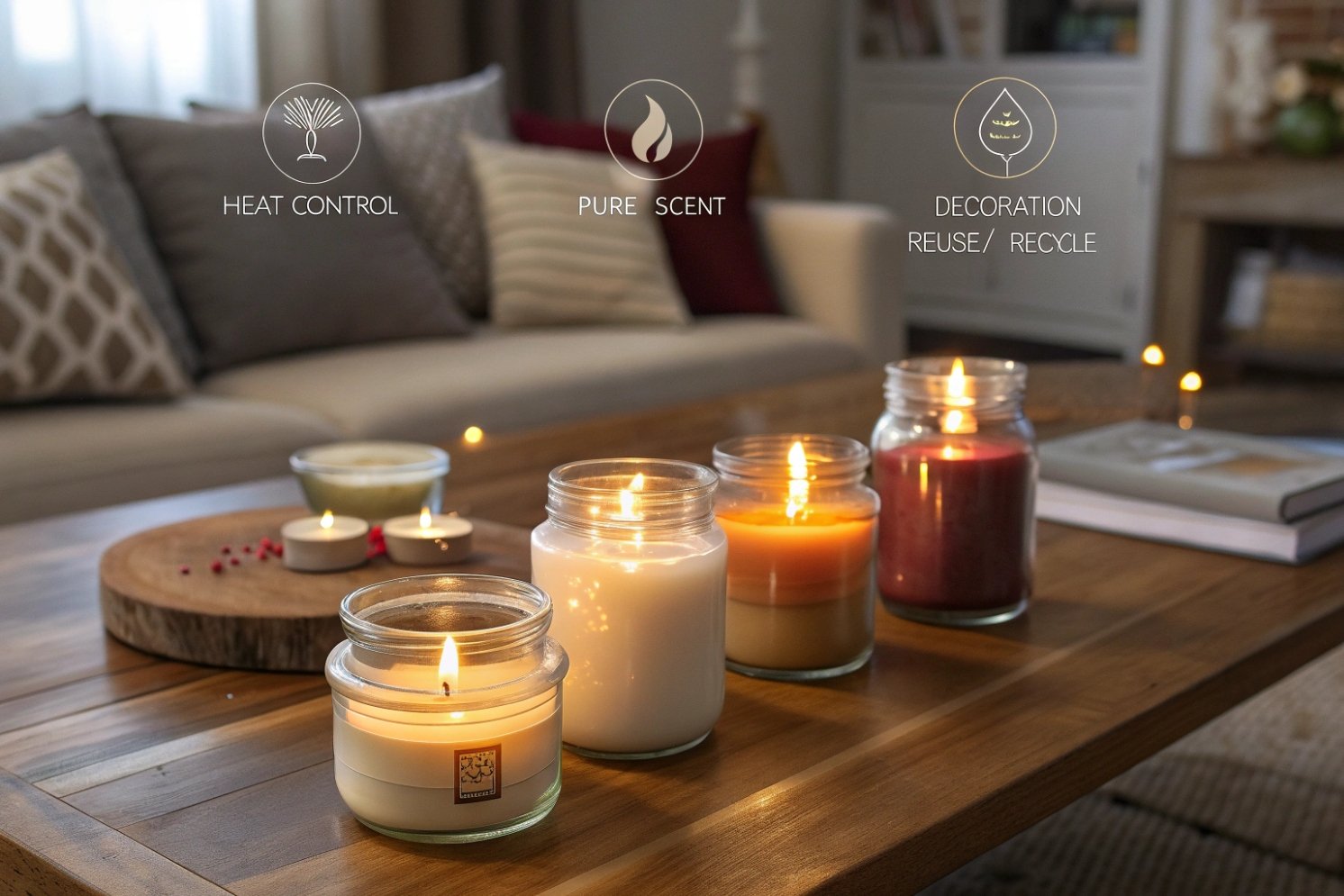
A candle should feel calm and safe. If the container is wrong, heat, wax, and fragrance all behave in ways that nobody wants in a real home. This is why many makers align design and testing with recognized voluntary safety standards for candles 1.
Glass jar candles bring clear benefits: safer heat control, better scent performance, strong shelf appeal through decoration, and a container that users can clean, reuse, or recycle after the last burn.
When the jar is well designed, it does more than hold wax. It keeps the melt pool contained, stabilizes the flame, protects furniture, and carries the brand story. At the same time, glass itself is inert and non-porous, so it helps keep fragrance pure and supports reuse and recycling when the candle is finished.
Do thick-wall jars improve heat containment and user safety at home?
A candle concentrates heat in a small area. If the jar is too thin or unstable, that heat can put stress on glass and surfaces, and users worry about burns or cracks.
Thick-walled glass jars with wide, heavy bases improve safety because they spread heat, resist tipping, protect surfaces from spills, and give users a more stable and predictable burn at home.
How jar design supports safer burning
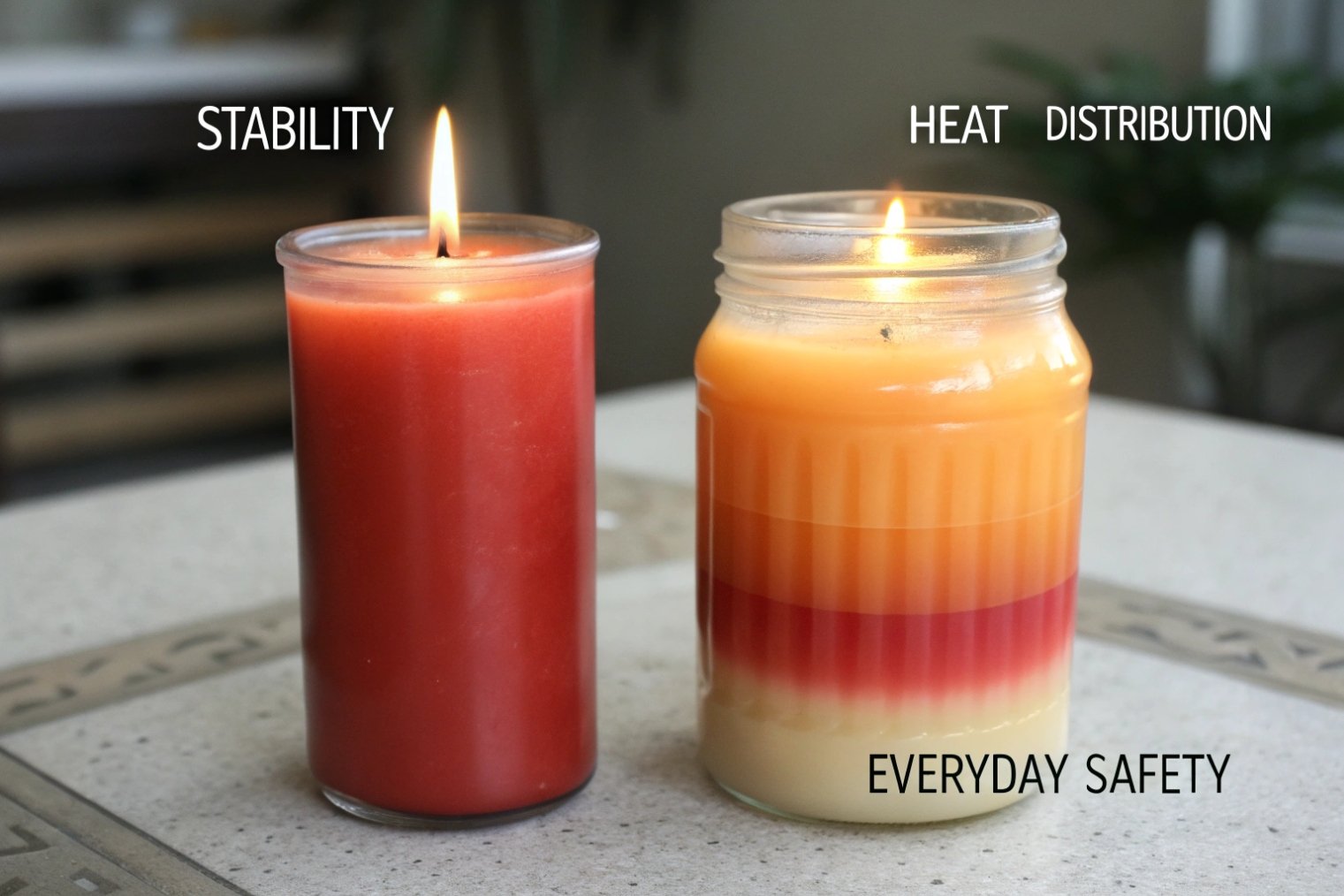
A well-designed glass jar does three big safety jobs. First, it keeps the melt pool contained, so hot wax does not drip over table tops or fabric. Second, it adds weight and a broad base so the candle is less likely to tip if someone bumps the table. Third, it works like a small shield around the flame and helps block drafts. This leads to a steadier flame, less flicker, and a more even burn.
Thick walls act as a heat buffer. They absorb and spread heat from the melt pool instead of letting it concentrate in one thin spot. It does not replace good wick choice and testing, but it gives extra margin in real-world use when people burn candles for hours.
Transparent walls also have a safety benefit. Users can see how deep the melt pool is, if the wick is leaning, or if the flame is getting too close to the glass. That visual feedback helps them know when to stop burning or trim the wick.
Comparing jar builds from a safety angle
Not every glass shape behaves the same way in front of a flame. This simple view helps explain the difference:
| Jar type | Stability | Heat behavior | Safety notes |
|---|---|---|---|
| Thin, tall, narrow jar | Easy to tip | Heat builds in a small area | Needs very careful wick choice and testing |
| Medium wall, tapered decorative | Medium, depends on base | Hot spots at narrow sections | Risk of side overheating near the taper |
| Thick-wall, straight-sided jar | High, wide heavy base | Spreads heat more evenly | Better for everyday home use |
Thick glass is not a magic shield on its own. The wick still must be sized so the flame stays centered and the melt pool never reaches the sidewall. But purpose-made glass designed for container candles (often aligned with the ASTM F2179 glass candle-container specification 2) gives you a safer foundation for consistent performance.
How does glass enhance hot/cold throw and scent preservation in storage?
A candle can look perfect on the shelf but disappoint when lit. Often the problem is not only the fragrance load. The container also shapes how scent moves before and during burning.
Glass jars support both cold and hot throw because they are non-porous, protect fragrance in storage, and help create a steady, well-formed melt pool that releases scent in a controlled way.
Why non-porous glass protects fragrance
Glass does not absorb wax or oils. The inside wall stays smooth and inert. This is very different from some porous or coated materials, which can hold onto fragrance and slowly dull the scent over time. Because glass is non-reactive, it does not add any odor of its own or strip notes from the fragrance blend.
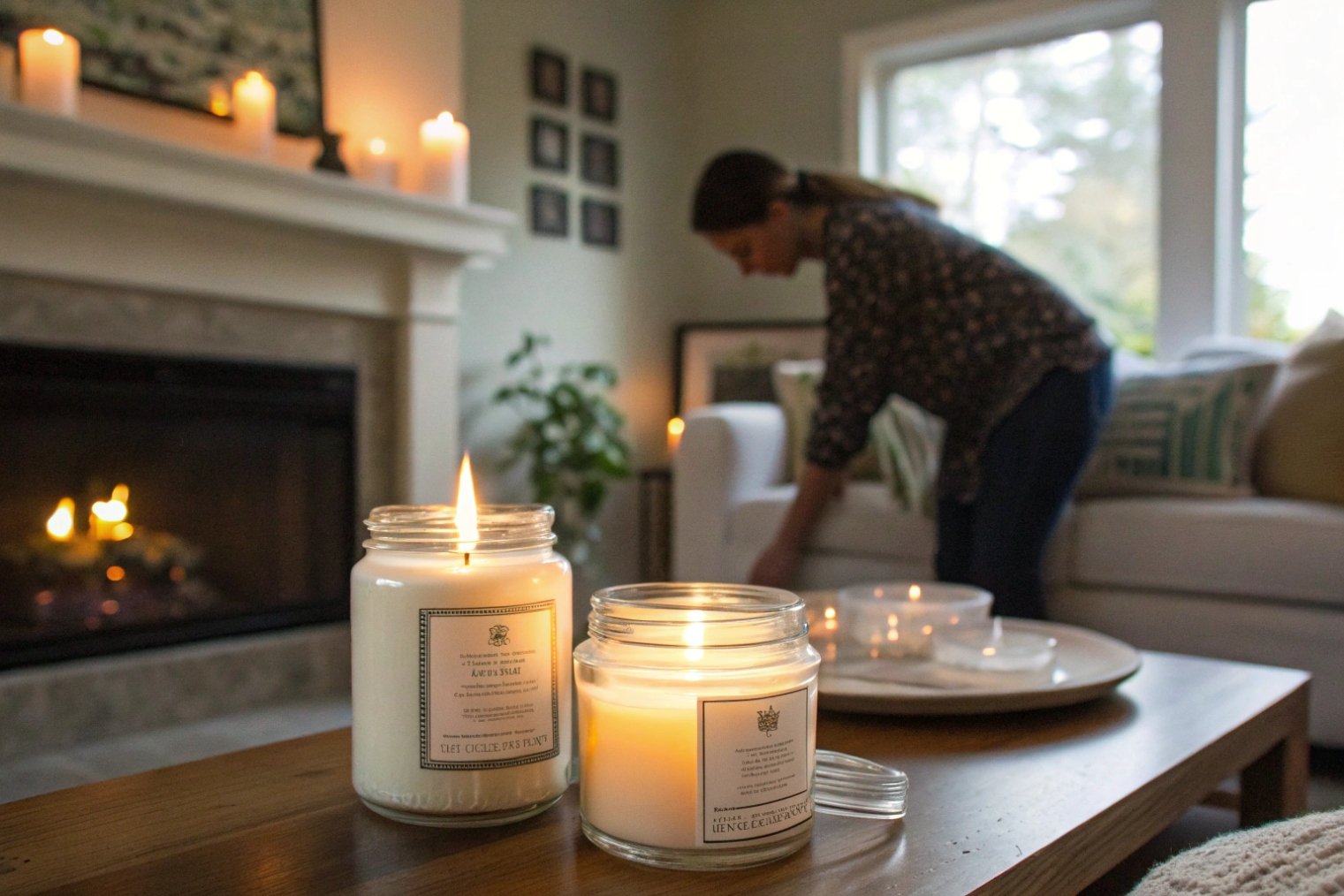
With a lidded jar, the benefits increase. Between burns, the lid helps lock in scent and keep dust out. It reduces fragrance loss into the air during storage or transport. When users open the lid again, they get a stronger cold throw because more fragrance stayed in the wax instead of in the room.
Tinted or frosted glass can also protect light-sensitive fragrance components in storage. When the jar blocks some light, it slows down oxidation and color change in the wax.
How glass shape and heat retention support throw
Once the candle is lit, heat becomes the main factor. Glass holds heat around the melt pool. This helps the wax reach and maintain a good working temperature, which is key for hot throw. A steady, even melt pool means scent is released at a controlled rate, not in short bursts. (If you need a quick refresher on what makers mean by hot throw and cold throw 3, definitions help keep testing notes consistent.)
Here is a simple way to see the link:
| Factor | Effect on cold throw | Effect on hot throw |
|---|---|---|
| Non-porous glass wall | Fragrance stays in wax | Pure scent, no jar odor |
| Tight but removable lid | Stronger scent on opening | Better preservation between burns |
| Heat retention around melt | Less impact | More even melt pool, steadier fragrance |
| Transparent or tinted wall | Users can judge wax condition | Helps adjust burn time for full melt pool |
Because users can see the melt pool through a clear jar, they also learn how long to burn the candle to get a full, edge-to-edge pool without tunneling. That habit alone improves hot throw and helps them feel they are getting full value from every burn.
Which decorations—frosting, decals, hot foil—boost shelf appeal?
On a shelf full of candles, many scents overlap. The jar becomes a silent sales team. Its finish, color, and decoration decide which candle people reach for first.
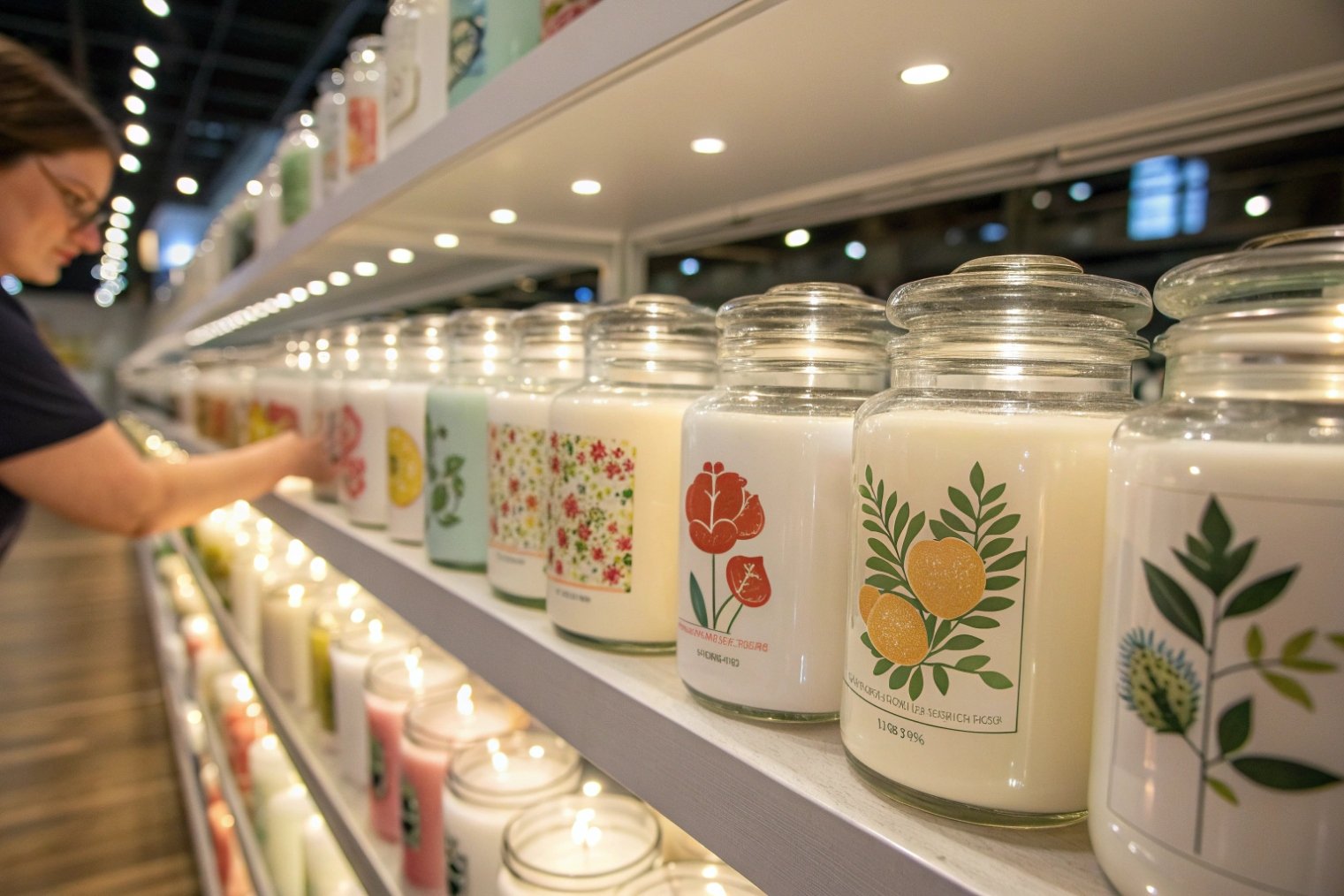
Frosting, decals, and hot foil all lift shelf appeal in different ways: frosting gives a soft and cozy look, decals tell stories with images, and hot foil adds a sharp, premium highlight on the glass.
How decoration shapes the mood and brand message
Glass is a natural canvas. Simple clear walls can show the wax color and flame glow. Frosted glass turns the light into a soft halo and supports calm, spa-like positions. Tinted glass can match fragrance themes, such as deep green for forest notes or amber for warm gourmand blends.
Decals and screen-printed graphics allow detailed artwork. They can show ingredients, illustrations, or seasonal designs. Hot foil stamping adds metallic flashes to logos or borders. People read these details as signals of care and quality, especially when the print is sharp and aligned.
Decoration also helps organize a range. One base jar can serve many fragrances, while color, foil, or label design separates each scent family. This approach controls cost but still gives a rich shelf impact.
Balancing beauty, heat, and recyclability
Decorations must also respect heat around the flame. For safety and performance, coatings and prints should sit on the outside of the jar and be rated for the temperatures a candle jar reaches in normal use. Inside coatings can discolor or release odor when heated.
A quick comparison of common options:
| Decoration type | Visual effect | Cost level | Notes for candles |
|---|---|---|---|
| Frosting / etch | Soft, diffused glow, cozy feel | Low–medium | Hides soot marks better than clear glass |
| Printed decals | Detailed images and stories | Medium | Good for limited editions or gift ranges |
| Hot foil | Metallic highlights, premium look | Medium–high | Use in small areas to protect recyclability |
| Full spray coat | Strong color block, bold identity | Medium–high | Check recyclability rules in target markets |
Labels also play a big role. A well-designed front label and a clear, honest warning label on the base make the product look finished and trustworthy. Many brands reference ASTM F2058 candle fire safety labeling 4 and borrow plain-language reminders from NFPA candle safety tips 5 so customers know exactly how to burn the candle responsibly.
Can jars be cleaned for reuse or recycled after end of life?
When the wax is gone, the story of the jar is not over. Customers now expect more than a one-time use. They want either a second life at home or a clear path to recycling.
Glass jar candles support reuse and recycling because glass is easy to clean, non-porous, and widely recyclable, so the container does not have to become waste once the wick reaches the base.
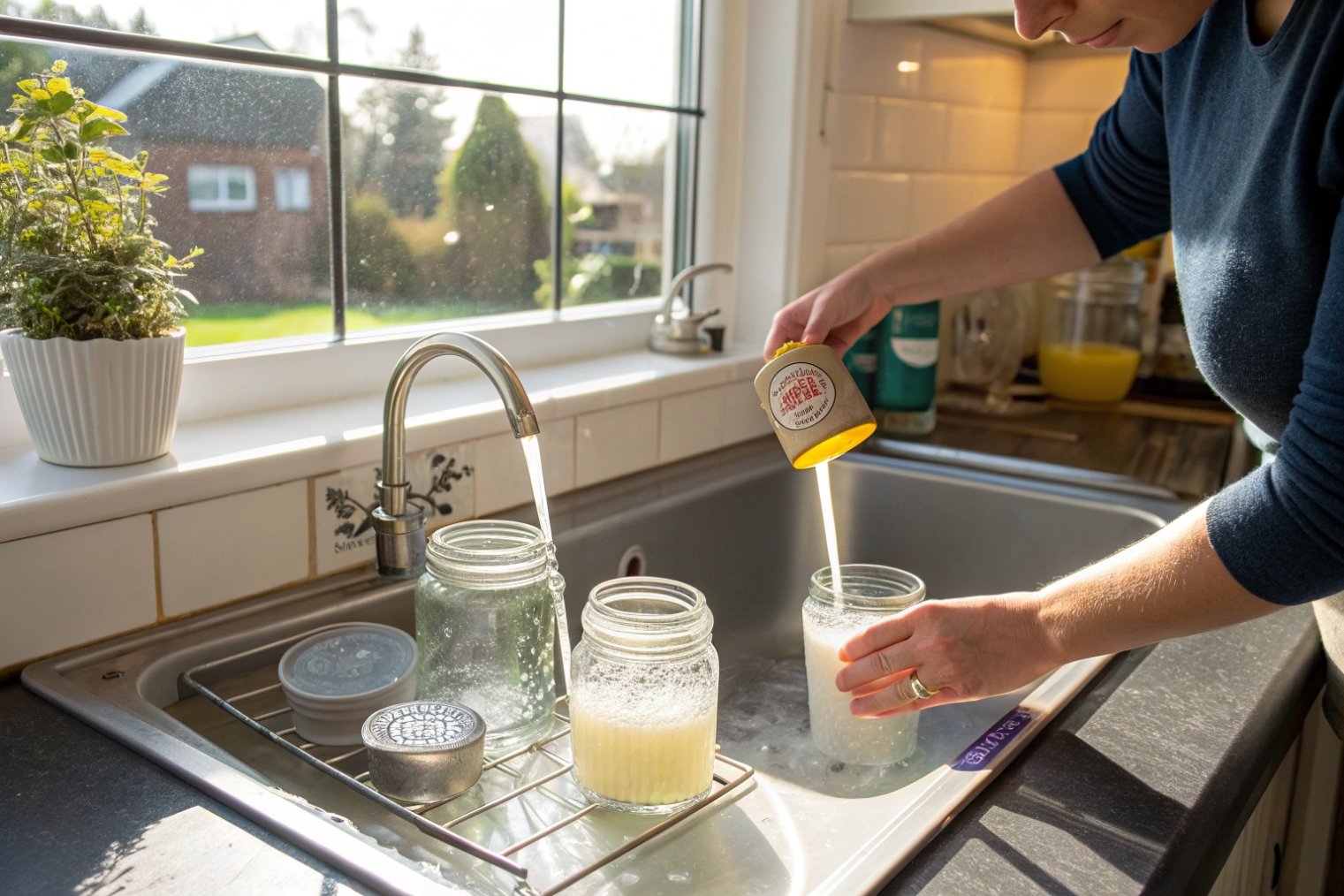
Simple ways to reuse glass jar candle containers
Because glass does not absorb wax or fragrance, it cleans up well. Once the candle is finished, users can remove leftover wax by gentle methods, such as warming the jar slightly and wiping, or using a freezer method to pop out remaining wax. Then they wash with warm soapy water.
After cleaning, jars can become:
- Storage for small items like cotton pads, matches, or craft supplies
- Planters for small succulents or herbs
- Desk organizers for pens and tools
- Refill containers for new wax, if the glass and original design support another candle
Heavy bases and nice finishes encourage this behavior. People are more likely to keep a jar that feels solid and looks good, even without the candle.
Recycling glass jars in a circular system
If users do not want to reuse the jar, recycling is the next step. As many recycling programs note, glass can be recycled endlessly 6. It can be melted and turned into new containers, often with a high share of recycled cullet in the batch.
To support this:
- Keep decorations on the outside and avoid heavy metal coatings
- Use labels and adhesives that come off cleanly
- Avoid mixed-material inserts that are hard to separate
This simple view can help:
| End-of-life path | User effort needed | Environmental benefit | Brand opportunity |
|---|---|---|---|
| Reuse at home | Cleaning and repurposing | Extends life of container, zero extra waste | Encourages emotional bond with the product |
| Brand refill | Return or refill system | Less new glass per burn | Builds loyalty and repeat purchase behavior |
| Local recycling | Rinse and bin separation | Glass returns as cullet for new products | Supports clear sustainability messaging |
When brands build refill or take-back models around robust candle vessels, they are essentially applying returnable reusable packaging systems 7 to fragrance-at-home categories. When the jar design, decoration, and labeling all support reuse or recycling, it sends a strong signal: the brand thought about the full life of the product, not just the first burn. That aligns safety, beauty, and responsibility in one simple glass container.
Conclusion
Glass jar candles combine safer, more controlled burning with strong scent performance, rich decoration options, and clear reuse or recycling paths, so they work well for both everyday users and serious candle brands.
Footnotes
-
CPSC overview of voluntary candle standards that reduce fire and container hazards. ↩︎ ↩
-
Defines performance expectations for glass containers intended for filled candles, including thermal shock considerations. ↩︎ ↩
-
Clear definitions of hot throw, cold throw, tunneling, and related testing terms used by candle makers. ↩︎ ↩
-
Standard for how fire-safety warnings should appear on candle units of sale. ↩︎ ↩
-
Practical home guidance for safer candle burning and placement. ↩︎ ↩
-
Explains why glass recycling preserves quality and how cullet supports new container production. ↩︎ ↩
-
Overview of returnable packaging loops: return, clean, and refill models that support circular programs. ↩︎ ↩






