
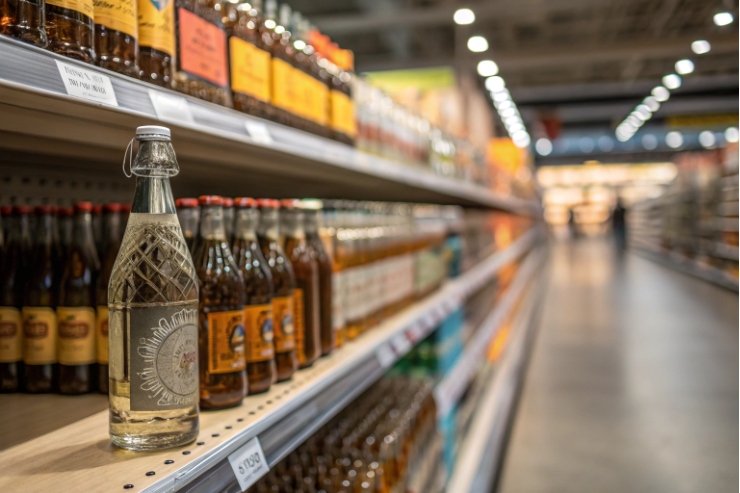
Many drinks and cosmetics look similar on the shelf, so generic bottles slowly erase all the hard work you put into your brand.
Custom glass bottles create instant shelf recognition, add functional protection, support anti-counterfeit features, and improve line efficiency, so the package becomes a real asset instead of a commodity.
When the bottle design matches the story, the filling line, and the logistics, you sell more, waste less, and build a brand image that is very hard for competitors to copy.
Can proprietary shapes and embossing lift brand recognition?
If your bottle silhouette disappears in a crowd, your label must work ten times harder just to get noticed.
Proprietary glass shapes, custom shoulders, and embossing turn the whole bottle into a 3D logo, so shoppers recognize your brand even from a distance or without reading the label.
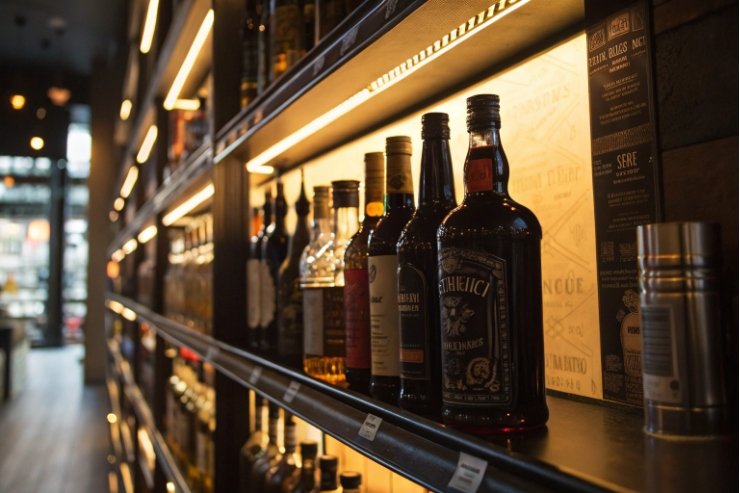
On busy shelves, labels get covered by price tags, shelf talkers, or other products. A unique glass profile still shows:
- A special shoulder line or neck curve.
- A base profile or punt that feels different in the hand.
- Embossed brand names and symbols in glass 1 customers can feel with their fingers.
So even in low light or behind other bottles, people can still “read” the brand by shape alone. This also helps in bars and restaurants, where the back-bar is crowded and only the silhouette and neck area are visible.
Premium cues that support higher price points
Custom glass also raises the perceived value of what is inside:
- A heavy base and tall, slim body say “premium spirit.”
- A soft, round wine bottle promises smooth, easy drinking.
- A strong, straight energy drink bottle communicates power.
These visual and tactile cues allow you to defend higher price points. Shoppers often assume that a distinctive bottle means more care in the liquid as well.
Making your bottle harder to copy
Embossing and proprietary geometry are basically baked-in brand assets:
- Embossed brand names and symbols stay visible even if labels are changed.
- Special mold details, such as unique ribs or textures, are harder and more costly to copy.
- Matching a full custom silhouette requires real mold investment, which discourages cheap imitators.
A simple way to see it:
| Feature | Stock bottle | Custom bottle |
|---|---|---|
| Silhouette | Generic, easy to copy | Ownable, part of brand identity |
| Embossing | None or generic | Brand name, logo, or pattern in glass |
| Recognition with label hidden | Low | High |
With the right design, your bottle becomes a visual shortcut. The shopper sees the shape, and the brand name appears in their mind before they read a single word.
Do tailored finishes improve shelf impact and grip?
A bottle that looks premium but slips in the hand or shows scratches after shipping will not impress anyone.
Custom surface finishes—frosting, coatings, textures, and color—boost shelf impact, improve grip, and protect the glass surface, as long as they are engineered to work with real supply-chain conditions.
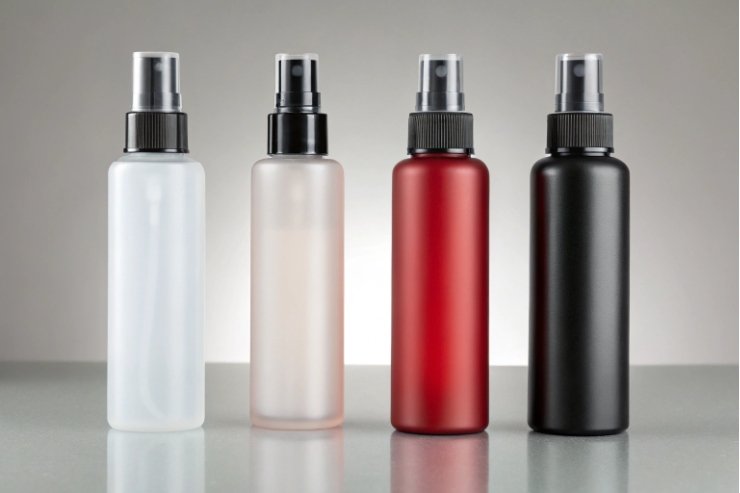
Visual finishes that match the product story
You can tune glass and coatings to support different brand messages:
- A frosted (acid-etched) glass finish 2 feels soft and high-end, perfect for skincare and spirits.
- Matte spray coatings give a modern, minimal look with controlled reflections.
- Tinted and gradient colors highlight the liquid and help manage light exposure.
- High-gloss lacquers or metallic effects create a bold luxury presence.
Planned “decoration zones” (flat panels, clear windows, defined emboss fields) keep labels, screen print, and coatings aligned, so the bottle does not look messy once everything is assembled.
Functional textures for grip and handling
Finishes are not only for beauty; they also change how the bottle behaves in wet or oily hands:
- Light micro-textures on the body or shoulder improve grip without looking rough.
- Raised emboss patterns double as tactile grip zones.
- Selective frosting or sandblasting creates matte grip bands while leaving clear windows for product visibility.
This is useful for:
- Shower products and bath oils.
- Bar use where condensation forms on cold bottles.
- Large-format spirits and wine where weight is higher.
Protecting bottles from scuffs and line damage
Custom finishes can also extend cosmetic life:
- Extra cold-end coating or clear protective layers reduce scuffs on shoulder and label panels.
- Smart geometry avoids sharp corners and weak points where coatings chip easily.
- UV-resistant clear coats help both the liquid and the coating survive bright retail lighting.
Put simply:
| Design focus | Result on shelf | Result in hand |
|---|---|---|
| Color + gloss | Strong visual impact | Clear style and positioning |
| Texture | Unique, recognizable look | Better grip, fewer drops |
| Protection | Fewer visible scratches and scuffs | Cleaner appearance through full life |
By thinking of finishes as both aesthetic and functional, you get a bottle that looks premium in photos and still looks premium after transport, filling, and real-world use.
How can anti-counterfeit features be built into glass?
If your product becomes successful, copies will usually show up faster than you expect.
Custom glass lets you hide and show anti-counterfeit features inside the shape, embossing, base design, and coding, so fake producers must spend serious money to imitate your packaging.
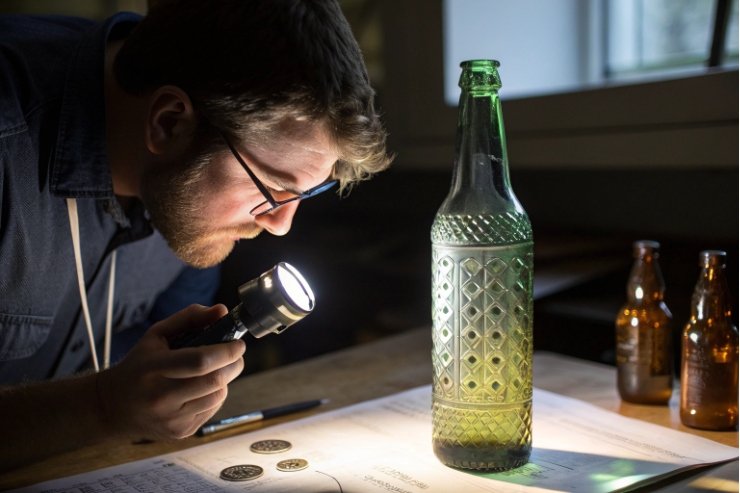
Hard-to-copy structural details
Fake producers can copy a label in a few days. Matching a complex glass shape is much harder:
- Unique base geometry: special punts, ribs, or step patterns that require precise molds.
- Multi-level embossing: sharp, small details that low-cost molds struggle to reproduce cleanly.
- Asymmetric features: off-center logos or angled panels that break simple symmetry.
You can also use coded embossing, such as:
- Small characters or numbers in the punt.
- Mold or date codes that your team knows how to read.
- Micro-marks near the heel or shoulder that are easy for you to check, but hard to see in photos.
Integrated with closures and labels
Glass-based features become even stronger when combined with closure and label design:
- A custom neck finish or collar geometry that only fits your closure style.
- Tamper-evident bands and shrink sleeves that line up with specific emboss marks.
- Holographic or special inks that sit in exact windows of the glass design.
This means a counterfeiter must copy:
- The glass shape.
- The neck finish and closure.
- The label and any special inks.
That level of effort and cost often makes copying less attractive.
Digital and traceability options
Custom glass also makes it easier to add traceability:
- Defined flat areas for data-matrix codes, laser marks, or QR codes.
- Stable positions for mold codes and plant identifiers in the base.
- Space for invisible UV inks or machine-readable marks.
For a standards-based approach to evaluating authentication features, many teams benchmark against ISO 12931 performance criteria for authentication solutions 3.
If you plan to serialize at unit level, the GS1 DataMatrix guideline 4 helps align symbol rules, sizing, and data structure with scanners and trading partners.
Combined with a tracking database, you can trace where a suspicious bottle should have been filled, or if it was ever produced in your plant at all.
A short view of anti-counterfeit options:
| Feature type | Example in glass | Benefit |
|---|---|---|
| Structural | Special punt, ribs, shoulder cuts | High copying cost |
| Emboss / deboss | Fine logos, micro text | Simple field check, low false match |
| Coding | Mold/date codes, laser marks | Traceability and batch control |
| System-level | Shape + closure + label integration | Full pack is very hard to fake |
Well-planned glass design does not stop every fake, but it makes your package a much harder target compared with stock bottles plus simple labels.
Will custom engineering boost line efficiency and ROI?
Some teams still worry that “custom” means slow, expensive, and hard to run. In reality, good engineering often does the opposite.
Custom bottles can be engineered around your fillers, cappers, conveyors, pallets, and cartons, so you get higher speeds, fewer line stops, lower damage, and better ROI on both packaging and equipment.
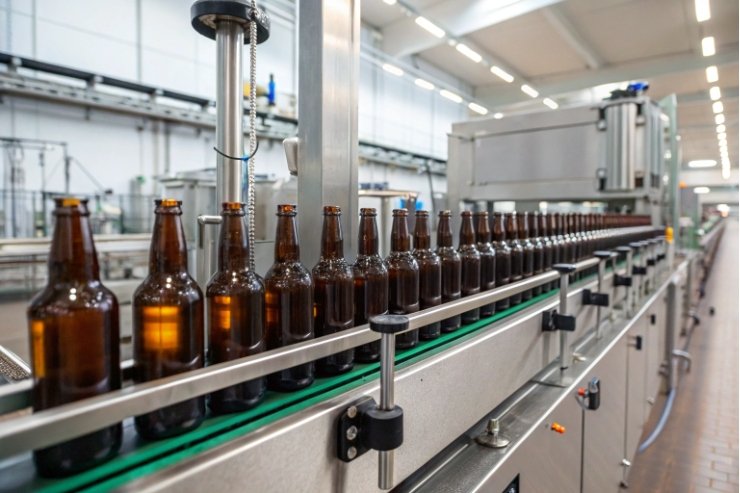
Designed to fit your existing equipment
Standard bottles may only partly match your line. Custom work allows you to tune:
- Neck finish and support ring geometry 5 for faster transfer through rinsers and fillers.
- Body diameter and height to suit existing labelers, rinsers, and inspection gates.
- Shoulder and label panel geometry so labels wrap cleanly and inspection cameras see what they need.
By locking these dimensions to your real machines, you can often increase rated speed without new equipment. You also cut down on micro-stops from misapplied labels, jammed guides, or unstable transfers.
Smarter weight and glass distribution
Custom engineering does not always mean heavier bottles. With the right forming process (P&B or NNPB) and container design study analysis against strength criteria 6 support, you can:
- Move glass from low-stress regions to the heel and shoulder, where impact loads are higher.
- Keep burst pressure and top-load strength, while dropping total weight.
- Improve thermal shock performance in hot-fill or pasteurization.
That leads to:
- Lower glass cost per unit.
- Lower transport cost per pallet.
- Smaller CO₂ footprint per bottle.
The key is that wall thickness and punt geometry are designed with your product, pressure, and process, not copied from an old standard.
Better logistics, fewer breakages
Custom designs also help outside the filling hall:
- Footprints that nest efficiently in cartons and pallets reduce empty space and freight cost.
- Stronger standing ring and base design reduce breakage on rough roads.
- Bottles designed for returnable pools can use shapes and label areas that survive many wash cycles.
Here is how custom vs stock can look in simple ROI terms:
| Area | Stock bottle risk | Custom bottle opportunity |
|---|---|---|
| Line speed | Limited by marginal fit | Optimized shape → higher stable throughput |
| Scrap / damage | Unknown glass distribution | Engineered walls → lower break and scrap |
| Freight | Generic carton fit | Tuned footprint → more units per pallet |
| Brand ROI | Easy to copy, low recall | Ownable pack → stronger long-term value |
When you sum all these factors—less glass, fewer damages, faster lines, stronger brand—the extra cost of custom molds is often recovered much faster than people expect. For a real-world example, see this wine bottle lightweighting case study with measured savings 7.
Conclusion
Custom glass bottles turn packaging into a long-term brand asset, mixing unique design with better protection, smarter logistics, and real gains in line efficiency and return on investment.
Footnotes
-
Shows how permanent embossing on glass creates tactile branding and makes bottles harder to imitate. ↩︎ ↩
-
Explains how frosting/etching creates a matte look and how it changes surface feel and appearance. ↩︎ ↩
-
International standard describing how to evaluate authentication features for anti-counterfeiting performance. ↩︎ ↩
-
Official guide for GS1 DataMatrix symbol rules, sizing, and data encoding for traceability. ↩︎ ↩
-
Technical overview of bottle finishes and how neck/finish geometry is formed and controlled in production. ↩︎ ↩
-
Explains how container designs are analyzed against glass strength criteria to predict performance and risk areas. ↩︎ ↩
-
Case study showing how lightweighting reduced bottle weight and delivered documented cost savings. ↩︎ ↩






