
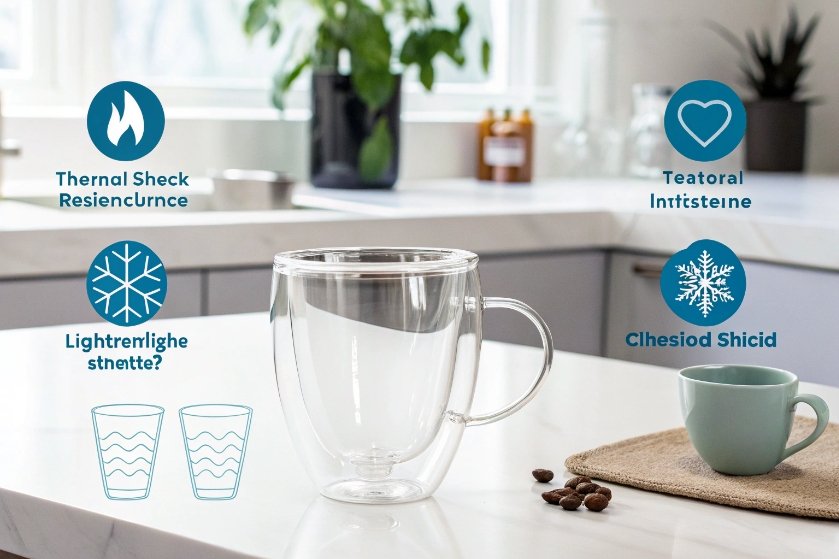
When customers ask why some cups cost more than others, they usually hold up a thin, clear borosilicate cup and say, “Is this really worth it?” The short answer is yes.
Borosilicate glass cups offer better thermal shock resistance, lighter yet durable walls, high chemical inertness, and clean flavor, which makes them ideal for cafés, labs, and serious home baristas.
From the factory side, borosilicate is not magic, but it is a very well-behaved material. Many daily-use products rely on borosilicate glass 3.3 1 as a reference for heat- and chemical-resistant performance. It expands less when heated, it resists sudden hot–cold changes, and it stays neutral with most drinks and chemicals. For people who push cups harder than normal users do, this extra stability makes a big difference.
How does borosilicate glass improve thermal-shock resistance for hot–cold use?
In cafés and in homes, people pour boiling water into cold cups, then drop those same cups into a cold sink. This is where standard soda-lime glass often fails.
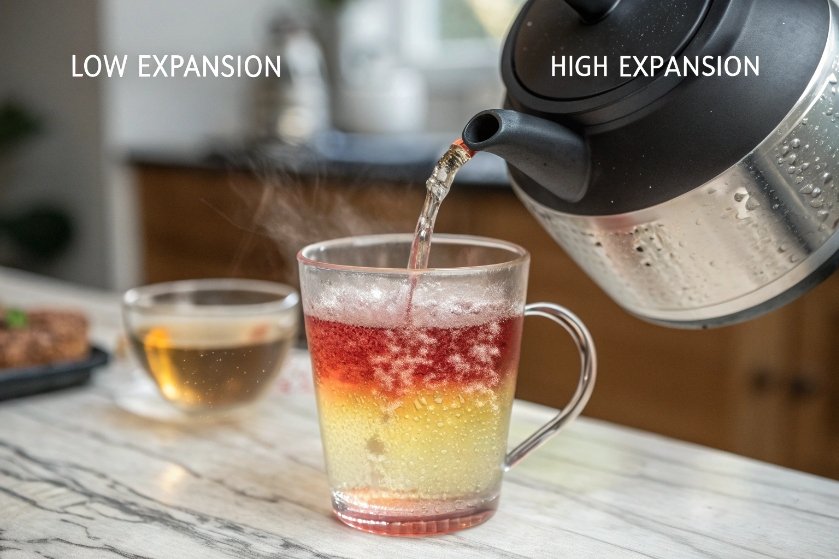
Borosilicate improves thermal-shock resistance because its coefficient of thermal expansion is much lower, so temperature changes create less stress in the glass and the cup is less likely to crack.
Why borosilicate survives the hot–cold torture
Thermal shock happens when one part of the glass changes temperature faster than another part. The hot side wants to expand, the cold side wants to stay the same size, and the stress between them pulls the glass apart.
1. Low thermal expansion = less internal stress
Borosilicate glass has a lower thermal expansion than soda-lime glass. That means, for the same temperature jump, it moves less. When a barista pours near-boiling water into a room-temperature cup, the inner wall heats up first. In borosilicate, the size change in that inner wall is smaller, so the stress between inner and outer surface stays lower.
If you want a deeper materials explanation, this thermal shock lesson for glass and ceramics 2 shows why lower expansion helps. And if you want the “why” behind the numbers, linear thermal expansion coefficients 3 explain how materials grow and shrink with temperature.
This does not mean borosilicate is unbreakable, but the safe window is much wider. A typical borosilicate cup can handle fast changes from iced to hot and back again in daily use.
2. Wider working temperature range
Borosilicate also stays stable over a wider temperature range. It handles freezer temperatures and boiling water better than standard soda-lime. Many designs are safe for microwave, dishwasher, and even moderate oven use when labels confirm this.
So one cup can move from iced coffee, to hot tea, to a quick reheat in the microwave, without a high risk of thermal fracture. This flexibility is a big reason why cafés like borosilicate for tea pots, pour-over servers, and double-wall cups.
3. Less risk from everyday abuse
In real life, people do not “pre-warm” cups the right way. A glass may sit on a metal counter under an air conditioner, then meet water just off the boil. With soda-lime glass, this rule-breaking use often leads to tiny cracks or rough edges over time. Borosilicate tolerates these habits better.
The difference is clear when we compare the two:
| Feature | Soda-lime glass cup | Borosilicate glass cup |
|---|---|---|
| Thermal expansion | Higher | Lower |
| Thermal shock resistance | Moderate, narrow safe range | Good, wide safe range |
| Typical safe hot–cold change | Needs more care | Handles stronger hot–cold swings in daily use |
| Common issues | Cracks from sudden heat or cold | More resistant, failures usually from serious abuse |
For users who work with boiling water all day, the lower stress in borosilicate is the most important hidden benefit.
Is borosilicate lighter yet durable compared with soda-lime?
When people first hold a borosilicate cup, they often say, “It feels too light. Is it fragile?” This is a natural first reaction, because many cheap glasses feel heavy.
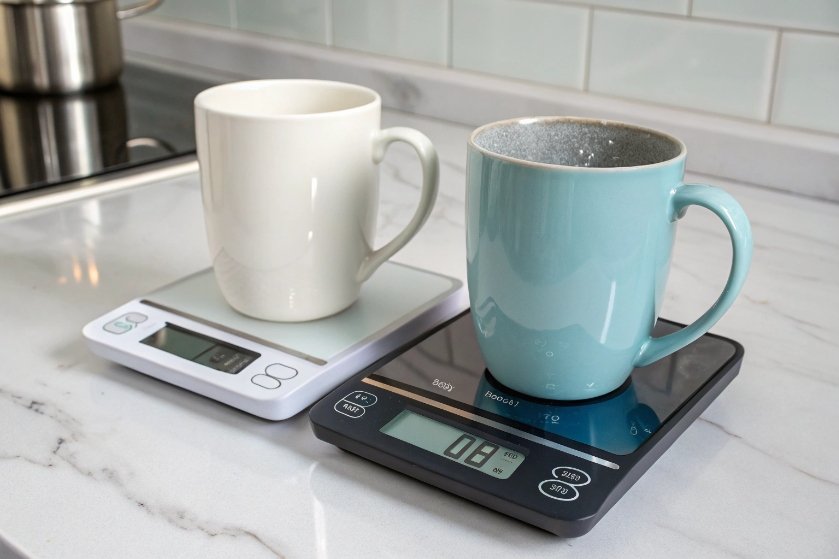
Borosilicate is often lighter at the same size because the walls can be thinner, yet it still offers good durability in normal use when the design and process are correct.
How borosilicate balances weight and strength
Borosilicate itself is not some kind of steel. It is still glass and still brittle. But its properties allow designers to reduce thickness while keeping practical strength.
1. Thinner walls with stable behavior
Because borosilicate handles temperature gradients better, manufacturers are not forced to design thick walls just to “protect” the glass from thermal shock. This opens design freedom. Cups can be slimmer, lighter, and more refined.
A thin wall transfers less heat from the drink to the outside air, which helps in two ways. For hot drinks, lips feel less sudden heat against the rim. For cold drinks, the outside warms up faster, so hands stay more comfortable. In double-wall versions, air between layers adds even more insulation.
2. Practical durability in cafés and homes
In daily use, two things decide if a cup survives: the glass itself and how people handle it. Borosilicate cups resist many micro-cracks that come from rapid temperature change. They also have good hardness, so they resist light scratching and rubbing with cutlery.
Of course, if a cup is dropped on a hard floor, both soda-lime and borosilicate can break. The benefit of borosilicate is not magic impact strength. The benefit is that normal use with hot and cold drinks causes less slow damage over time. This means fewer surprise cracks and lower replacement rates for operators who use them properly.
3. Weight, comfort, and shipping
Lighter cups feel different in the hand. Many specialty coffee drinkers enjoy this. Cafés also notice lower shipping weight and easier handling on trays. For large orders, weight reduction at cup level becomes meaningful at pallet level.
We can summarize the weight–durability balance like this:
| Aspect | Soda-lime glass | Borosilicate glass |
|---|---|---|
| Typical wall thickness | Medium to thick | Thin to medium |
| Hand feel | Heavier, more “solid” | Lighter, more “refined” |
| Thermal durability | Sensitive to strong hot–cold shifts | More tolerant of hot–cold changes |
| Impact durability | Similar in many use cases | Similar; design and thickness still important |
| Double-wall option | Less common | Very common and effective |
So yes, borosilicate cups are often lighter, yet still durable enough for cafés and home baristas who use them with care.
Does borosilicate offer better chemical inertness and flavor purity?
For tea and coffee people, taste is everything. For labs, purity is everything. Both groups share the same question: “Will the cup affect what is inside?”
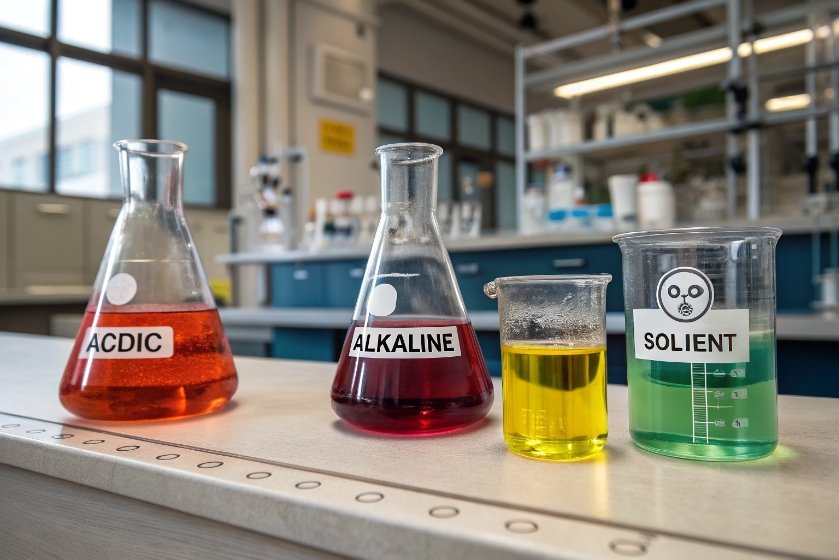
Borosilicate glass is very chemically inert and nonporous, so it does not leach, stain, or hold odors easily, and it preserves flavor and sample purity better than many other materials.
Clean glass, clean taste, and safe contact
Glass in general is already one of the safest contact materials. Borosilicate pushes this to a higher level for many applications.
1. Chemical resistance and low leaching
Borosilicate resists attack from acids, alkalis, and many solvents. This is why lab standards often highlight DURAN® borosilicate glass chemical durability 4. With normal food and drink use, the glass stays stable. It does not release unwanted ions into the beverage, even with hot and acidic drinks like lemon tea or espresso.
There is no BPA or plasticizer in the glass, because it is a pure inorganic network. For users who want a plastic-free contact surface, borosilicate is a simple choice.
2. Nonporous surface and easy cleaning
The glass surface is smooth and nonporous. It does not soak up oils or pigments the way some plastics and ceramic glazes can. Many stains from tea or coffee rinse away with normal washing, especially when users avoid abrasive pads.
Because the surface is smooth, residue buildup is lower. There are fewer microscopic niches for bacteria to hide. This makes hygiene easier to maintain in busy service environments. For brands that sell into regulated markets, it also helps to understand the broader EU food contact materials framework 5.
3. Flavor purity for coffee and tea
Serious coffee and tea drinkers are very sensitive to off-notes. Plastic cups can sometimes hold old aromas or give a slight smell when hot water hits them. Metal cups can give a metallic note if not well coated.
With borosilicate, what people taste is the drink, not the cup. This is important for cupping sessions, tastings, and any context where the same cup is used for different drinks across the day.
We can compare contact properties like this:
| Property | Plastic cup | Soda-lime glass cup | Borosilicate glass cup |
|---|---|---|---|
| Chemical inertness | Medium, depends on type | High | Very high |
| Risk of leaching | Possible for some plastics | Very low | Very low |
| Odor retention | Can retain smells | Low | Very low |
| Stain resistance | Medium | High | Very high |
| Suitability for lab use | Limited | Used in some cases | Standard for many lab applications |
In short, borosilicate does not make drinks taste better by itself. It simply stays out of the way and lets the drink show its true character.
Where do cafés, labs, and home baristas gain the most from it?
Different users push cups in different ways. A busy café, a chemistry lab, and a home barista have very different workflows, but borosilicate solves core problems for all of them.
Cafés gain from thermal stability and presentation, labs gain from chemical resistance and dimensional stability, and home baristas gain from durability, clean taste, and stylish double-wall designs.
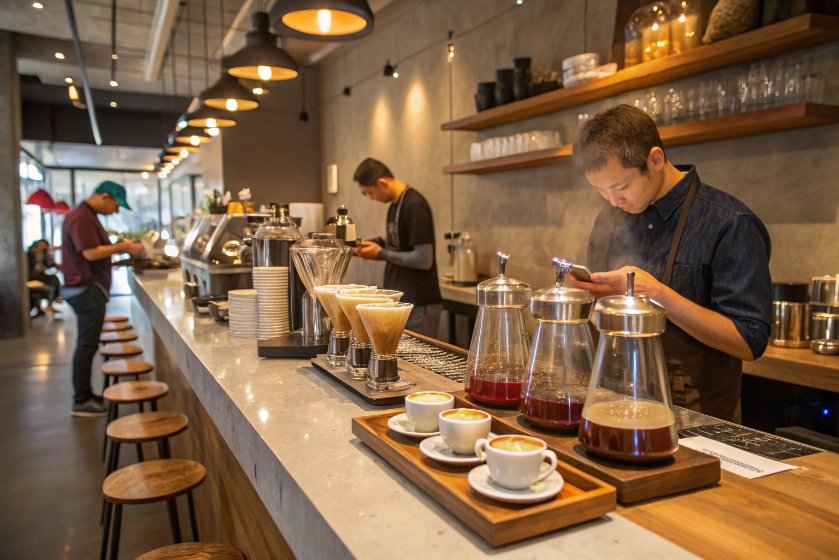
Real-world value in different environments
Instead of looking only at technical data, it helps to see how borosilicate behaves in daily work.
1. In cafés and restaurants
Cafés use borosilicate for tea pots, servers, and clear cups that show latte art, layered drinks, or colorful infusions. The bar team moves fast. Cups shift from hot rinse water to cooler counters and back to hot liquids. Borosilicate reduces breakage from these quick changes.
Double-wall cups keep espresso warm without burning fingers. For iced drinks, they reduce condensation, so tables and coasters stay drier. If you want a simple engineering view of why it works, this note on double-wall insulation and heat transfer 6 explains the “air gap” effect.
2. In laboratories and technical environments
Labs rely on borosilicate for beakers, flasks, and measuring cylinders. Here the key is not looks, but reliability. The glass must resist aggressive chemicals and repeated heating and cooling. Low thermal expansion helps keep dimensions stable, so stoppers and lids fit well over a range of temperatures.
If you want a classic example of why borosilicate became a go-to for thermal performance, Corning’s material story behind PYREX® product lines 7 is a useful reference point.
3. For home baristas and tea lovers
At home, users want tools that look good and feel easy to live with. Borosilicate cups are light, clear, and modern. They move from kettle to table to dishwasher without drama when used correctly.
Flavor-sensitive users enjoy the neutral character of glass. There is no plastic taste and no old coffee smell stuck in the wall. For people who already invest in good beans, careful brewing, and filtered water, using a neutral cup is a natural next step.
4. Summary of gains by user type
| User type | Main gains from borosilicate cups |
|---|---|
| Cafés | Lower thermal breakage, better drink presentation, double-wall comfort |
| Restaurants | Stable hot–cold performance, clean look, easy hygiene |
| Labs | Chemical resistance, thermal stability, reliable dimensions |
| Home baristas | Neutral taste, lightweight feel, stylish design, good insulation |
| Tea lovers | Visual enjoyment of infusions, safe hot–cold use, stain resistance |
Different users tell different stories, but behind them are the same core properties of borosilicate: low expansion, high chemical stability, and a clean, clear surface.
Conclusion
Borosilicate glass cups cost more than basic glass, but they repay that difference with better thermal shock resistance, lighter and durable designs, clean flavor, and reliable performance for cafés, labs, and home users.
Footnotes
-
ISO reference page for borosilicate glass 3.3 properties used widely in heat/chemical-resistant glassware. ↩ ↩
-
Explains thermal shock and why borosilicate handles rapid hot–cold changes better than soda-lime glass. ↩ ↩
-
Practical tables and explanation of thermal expansion, useful for understanding why “low CTE” matters. ↩ ↩
-
Manufacturer overview of borosilicate glass durability, including hydrolytic resistance and thermal shock resistance. ↩ ↩
-
EU framework on general safety/inertness principles for materials intended to contact food and beverages. ↩ ↩
-
Technical explanation of how double-wall designs reduce heat transfer and keep outer surfaces cooler. ↩ ↩
-
Corning’s history on borosilicate glass performance and why it became important for cookware and labware. ↩ ↩






