
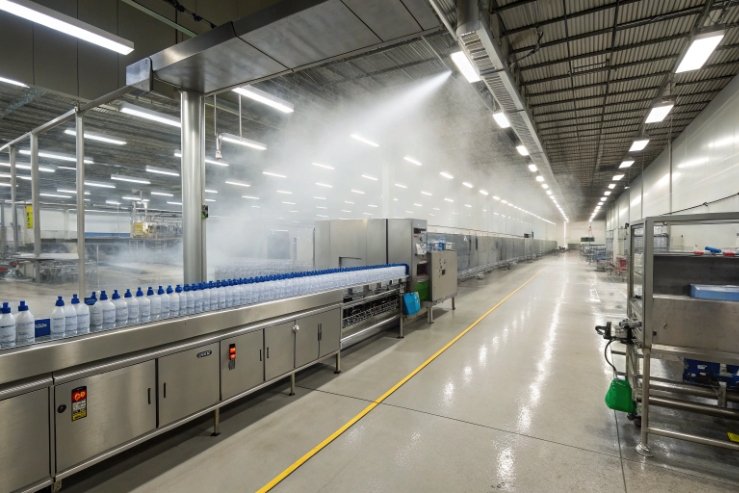
Wet rinsing looks harmless, but it can hide costs and create defects. Water, heat, and drying steps can turn into downtime, spots, and scuffs.
Rinseless glass bottle lines reduce water, energy, and maintenance while keeping containers dry before filling. With ionized-air or depyro-style systems, plants can hit strict particle and hygiene targets and cut label defects, if validation is done correctly.
A no-wash line is not “no hygiene.” It is a different hygiene strategy. The line shifts effort from water washing to controlled bottle supply, dry de-dusting, and repeatable validations. When that system is built right, the whole plant feels simpler.
Do depyro and ionized-air systems cut water and energy use?
Water rinsers feel standard because they have been around forever. But they bring hidden utilities and hidden risk. The bills show up in water, steam, drains, filters, and downtime.
Yes. Ionized-air rinsing removes dust with dry, filtered air, so water use can drop to near zero for the container-clean step. Depyro (dry heat) goes further for pharma-grade needs, but it uses heat instead of water and is not meant for every beverage line.
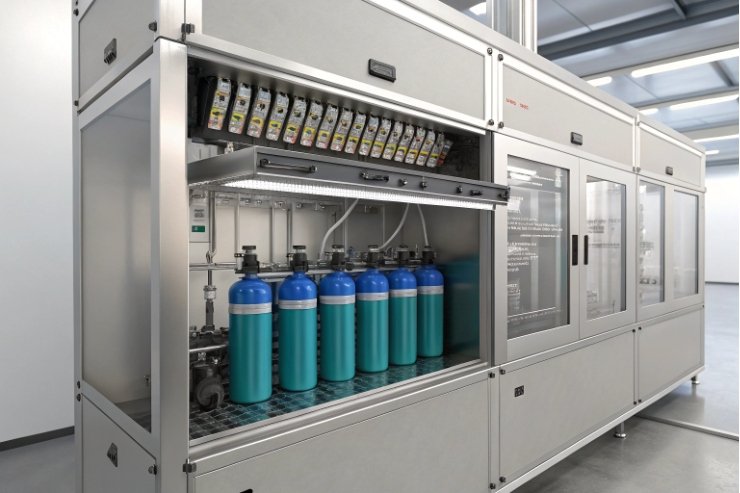
What “rinseless” usually means in practice
Most rinseless lines are built for new, one-way glass that arrives clean and protected (shrink wrap, layer pads, clean pallets). The “cleaning” step on the line is mainly:
- remove glass dust and paper fibers
- remove insects or stray debris
- neutralize static so dust releases
- keep the container dry right up to the filler
Ionized-air systems 1 do this well because static is a real problem on high-speed lines. Dust sticks to charged glass, then it rides into the bottle. Ionization neutralizes the charge, then air blast and vacuum capture pull particles away.
Depyrogenation (depyro) is a different tool. A depyrogenation tunnel 2 is a dry-heat tunnel used when the goal includes endotoxin/pyrogen control, not only dust. That is typical for sterile pharmaceuticals, not typical for beer, juice, or spirits.
Where the savings really come from
A water rinse step does not only consume rinse water. It triggers a chain:
- water treatment and filtration
- pumps and pressure control
- drainage and wastewater management
- drying or drip time
- cleaning-in-place of the rinser itself
When that step is removed, utilities and maintenance drop together. The line also becomes easier to restart after stops because there is less “wet recovery” and fewer areas where stagnant water can sit.
A decision table that keeps planning grounded
| System choice | Removes what best | Water use | Energy profile | Best fit |
|---|---|---|---|---|
| Water rinser | Dust + some soluble residues | High | Medium to high (pumping, drying) | Legacy lines, heavy soil risk |
| Air rinser (non-ionized) | Loose dust | Low | Low to medium | Low-static environments |
| Ionized-air + vacuum | Dust + static-bound particles | Very low | Low to medium | High speed, lightweight bottles |
| Depyro tunnel (dry heat) | Pyrogens/endotoxin + microbes | None | High (heat) | Sterile/pharma-grade packaging |
In short, ionized-air systems are the “utility saver” for most beverage-style no-wash lines. Depyro is a “compliance enabler” for high-spec sterile packaging, not a default choice.
How do cleanliness specs compare with traditional rinsing?
A rinsed bottle can look clean and still fail specs. A dry-rinsed bottle can pass specs and still be risky if the supplier pack and storage are not controlled. The spec must match what the system can truly control.
No-wash lines usually focus on particle and debris removal, plus dry, controlled handling. Traditional rinsing can also remove some soluble residues, but it adds moisture and can introduce water-borne contamination if the water system is weak.
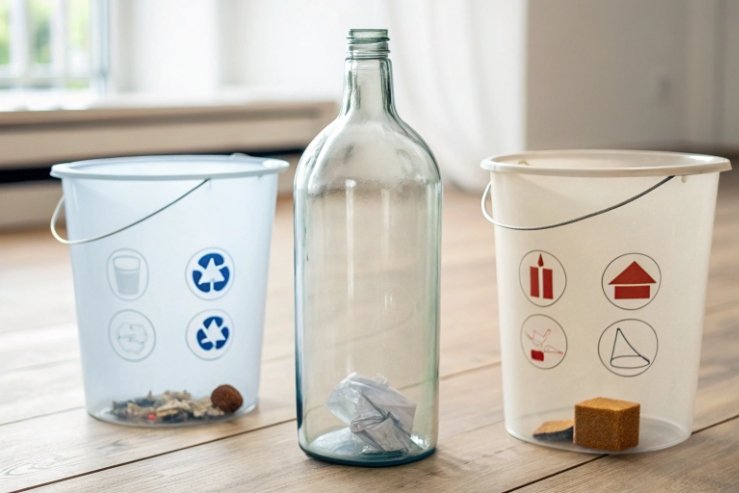
Think in two buckets: “what must be absent” and “what must be controlled”
For most food and beverage glass, the container interior must be free from:
- visible foreign matter
- harmful particulate levels
- unacceptable microbial contamination (based on product risk)
A water rinser is good at flushing loose debris. It can also dilute or remove light soluble residues. But it creates a new control point: water quality. If water quality drifts, the rinse becomes a contamination source. A no-wash line avoids that water variable, but it raises the importance of bottle supply and dry air quality.
What specs often look like on a modern no-wash line
A practical spec set often includes:
- visual cleanliness: camera inspection or light inspection for internal debris
- non-viable particles: limits tied to risk and filling method
- residual moisture: “dry to fill,” especially for spirits and powders
- process air quality (for example, ISO 8573-1 compressed air purity classes 3): oil-free, filtered, monitored
- line hygiene: enclosed rinser zone aligned to EHEDG hygienic design principles 4
For higher-risk products (cold-fill, low preservative, or long shelf life), specs may also include:
- microbial swab or rinse sampling on empty bottles (periodic)
- environmental monitoring around the rinser and filler infeed
- trend limits with corrective action triggers
A table to compare “spec behavior,” not only “spec wording”
| Spec area | Traditional water rinse tends to control | No-wash/ionized-air tends to control | Main weakness to manage |
|---|---|---|---|
| Visible debris | Good | Very good (with vacuum capture) | Upstream bottle packaging quality |
| Static-bound dust | Often poor | Strong | Ionizer maintenance and tuning |
| Moisture inside bottle | Often worse (adds moisture) | Strong (stays dry) | Humidity control in rinser zone |
| Water-borne microbes | Risk exists | Eliminated | Air filter integrity and enclosure hygiene |
| Soluble residues | Sometimes better | Not the main strength | Supplier cleanliness, storage discipline |
A no-wash line usually wins when bottles arrive clean and the main risk is particulate and handling dust. A wet rinse still has a place when incoming containers may have unknown residues or when the plant does not control bottle storage well.
Does fewer wet steps reduce label scuff and spotting?
Premium packaging often fails in small ways. A tiny water spot can ruin shelf look. A small scuff can make a brand look low quality. Wet steps are common causes because they change friction and leave residue.
Yes. Fewer wet steps can reduce label scuffing, water spotting, and glue failures because bottles stay dry and surface friction stays predictable. Dry handling also reduces smear risk on decorated bottles and helps labels lay flat faster.
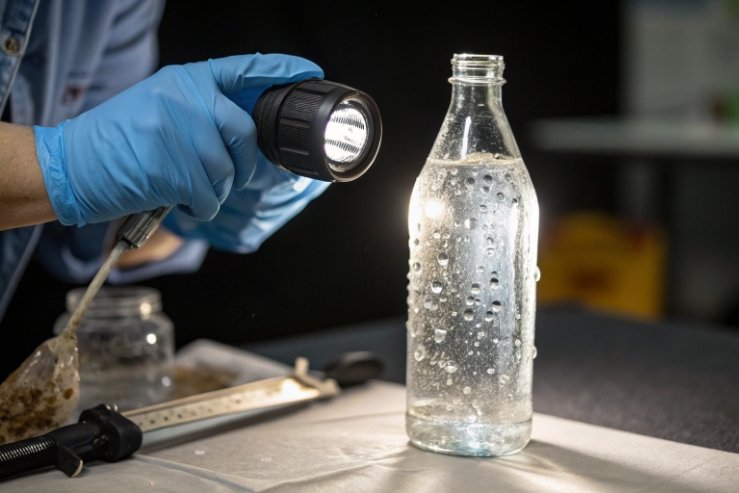
Why wet steps create label defects
Wet rinsing creates droplets. Those droplets do three annoying things:
- they create water spots after drying, especially with mineral content
- they change surface friction, so bottles rub differently on conveyors
- they interfere with some label adhesives and can cause edge lift
Paper labels show this fast. But even plastic labels can show wrinkles if moisture sits under the label or if the bottle is still cooling and sweating.
Dry rinsing avoids adding water. That means:
- less time needed before labeling (no hidden moisture)
- fewer “random” cosmetic rejects
- cleaner performance on high-speed labelers because the bottle surface is consistent
Scuff risk is bigger on lightweight and coated bottles
Lightweight bottles and coated bottles are more sensitive to scuff marks. Wet conveyors and rinse spray zones often create “micro-sandpaper” conditions because dust sticks to wet surfaces. That dust then rubs under pressure. Dry systems reduce this because they remove dust and they do not create wet sticky surfaces in the same area.
This is one reason no-wash lines often feel like a better match for premium decoration. Fewer wet transfers means fewer chances to damage screen print, hot stamp, or coated finishes.
A quick defect map that helps troubleshooting
| Defect seen in market | Wet-step link | Why it happens | No-wash improvement lever |
|---|---|---|---|
| Water spots on glass | Strong | Minerals + uneven drying | Keep bottles dry; control air humidity |
| Label edge lift | Medium | Moisture reduces adhesive bond | Dry rinser; stable bottle temp |
| Label scuff/tearing | Medium to strong | Friction changes; wet dust rub | Cleaner bottle surface + dry conveyors |
| Decor smearing | Medium | Wet handling + abrasion | Remove wet transfers near decoration |
| Glue haze / “milky” look | Strong (some glues) | Water trapped under label | Dry infeed and controlled dwell |
A no-wash line will not fix a weak label adhesive or a poor carton pack. But it removes one major variable: moisture. That alone improves cosmetic yield in many plants.
What microbiological validations are required?
“No water” does not mean “no validation.” It means the validation focus shifts. Instead of proving rinse water is safe, the plant must prove dry cleaning is effective and the surrounding environment stays under control.
Microbiological validation depends on product risk. For standard beer and spirits, validation often focuses on foreign-matter control, dry conditions, and hygienic design. For aseptic or sterile products, validations expand to environmental monitoring, microbial challenge logic, and in pharma, depyrogenation or sterilization performance (including endotoxin reduction targets).
Step one: define the risk level of the product and the fill
The validation plan should start with one sentence: “What hazard is most likely to harm the product?”
Common hazard priorities by category:
- Beer, carbonated drinks, spirits: foreign matter and particulates first; microbes are still important, but product conditions often reduce growth risk
- Juices, teas, low-acid products: microbes matter more, especially for cold-fill
- Aseptic beverages and sterile pharma: microbes and endotoxin control become central
This matters because a dry air rinser is mainly a particle removal step. It is not a guaranteed sterilization step unless additional technologies are included (and validated).
What validation looks like for beverage-style no-wash lines
A practical beverage validation package usually includes:
- process description + HACCP hazard analysis framework 5
- air quality controls: filtration, oil-free blowers, maintenance records
- visual and particle verification: trend data, reject rates, audits
- environmental hygiene: cleaning SOPs for the rinser enclosure and infeed
- periodic microbiological checks where risk calls for it (swabs, rinse tests, yeast/mold checks)
Many plants also add rapid checks such as ATP as an internal control tool. ATP is not a perfect microbiology test, but it is useful for trend control and for catching hygiene drift early.
What validation expands to for aseptic and sterile packaging
For high-risk products, validations often add:
- defined environmental monitoring zones (viable and non-viable particles) aligned to ISO 14644-1 cleanroom classification 6
- defined sampling plans and alert/action limits
- microbial ingress thinking for the container-closure system
- stronger change control for filters, ionizers, and air paths
In pharma contexts, depyrogenation tunnels are validated with time-temperature profiles and endotoxin challenge methods. A commonly referenced baseline is the USP-described dry-heat depyrogenation cycle 7 of 250°C for at least 30 minutes to achieve a targeted endotoxin reduction. The key point is not the number. The key point is that the cycle must be proven by qualification and routine monitoring.
A validation checklist that helps buyers ask the right questions
| Validation item | Why it exists | Evidence to request | Who owns it |
|---|---|---|---|
| Air quality (filtration, oil-free) | Air becomes the “rinse medium” | Filter spec, maintenance, pressure checks | Plant + equipment supplier |
| Particle removal effectiveness | Prevent foreign matter complaints | Visual data, inspection rejects, audits | Plant QA |
| Hygienic design and cleaning | Avoid buildup and recontamination | SOPs, cleaning records, swab trends | Plant sanitation |
| Micro sampling plan (when needed) | Prove bioburden control | Test methods, limits, trend reports | Plant QA/micro |
| Depyro/sterilization qualification (if used) | Meet sterile/endotoxin targets | IQ/OQ/PQ reports, challenge logic | Plant validation team |
The strongest no-wash lines treat validation as a living system. Filters get tracked. Ionizers get checked. Enclosures get cleaned. Trend charts get reviewed. That is how a dry process stays safe year after year.
Conclusion
Rinseless glass bottle lines save water and energy, simplify equipment, and reduce cosmetic defects. Success depends on clean bottle supply, controlled dry air, and validation that matches the product’s real microbial risk.
Footnotes
-
Describes ionized-air plus vacuum removal and static neutralization for dry container rinsing. ↩ ↩
-
Practical guidance on validating depyrogenation tunnels for sterile packaging and endotoxin control. ↩ ↩
-
Explains ISO 8573-1 purity classes for particles, water, and oil when specifying process air. ↩ ↩
-
Hygienic design principles for food equipment to reduce contamination risk and improve cleanability. ↩ ↩
-
FDA overview of HACCP as a preventive food safety management system and hazard control framework. ↩ ↩
-
ISO description of ISO 14644-1 cleanroom particle classification used for non-viable monitoring in controlled zones. ↩ ↩
-
USP reference for a typical dry-heat depyrogenation cycle (30 minutes at 250°C). ↩ ↩






