
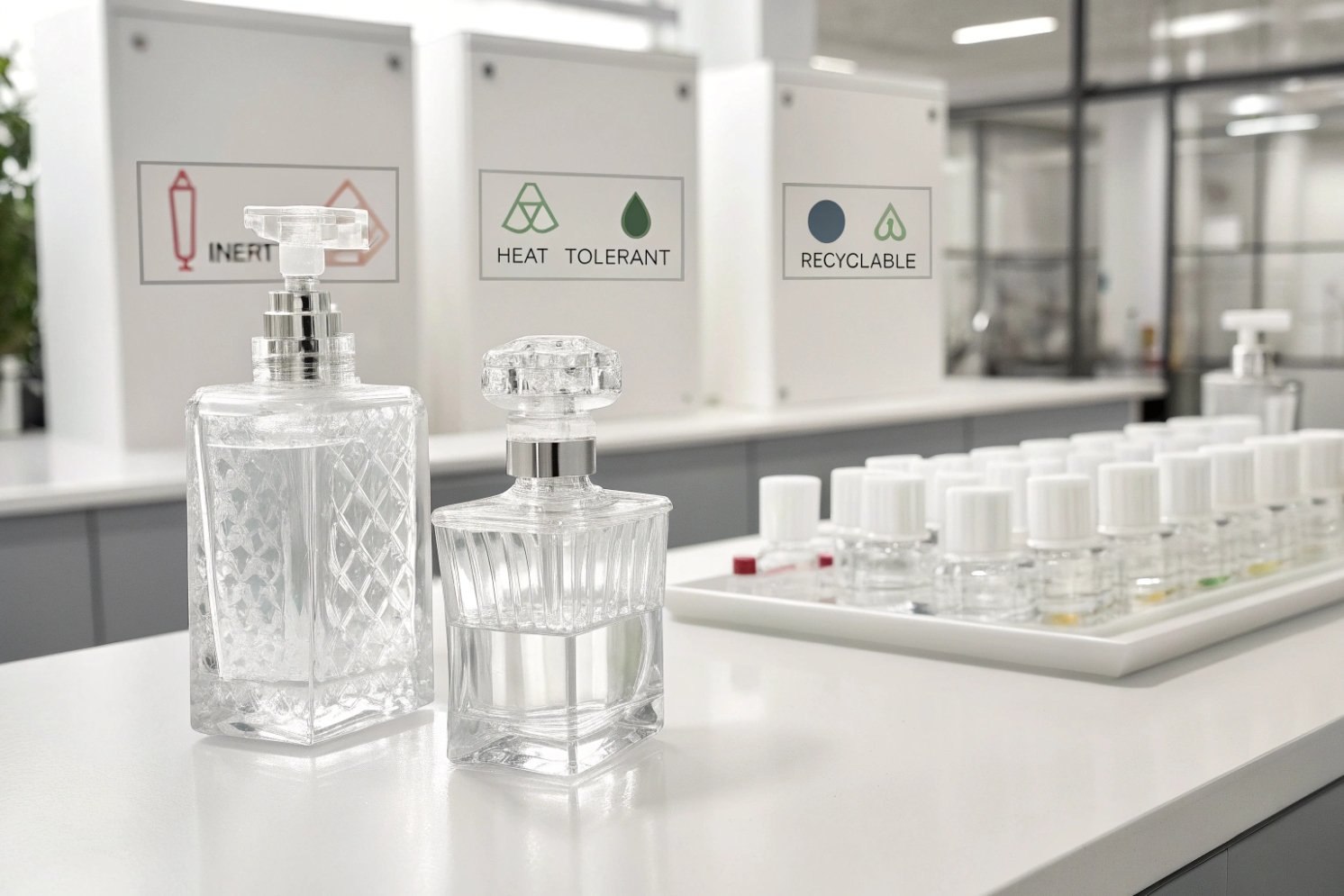
Perfume is chemistry on the skin, so the bottle that holds it is never “just packaging”. If the wrong material is used, even the best formula can age, fade, or smell off.
Glass perfume bottles have clear advantages because they are inert, scent-safe, visually premium, heat tolerant, and fully recyclable, while also working very well with pumps, refills, and modern circular packaging programs.
When we compare glass and plastic for perfume, the difference is not only about look. It touches formula stability, brand positioning, logistics, and even long-term sustainability goals. So it makes sense to break the topic into four key questions buyers ask most often.
Is glass more inert and scent-safe than plastic for alcohol bases?
Many fragrances use high levels of alcohol. Alcohol is a strong solvent, so buyers often worry that plastic may leach or react, and slowly change the scent they worked so hard to develop.
Yes, glass is more inert and scent-safe than most plastics for alcohol-based perfumes because it is non-reactive, non-porous, and does not leach additives, while also giving a strong barrier against oxygen and contamination.
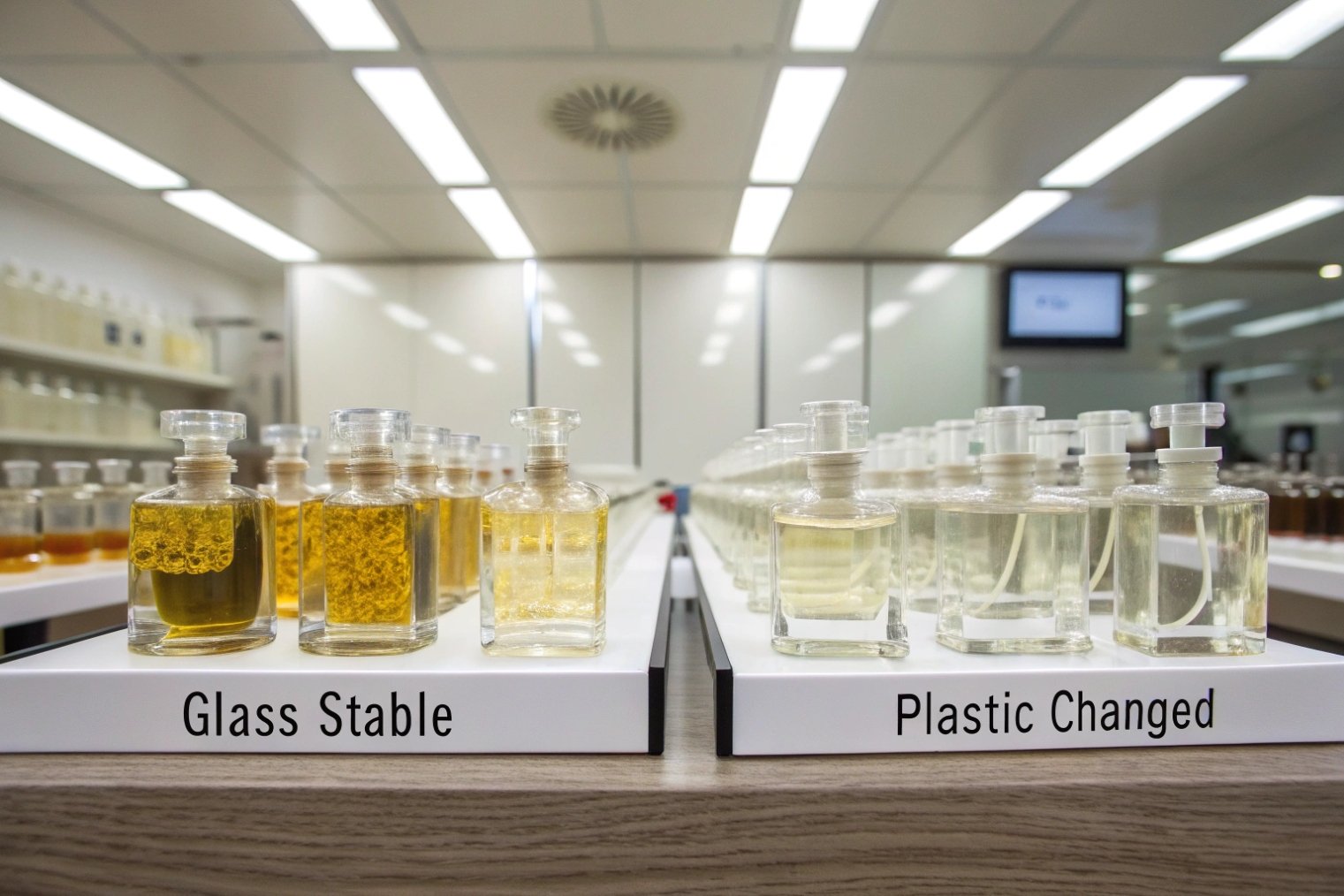
How alcohol interacts with different packaging materials
Perfume alcohol does not only dissolve fragrance oils. It can also dissolve small molecules from its container.
With plastics, this includes plasticizers, stabilizers, or monomer residues 1. Over time these can move into the perfume, especially at warm temperatures or under light. The result can be:
- A faint plastic note
- A change in color
- Lower top-note freshness
- Regulatory concerns in some markets
By contrast, glass is made from inorganic oxides. It is a rigid network with no organic additives that can migrate. Alcohol sits inside the bottle, but it does not attack the glass surface or extract anything from it.
Why glass is considered inert and impermeable
Glass is:
- Non-porous: it does not absorb the fragrance
- Inert: it does not react with alcohol or oils
- Impermeable: it blocks gas and vapor very well
It is widely described as non-porous, chemically inert, and recyclable 2, which is why it is so commonly used for sensitive formulations.
This gives three practical benefits. First, the scent profile stays closer to the perfumer’s original intent over the full shelf life. Second, there is no risk of plastic-like off-notes or cloudiness. Third, regulatory and safety reviews are more straightforward, because glass is a well-known, widely accepted material in cosmetic and pharma packaging.
Dimensional rigidity is another hidden advantage. The neck and thread of a glass bottle keep their shape. Pumps and atomizers seat in a consistent way. This helps maintain tight seals and reduces micro-leaks and slow evaporation over time.
Practical comparison: glass vs plastic for alcohol perfumes
| Aspect | Glass perfume bottle | Plastic perfume bottle (common types) |
|---|---|---|
| Chemical reactivity | Inert, non-reactive | May interact with strong alcohol bases |
| Risk of leaching | No leaching of plasticizers or monomers | Possible leaching of additives over time |
| Odor impact | Does not add odor | Can create faint “plastic” or off smells |
| Barrier to oxygen | Excellent | Usually lower, depends on resin |
| Absorption of fragrance | Does not absorb | Some plastics can absorb or swell |
| Temperature resistance | High, stable in heat and cold | Can warp or soften at higher temperatures |
| Regulatory perception | Premium, close to pharma standard | More questions around long-term stability |
For alcohol-heavy fragrances, glass simply gives more peace of mind. The formula stays cleaner, the scent stays closer to the target, and the risk of packaging-related complaints goes down.
Do tinted or coated glass bottles extend fragrance longevity by blocking UV?
Perfume is sensitive to light. When bottles sit on a sunny shelf or in a bright bathroom, UV and visible light can slowly break down fragile top notes and colorants.
Tinted or coated glass bottles help extend fragrance longevity because darker glass and UV coatings block light energy, which slows down photodegradation of sensitive aroma molecules and stabilizes color and scent.
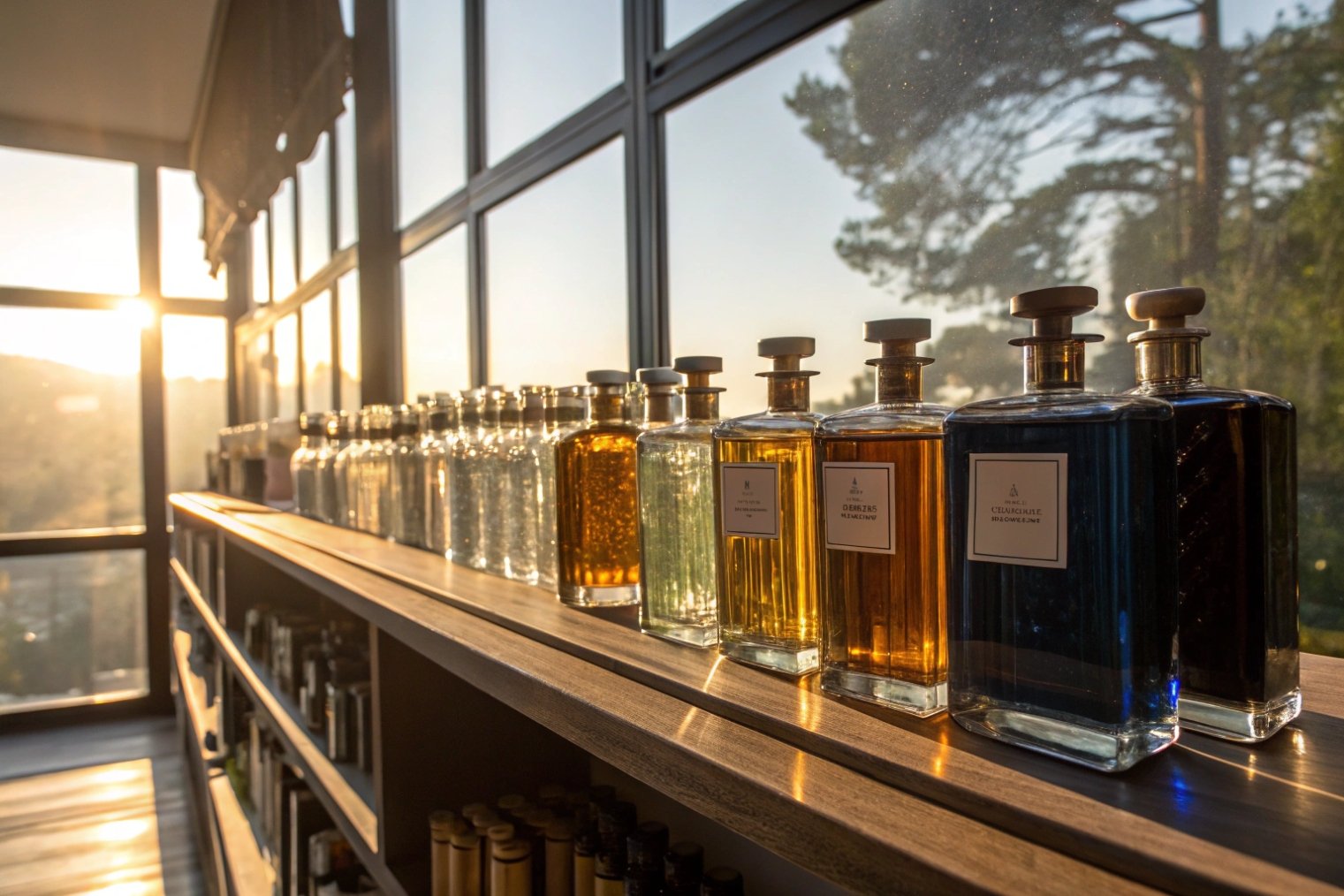
How light damages perfume over time
Light carries energy. When UV or strong visible light hits a perfume, it can:
- Break chemical bonds in some citrus, floral, or green notes
- Change the oxidation state of certain ingredients
- Trigger color shifts or sediment in the juice
- Accelerate photodegradation of sensitive aroma molecules 3
The result can be a duller, “flattened” scent. Fresh notes fade first. Heavier base notes become more dominant, so the perfume feels unbalanced. For a premium brand, this type of drift directly harms the product experience.
How colored and coated glass protects the formula
Tinted glass and surface coatings work like sunglasses for the perfume:
- Amber, smoked, or black glass reduce both UV and short-wave visible light
- Opaque coatings or lacquers add an extra shield and can block almost all light
- Inner coatings can give a special effect while still protecting the juice
These choices help keep volatile top notes alive for longer. They also protect sensitive naturals, such as some essential oils and absolutes, that break down fast under light. In markets where perfume bottles are displayed in open shelves or near windows, this protection is especially important.
Balancing visibility, design, and protection
There is always a balance between wanting to show the color of the juice and needing to shield it.
Some brands use lightly tinted glass. This keeps a sense of transparency but still reduces light stress. Others go for fully opaque bottles and use shape, texture, and decoration to signal quality instead of showing the liquid.
The outer carton also plays a role. When customers store fragrance in the box, the main light exposure happens only at the point of sale. Display planning and consumer education can work together with glass color to protect the scent.
| Packaging option | UV / light protection | Juice visibility | Typical use case |
|---|---|---|---|
| Clear flint glass | Low | Full | Strong formulas, boxed storage, indoor use |
| Light tinted (smoke / pastel) | Medium | High | Balance between display and protection |
| Dark amber / deep color glass | High | Medium | Light-sensitive perfumes, open display |
| Opaque coated or lacquered glass | Very high | None | Strong branding focus, maximum protection |
When brands combine tinted or coated glass with a good outer box and proper storage advice, they give the fragrance a better chance to smell “new” even after long shipping and months on shelf.
How do glass clarity, weight, and custom shapes elevate luxury branding?
On a crowded shelf, many fragrances smell good. Buyers often decide with their eyes and hands first. The bottle becomes the first “test” of quality before anyone even sprays the juice.
High clarity, strong gloss, heavy bases, and custom-shaped glass bottles send clear luxury signals, improve stability on the counter, and turn the packaging into a key part of the brand story.
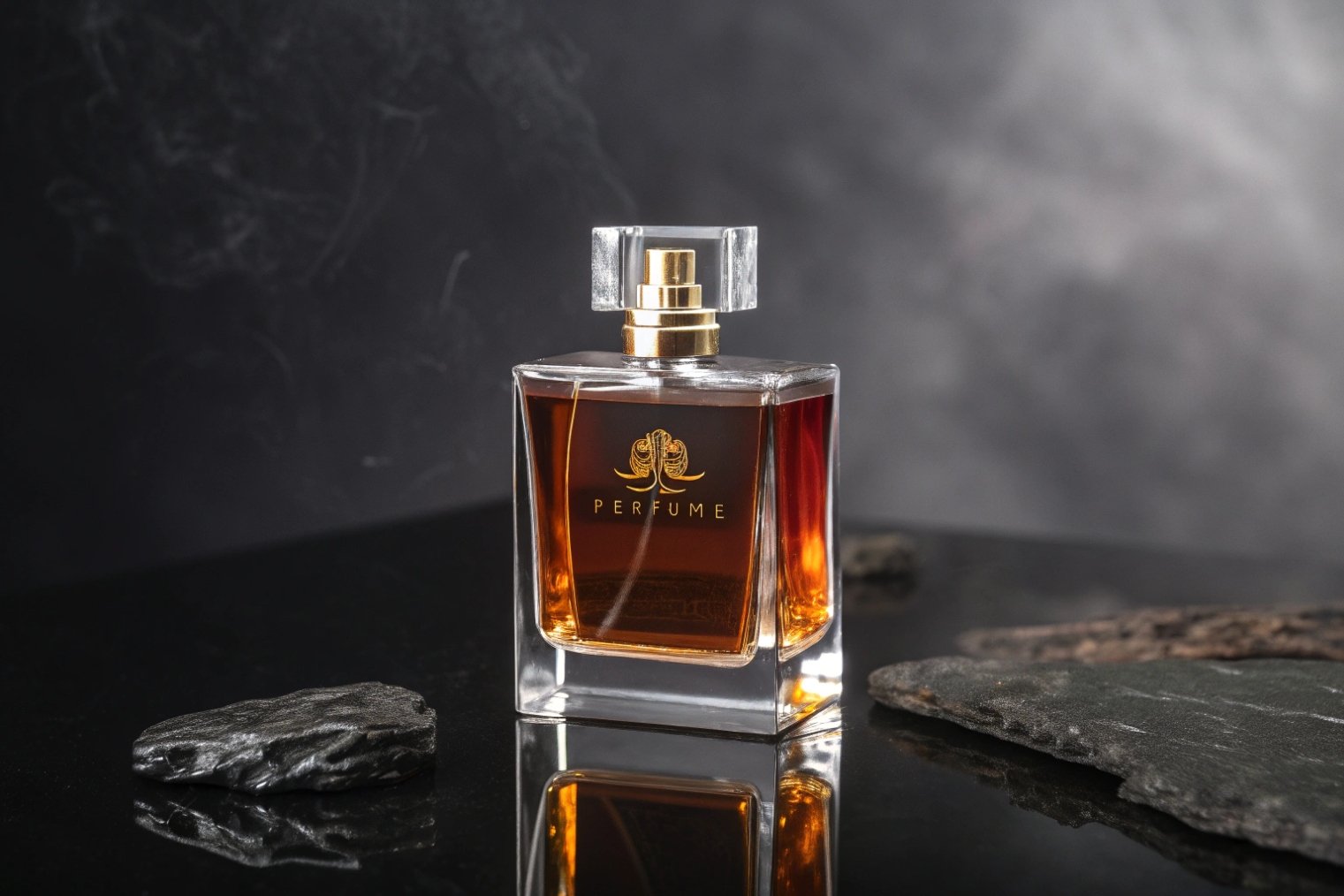
Visual cues: clarity, gloss, and proportion
People read trust and value from very small details. Clear, high-white glass shows the true color of the perfume without haze. Sharp edges, clean facets, and smooth surfaces reflect light in a precise way. Thick bases create a visual anchor that feels stable and rich.
These design elements help in three ways:
- They make the perfume look more “pure” and controlled
- They highlight the color of the juice as part of the design
- They create a stage for decoration like hot stamping, silk-screen logos, or decals
When the glass itself looks premium, the entire product feels more considered. This effect is hard to match with lightweight plastic.
Tactile experience and perceived value
Bottle weight as an extrinsic quality cue 4 shows up in real buying behavior. A heavier glass base feels solid and serious. It tells the brain, “this is substantial” even before you think about it. The cold surface of glass, the smooth neck, and the clean click of a well-fitted pump all contribute to this perception.
Dimensional rigidity is important here too. Glass maintains tight neck tolerances. Pumps and atomizers sit straight, spray evenly, and leak less over time. This protects both the formula and the reputation of the brand, because no one enjoys a sticky, leaking perfume bottle in a bag or on a dresser.
Custom shapes as brand language
Custom glass shapes turn a perfume into an object people like to keep on display. Sculpted shoulders, engraved logos, debossed patterns, or unusual section lines all become part of the brand’s visual language. Surface treatments push this further:
- Frosting gives a soft, muted look
- Spraying and painting add color gradients
- Electroplating or metallization creates mirror effects
- Engraving and laser marking support fine details or codes
With modern glass production and decoration lines, it is possible to align bottle shape, cap, pump, and outer box into one coherent design system.
| Design element | Message to the consumer | Practical effect |
|---|---|---|
| Heavy glass base | Premium, stable, long-lasting | Better counter stability, fewer tip-overs |
| High clarity flint | Pure, clean, modern | Shows true liquid color |
| Custom silhouette | Unique, artistic, collectible | Strong shelf impact |
| Frosted / matte finish | Soft, gentle, skincare-like | Hides minor scratches from reuse |
| Embossed / debossed logo | Crafted, authentic, permanent | Branding stays even if label wears |
When bottle and scent tell the same story, the product feels more consistent. This is why many niche and prestige brands invest heavily in custom glass.
Are glass bottles easier to recycle or refill in circular programs?
Fragrance buyers and brands both pay more attention to waste today. They ask if the bottle can be recycled, refilled, or reused, and how this fits into wider sustainability targets.
Glass perfume bottles are well-suited to circular models because glass is 100% recyclable, highly reusable after sanitization, and compatible with refill systems that rely on durable, heat-resistant, and chemically stable containers.

Glass in modern recycling streams
Glass can be recycled endlessly with no loss in quality or purity 5. When collected and sorted by color, it can re-enter the furnace as cullet and reduce the need for virgin materials and energy.
For perfume bottles, this works best when:
- Labels and decorations are designed to detach cleanly
- Metal components (like pumps and collars) can be removed
- Coatings and colors follow local recycling guidance
Many brands also pair recycling with circular models like returnable reusable packaging systems 6, where durable packs are cleaned and refilled to extend their usable life.
Refill and reuse: how glass supports circularity
Glass also performs very well in reuse models. It tolerates hot washing, steam, and strong cleaning agents. The surface does not absorb residues or scents, so the same container can safely hold the same fragrance again and again if the hygiene process is correct.
Brands can design:
- Refillable flagship bottles with separate refill packs
- In-store refill fountains for loyal customers
- Standardi
Footnotes
-
Review of chemical migration from plastics, useful context for leaching concerns in alcohol-rich products. ↩︎ ↩
-
Peer-reviewed summary of why glass is chemically inert, nonporous, and recyclable in packaging. ↩︎ ↩
-
Research example of direct photodegradation of a fragrance ingredient under sunlight-like conditions. ↩︎ ↩
-
Experimental study on bottle weight influencing perceived quality and preference, explaining “heavier feels more premium.” ↩︎ ↩
-
Clear explainer on why glass can be recycled endlessly without losing quality or purity. ↩︎ ↩
-
Overview of returnable packaging systems and how cleaning/refill loops support circular business models. ↩︎ ↩






