
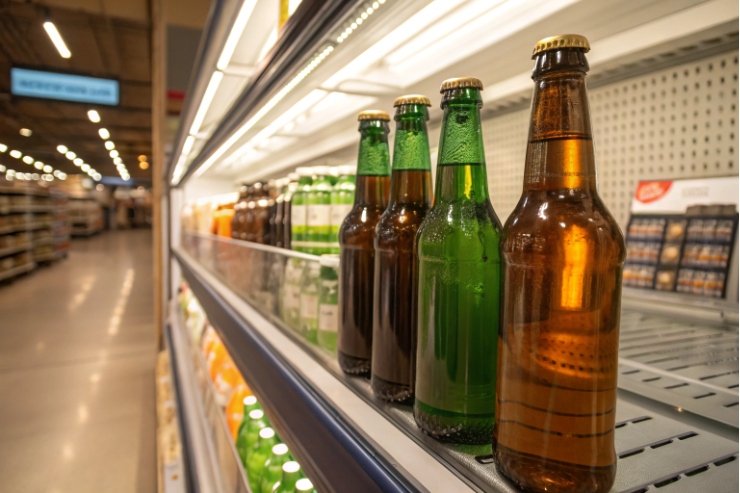
Many breweries ask if glass is still worth the extra cost and breakage risk. When they switch to other formats too fast, they often discover new flavor and image problems.
Glass beer bottles preserve flavor by blocking oxygen and odors, protect against light-strike with amber and green colors, fit strong returnable and recycling systems, and clearly lift premium perception at retail.
In real projects, glass is not just “the old way.” It is a technical tool. It keeps beer stable, supports reuse, and tells a premium story on the shelf. Let’s look at each advantage one by one.
Does glass preserve flavor better by resisting oxygen and odor transfer?
A brewer can control every step in the brewhouse and still lose the beer on the last step: the package. Oxygen pick-up and odd container smells ruin months of work.
Glass helps preserve beer flavor because it is near-inert, has an excellent oxygen barrier, avoids plastic taste, and supports bottle conditioning for certain styles.
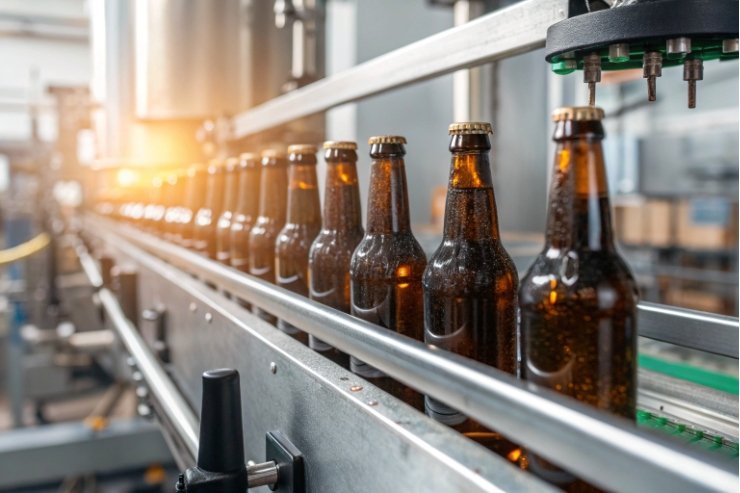
Oxygen barrier and flavor stability
Glass is effectively impermeable to gases in normal storage—basically impermeable to most gases 1. Once you fill and cap the bottle, almost all oxygen changes come from the headspace and the closure, not the wall itself. This is very different from PET, where oxygen ingress is tracked and managed with oxygen transmission rate (OTR) testing 2.
For beer, that matters a lot. Oxygen dulls hop aroma, flattens malt sweetness, and turns fresh flavors into cardboard and sherry notes. A glass wall does not add to this problem. With good filling and a high-quality crown or cap, dissolved oxygen stays low for long periods.
Compared with PET, glass has clear advantages on carbonation stability as well. Carbon dioxide loss through the wall is minimal. So you are not fighting against slow de-gassing every month the beer sits in the warehouse or fridge.
Aluminum cans have strong barrier performance too, thanks to the metal body and internal lining. But some studies show that, for certain styles and storage conditions, bottled beer can stay fresher over months. That is often linked to how oxygen behaves around seams, linings, and closures, and how the beer interacts with the coating.
| Packaging type | Oxygen barrier in wall | Typical risk zones | Long-term flavor impact |
|---|---|---|---|
| Glass bottle | Excellent | Closure, headspace | Very good, if filling is controlled |
| Aluminum can | Excellent (with liner) | Seam, lining interactions | Very good, style-dependent |
| PET bottle | Moderate | Wall and closure | Higher oxidation over long storage |
Odor neutrality and “clean” taste
Glass is near-inert. It does not absorb aroma from one product and give it to the next. It does not need plasticizers, and it does not carry “plastic” smell into delicate beers.
For breweries, this is especially important when they run multiple products on the same line. Strong stouts, fruited sours, and clean lagers can all run through the same glass bottle family without flavor transfer through the package itself.
The inner surface of a glass bottle is hard and non-porous. After proper washing in a returnable system, there is no flavor memory. This gives much more confidence in the next fill compared with porous or scratched polymer packaging.
Bottle conditioning and in-bottle development
Glass bottles also support styles that grow in the package. The bottle-conditioning technique 3—adding priming sugar (and sometimes yeast) so beer naturally carbonates in the bottle—is almost always done in glass.
Glass:
- Holds high internal pressure from natural CO₂
- Gives a stable environment for slow flavor development
- Allows consumers to see fine sediment and clarity changes
Many Belgian ales, farmhouse beers, and some modern craft styles rely on bottle conditioning to reach their final profile. In these cases, the bottle is almost part of the fermenter. Glass can play that role; most other packages cannot do it as safely or convincingly.
For long-term storage and cellaring, drinkers also trust glass. They know a well-kept bottle of strong ale or barleywine can age for years. That trust is built on centuries of performance.
How do amber and green beer bottles defend against light-strike?
Light can destroy a great beer much faster than most people think. A sunny shop window or a bright display shelf is enough to create “skunky” off-aroma.
Amber glass gives the strongest defense against light-strike by blocking most UV and blue light; green glass offers medium protection and must often be combined with recipe changes or controlled light exposure.
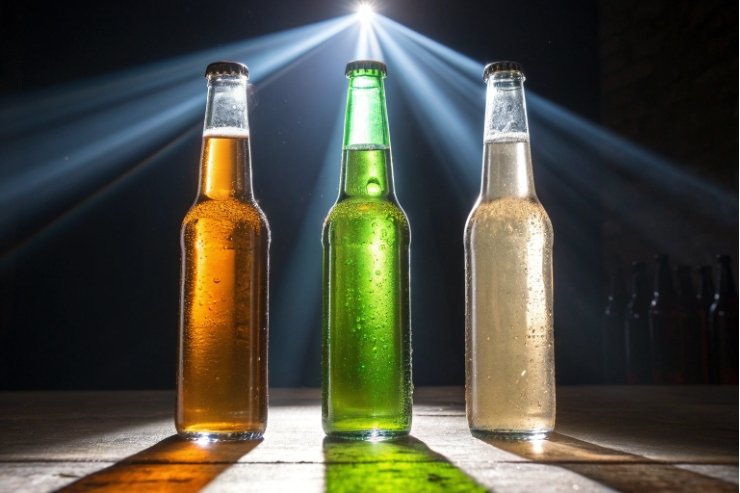
What light-strike really is
Light-strike is not just a vague idea. It is a specific reaction. Light, especially UV and short-wave visible blue light, breaks down iso-alpha acids from hops. The fragments react with sulfur compounds and form 3-methyl-2-butene-1-thiol (MBT) 4.
Human noses pick up MBT at very low levels. It smells like a skunk or burnt rubber. Once formed, it does not go away. So a beer that sits in bright light in a clear or weakly protected bottle can pick up this fault even if the brewery did everything else right.
This is why packaging choice sits right next to hopping strategy when we talk about aroma stability.
How amber and green glass behave
Amber glass is the best defender in normal beer bottling. It blocks up to 99% of UV rays below 450 nm 5. That means less energy reaches the beer to kick off the MBT reaction. In practice, amber bottles are much more forgiving in shops and bars with bright lighting.
Green glass gives some protection but not as much. It cuts part of the UV band, but more blue light passes through compared with amber. That is why green-bottle beers are more sensitive to strong light, even if the brand feels “premium”.
Clear flint glass gives almost no real protection. It looks beautiful and shows beer color well, but it leaves the liquid almost fully exposed to light-strike risk.
| Bottle color | UV / blue blocking | Light-strike risk (same beer, same light) | Typical use |
|---|---|---|---|
| Amber | High | Low | Ales, lagers, most craft beer |
| Green | Medium | Medium | Some lagers, “import” styles |
| Clear/flint | Low | High | Marketing-led brands, RTDs, cocktails |
Modern breweries that insist on green or clear glass often change the recipe. They use light-stable hop extracts that do not form MBT, or they restrict exposure with cartons and careful display rules. This is how some famous green-bottle brands keep flavor stable despite weaker protection.
In projects where flavor stability is more important than visual tradition, we usually steer brewers toward amber glass. It is the simplest way to guard against light-strike without adding extra steps in the brew or in retail control.
Are returnable schemes and recycling easier with glass?
Even the best beer package is a problem if it turns into waste after a single use. Many brewers now look at total system impact, not just unit cost.
Yes. Glass supports strong returnable systems and closed-loop recycling. Bottles can be washed and reused many times, then recycled endlessly as cullet when they finally break.
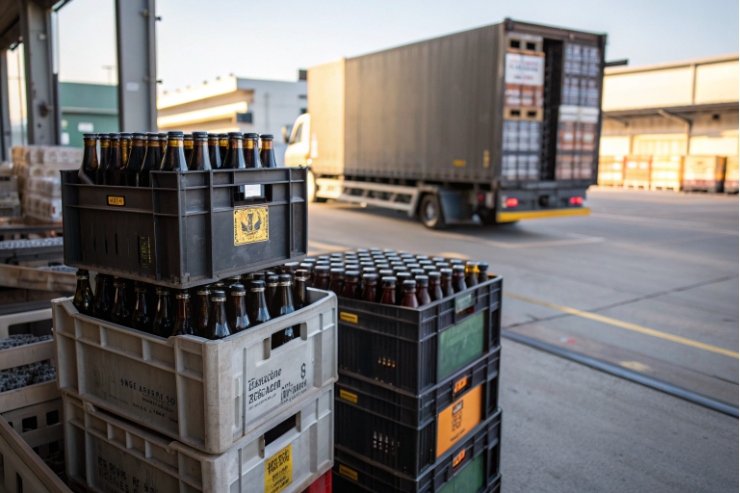
Refillable glass bottle loops
Returnable glass works well because the material does not degrade with washing. A thick, returnable beer bottle can survive many trips between brewery and market. Each trip means only washing and transport energy, not new glass melting.
This loop can cut total greenhouse-gas emissions compared with single-use packaging, even including the extra weight in transport. When the loop is local and bottle recovery is high, the benefit grows.
In practice, a returnable system needs:
- Standardized bottle shapes and colors
- Crates or trays designed for fast handling and protection
- Washing lines with controlled time, temperature, and chemistry
- Clear deposit or take-back rules for consumers and trade
Once set up, the system is hard to match with one-way formats on sustainability. Many European breweries have used this model for decades, and newer markets are now re-discovering it.
Endless recycling and cullet use
When a returnable bottle finally reaches the end of its life, or when one-way bottles come back, glass still has value. Broken glass (cullet) goes back into the furnace and becomes new bottles. There is no “downcycling” needed. A brown beer bottle can become another brown beer bottle many times.
Higher cullet content reduces energy use and CO₂ emissions 6 because cullet melts more easily than virgin minerals. This also lowers demand for raw materials and supports higher recycled-content targets.
Green and amber glasses are often especially good at absorbing high cullet percentages, including mixed-color streams. This gives more room to use what the recycling system actually collects.
By contrast, many plastic and composite packs move down the value chain when recycled. And while aluminum is also highly recyclable, cans are nearly always one-way; setting up true refillable loops with aluminum is more complex than with glass bottles and crates.
| Aspect | Glass beer bottle | Aluminum can |
|---|---|---|
| Refillability | Very good, multi-trip systems | Rare in practice |
| Recycling quality | Closed loop, same-quality glass | Closed loop for metal |
| Trips per package | One (one-way) or many (returnable) | Usually one |
| Need for coatings | Only for decoration | Internal linings always needed |
On a busy beer shelf, packaging is your only salesperson. Before anyone reads the label, the material, weight, and color are already sending signals.
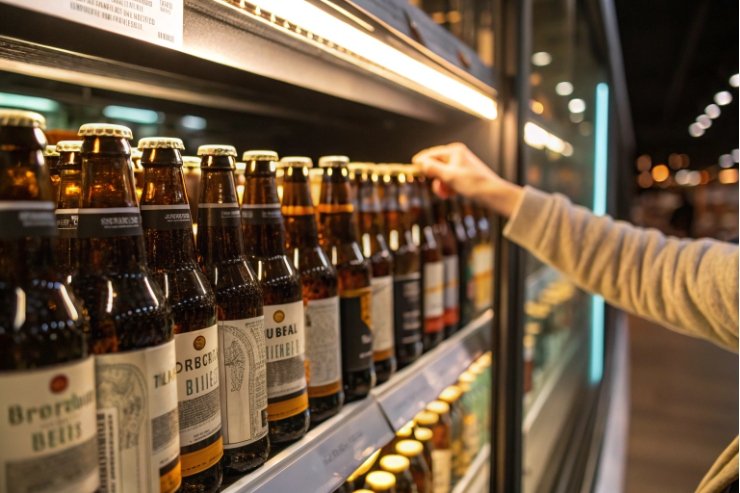
Glass bottles strongly support premium perception. Their weight, clarity, and shapes help beers look more authentic and higher-value, especially when paired with dark glass, embossing, and quality closures.
Weight, transparency, and tradition
A glass bottle feels different from a can or PET. It is heavier, cooler, and more rigid. When a customer picks it up, that weight suggests care and quality. For many drinkers, especially in craft and specialty segments, glass still equals “real beer”.
Packaging also shapes expectations: research shows that packaging can change perceived taste 7 even when the liquid is the same. In beer, that means glass can help reinforce “this is fresher / better” at the moment of choice.
Transparency lets people see the liquid (when the brand chooses clear or lightly tinted glass). They can check color, clarity, and foam traces. Even in amber or green glass, reflections and gloss give a rich visual effect that supports the idea of a natural product.
Glass also carries heritage. People associate it with classic lagers, Belgian ales, and cellarable beers. This history works in favor of new brands that want to stand next to established names and feel part of that world.
Design freedom for brand identity
Glass allows many design tricks that boost shelf presence:
- Embossed logos and patterns in the shoulder or base
- Unique silhouettes that stand out in the fixture
- Deep punts and heavy bases for strong visual weight
- Rich spray coatings and partial fades
- Paper labels, direct print, or full shrink sleeves
These features are harder to achieve in a way that feels “premium” on some other formats. A thick, well-shaped glass bottle with crisp embossing and a tight crown or closure immediately tells the shopper that this is a product the brewery took seriously.
Many breweries use material as a ladder:
- Core everyday beers in cans for convenience and price
- Specialty lines and strong ales in glass to mark them as upgrades
- Limited editions in large-format bottles for gifting and cellaring
| Format | Shopper perception (general) | Best suited for |
|---|---|---|
| Can | Casual, portable, modern | Core range, hazy IPAs, outdoor use |
| Glass 330–500 | Classic, premium, trustworthy | Lagers, ales, many craft styles |
| Large glass | Celebration, collectible, gift | Special releases, strong styles |
Conclusion
Glass beer bottles protect flavor, support true circularity, and lift brand image, which is why they remain a powerful choice even in a world full of cans and PET.
Footnotes
-
Explains why glass walls don’t let oxygen slowly permeate into packaged beverages. ↩︎ ↩
-
Shows how PET barrier performance is measured and why oxygen ingress varies by material and closures. ↩︎ ↩
-
Defines bottle conditioning and why in-bottle fermentation is a core technique for certain beer styles. ↩︎ ↩
-
Details the chemistry of lightstruck beer and MBT formation under UV exposure. ↩︎ ↩
-
Practical reference on amber glass UV filtering below ~450 nm and why it protects light-sensitive products. ↩︎ ↩
-
Summarizes how using cullet lowers melting energy and reduces emissions in glass manufacturing. ↩︎ ↩
-
Evidence that packaging format can shift perceived taste, helping explain glass’s premium impact at retail. ↩︎ ↩






