
Glass has a clean, premium image. Many buyers treat it as the “safe default” for food, beverage, and cosmetics. Then they see the weight, breakage, and freight invoices, and the picture becomes more complicated.
Glass offers excellent chemical inertness, barrier performance, heat resistance, and recyclability, but it is heavy, brittle, energy-intensive to produce, and less flexible than plastic in logistics and design.
When we understand both sides clearly, we can decide when glass is the best tool and when another material makes more sense.
Is glass truly inert, nonporous, and ideal for sensitive formulations?
Most teams choose glass because they want “no reaction, no smell, no leaching.” This is a good starting point. It is not magic, but it is close.
Glass is effectively inert and nonporous for most food, beverage, cosmetic, and pharma applications. It protects sensitive formulations by stopping chemical interaction, gas exchange, and flavor loss in a way that plastics cannot easily match.
Dive deeper: why glass protects product purity so well
1. Chemical inertness and safety
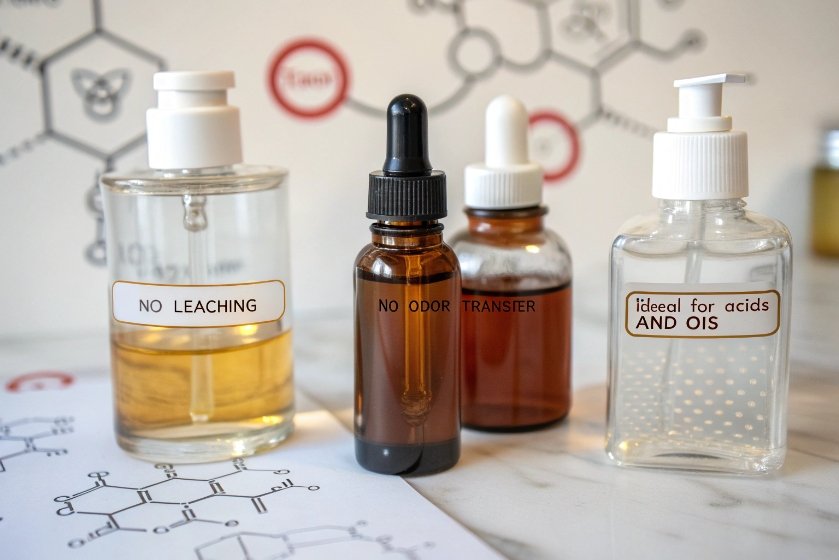
Glass is an inorganic network of oxides. It does not contain plasticizers, monomers, or soft segments that can migrate into the product. For most recipes:
- No BPA, no phthalates, no softeners.
- No transfer of taste or odor.
- Very low leaching of ions when the right glass composition is used.
This is especially important for:
- Acidic foods (sauces, vinegars, pickles).
- High-proof alcohol and perfumes.
- Oil-rich formulas and essential oils.
- Pharma syrups, tinctures, and injectable vials (with Type I borosilicate glass containers 1).
Sensitive formulations keep their pH, flavor, and aroma much closer to the day they were filled.
2. Nonporous and gas-tight barrier
The glass network is dense and nonporous. There are no channels for small molecules to pass through. This gives three big advantages:
- Oxygen cannot creep in through the wall.
- CO₂ cannot leak out of carbonated drinks.
- Aromas cannot evaporate through the container.
This is why beer, wine, and premium juices perform better in glass than in many alternative materials over long shelf life.
3. Light protection with colored glass
For light-sensitive products, clear glass is not always ideal. Amber, green, and other colored glasses can:
- Filter UV and part of the visible spectrum.
- Protect vitamins, hops, and fragrance molecules.
- Reduce the need for extra antioxidants or over-dosing of actives.
A simple switch from flint to amber glass can add months of real shelf life for some recipes.
4. Where glass still has limits
Glass is not a perfect shield in every situation. For extreme high pH or very long contact at high temperature, surface leaching can still occur. Decorations, coatings, and closures must also be food-contact safe. So we still need migration tests, especially for pharma or baby products.
| Property | Glass Performance | Practical Result |
|---|---|---|
| Chemical inertness | Very high | Ideal for sensitive formulations |
| Gas and vapor permeability | Almost zero | Long shelf life, good carbonation retention |
| Odor and flavor interaction | Negligible | Clean taste, no “packaging” notes |
| Light protection (amber) | Strong UV/blue light blocking | Better stability for light-sensitive goods |
For any product that sells “purity”, “clean label”, or “active ingredients that really work”, these advantages are hard to beat.
How do weight and fragility impact shipping and handling costs?
Once the product is stable and tastes good, the finance and operations teams look at another side of glass: weight and breakage.
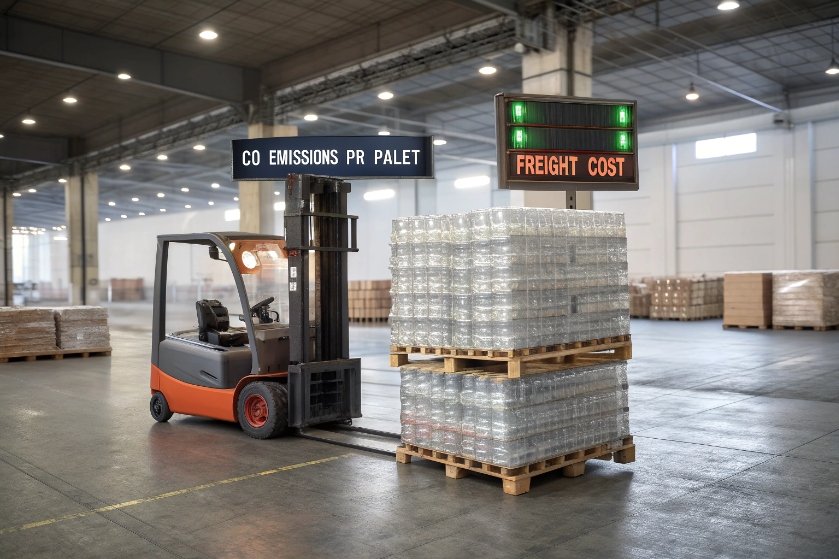
The main disadvantages of glass are its weight and brittleness. These increase transport cost, emissions, and handling risk across the supply chain, especially in long, complex routes.
Dive deeper: how glass behaves in real logistics
1. Weight and freight economics
Glass is simply heavier than plastic or aluminum for the same volume. This affects:
- Fuel use per pallet and per kilometer.
- Freight cost, especially on long-haul and export routes.
- Emissions per liter delivered, in many life cycle assessment (LCA) models 2.
Lightweighting helps. Modern 300 g wine bottles can replace older 400–500 g designs with similar strength. But even with lightweighting, glass will not match PET for pure weight-based efficiency.
2. Breakage and handling losses
Glass is strong in compression but weak in tension and impact. It does not like:
- Sharp knocks on the heel or shoulder.
- Hard pallet drops or forklift hits.
- Extreme temperature shocks.
Breakage costs go far beyond the bottle:
- Lost product value.
- Clean-up time and safety risks on lines and in warehouses.
- Returns and brand damage if consumers receive broken goods.
Good design, annealing, coatings, and packaging can push breakage rates down a lot, but they cannot remove risk completely.
3. Extra packaging and protection
To protect glass, we often add:
- Heavier cases and dividers.
- Pallet corner posts and top boards.
- Extra cushioning for e-commerce.
All of this adds cost, materials, and sometimes complexity in recycling. For high-margin products, this is acceptable. For low-margin commodities, it is harder to justify.
4. When the trade-off is still worth it
Even with these disadvantages, glass can still be the best choice when:
- The product has a high value per liter.
- The channel is controlled (HORECA, local markets, DRS loops).
- The brand relies on premium feel and taste stability.
Here, the extra freight and packaging cost is a smaller share of total value.
| Factor | Effect on Glass Logistics |
|---|---|
| High unit weight | Higher freight cost and emissions per pallet |
| Fragility | Breakage risk, safety concerns, downtime |
| Extra protective pack | More material and handling steps |
| Controlled local loops | Weight and breakage impact reduced |
So, weight and fragility are real disadvantages. But they are manageable when the brand can support a higher price point or use shorter, cleaner routes.
When should buyers choose borosilicate, flint, or high-white glass?
“Glass” is not just one material. Different compositions and clarity levels target different needs and price bands.
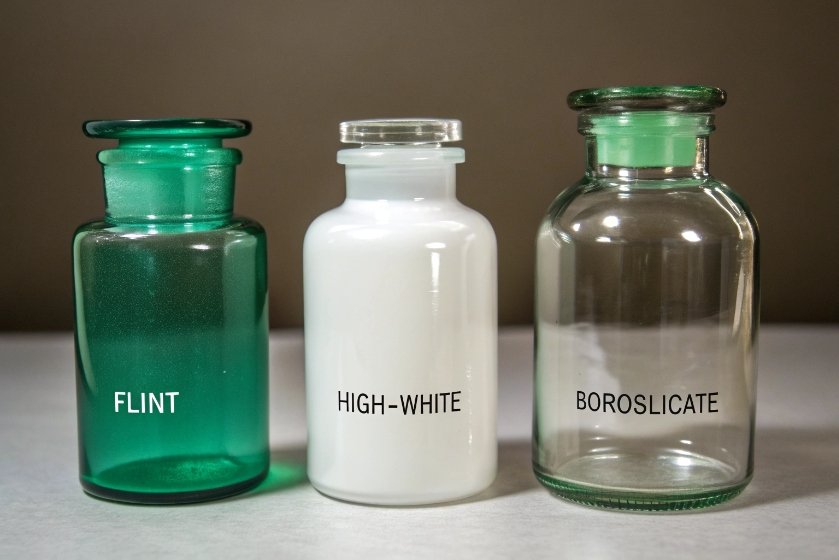
Buyers should choose borosilicate for high-temperature and highly sensitive uses, flint for standard food and beverages, and high-white glass when optical clarity and premium appearance are critical.
Dive deeper: matching glass types to real projects
1. Flint (standard soda-lime) glass
This is the workhorse for:
- Jars for sauces, pickles, jams.
- Standard beverage bottles.
- Many cosmetics and home products.
Pros:
- Good strength and chemical durability for normal use.
- Compatible with hot-fill and pasteurization when designed correctly.
- Most cost-effective option for large volumes.
Cons:
- Slight greenish tint depending on iron content.
- Lower thermal-shock resistance 3 than borosilicate.
- Not the clearest choice for ultra-premium look.
It is usually the first choice when performance needs are standard and the focus is on cost and availability.
2. High-white (extra-flint) glass
High-white glass is a refined soda-lime with very low iron content. It offers:
- Very high clarity and brightness.
- “Crystal-like” appearance on shelf.
- Strong premium cues for cosmetics, spirits, and luxury foods.
Buy this when:
- The product color is part of the selling point (cold-brew, juice, oil, perfume).
- Brand image needs “luxury” and “purity.”
- You are ready to pay a bit more per unit for aesthetics.
Performance is similar to standard flint for normal processes, but with better optical quality.
3. Borosilicate glass
Borosilicate is a different composition, with more silica and boron and less alkali. It brings:
- High thermal-shock resistance.
- Very good chemical durability and low leaching.
- Ability to handle steam sterilization and dry heat.
It is common in:
- Labware and pharma vials (Type I).
- High-end cookware and kettles.
- Some premium bottles that face extreme temperature swings.
Cons:
- Higher material and production cost.
- Heavier process demands, fewer suppliers in some regions.
- Often over-specified for standard food and beverage.
So borosilicate is not a general solution for all packaging. It is a surgical tool for demanding cases.
| Glass Type | Main Strengths | Typical Use Cases |
|---|---|---|
| Flint (standard soda–lime–silica glass 4) | Cost-effective, robust for normal use | Jars, standard bottles, many beverages |
| High-white | High clarity, premium appearance | Spirits, cosmetics, premium drinks |
| Borosilicate | High thermal and chemical resistance | Pharma, labware, extreme heat cycles |
Choosing the right type turns “glass” from a generic choice into a tuned solution.
How recyclable is glass, and what affects recycled content availability?
Many brand decks say “100% recyclable glass” in big letters. This is true in theory. In practice, recycled content levels depend on collection, sorting, color mix, and furnace setup.
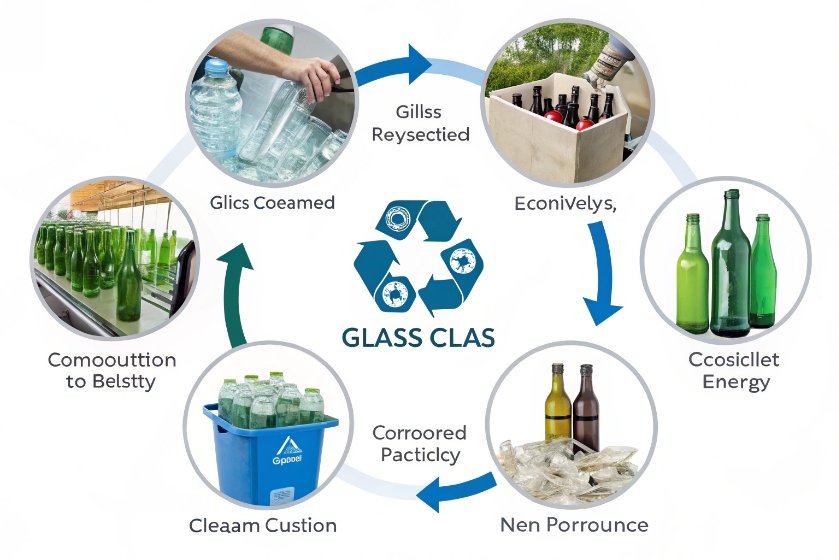
Glass is recycled endlessly with no loss in quality or purity 5, but actual recycled content depends on glass cullet 6 supply, color separation, contamination levels, and regional infrastructure.
Dive deeper: recycling reality behind the slogan
1. Why glass is strong in circularity
When cullet (broken glass) is clean and well sorted:
- It can replace a high share of virgin raw materials.
- It melts at lower energy than raw batch.
- It keeps full material quality cycle after cycle.
This means:
- Lower energy cost per ton of glass.
- Lower CO₂ emissions.
- A strong sustainability story for brands.
2. Factors that limit recycled content
Even when a factory wants more cullet, it can face limits:
- Not enough high-quality cullet in the right color.
- Too much contamination from ceramics, metals, or organics.
- Mixed-color cullet that cannot be used in flint furnaces without tint problems.
Clear flint glass needs very clean, light-colored cullet to stay clear. Amber and green furnaces are more tolerant of color variation.
3. Design choices that help recycling
Packaging design can make cullet easier to use:
- Stick to common colors (flint, amber, some greens).
- Use labels and sleeves that are easy to remove and do not hide optical sorting.
- Avoid heavy-metal-containing inks, complex multi-material decorations, and glued-on elements that are hard to remove.
Even small decisions—like label area, adhesive type, and coating coverage—can influence how much of a brand’s glass ends up back as bottle-to-bottle cullet versus downcycled or discarded.
4. Regional differences
Cullet availability varies a lot by region:
- Places with strong deposit-return systems 7 or bottle banks collect more and cleaner glass.
- Rural or low-infrastructure areas may have lower collection rates and higher contamination.
- Export and import patterns can create color imbalances (for example, more green cullet than local demand).
| Aspect | Positive for Recycled Content | Negative for Recycled Content |
|---|---|---|
| Collection system | DRS, bottle banks, curbside sorting | Mixed waste, low participation |
| Color strategy | Using flint/amber with matching cullet | Many niche colors, limited demand |
| Decoration and labels | Easy to remove, minimal coverage | Full-body sleeves, complex coatings |
| Contamination levels | Clean cullet streams | Ceramics, stones, metals mixed in |
So glass is a strong circular-material story, but real recycled content is a shared responsibility between brand, consumer, and local systems.
Conclusion
Glass brings outstanding chemical safety, barrier performance, heat resistance, and recyclability, but buyers must balance these strengths against weight, fragility, cost, and regional recycling realities when choosing the right material and glass type for each product.
Footnotes
-
USP briefing on Type I–III glass performance for pharmaceutical packaging. ↩ ↩
-
Peer-reviewed LCA comparing reusable glass and PET bottles, including transport impacts. ↩ ↩
-
Explains thermal shock and why borosilicate resists rapid temperature changes. ↩ ↩
-
Overview of soda–lime glass composition and why it dominates bottles and jars. ↩ ↩
-
Industry explanation of glass’s closed-loop recyclability without quality loss. ↩ ↩
-
Defines cullet and summarizes recycling energy and emissions benefits. ↩ ↩
-
How deposit return schemes work and why they improve collection and sorting. ↩ ↩






