
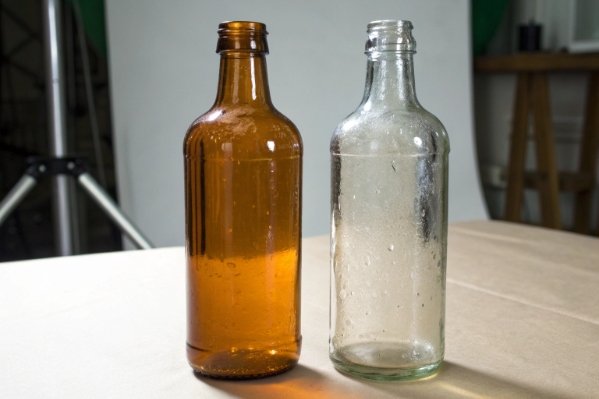
Choosing between amber and clear glass is usually a decision based on light protection or aesthetics, but does this choice impact the chemical safety of your product? We must analyze whether the coloring agents and recycled content used in amber glass compromise its resistance to acidic beverages or alkaline washing.
Fundamentally, amber and clear (flint) glass share the same soda-lime silicate base and possess nearly identical chemical durability ratings (Type III). However, the "reduced" atmosphere required to create amber glass and its ability to hide surface etching make it practically superior for returnable fleets, while clear glass exposes even the slightest corrosion haze.
The Base Chemistry: Color vs. Composition
At FuSenglass, I often guide clients who believe that Amber glass is a "special material" distinct from standard glass. In reality, the difference is merely cosmetic doping. Both Amber and Clear (Flint) bottles are predominantly made of the same workhorse material: Soda-Lime-Silica glass 1.
The chemical durability 2—how well the bottle resists being dissolved by vinegar, beer, or caustic soda—is determined by the ratio of Silica (Sand) to the Stabilizers (Calcium/Alumina) and Fluxes (Soda Ash). Whether we add a pinch of Selenium to make it clear or a mix of Iron and Sulfur to make it amber, the "backbone" of the glass remains 70-74% Silica.
However, the process of making them differs. Amber glass is produced in a "reduced atmosphere" 3 (low oxygen) to activate the color centers. Clear glass is often produced in an "oxidized" atmosphere. While the base resistance (Hydrolytic Class) is usually the same (HGB 3), the minor variations in raw materials can influence batch consistency.
For a brand owner, the takeaway is simple: Do not fear the color. A high-quality Amber bottle from FuSenglass will pass the same acid resistance tests as a high-quality Clear bottle. The choice should be driven by your product’s sensitivity to UV light, not a fear of chemical leaching.
Composition Comparison
| Component | Clear (Flint) Glass | Amber Glass | Impact on Resistance |
|---|---|---|---|
| Silica (SiO₂) | ~72% | ~72% | Primary. Provides the structural resistance. |
| Soda Ash (Na₂O) | ~13-14% | ~13-14% | Primary. Determines solubility (flux). |
| Iron (Fe₂O₃) | Low (<0.06%) | Medium (~0.3-0.5%) | Minimal impact on acid/alkali resistance. |
| Colorants | Selenium/Cobalt | Carbon/Sulfur | Negligible quantity (<0.01%). |
| Atmosphere | Oxidizing | Reducing | Alters Iron oxidation state (Fe²⁺ vs Fe³⁺). |
While the backbone is the same, the ingredients list—specifically the use of recycled glass—varies significantly. This brings us to the nuance of production.
Does glass color (amber vs. flint) change chemical durability, or is it mainly driven by base composition and melting practice?
The color of the glass is a secondary characteristic resulting from trace additives, whereas durability is a fundamental property of the silicate network. Therefore, the color itself is not a predictor of corrosion resistance.
Chemical durability is driven strictly by the base composition—specifically the balance of Alumina and Calcium stabilizers against Sodium flux—not by the colorants. Whether a bottle is amber or flint, if the manufacturer maintains the same target oxide ratio and proper annealing temperatures, the acid and alkali resistance will be chemically indistinguishable.
The Myth of "Amber Protection"
There is a misconception that Amber glass is "tougher" chemically. This likely stems from its association with aggressive products: beer (carbonated/acidic), chemicals, and medicines.
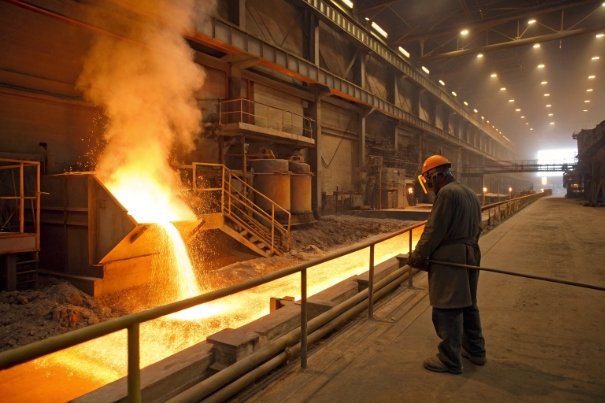
In the furnace, we create Amber color using the "Carbon-Sulfur" chromophore. We add Iron Oxide 4, Sulfur, and a reducing agent (like Carbon or Coke). This forms iron sulfide structures that absorb blue and UV light, giving the glass its brown hue.
- Acid Resistance: The iron sulfide complexes are locked within the silica matrix. When exposed to acids (like the pH 4.0 of beer or pH 3.0 of kombucha), the silica network protects them. The glass does not release iron or sulfur in any meaningful quantity.
- Alkali Resistance: Similarly, the resistance to caustic washing is determined by the Silica-Alumina network. The presence of 0.3% iron in Amber glass (vs 0.05% in Clear) does not make the network significantly weaker or stronger against hydroxyl attack.
Melting Practice is King:
The real differentiator is homogeneity.
- Amber Glass: The dark color absorbs heat radiation in the furnace. This makes the bottom of the glass melt colder than the top. If the furnace operator doesn’t adjust the boosting (electric heating), you can get uneven melting. Poorly melted glass—regardless of color—has lower chemical durability.
- Clear Glass: Transmits heat to the furnace bottom more easily, generally allowing for easier convective mixing and potentially more consistent chemical durability in older or less advanced furnaces.
At FuSenglass, we use bottom bubbling and electric boosting to ensure our Amber melts are just as homogenous and durable as our Flint melts. Also, proper annealing 5 temperatures are maintained to relieve internal stresses.
Drivers of Durability
| Factor | Influence on Clear Glass | Influence on Amber Glass | Verdict |
|---|---|---|---|
| Silica Content | High = High Durability | High = High Durability | Tie. |
| Alkali (Na₂O) | Low = High Durability | Low = High Durability | Tie. |
| Iron Content | Trace | Minor additive | Negligible. |
| Heat Transfer | Good (Radiant heat passes) | Poor (Absorbs IR) | Clear is easier to melt uniformly. |
| Sulfur Treatment | Optional (Type II) | Often standard for pharma | Amber often receives treatment more frequently. |
However, there is one major ingredient difference: Recycled Glass (Cullet). Amber furnaces are the hungry pigs of the industry—they eat everything.
How can amber colorants and higher recycled content influence leaching, surface haze, or corrosion consistency?
Amber glass production typically utilizes a significantly higher percentage of recycled cullet than flint glass. This heavy reliance on recycled material introduces variables that can subtly affect the glass’s chemical behavior.
High cullet levels in amber glass generally improve melting efficiency and homogeneity, potentially enhancing durability. However, if the cullet source is contaminated or inconsistent, it can introduce foreign oxides that slightly alter the leaching profile. Conversely, amber’s dark coloration effectively masks the early visual signs of surface corrosion (haze/scuffing) that would be immediately rejected in clear bottles.
The Cullet Factor
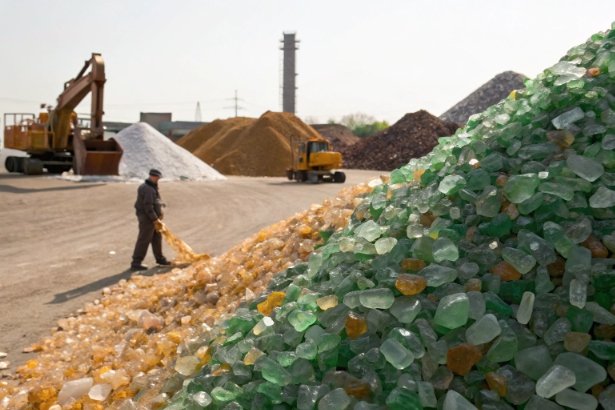
Sustainable manufacturing relies on Cullet 6 (crushed, recycled glass).
- Clear Glass: Very picky. We can only use clear cullet. If we mix in green or amber cullet, the glass turns an ugly "dead leaf" color. We typically run 10-30% cullet.
- Amber Glass: Very forgiving. We can mix in green, clear, and amber cullet. The strong amber colorant overpowers the others. We often run 50-70% cullet.
Impact on Corrosion Consistency:
Using 60% recycled glass actually stabilizes the melting process because cullet melts at a lower temperature than raw sand. This results in a very homogenous glass with consistent chemical resistance.
- Risk: If the recycled glass stream contains contaminants (ceramics, lead crystal from household waste), it can create "stones" or weak spots.
- Leaching: Amber glass naturally contains more Iron and Manganese. In extremely aggressive acid tests (boiling in HCl), Amber glass might leach slightly higher levels of Fe/Mn than Clear glass. However, for food applications, these levels are chemically insignificant and far below safety limits.
The "Hiding" Power of Amber:
This is a functional advantage. Corrosion often manifests as "Haze" or "Scuffing" (micro-scratches and etching).
- Clear Bottle: A tiny bit of alkali etching (from washing) creates a white haze that reflects light. The bottle looks dirty.
- Amber Bottle: The dark glass absorbs light rather than reflecting it. The same amount of etching is practically invisible to the consumer. This makes Amber bottles appear "newer" for longer in returnable systems.
Recycled Content & Defect Matrix
| Feature | Clear Glass (Low Cullet) | Amber Glass (High Cullet) | Operational Effect |
|---|---|---|---|
| Melting Energy | Higher | Lower | Amber is more eco-friendly. |
| Homogeneity | Dependent on furnace heat. | Good (Cullet aids melting). | Consistent durability. |
| Contamination Risk | Low (Strict sorting). | Moderate (Mixed sources). | Potential for inclusions/stones. |
| Haze Visibility | High. (Shows everything). | Low. (Hides defects). | Amber preferred for wash fleets. |
| Leaching Profile | Primarily Na, Ca, Si. | Na, Ca, Si + trace Fe/S. | No toxicity difference. |
Knowing this, how do you choose? It depends on what you are putting inside and how you plan to clean it.
Which applications favor amber vs. clear bottles when acids/alkalis and heat are involved (beer, kombucha, syrups, cleaning products)?
The choice between amber and clear is rarely about acid resistance alone; it is a balance of UV protection, marketing visibility, and wash-line survival.
Amber bottles are mandatory for light-sensitive acidic products like beer and kombucha to prevent photochemical skunking, while also offering superior visual longevity in caustic wash lines by masking scuff marks. Clear bottles are preferred for stable syrups and cleaning agents where product color visibility is a marketing asset, provided the formulation is not UV-sensitive.
Application-Specific Selection
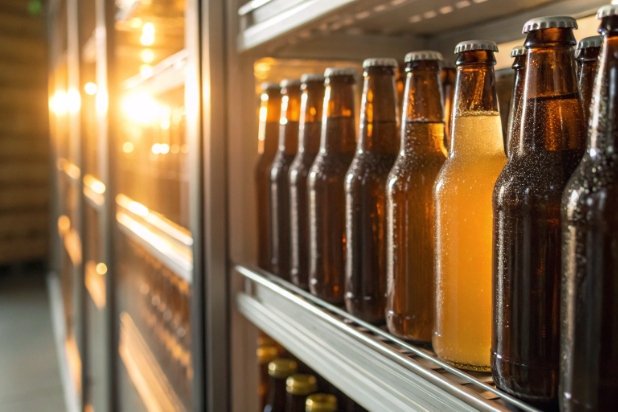
1. Beer & Kombucha (The UV/Acid Combo):
These beverages are acidic (pH 3.0 – 4.5) and carbonated.
- Chemical Need: Standard Soda-Lime acid resistance (Class S1/S2). Both Clear and Amber provide this.
- The Dealbreaker: UV Light. Hops in beer react with UV light to create 3-MBT ("skunky" 7 flavor). Kombucha probiotics can be degraded by light.
- Verdict: Amber is non-negotiable. It blocks 99% of UV light below 400nm. Clear glass blocks almost nothing.
2. Cleaning Products (The Alkali/Visual Combo):
Many household cleaners are alkaline (Ammonia, Bleach).
- Chemical Need: Alkali resistance.
- The Dealbreaker: Consumer Trust. Users want to see the blue liquid or the yellow cleaner to know it’s "powerful."
- Verdict: Clear is preferred. Since these are usually single-use, the long-term etching from the alkaline product is not a visual issue before the bottle is discarded.
3. Syrups & Sauces (Hot Fill/Acid):
Hot-filling tomato sauce (acidic) or maple syrup (neutral/acidic).
- Chemical Need: Thermal shock resistance 8 and Acid resistance.
- The Dealbreaker: Aesthetics. A premium maple syrup looks like liquid gold; you want to show that off.
- Verdict: Clear is standard. Unless the product oxidizes (browns) in light, Clear wins for marketing.
4. Returnable Fleets (The Wash Line):
Milk, Water, Soda.
- Chemical Need: Resistance to hot Caustic Soda (NaOH) washing.
- The Dealbreaker: Scuffing. A scuffed clear bottle looks like garbage.
- Verdict: Amber wins on longevity. It hides the "wash rings" and scuffing, allowing the fleet to circulate for 30-50 trips vs 20-30 for clear.
Selection Matrix
| Product | Primary Stressor | Secondary Stressor | Recommended Glass | Why? |
|---|---|---|---|---|
| Lager/IPA | UV Light | Internal Pressure | Amber | Prevents "skunking." |
| Kombucha | Acid (pH 3) | UV Light | Amber | Protects probiotics/flavor. |
| Maple Syrup | Heat (Hot Fill) | Acid | Clear | Showcases product color. |
| Hot Sauce | Acid (Vinegar) | Sediment | Clear | Visual appeal; acid stable. |
| Chemical Reagents | Light Sensitivity | Aggressive Chem | Amber | Safety/Stability. |
| Returnable Soda | Caustic Wash | Scuffing | Amber | Hides wear and tear. |
Finally, when you send requests to suppliers, you must compare apples to apples.
What tests should buyers use to compare amber and clear bottles fairly (same ISO chemical resistance method, temperature, and exposure time)?
Subjective visual inspections are not enough. You must mandate identical ISO protocols to prove that the clear bottle is just as chemically robust as the amber one, or vice versa.
Buyers should require ISO 719 (Hydrolytic Resistance) and DIN 12116 (Acid Resistance) tests performed at identical temperatures and durations for both glass colors. Additionally, USP <660> Light Transmission testing is essential for amber glass to verify that its UV-blocking capabilities meet pharmacopeial standards, a metric not applicable to clear glass.
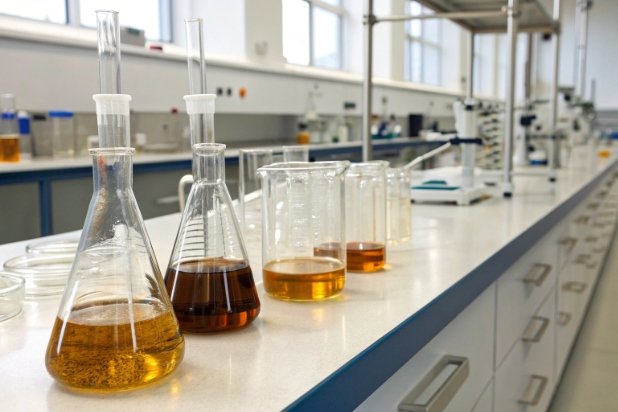
The Comparative Testing Protocol
When I receive a "Quality Concern" claim stating that "The clear bottles are leaching more than the amber ones," 99% of the time, the client is comparing data from two different test methods. To compare fairly, you must standardize the conditions.
1. Hydrolytic Resistance (The Baseline):
- Method: ISO 719 9 (Grain Test) or USP <660> (Surface Test).
- Fairness Check: Ensure both are tested at 121°C for 60 minutes.
- Expectation: Both should be HGB 3 (Grain) or Type III (Surface). If the Amber is Type II (treated) and Clear is Type III, that is a spec difference, not a color difference.
2. Acid Resistance (The Food Safety Check):
- Method: DIN 12116 10.
- Condition: Boiling in 6N Hydrochloric Acid for 6 hours.
- Measurement: Mass Loss (mg/dm²).
- Expectation: Both should be Class S1 or S2. The mass loss difference should be negligible.
3. Light Transmission (The Difference Maker):
This is where they should differ.
- Method: USP <660> Spectral Transmission.
- Requirement:
- Amber: Must block light between 290nm and 450nm (Transmission < 10%).
- Clear: No limit (usually > 90% transmission).
- Why: This confirms the Amber is actually functional protection, not just painted glass.
4. Leachable Iron (The Amber Specific):
- Method: ASTM C927 (Modified).
- Why: Since Amber contains iron, you might want to verify it doesn’t leach.
- Target: Fe < 0.05 ppm in the extract solution.
Buyer’s Test Comparison Table
| Test Parameter | Standard | Amber Target | Clear Target | Notes |
|---|---|---|---|---|
| Hydrolytic Class | ISO 719 | HGB 3 | HGB 3 | Should be identical. |
| Acid Resistance | DIN 12116 | Class S1 / S2 | Class S1 / S2 | Should be identical. |
| Alkali Resistance | ISO 695 | Class A2 | Class A2 | Should be identical. |
| UV Protection | USP <660> | PASS (<10%) | N/A (Fail) | The main functional difference. |
| Arsenic/Lead | USP <232> | Non-Detect | Non-Detect | Safety check for both. |
Conclusion
The battle between Amber and Clear is not fought on the grounds of chemical durability—both are robust, high-quality soda-lime warriors. The decision lies in the specific needs of your product: does it need a shield against UV light (Amber) or a window for consumer display (Clear)? By understanding that the base chemistry is shared, you can confidently choose the color that serves your brand, knowing that FuSenglass engineering protects the contents either way.
Footnotes
-
The standard material composition used for the vast majority of commercial glass packaging. ↩
-
A material’s ability to withstand breakdown from water, acids, and alkalis. ↩
-
An oxygen-depleted furnace environment essential for activating amber chromophores. ↩
-
The chemical compound responsible for the brown tint in amber glass. ↩
-
A controlled cooling process that eliminates internal stress to prevent breakage. ↩
-
Recycled glass fragments used to lower melting temperatures and save energy. ↩
-
The off-flavor in beer caused by UV light reacting with hops. ↩
-
The ability of glass to withstand sudden temperature changes without cracking. ↩
-
Standard test method for measuring the water resistance of glass grains. ↩
-
Standard test method for determining the acid resistance of glass. ↩






