
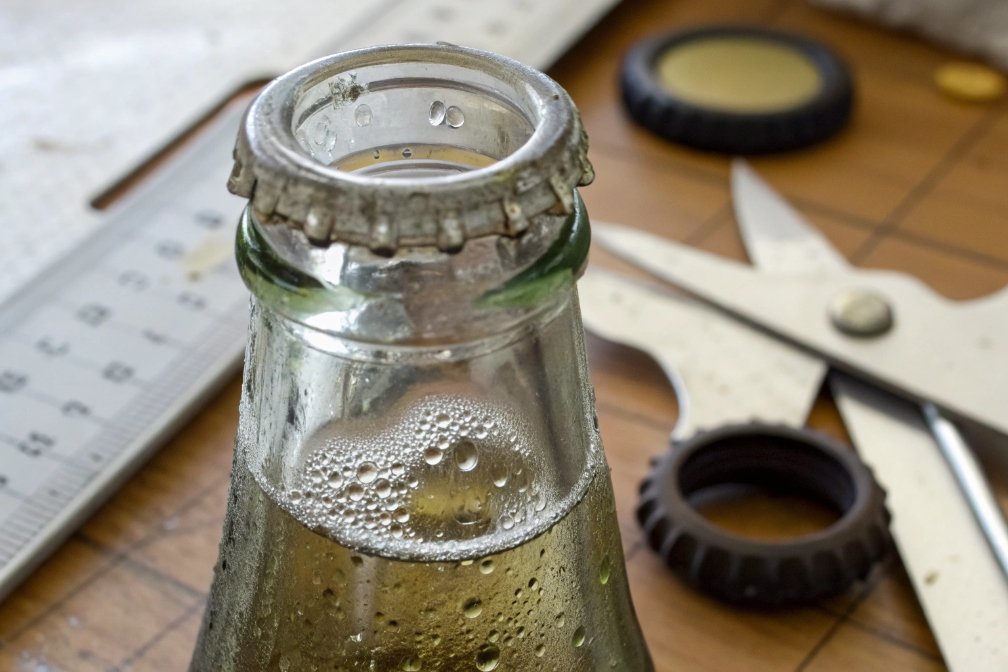
A bottle can look perfect on the line, but one weak seal is enough to ruin a pallet, a launch, or a brand’s trust.
Poor sealing in glass bottles usually comes from small geometry errors at the finish, wrong torque or liner, temperature swings after filling, and hidden glass defects under the cap that damage the gasket.
When we investigate leaks, we almost never find one single cause. Sealing is a system: glass finish, closure design, liner material, capping torque, headspace pressure, and temperature profile all interact. Let us walk through the main weak points one by one.
Do finish flatness and thread accuracy drive micro-leaks?
A beautiful label does not save a bottle if the finish is tilted, chipped, or out of round. The closure will never sit right.
Yes. Finish flatness, thread accuracy, neck straightness, and ovality directly control how evenly the liner compresses. Small geometry errors often show up later as slow micro-leaks instead of obvious drips.
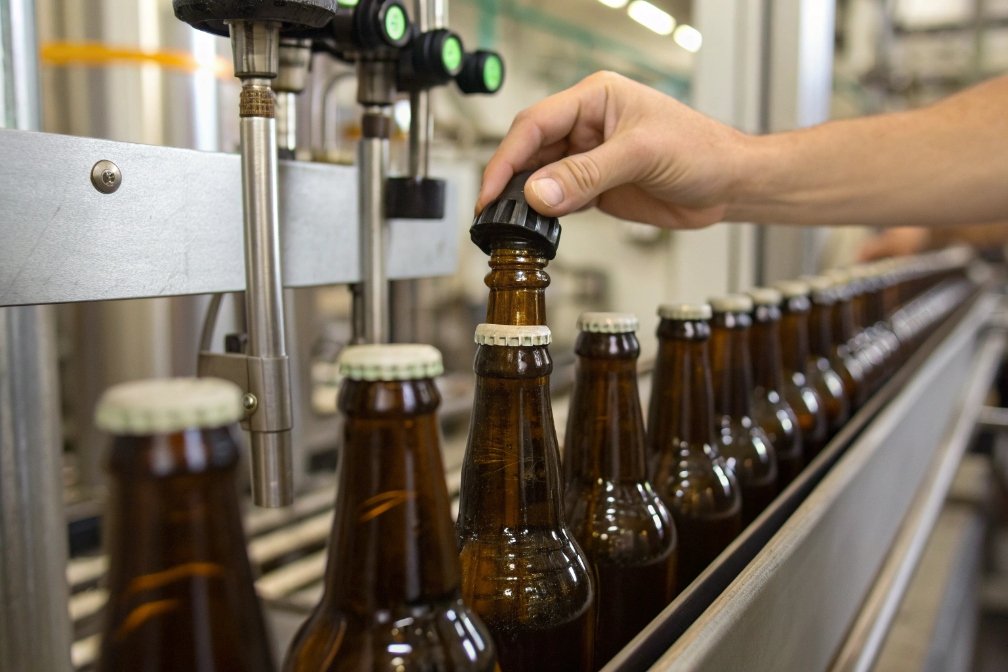
How the glass finish controls the seal
The closure and liner can only work with the surface they touch. At the top of the bottle, we care about four things:
- Top land flatness: the sealing land must be level. If it tilts or waves, the liner only touches some areas.
- Roundness / ovality: out-of-round finishes create high compression on one side and low compression on the other.
- Neck straightness: if the neck axis leans, caps sit crooked, and the liner contact is uneven.
- Thread or lug accuracy: wrong height, pitch, or start causes cross-threading, cocked caps, and poor centering.
If you want a practical way to explain why neck/finish dimensions matter, this guide on matching a bottle with a compatible closure 1{#fnref1} covers the core measurements that drive real-world sealing.
Even small deviations can be enough to break vacuum, lose carbonation, or let product creep out over weeks.
When these errors are random, you see scattered leakers. When they are systematic (for example, one neck ring out of spec), a whole mold or section creates the same sealing problem on every cycle.
How we read micro-leaks in practice
Micro-leaks seldom leave big puddles. They leave:
- Slight sticky rings under caps.
- Mold growth on necks in warehouse or store.
- Slow vacuum loss in hot-fill products.
- Flat or oxidized beverages after some weeks.
In failure analysis, we often see a pattern:
- Finish is slightly tilted or chipped.
- Liner shows partial compression ring instead of a nice continuous ring.
- Vacuum or pressure measurements show drift over time.
That is why we use tight finish tolerances and dedicated gauges. Ring and plug gauges, profile projectors, and even 3D scanners help us confirm that the finish is within design.
Linking finish defects to leak patterns
Below is a simple way to connect geometry issues to what we see later:
| Finish / neck issue | Effect on seal | Typical field symptom |
|---|---|---|
| Top land not flat | Local low compression | Micro-leaks, mold under cap, vacuum loss |
| Oval or out-of-round finish | Uneven liner contact | Random leakers in a lot |
| Bent / cocked neck | Cap sits skewed | Cross-thread, poor torque, visible tilt |
| Damaged thread profile | Cap cannot seat fully | Loose-feeling caps, torque scatter |
| Small chips on sealing land | Direct leak paths, liner cuts | Single-bottle leaks, glass in liner |
So yes, finish flatness and thread accuracy do drive micro-leaks. They are not “cosmetic details”; they are the foundation of the whole sealing system.
How do cap torque and liner selection affect seal integrity?
Even a perfect bottle and cap design will leak if the liner is wrong for the product or the torque is set “by feel” instead of a controlled window.
Application torque must be high enough to compress the liner and low enough to avoid crushing or deforming the closure, while liner material and hardness must match the product, finish, and storage conditions.
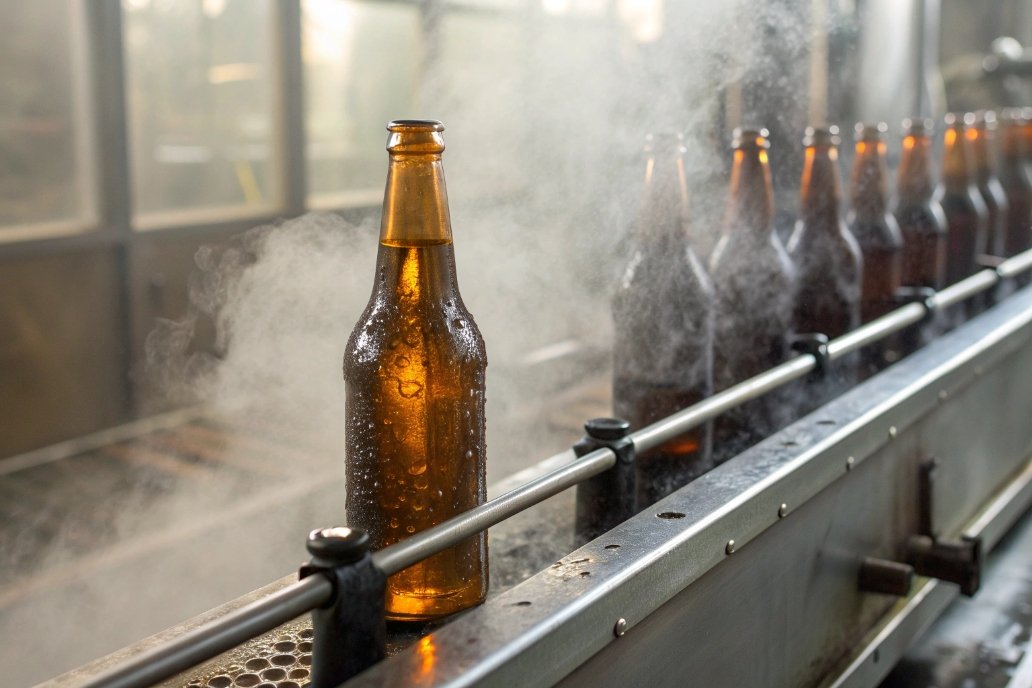
The role of torque in building the seal
When the capper applies torque, it pulls the closure down and compresses the liner against the finish. Three things happen:
- The closure threads engage and stretch slightly.
- The liner flows to fill small gaps, scratches, or micro-irregularities.
- A balance of forces sets up between closure, liner, bottle, and internal pressure.
In practice, sealing investigations get much easier when teams track and trend both application torque and removal torque 2{#fnref2} instead of only checking caps “by feel.”
If torque is too low:
- The liner does not compress fully.
- Any small finish defect becomes a leak path.
- Removal torque is low, and some caps can be loosened in transit.
If torque is too high:
- The liner can be crushed and lose recovery (set loss).
- Plastic closures can deform or “dish,” lifting at the outer edge.
- Threads on the closure or bottle can be damaged.
So we define a torque window for each closure–bottle–product combination and monitor it with a bottle cap torque tester 3{#fnref3} during production.
Liner materials and why they matter
Liners look simple, but they are engineered parts. Different materials behave differently with:
- Product type: water, oil, alcohol, acid, sugar, carbonation.
- Temperature: hot-fill vs ambient filling.
- Headspace pressure: vacuum, still, or carbonated.
For a quick, packaging-engineer-friendly overview of closure liner types and materials 4{#fnref4}, it helps to compare how foam, rubber-like liners, and induction liners behave under stress, time, and temperature.
Common liners include:
- Foam/EPE liners: good general purpose, forgiving to small defects, but limited with strong solvents.
- PVDC or PVC-based liners: better barrier, used for some beverages, but with regulatory and compatibility limits.
- TPE or rubber-like liners: high resilience, very good sealing, often in metal lug / crown closures.
- Induction seals: foil plus heat-activated polymer, used for tamper evidence and extra barrier.
We also watch liner hardness and thickness. A very hard liner on a rough finish cannot flow into defects. A very soft liner under high torque can squeeze out and leave thin spots.
How torque and liner choices show up as failures
When we see leaks that are not linked to obvious finish defects, liner and torque are often the real cause.
| Cause | What happens at the seal | Field result |
|---|---|---|
| Under-torque | Low liner compression | Early leaks, low removal torque |
| Over-torque | Liner crush, closure deformation | Delayed leaks, stuck or distorted caps |
| Liner too hard | Poor flow into micro-defects | Random weeping at defects |
| Liner too soft | Cold flow, set loss over time | Good at first, leakers after storage |
| Chemical incompatibility | Liner swelling, cracking, or shrinkage | Seal loss, off-odors, product attack |
A stable seal needs the right trio: correct finish, suitable liner, and controlled torque. If one leg is weak, the whole system leans.
Can hot-fill shrinkage or temperature swing break the seal?
Even when the cap looks perfect at the filler, temperature changes during cooling, transport, and storage can slowly pull the closure and liner away from the glass.
Yes. Hot-fill cooling, pasteurization, and ambient temperature swings change headspace pressure and liner stress, which can loosen caps, break vacuum, and turn borderline seals into leaks.
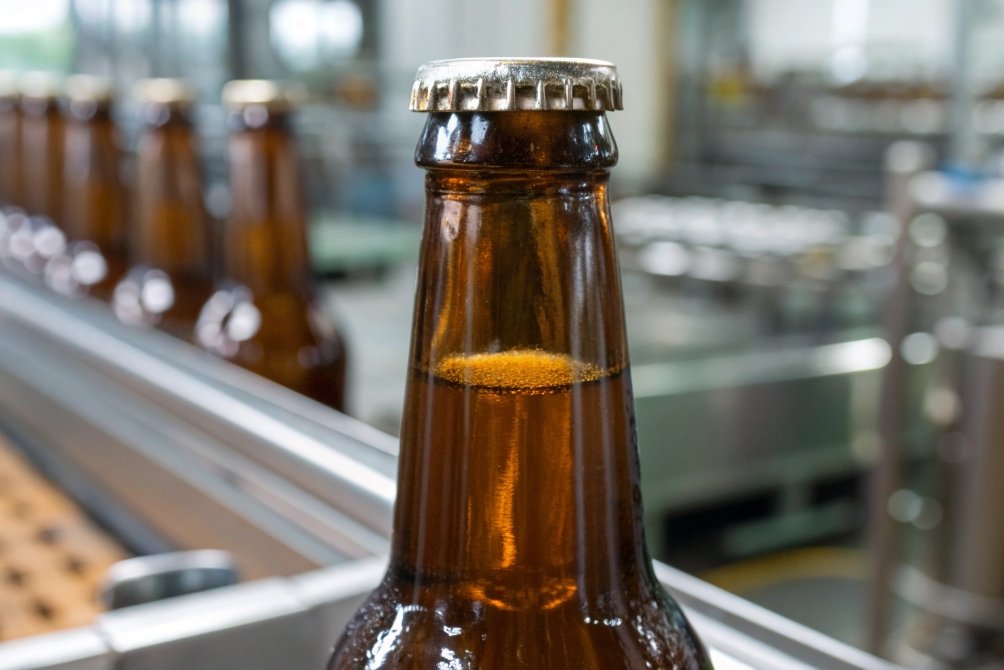
What happens during hot-fill and cooling
In hot-fill lines, product enters the bottle at high temperature. Then we:
- Fill and cap while product and headspace are hot.
- Hold the bottle at temperature for a set time (for sterilization or pasteurization).
- Cool the bottle in tunnels or ambient air.
As the product cools:
- The liquid volume shrinks.
- The headspace pressure drops, often creating a vacuum.
- Glass contracts slightly, closures and liners also contract.
If the closure/liner is designed for it, hot-fill cooling can help sealing. For example, plastisol lined caps used in hot-fill 5{#fnref5} can take advantage of heating and cooling to form an airtight seal—but only if the process window is controlled.
Cold-chain changes for carbonated drinks work in the opposite direction. Warmer storage raises internal pressure, which pushes against the seal and can cause CO₂ loss or leaks if the seal margin is small.
How temperature swings interact with weak spots
Temperature swings alone do not create leaks on a robust system. They expose weak spots that were already close to the limit.
Examples:
- A bottle with a slightly tilted finish and a liner with borderline compression may pass in-plant tests. After hot-fill cooling, vacuum pulls the liner into the low spot, and micro-leaks appear.
- A carbonated product filled cool may be safe in a refrigerated warehouse. After a period in a hot truck, internal pressure increases, and caps with low torque open slightly.
This is why we always test sealing performance under realistic temperature cycles. Even general filling guidance reminds brands that headspace is necessary to accommodate temperature-driven expansion 6{#fnref6}—and headspace interacts directly with pressure, torque, and liner behavior.
Designing the system for thermal and pressure changes
Good sealing design does not only look at room temperature. It plans for the whole life of the product.
| Scenario | Risk to seal | Mitigation steps |
|---|---|---|
| Hot-fill + rapid cooling | High vacuum, liner set loss | Use vacuum panels, right liner, vacuum-rated cap |
| Pasteurization after capping | Repeated heat cycles | Verify liner set and removal torque after cycle |
| Warm truck after cold filling | Higher internal pressure | Choose closure for pressure, verify torque window |
| Cold-chain excursions in retail | Cycles of pressure and vacuum | Stability tests over full temp range |
So yes, hot-fill shrinkage and temperature swings can “break” the seal. They do this by changing pressure and stress on an already marginal closure–bottle system.
Do glass chips or burrs under the closure trigger failures?
Sometimes we open a cap and see a perfect liner ring with one deep cut, or a small piece of glass embedded in the gasket. That is a clear red flag.
Glass chips, sharp seams, and burrs on the finish land or under the closure can cut the liner, create direct leak paths, scatter torque values, and even send glass fragments into the product.
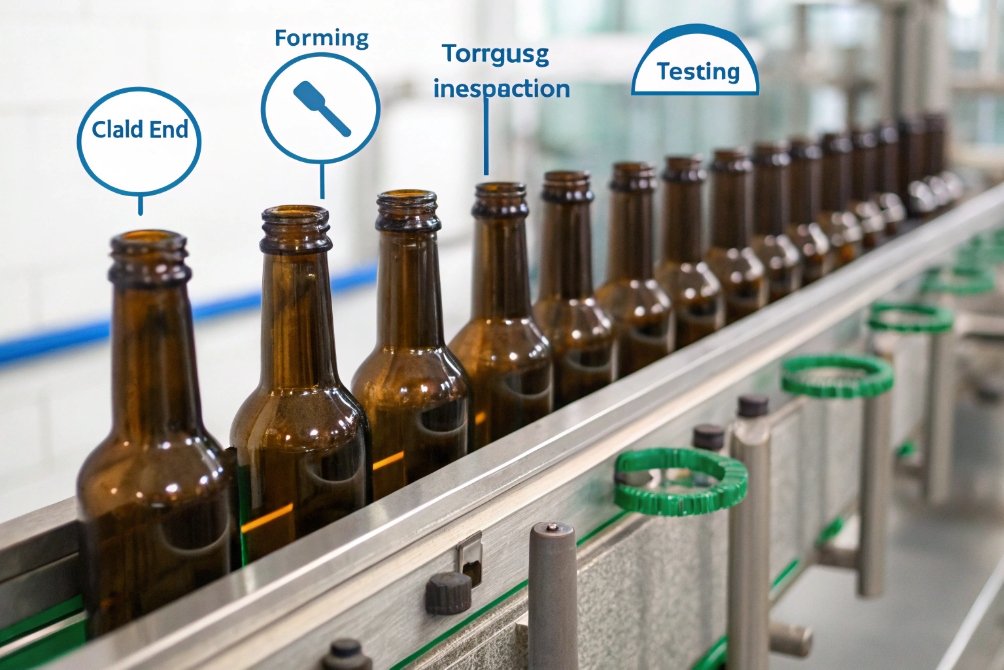
Where chips and burrs come from
These defects can appear at several stages:
- During forming: split finishes, overpress, mold damage, or rough trimming.
- During handling: bottle-to-bottle impact, contact with guides, dead plates, or dividers.
- During packaging and transport: rubbing against pallets, other bottles, or equipment.
Chips at the lip or under the cap may be small and hard to see, especially once the bottle is coated and printed. But they have sharp edges that focus stress and can dig into the liner when the cap is applied.
A closely related lesson from canning is that retightening closures while hot can cut through gaskets—NCHFP’s guidance on cooling jars and testing seals 7{#fnref7} describes this failure mode clearly, and the same “don’t damage the gasket during handling” principle applies to glass bottle closures.
How they damage the seal
When the closure comes down and torque builds, the liner flows around the finish. If there is a chip:
- Part of the liner is forced into the chipped cavity.
- The sharp glass edge can cut or pinch the liner.
- Under vibration or pressure changes, the liner can tear further.
If there is a burr or sharp seam:
- The liner compresses harder at that ridge, which may tear or thin it.
- Adjacent regions may see lower compression, creating micro-channels.
The result is often:
- Leaks at one specific angle around the neck.
- Liner rings with clear cuts in leakage analysis.
- Occasional glass crumbs trapped in the liner surface.
Why chips also affect torque and safety
Chips and burrs do more than cause leaks. They also:
- Change how the closure seats, which can scatter torque readings.
- Create high local stress concentrations at the finish, raising crack risk under capping or handling.
- Introduce a foreign body hazard if glass fragments fall inside the bottle during filling or opening.
This is why finish inspection in our process treats many chip types as critical defects with zero tolerance in AQL plans.
| Defect on finish | Direct effect on liner | Field risk |
|---|---|---|
| Small chip on top land | Cut, thin area in liner | Micro-leak, glass in gasket |
| Large chip on lip | Big gap, mis-seating of closure | Fast leak, safety complaint |
| Sharp seam / burr | Local overcompression and tearing | Slow leak, fungus under cap |
| Crushed or flaked edge | Multiple small glass fragments | Contamination, sharp pieces in product |
Careful cold-end inspection, plus empty-bottle inspection at the filler, helps keep these dangerous defects out of shipped product.
Conclusion
Reliable sealing in glass bottles depends on a clean, accurate finish, the right closure–liner–torque setup, and a process that respects temperature and handling limits so small defects do not grow into leaks.
Footnotes
-
Explains neck/finish dimensions and how closure compatibility drives sealing reliability. ↩ ↩
-
Defines application vs removal torque and why both matter for seal integrity over time. ↩ ↩
-
Practical torque-testing guidance and why torque testers are essential for controlling leak risk. ↩ ↩
-
Overview of closure liner types and how material choices affect sealing performance and compatibility. ↩ ↩
-
Explains liner options (including hot-fill use cases) and how liners create airtight seals. ↩ ↩
-
Notes why headspace matters for temperature-driven expansion and pressure changes in sealed containers. ↩ ↩
-
Shows how hot handling can damage gaskets and cause seal failures—useful for closure handling SOPs. ↩ ↩






