
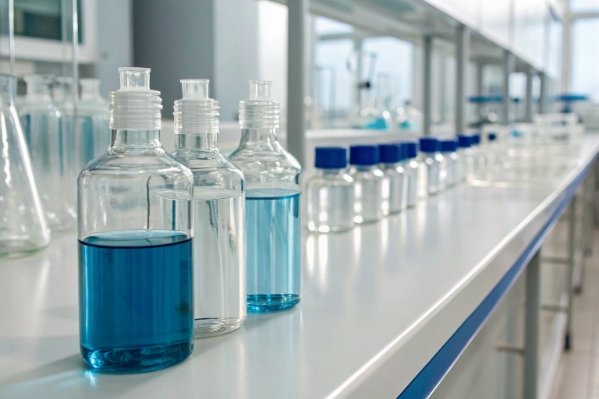
For products that demand absolute purity, standard glass simply isn’t enough. We must explore why High Borosilicate glass is the ultimate shield against chemical interaction, preventing dangerous pH shifts and contamination in sensitive formulations.
High Borosilicate glass (Type I) offers superior acid and hydrolytic resistance compared to soda-lime glass because its molecular structure, reinforced with Boron and possessing very low alkali content, virtually eliminates ion exchange. This "neutral" glass prevents the leaching of sodium ions into acidic solutions and resists surface attack, ensuring the liquid inside remains 100% pure and stable.
The "Neutral" Gold Standard: Type I Glass
At FuSenglass, when a client comes to us with an injectable drug, a high-purity reagent, or a luxury serum that costs $500 an ounce, we don’t suggest soda-lime. We point them immediately to High Borosilicate Glass (often called "Neutral Glass" or Type I).
The primary advantage of borosilicate glass 1 isn’t just that it handles heat (thermal shock); it is chemically inert. Standard soda-lime glass (Type III) contains roughly 13-15% Sodium Oxide (Na₂O). As we discussed in previous articles, Sodium is the element that likes to leach out into your product, especially when that product is acidic or water-based.
High Borosilicate glass drastically reduces this sodium content (typically < 4-8%) and replaces it with Boron Oxide 2 (B₂O₃) and Alumina. The result is a glass network so tight and stable that the release of ions is practically undetectable. In the pharmaceutical world, this neutrality is non-negotiable. If you put distilled water in a soda-lime bottle, the pH will rise over time. In a borosilicate bottle, the pH stays 7.0.
Chemical Durability Comparison: Type I vs. Type III
| Feature | High Borosilicate (Type I) | Soda-Lime (Type III) | The Advantage |
|---|---|---|---|
| Alkali Content (Na₂O) | Low (< 8%) | High (~14%) | Minimal potential for leaching. |
| Hydrolytic Resistance | Class HGB 1 (Excellent) | Class HGB 3 (Moderate) | Water/liquid stays pH neutral. |
| Acid Resistance | Class S1 (Excellent) | Class S1/S2 (Good) | Impervious to strong acids. |
| Thermal Expansion | Low (3.3 or 5.0) | High (9.0) | Can be sterilized at extreme heat without breaking. |
| Cost | High | Low | Investment in product safety. |
To justify the higher cost, we need to understand the molecular engineering that makes this glass so unreactive.
Why does high borosilicate glass typically resist acids and alkalis better than soda-lime container glass?
It comes down to atomic "connectivity." Borosilicate glass replaces weak, soluble bonds with strong, three-dimensional covalent networks that aggressive chemicals simply cannot penetrate.
High borosilicate glass resists chemical attack because Boron oxide acts as a network former, creating a tightly cross-linked structure that contains far fewer "Non-Bridging Oxygens" than soda-lime glass. This high connectivity minimizes the mobility of alkali ions, effectively blocking the ion-exchange mechanism that causes leaching in acids and reducing the rate of silica dissolution in alkaline environments.
The Power of the Boron Network
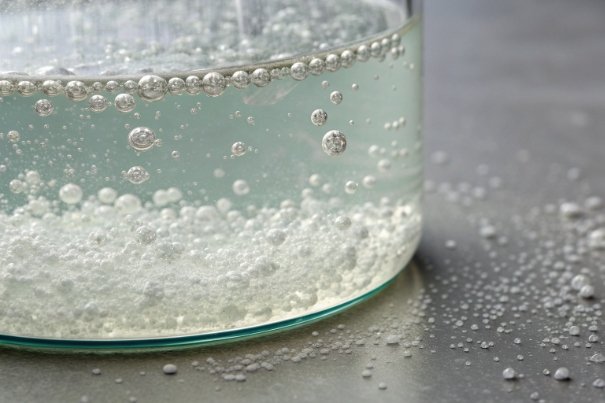
In standard glass, silica tetrahedra are linked together, but the network is full of "holes" and "dead ends" created by the sodium flux. These dead ends (Non-Bridging Oxygens) 3 are chemically active sites—they are weak spots where acids can attack.
In High Borosilicate glass (specifically "3.3 expansion" glass like Pyrex or Duran type compositions), the Boron atoms integrate into the silica network. They don’t just sit in the holes; they build bridges.
- Acid Defense: Because the network is so highly interconnected (cross-linked), there are very few loose alkali ions available to swap with the Hydrogen in an acid. The acid effectively hits a wall. Even strong mineral acids (except Hydrofluoric acid) 4 merely glide off the surface.
- Alkali Defense: While strong alkalis can attack borosilicate (as mentioned in our specific boron article), High Borosilicate performs better than standard glass in terms of purity. Even if the surface is slightly etched by a strong base, the glass releases very little "junk" (like calcium or magnesium) into the solution because the composition is so pure (mostly Silica and Boron).
The "Low Alkali" Factor:
The defining feature of Type I glass is that it releases almost zero alkali.
- Soda-Lime: Releases alkali $\rightarrow$ pH of liquid rises $\rightarrow$ Liquid becomes aggressive $\rightarrow$ Attacks glass more.
- Borosilicate: No release $\rightarrow$ pH stays stable $\rightarrow$ Corrosion cycle never starts.
Resistance Mechanism Summary
| Environment | Standard Glass Reaction | Borosilicate Glass Reaction |
|---|---|---|
| Water (Storage) | Sodium leaches out; creates alkaline layer ("Bloom"). | Inert. No leaching. No blooming. |
| Acid (pH 2-5) | Ion Exchange 5 (H+ replaces Na+). | Blocked. Network is too tight for exchange. |
| Alkali (Cleaning) | Silica network dissolves; surface haze forms. | Resistant. Dissolution is slower; minimal ion release. |
| Heat + Chem | Reaction rate doubles every 10°C. | Stable. Withstands high temp sterilization without degrading. |
So, who actually needs this level of performance? It’s not just for scientists in white coats.
Which products benefit most from high borosilicate bottles (acidic beverages, vinegar, pharma syrups, alkaline formulas)?
When product integrity is the primary value proposition, borosilicate is the only choice. It serves industries where a changed pH means a ruined product or a failed regulatory audit.
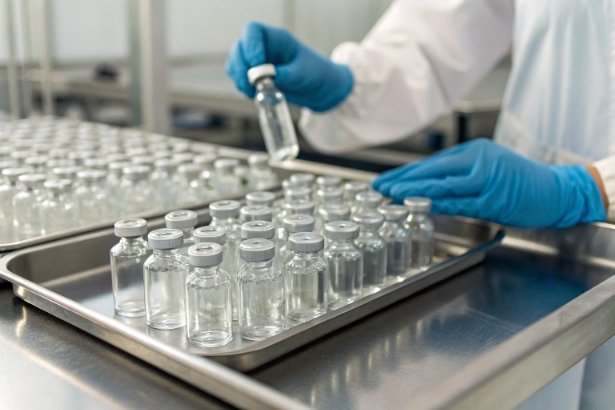
High Borosilicate bottles are essential for parenteral pharmaceuticals (injectables), high-value chemical reagents, and premium acidic cosmetics (like Vitamin C serums) that degrade with pH shifts. They are also increasingly favored for "ultra-pure" health beverages and concentrated extracts where the brand guarantees zero packaging interaction.
The "Must-Have" Applications
At FuSenglass, we segment our borosilicate customers into three distinct tiers:
1. The "Life Critical" Tier (Pharma):
- Products: Injectable drugs (Vaccines, Antibiotics), IV fluids, Insulin.
- The Risk: If the glass interacts with the drug, it can change the chemical structure of the medicine or release flakes (delamination) into the bloodstream.
- The Solution: USP Type I Borosilicate is mandatory. It is the only material trusted to hold liquids in the body.
2. The "Active Stability" Tier (Cosmetics & Chems):
- Products: Acidic serums (AHA/BHA), Vitamin C (Ascorbic Acid) 6, Essential Oils, Reagents.
- The Risk: Vitamin C is highly unstable. If the glass releases alkali and raises the pH, the Vitamin C oxidizes and becomes useless yellow water.
- The Solution: Borosilicate ensures the acidic environment stays acidic, preserving the active ingredients for the full shelf life.
3. The "Pure Taste" Tier (Premium Food/Bev):
- Products: Aged balsamic vinegars, high-concentration tinctures, luxury spirits.
- The Risk: While soda-lime is safe, discerning brands want to claim "Zero Interaction."
- The Solution: Using borosilicate marketing ("Laboratory Grade Glass") signals purity to the consumer. It implies that the liquid tastes exactly as the master distiller intended, with zero mineral migration from the container.
Application Benefit Matrix
| Industry | Product Type | Chemical Threat | Borosilicate Benefit |
|---|---|---|---|
| Pharma | Parenteral 7 Injectables | Alkali leaching = Toxicity/pH shift. | Neutrality. Zero leaching. |
| Cosmetics | Active Serums | pH rise = Oxidation of actives. | Stability. Maintains potency. |
| Chemicals | Acids/Solvents | Container corrosion. | Safety. Won’t dissolve or weaken. |
| Food | Concentrates | Flavor contamination. | Purity. No "mineral" aftertaste. |
This sounds perfect. But if it’s so good, why isn’t every Coke bottle made of borosilicate?
Are there any limitations or trade-offs when specifying high borosilicate for packaging (cost, forming options, decoration compatibility)?
Performance comes at a premium. Borosilicate glass is harder to melt, harder to shape, and significantly more expensive than soda-lime, limiting its use to high-margin or critical-safety applications.
The primary trade-offs are extreme cost (3x-5x that of soda-lime) and limited forming options; borosilicate requires incredibly high melting temperatures and is often processed from pre-made tubes (tubular glass) rather than molded, limiting shape complexity. Additionally, standard ceramic decals may not be compatible due to the difference in thermal expansion coefficients, requiring specialized inks.
The Reality Check: Cost and Complexity
As a manufacturer, I have to be honest with my clients about the feasibility of "going boro."
1. The Energy Penalty (Cost):
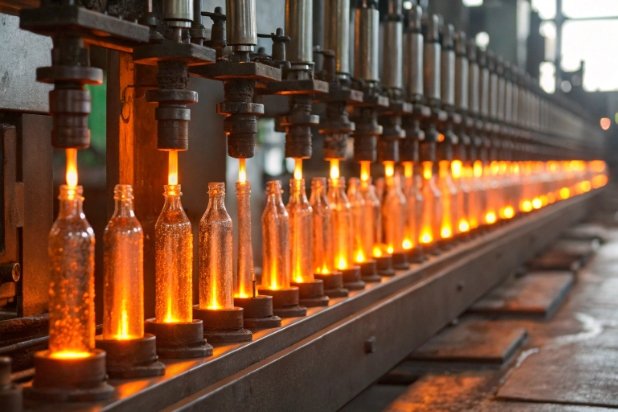
Melting sand and soda ash (Soda-Lime) happens around 1500°C. Melting sand and boron (Borosilicate) requires temperatures approaching 1650°C+.
- Consequence: We need oxygen-fuel furnaces and expensive refractories. The raw material (Borax) is also pricey. This translates to a unit cost that is 300% to 500% higher than a standard bottle.
2. The Shaping Constraint (Tubular vs. Molded):
- Tubular: Most small borosilicate vials (1ml to 50ml) are not blown in a mold like a beer bottle. They are cut and formed from long, pre-made glass tubes.
- Limit: You can only make cylinders. You cannot make a square bottle or a custom shape easily.
- Molded Borosilicate: We can mold it (like a baby bottle), but the machinery runs slower, and the molds wear out faster due to the heat. It is a niche, expensive process.
3. Decoration Challenges:
If you want to print your logo on borosilicate, you can’t use standard ceramic enamels.
- Science: Standard enamels are designed to expand with soda-lime glass (COE ~9.0). Borosilicate expands very little (COE ~3.3).
- Failure: If you fire a standard decal on a boro bottle, the decal will crack and pop off as it cools because it shrinks more than the bottle. You must use specialized, expensive inks.
Trade-off Summary
| Factor | Soda-Lime Glass | High Borosilicate Glass | Implication |
|---|---|---|---|
| Unit Cost | $ | $$$$ | Only viable for high-value products. |
| Shapes | Unlimited (Custom Molds) | Limited (Mostly Cylinders/Tubular) | Harder to brand with shape. |
| Decorating | Standard Enamels | Specialized Low-Expansion Inks | Branding is more complex/costly. |
| Availability | Ubiquitous | Specialized Suppliers | Longer lead times. |
If you decide the cost is worth it for the quality, how do you verify you are getting the real deal?
What standards, test reports, and buyer specs should you require to prove acid/alkali resistance for borosilicate bottles?
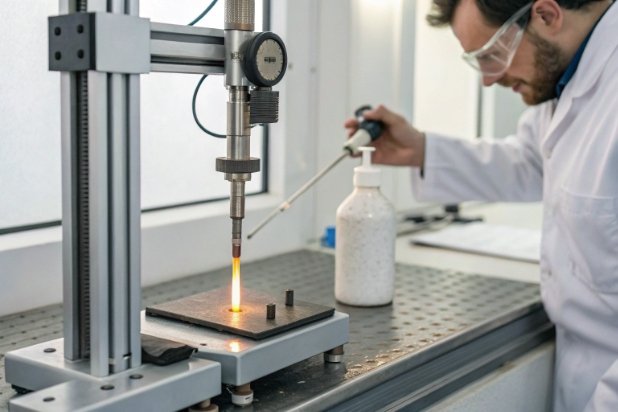
There are many "fake" borosilicate glasses on the market (neutral borosilicate vs. low-boron soda-lime). You must validate the expansion coefficient and the hydrolytic class to ensure you are buying genuine Type I glass.
Require certification to USP <660> Type I or ISO 719 Class HGB 1 to confirm the highest hydrolytic resistance. Crucially, specify the "Coefficient of Thermal Expansion" (COE) as either 3.3 (Premium) or 5.0/7.0 (Neutral), as this physical property confirms the boron content and chemical purity.
The Buyer’s Verification Pack
When sourcing Borosilicate from China, clarity in specifications is your defense against "quasi-boro" or "low-boro" substitutes.
1. The Hydrolytic Class (The Performance Spec):
- Requirement: USP Type I or ISO 719 HGB 1.
- Meaning: This proves the glass releases virtually no alkali. It is the definition of "Neutral Glass."
2. The Expansion Coefficient (The Material Spec):
This is the DNA of the glass.
- COE 3.3 (Borosilicate 3.3): This is the "Pyrex" standard. Highest heat and chemical resistance 8.
- Usage: Labware, high-end baby bottles, premium pharma.
- COE 5.0 / 7.0 (Neutral Borosilicate): Slightly less boron, but still Type I.
- Usage: Standard injectable vials, ampoules.
- Red Flag: If a supplier refuses to state the COE or claims it is "around 8.5," they are selling you treated soda-lime, not borosilicate.
3. Arsenic and Lead (The Purity Spec):
- Requirement: ISO 4802-2 or ASTM C225.
- Why: While boro is pure, the refining agents used (like Arsenic trioxide) in the past are now banned. Ensure the glass is "Arsenic-Free."
Specification Checklist
| Test / Standard | Target Result | What it Proves |
|---|---|---|
| USP <660> / EP 3.2.1 | Type I | Validates Pharma-grade 9 neutrality. |
| ISO 719 | Class HGB 1 | Maximum water resistance. |
| Thermal Expansion | 3.3 x 10⁻⁶ K⁻¹ | Confirms high-boron content (Premium). |
| Acid Resistance | DIN 12116 Class S1 | Max acid resistance. |
| Alkali Resistance | ISO 695 Class A2 | Good alkali resistance (comparable to soda-lime). |
Conclusion
High Borosilicate glass is the elite bodyguard of the packaging world. While it demands a higher budget and limits your shape options, it offers an unmatched guarantee of purity. For acidic actives, life-saving drugs, and chemically pure formulations, the resistance of Type I glass 10 isn’t just an advantage—it is a necessity.
Footnotes
-
A glass type with silica and boron trioxide as main components, known for low thermal expansion. ↩
-
The chemical additive that replaces soda flux to increase network connectivity and durability. ↩
-
Structural flaws in the glass network where alkali ions are loosely held and leachable. ↩
-
The only mineral acid capable of dissolving the silica network of borosilicate glass. ↩
-
The chemical mechanism where hydrogen ions in solution swap with sodium ions in glass. ↩
-
A pH-sensitive vitamin that requires neutral packaging to prevent oxidation. ↩
-
Medical substances administered via injection, requiring the highest packaging purity. ↩
-
The ability of the material to withstand breakdown by acids, alkalis, and water. ↩
-
The United States Pharmacopeia standard defining the requirements for Type I glass containers. ↩
-
The pharmaceutical industry classification for high-quality borosilicate neutral glass. ↩






