
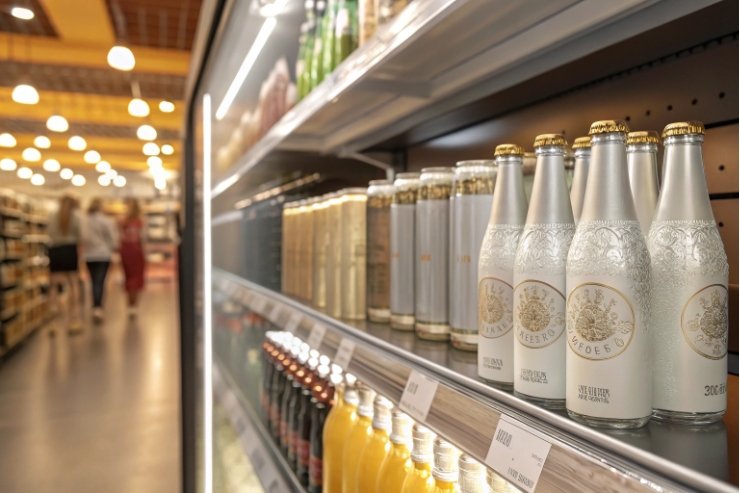
Many brands feel stuck: PET is light, cans are cheap, but customers keep asking for “premium” and “clean.” This is where glass quietly wins.
Glass containers offer flavor purity, almost zero oxygen transmission, strong heat resistance for hot-fill and pasteurization, high refillability and recycling, and flexible formats for still, sparkling, and alcoholic drinks.
Once you see glass as part of the beverage recipe, not just a “container cost,” the picture changes. Shelf life, taste, brand image, and sustainability all connect back to how that glass bottle is designed and used.
Do flavor purity and low OTR really improve shelf life and taste?
Many people focus on label design and ignore the simple truth: the wrong package can slowly ruin a great beverage.
Because glass is chemically inert and has extremely low oxygen transmission, it protects taste, aroma, and color better than most other packaging options, especially for sensitive juices, wines, and craft drinks.

Why glass keeps flavor closer to “just filled”
Glass is basically a rigid mineral network. As a chemically inert packaging material 1, it does not have plasticizers, and it does not absorb or release aroma compounds in normal use. This brings three important effects:
- No flavor scalping: delicate notes from hops, botanicals, coffee, or fruit stay in the liquid, not in the wall.
- No plastic taste: you avoid the “packaging note” that some people notice in warm-stored PET or lined containers.
- Stable color and clarity: no interaction means less risk of haze or off-colors that come from packaging reactions.
For premium juices, ready-to-drink cocktails, and cold brew coffee, this is very visible in side-by-side comparisons after a few months.
The impact of ultra-low oxygen transmission
Oxygen is the slow enemy of most beverages. It fades flavors, browns juices, and changes wine and beer.
- Glass has practically zero oxygen transmission rate (OTR) through the wall.
- The only real oxygen paths are the headspace and the closure interface.
- When you combine glass with a good cork, crown, or lug cap, you get a very stable micro-oxygen environment.
For a clear definition of oxygen transmission rate (OTR) 2 (and why closures matter so much), a packaging barrier overview helps frame the shelf-life problem correctly.
For red wine, a little controlled oxygen can help. That comes from cork or special liners, not from the bottle itself. For white wine, beer, juice, and functional drinks, lower oxygen is almost always better. Glass gives you this low baseline OTR without extra barrier coatings or multi-layer structures.
Protection against light and aroma loss
Glass color also matters:
- Amber and some deep greens block much of the UV and short-wave light that cause “light-struck” flavors in beer and some wines.
- Clear flint glass shows off product color, which is great for juices and mixers, but needs careful control of light exposure.
A practical reference for beverage packaging notes that amber and green glass protect the product from UV exposure 3, which helps preserve aroma and taste when light control is limited.
In practice, glass lets you “tune” aroma and oxidation behavior with closure choice, headspace, and color, but it does not introduce new off-flavors of its own. That is why many brands move their premium lines into glass even if they keep entry-level products in other materials.
Why do hot-fill and pasteurization processes favor glass?
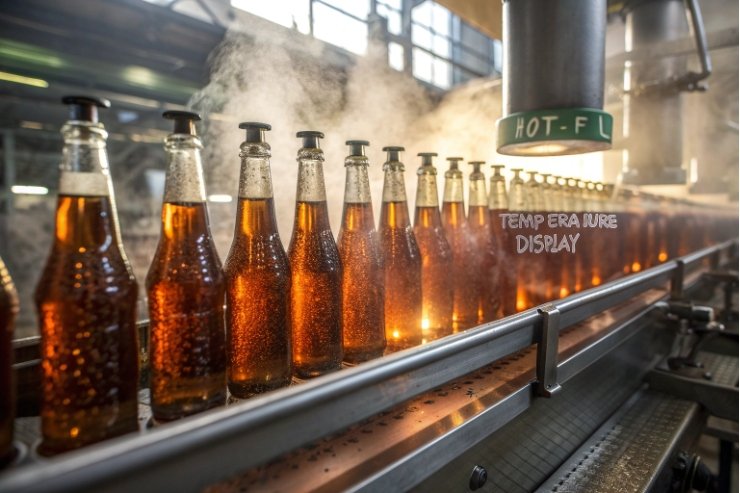
When you run hot-fill or pasteurization, packaging is part of your thermal process. If it deforms or loses seal under heat, you lose the batch.
Glass handles high temperatures, caustic washing, and many pasteurization and hot-fill profiles without warping, which makes it a very safe choice for shelf-stable beverages and hygienic production.
Thermal resistance and shape stability
Glass softens only at very high temperatures, far above typical beverage processes. In day-to-day production this means:
- Bottles keep their shape during hot-fill of juices, teas, and sauces.
- They stay dimensionally stable during tunnel pasteurization of beer, cider, and RTD cocktails.
- They do not collapse or shrink on the line like some plastics when you push the process window.
For process context and why container stability matters, this overview of tunnel pasteurization 4 explains the heating/holding logic that packaging has to survive.
As long as the bottle design has good thermal shock resistance (ΔT) and proper annealing and internal stress control 5, it can handle quick moves between hot product and cooler environment.
Compatibility with caustic washing and CIP
For refillable systems, glass takes strong cleaning better than most alternatives:
- It handles caustic wash cycles in bottle washers used for returnable beer and soft drink lines.
- It resists many sanitizers and disinfectants without losing strength or changing color.
- It allows high-temperature sterilization for some niche products without changing dimensions.
This is a big reason why many refillable pools in Europe and other regions rely on glass. The container can live through dozens of wash and fill cycles.
Process flexibility for the future
Many beverage brands adjust processes over time:
- Moving from cold-fill to warm-fill to improve shelf life.
- Adding or removing pasteurization steps.
- Trialing new formulations that need stronger thermal conditions.
With glass, there is more “headroom” to adjust those processes without replacing every package format. This gives developers freedom to change recipes and processes while keeping the same main bottle family and closures.
Are glass bottles really better for reuse and recycling than plastics?
Sustainability claims are easy to print on a label. The challenge is turning them into real, measurable flows of material.
Glass can run in high-cycle refillable systems and is endlessly recyclable without downgrading, so it often reaches higher reuse and true recycling rates than many plastics in organized collection systems.
Refillability and bottle pools
In markets with strong logistics, glass has a long tradition as a refillable container:
- Standard shapes run in shared bottle pools for beer, soft drinks, and even water.
- Individual brands use proprietary returnable bottles with embossing and strong designs.
- Bottles survive many cycles of washing, relabeling, and refilling before they become cullet.
For practical frameworks and case examples, the Ellen MacArthur Foundation’s work on returnable reusable packaging systems 6 is a useful starting point.
Returnable systems require investment in crates, washing lines, and sorting. However, when volume is stable, the cost per trip can become very low, and the carbon footprint per liter often beats one-way formats.
Recycling without downcycling
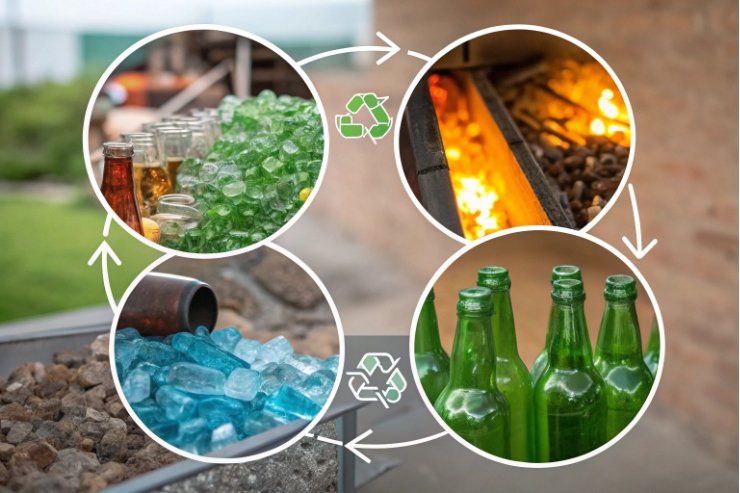
Glass has one strong advantage: it is infinitely recyclable in a closed loop as long as the cullet stream is clean and color-managed.
In practice, glass can be recycled endlessly with no loss in quality or purity 7 when collection and sorting are done well.
- Old bottles become new bottles, not lower-grade materials.
- Using cullet saves energy and reduces CO₂ in the furnace.
- Color-separated cullet (flint, green, amber) keeps optical quality high.
In some plastics, “recycling” means downcycling into non-food products or mixtures that cannot return to bottles. With glass, the path back to another food-safe container is clear and proven.
Realistic trade-offs and communication
Glass is heavier and more fragile than lightweight plastics, so transport and breakage must be managed with good design and packaging. But when:
- Return flows are organized, or
- Recycling systems are strong,
glass can be a core part of a real circular model. Many beverage brands now combine:
- Lightweighted glass designs,
- Higher cullet content, and
- Refill or deposit schemes
to reach sustainability targets in a way that customers also understand and trust.
Which glass formats work best for still, sparkling, and alcoholic drinks?
One of the biggest myths is that “glass is only for wine and premium spirits.” In reality, glass formats cover almost every beverage segment.
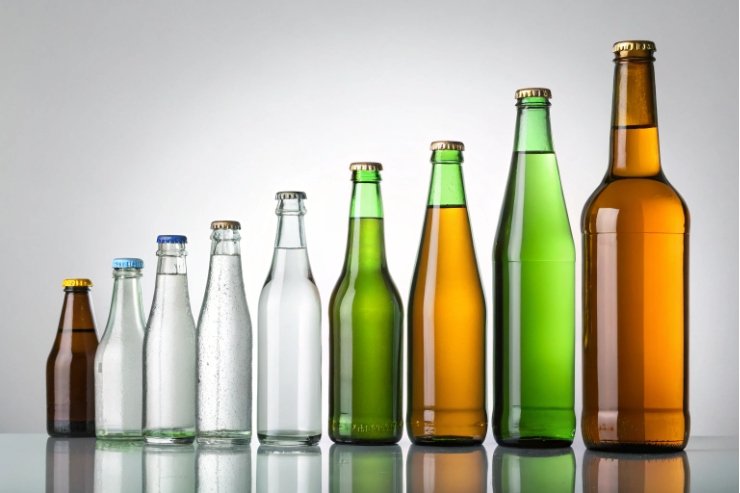
Glass packaging spans still and carbonated soft drinks, juices, dairy, beer, cider, wines, and spirits, with shapes and finishes tuned to pressure, carbonation levels, and brand positioning.
Still and low-carbonation beverages
For still water, juices, teas, and functional drinks, the main requirements are:
- Good barrier to oxygen and aroma
- Compatibility with hot-fill or mild pasteurization, if needed
- Strong branding surface for labels or direct printing
Formats include:
- Long-neck and short-neck bottles from 200 ml to 1 L
- Carafes and wide-mouth bottles for premium juices and cold brew
- Swing-top or lug-cap bottles for artisanal drinks
Finishes can be screw caps, lug caps, or swing stoppers, depending on the filling line and consumer ritual.
Sparkling and fully carbonated drinks
Carbonated soft drinks, beer, cider, and sparkling wines place higher mechanical demands on the bottle:
- Higher internal pressure from CO₂
- More sensitive to thermal shock during pasteurization
- Higher risk of impact damage in handling
For beer and CSD we use:
- Crown-finish bottles with tested burst pressure and top-load
- Colors like amber or green for light protection
- Refillable or one-way designs depending on market
For sparkling wine and Champagne-style products:
- Thick, high-pressure glass with a deep punt
- Special finishes for cork and wirehood
- Very strict burst-pressure and impact requirements
In all these cases, glass handles the pressure with the right design, but we always verify with burst and top-load tests before release.
Wines, spirits, and cocktails
Glass is still the default for:
- Still wines in 187 ml, 375 ml, 750 ml, magnum, and other sizes
- Spirits from simple round 700 ml bottles to heavy, custom-shaped decanters
- Ready-to-drink cocktails that target a premium bar look at home
Here, design freedom is almost as important as performance:
- Embossing and debossing for logos and patterns
- Special shoulder and base shapes
- Custom colors, coatings, and decoration
Functionally, finishes must match closures: cork, bartop, Stelvin, pilfer-proof, or specialty stoppers. Mechanically, bottles must survive filling, labeling, transport, and often cold storage or ice buckets.
A simple overview of common glass formats:
| Beverage type | Typical glass format | Key finish options |
|---|---|---|
| Still water / juice | 250–1000 ml round or square bottles | Screw cap, lug cap |
| CSD / beer | 200–650 ml long-necks, stubby bottles | Crown, sometimes ROPP |
| Still wine | 375–1500 ml Bordeaux, Burgundy, fluted | Cork, Stelvin, bartop |
| Sparkling wine | 187–1500 ml thick sparkling bottle | Cork + wirehood |
| Spirits / liqueurs | 50–1500 ml custom or standard spirits bottles | Bartop, ROPP, special stoppers |
| RTD cocktails | 200–330 ml sleek or stubby bottles | Crown, ROPP, ring-pull crowns |
This flexibility is why many beverage owners standardize closures and line equipment, then play with glass shape and color to extend their range quickly without changing the core process.
Conclusion
Glass brings flavor purity, low oxygen pickup, strong heat resistance, real circularity, and flexible formats that support both technical performance and brand storytelling in beverage packaging.
Footnotes
-
Why glass is virtually inert and impermeable for food and beverage contact. ↩︎ ↩
-
Definition and measurement basics for oxygen transmission rate in packaging materials. ↩︎ ↩
-
Guidance on how amber/green glass reduces UV exposure to help preserve beverage aroma and taste. ↩︎ ↩
-
Compares tunnel pasteurization and hot-fill, including why glass is commonly used. ↩︎ ↩
-
How annealing and internal stress affect bottle strength and thermal shock performance. ↩︎ ↩
-
Framework and examples for scaling returnable reusable packaging systems. ↩︎ ↩
-
Key facts on glass recycling, including bottle-to-bottle loops and cullet benefits. ↩︎ ↩






