
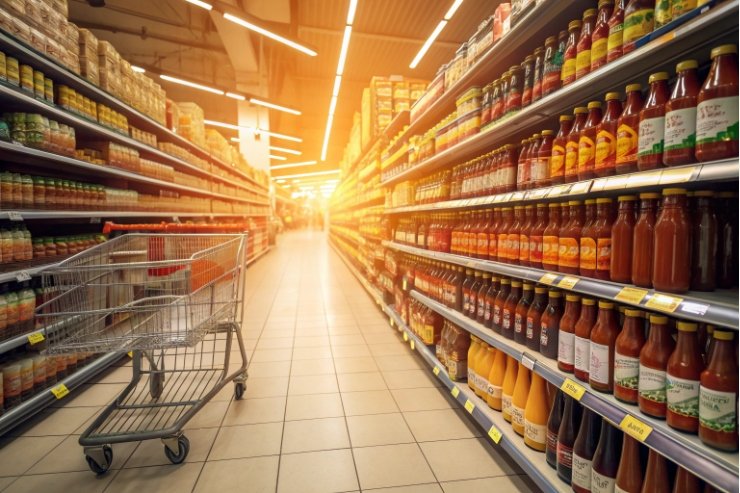
Food brands work hard on recipes, yet still lose flavor, color, and shelf life because packaging quietly sabotages the product. Many “invisible” problems start with the wrong container material.
Glass bottles offer a rare mix of safety, flavor protection, heat resistance, recyclability, and shelf appeal. For many sauces, juices, oils, and ferments, glass is still the most stable and trustworthy food-contact packaging.
When we look at real data from filling lines and from consumer feedback, a pattern appears. Brands that move core SKUs into well-designed glass often see fewer complaints, fewer leaks, and a stronger “premium and natural” perception in the aisle.
Does glass’s inert barrier better protect flavor, aroma, and acidity?
Many packaging failures do not look dramatic. The product “just tastes a bit dull” or “smells slightly off” six months later, even though the recipe is the same.
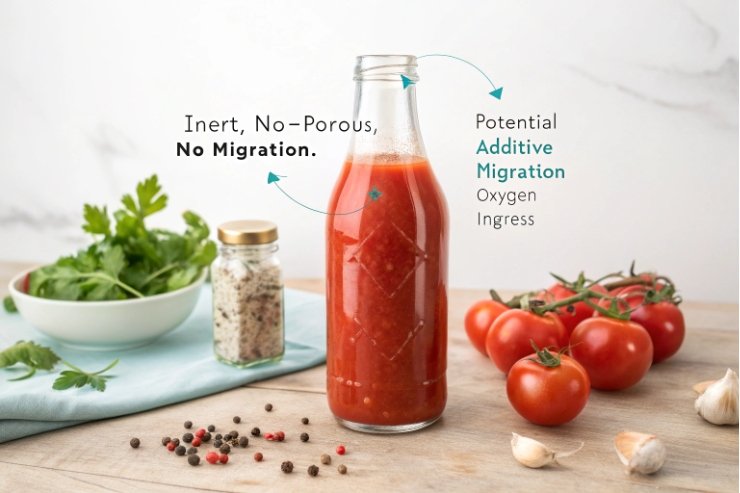
Yes. Glass is inert and non-porous, so it does not react with acids or fats and does not let oxygen or aromas creep in or out, which keeps flavor, aroma, color, and nutrients stable for longer.
Glass vs other materials: what touches your food
Glass is basically sand, soda ash, and limestone melted into a solid. There are no plasticizers, no BPA, and no phthalates in the glass wall. This means:
- No migration of monomers or additives into sauces, juices, or pickles.
- No absorption of food aromas into the packaging.
- No slow “breathing” of oxygen or water vapor through the container wall.
If you’re exporting, it also helps that the EU food contact materials framework 1 is built around “inertness” expectations for packaging.
By contrast, most plastics are organic polymers. They can carry stabilizers, slip agents, and pigments. Even with food-grade certifications, there is some migration risk, especially under heat, fat, or alcohol—something the FDA discusses in its overview of food packaging and substances that come into contact with food 2. For many brands, that is not acceptable for long-shelf-life or high-acid foods.
Simple comparison:
| Property | Glass bottle | Typical plastic bottle (PET/HDPE) |
|---|---|---|
| Chemical reactivity | Inert, non-reactive | Can interact with some contents |
| Gas / moisture barrier | Excellent | Good, but not perfect |
| Flavor and aroma migration | None from glass wall | Possible over time |
| Suitability for high acidity | Very good | Needs more testing and validation |
Why barrier performance matters for taste and nutrition
Oxygen and light are enemies for many foods. They cause:
- Oxidation of oils (rancid notes).
- Browning and off-flavors in juices.
- Vitamin loss, especially vitamin C and some B vitamins.
Because glass is non-porous and can form an airtight seal with the right cap, oxygen ingress is very low. Colored glass (for example, amber) also blocks much of the UV range, which slows photo-oxidation for oils, beer, dressings, and dairy-based sauces.
For acidic and fermented products—vinegars, pickles, kimchi, kombucha—glass also stands out. Acid can slowly interact with some plastics or foil laminates, but it does not attack glass. The taste you bottle is much closer to the taste your customer gets months later.
Use cases where glass’s barrier really shines
We see clear benefits when brands package:
- Tomato sauces, salsas, and chutneys with bright color and aromatic herbs.
- Cold-pressed juices and functional shots that rely on aroma and freshness signals.
- Fermented foods with active cultures that need a stable environment.
- High-value oils (olive, avocado, nut oils) that are sensitive to oxidation.
In these categories, glass protects the recipe and the brand promise. When a customer opens a jar after a long time in the pantry and the product still smells clean and strong, trust grows quietly in the background.
Can glass handle hot-fill, pasteurization, and retort more reliably than plastics?
Food safety and long shelf life often mean heat. Hot-fill, tunnel pasteurization, and even retort cook products inside the container. Not every material is happy under those stresses.
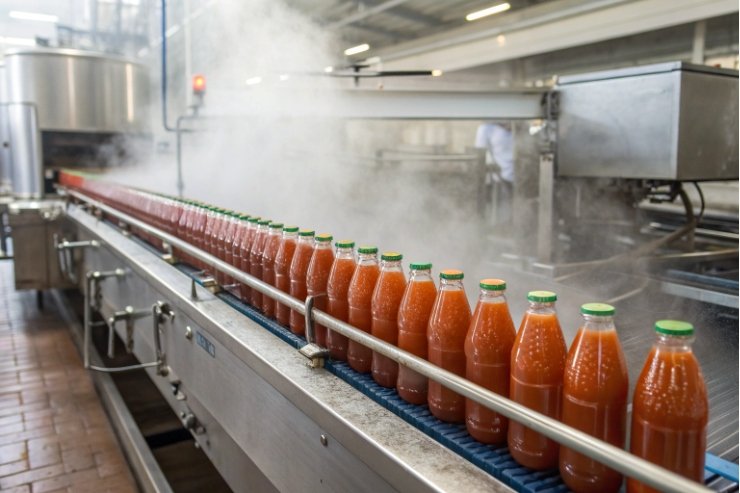
Yes. Properly designed glass bottles and jars handle hot-fill, pasteurization, and even retort very reliably. They do not warp at process temperatures, and they keep shape, seal, and label alignment on high-speed lines.
Thermal performance and mechanical stability
Glass has a relatively high softening point compared with common food plastics. With correct design and controlled temperature changes, it can handle:
- Hot-fill temperatures (often 80–95°C, sometimes higher).
- Water-bath or tunnel pasteurization.
- Many retort cycles, especially with thicker-walled jars and bottles.
For context, published process descriptions of the hot-fill process (often >90–95°C) 3 show why container stiffness matters when products are filled hot and then cooled.
Plastic containers can handle some of these processes, but the risk is different:
- PET can shrink or panel if vacuum or heat is not controlled.
- PP containers handle heat better but may not give the same barrier or premium feel.
- Multilayer structures add complexity for recycling and procurement.
With glass, the wall stays rigid. Closure torque, thread geometry, and label placement remain stable, which keeps the pack looking “on spec” after processing.
Matching glass design to the process
Thermal success is not automatic. The bottle or jar must be designed with the process in mind.
Important details:
- Even wall thickness to avoid stress points.
- Proper radius in corners and shoulders.
- Bottle geometry that allows smooth heating and cooling.
In projects at FuSenglass, we adjust shoulder angles and base design based on the customer’s pasteurization or retort profile. This reduces breakage during thermal shock and supports higher line speeds.
Process compatibility snapshot:
| Process | Glass bottles / jars | Typical plastics (PET/PP) |
|---|---|---|
| Hot-fill | Very good with right design | Good, needs careful vacuum control |
| Tunnel pasteurize | Very good | Depends on resin and wall design |
| Retort | Good with robust designs | Requires specialty containers / multilayer |
| Microwave use* | Many glass items suitable | Many plastics suitable, but check limits |
*Always validate with the actual product and closure.
Labeling, capping, and post-process appearance
Heat can do strange things to labels and caps. On glass, because the surface does not deform, we usually see:
- Better label flatness after cooling.
- More consistent capsule or shrink-sleeve appearance.
- Stable cap torque, as threads do not move.
On plastics, small dimensional changes from heat can show up as wrinkled labels, uneven shoulder shrinkage, or improper neck geometry for the closure. For premium sauces, juices, and condiments, this visual difference matters.
So while high-performance plastics can work, glass often gives a wider safety margin and a more predictable result on modern thermal lines. If your process includes retorting, it’s worth aligning terminology with the official FDA definition of a retort 4 so specs and validation documents stay consistent.
How do recyclability and reuse improve lifecycle sustainability metrics?
Many teams see glass as “heavy but green”, and plastic as “light but problematic”. The reality is more nuanced, and it depends on local systems. But glass has clear strengths in real closed-loop and reuse systems.
Glass is 100% and indefinitely recyclable, and it also performs very well in reuse and refill systems. Over multiple cycles, per-use emissions and waste can drop far below single-use plastic or complex laminates.
Recycling: true closed-loop potential
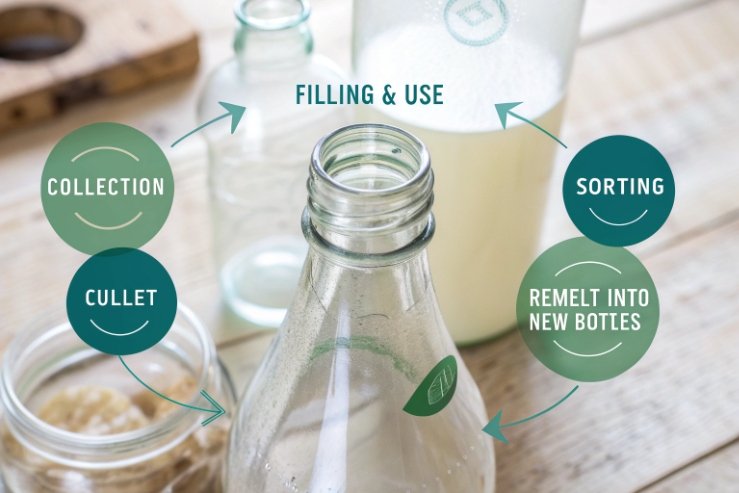
When glass is collected and sorted by color, it can be:
- Crushed into cullet.
- Mixed into new glass batches.
- Remelted into new bottles and jars with no quality loss.
There is no “downcycling” from bottle to lower-grade plastic or fiber. A green oil bottle can become another green oil bottle many times.
Key points:
- Higher cullet content usually means lower furnace energy use.
- Many regions have strong glass-collection systems already.
- Labels and caps are often separated in the recycling process.
If you need a simple public-friendly source for claims, the Glass Packaging Institute states glass can be endlessly recycled without loss in quality or purity 5.
Simple comparison:
| Material | Recyclability loop | Quality loss over cycles |
|---|---|---|
| Glass | Closed loop: bottle → bottle | None in the glass itself |
| PET plastic | Often bottle → fiber → lower uses | Quality drops after each cycle |
| Multilayer | Often not recyclable at scale | Usually treated as waste |
| Metal can | Good recycling, often downcycled | Some quality loss, but robust |
When customers see the glass recycling symbol and understand that their jar may live many lives, they feel more comfortable choosing a heavier container.
Reuse and returnable systems
Glass is strong, rigid, and easy to wash. That makes it ideal for:
- Deposit systems for milk, juices, and yogurts.
- Refillable sauces and condiments in foodservice.
- Closed-loop packaging for local brands and grocery chains.
If a bottle is designed with reuse in mind, it may be:
- Slightly heavier, with a reinforced base.
- Shaped for stable stacking in crates.
- Marked to show it is part of a returnable system.
For a practical overview of how returnable reusable packaging systems 6 are designed and scaled, it helps to look at what’s working in real markets.
Designing glass packaging for real-world sustainability
Good sustainable design is not just “use glass and hope”. It means:
- Choosing shapes that pack efficiently on pallets to cut freight impact.
- Matching color to local recycling realities (for example, clear or common greens).
- Selecting decorations that do not block recycling: light coatings, wash-off labels, or direct print within accepted limits.
At FuSenglass, we also work with customers on weight targeting. For some products, we can trim glass weight while keeping the premium feel. The goal is a strong lifecycle story: safe product, attractive pack, and credible sustainability message, not just heavy glass for its own sake.
Does transparency aid QA, shelf appeal, and consumer trust at retail?
Most shoppers trust their eyes first. If they cannot see the product, they rely fully on brand promises. For many food categories, that is a missed opportunity.
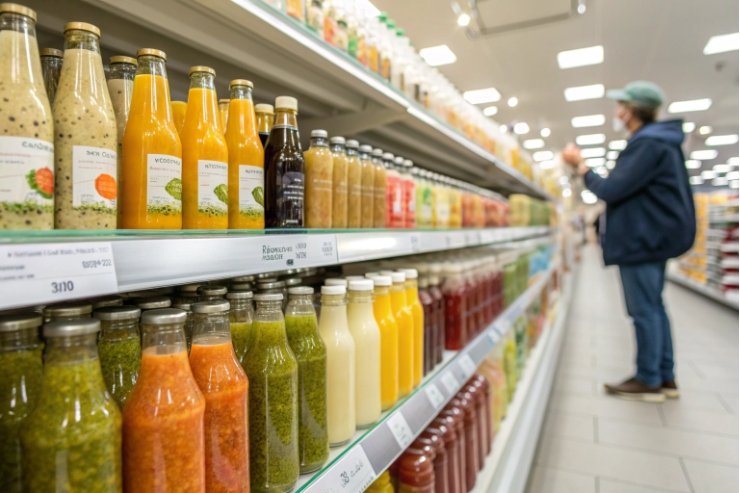
Yes. The transparency and surface quality of glass let customers inspect the product, support strong branding, and even help QA teams spot issues early, which builds trust and reduces returns.
Seeing the food, not only the label
When a consumer looks at a glass bottle, they can judge:
- Color and consistency of the sauce or juice.
- Presence of herbs, fruit pieces, or spice flakes.
- Sediment or separation (which can be either a positive or a warning, depending on the product).
This transparency supports claims like “no artificial color” or “just fruit and spices”. It also lets customers avoid defects like unusual separation or darkening. That reduces the chance of disappointments at home.
For QA teams, glass clarity helps inspectors and line workers see:
- Fill levels and headspace.
- Foreign objects or large bubbles.
- Label alignment and capsule seating.
In many factories, visual checks are still part of the safety net. Glass makes that work easier.
Glass naturally reflects light in a way that feels clean and high-end. Combined with clear or lightly tinted product, it can:
- Create strong color blocks on shelf (for example, red passata, green pesto, golden oil).
- Highlight contrast between product and label or closure.
- Make brand design look sharper through the gloss of the glass.
In market research, shoppers often associate glass with:
- Higher quality and “real food”.
- Less processing and fewer additives.
- More careful production and packaging.
This association is especially strong in categories like honey, jams, sauces, pickles, juices, plant milks, and ferments.
Comparison of customer perception:
| Packaging type | Typical perception in food aisles |
|---|---|
| Clear glass bottle | Premium, honest, natural |
| Opaque plastic | Practical, sometimes “mass” or budget |
| Metal can | Long-life, processed, less “fresh” |
| Carton / laminate | Convenient, but product is hidden |
Balancing transparency with protection
Sometimes, full transparency is not ideal. Light-sensitive products need some shielding. Glass gives options:
- Fully clear bottles for products that love the spotlight.
- Light tints that add color identity and partial light protection.
- Amber or dark glass for very sensitive oils and extracts.
If you need a clear explanation you can share internally, this overview of amber glass UV protection 7 helps teams align on when tint is doing real work (not just “branding color”).
In all cases, the surface remains clean and premium, and design can use windows or clear panels to show the product where it matters.
By combining clarity and protection, brands can give both QA teams and consumers enough visual information without sacrificing performance.
Conclusion
Glass bottles give food brands a rare combination of safety, process stability, circular potential, and visible quality, so the packaging supports the recipe instead of quietly working against it.
Footnotes
-
Defines EU food-contact “inertness” principles, useful for compliance files and export-ready packaging claims. ↩︎ ↩
-
FDA overview of packaging contact substances and safety authorization—helpful when discussing migration risk. ↩︎ ↩
-
Describes hot-fill heat ranges and handling, supporting why rigid containers reduce warping and seal issues. ↩︎ ↩
-
Official definition of “retort” for thermal processing—keeps your specs and validation language aligned. ↩︎ ↩
-
Confirms glass is 100% recyclable and endlessly recyclable—supports clear, compliant sustainability messaging. ↩︎ ↩
-
Explains how returnable packaging works at scale, including cleaning and refill loops for reuse models. ↩︎ ↩
-
Explains how amber glass filters UV, helping you justify tinted bottles for light-sensitive foods and oils. ↩︎ ↩






