
Your scent fades too fast, and it feels like money evaporates with it. Dry skin, wrong placement, and careless storage are common causes. Small changes can fix it.
Yes, perfume can last longer if it sits on moisturized skin, hits the right warm points, and is not rubbed away. Light clothing misting, correct spray distance, cool-dark storage, and choosing the right concentration also change wear and projection.
Longevity is a system, not a single “hack”
Perfume longevity depends on three things: how fast the formula evaporates, how much it absorbs into skin or fabric, and how well the bottle protects the juice between uses. Skin can be a great “platform” for scent, but it can also be a sponge that eats top notes fast. Application can help, but it cannot fully beat biology, heat, and wind. Storage can keep the perfume true for years, but it cannot save a bad atomizer that leaks air.
The eight practical tips at a glance
1) Moisturize first (unscented or matching).
2) Apply right after a shower on clean skin.
3) Use pulse points, but do not over-focus on wrists only.
4) Do not rub wrists after spraying.
5) Spray from 6–8 inches (15–20 cm) 1 for an even mist.
6) Lightly mist clothing or hair from a distance (avoid delicate fabrics).
7) Store in a cool, dark, dry place with the cap tight.
8) Pick concentration wisely (EDT vs EDP vs parfum) and layer when needed.
What ruins wear time most often
The biggest mistakes are simple: spraying on dry skin, rubbing the wrists, storing bottles in a hot bathroom, and assuming “stronger” always means “longer.” Many people also chase projection by overspraying. That often makes the opening loud, then it collapses fast. A steady routine usually beats heavy dosing.
| Longevity lever | Why it works | Effort | Risk if done wrong |
|---|---|---|---|
| Moisturizer base | Slows evaporation | Low | Scent clash if lotion is strong |
| Placement | Uses body heat to diffuse | Low | Over-application in one area |
| Fabric/hair | Fibers hold aroma longer | Medium | Staining, dryness, buildup |
| Storage | Protects the formula over time | Low | Heat/light can spoil the juice |
| Concentration | More oil can extend wear | Medium | Can feel heavy or less “sparkly” |
If these basics are in place, the rest becomes easier, and the scent behaves more like the perfumer intended.
Keep reading, because each tip has a “best way” and a “bad way,” and that difference is what makes the routine work.
Does applying to moisturized skin increase longevity?
Perfume can smell amazing at first, then disappear in two hours. Dry skin is a common reason. The scent has nothing to hold onto, so it lifts and vanishes.
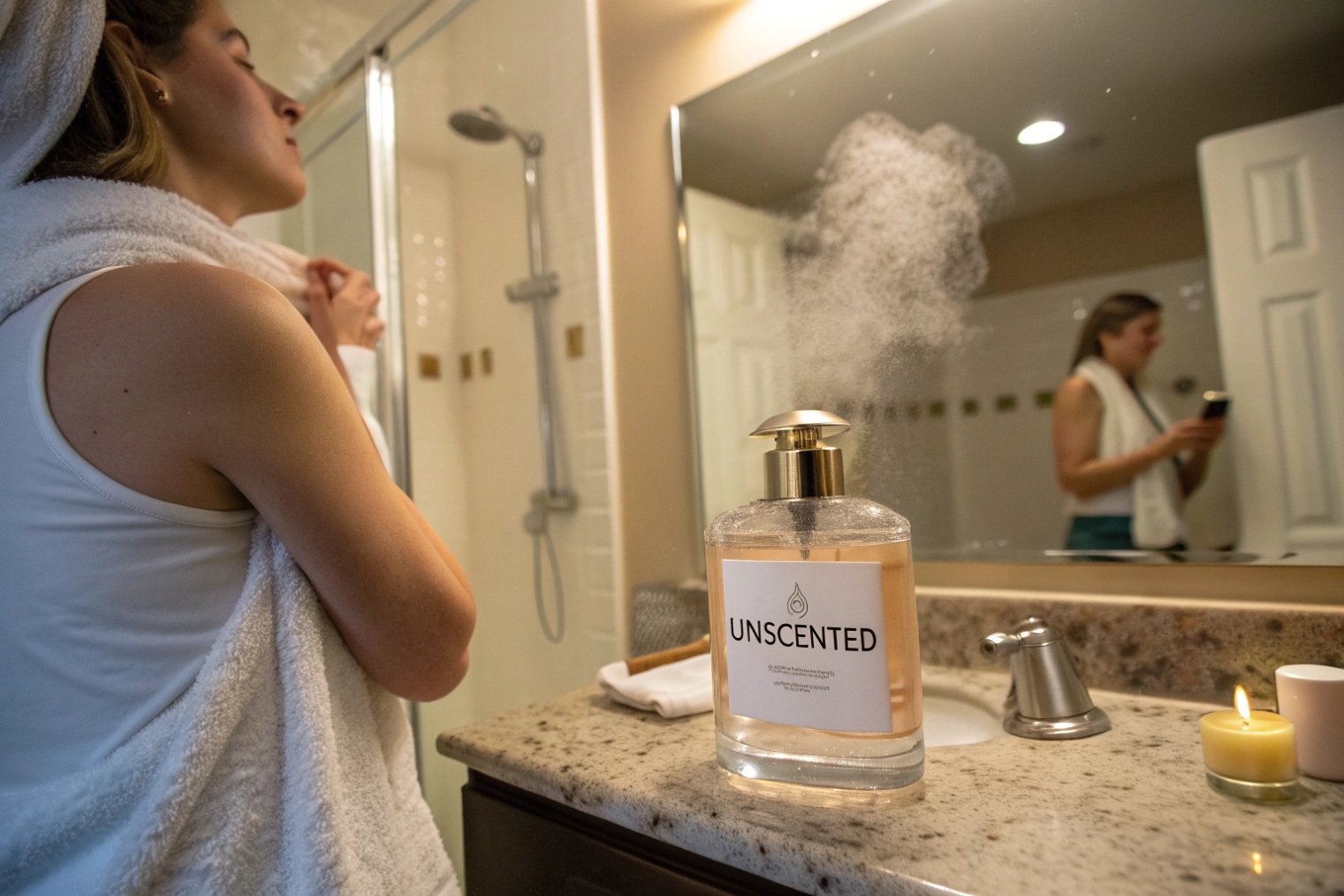
Yes. Moisturized skin usually increases longevity because emollients reduce rapid evaporation and help fragrance cling. An unscented lotion (or a matching body product) builds a smoother base without changing the scent profile.
Why moisture helps the scent “stick”
Skin that is dry tends to pull fragrance in and let alcohol flash off fast. A light layer of moisturizer makes the surface more even. It slows the first wave of evaporation, so the opening lasts longer. This does not turn an EDT into a parfum, but it often adds a noticeable hour or two.
The best routine is simple
The most reliable timing is right after a shower. Skin is clean, and it still holds a bit of warmth. A thin, unscented lotion goes on first. Then the perfume goes on top after a minute or two. When the base product is strong-smelling, it can fight the fragrance. That is why unscented is the safe choice. Matching body products can also work because they are built to blend.
Occlusive tricks, used carefully
A tiny amount of petroleum jelly on pulse points can work because it is occlusive. It creates a barrier that slows evaporation even more than lotion. The key is “tiny.” Too much can feel greasy, and it can trap scent in a heavy way that changes the opening. For many daily routines, lotion is enough, and it feels cleaner.
A helpful way to think about this is the moisturizing action of emollients 2: better hydration and a smoother surface can help fragrance hang around longer.
| Base layer | Longevity gain | Feel on skin | Best use case |
|---|---|---|---|
| No base (dry skin) | Low | Normal | Quick sprays, low commitment |
| Unscented lotion | Medium | Comfortable | Daily wear, office safe |
| Body oil (light) | Medium–High | Rich | Dry climates, winter wear |
| Petroleum jelly (tiny dab) | High | Occlusive | Very dry skin, special occasions |
Moisturized skin is not just a “beauty tip.” It is a practical way to control evaporation and keep your scent closer to you for longer.
Which pulse points and clothing applications work best?
A fragrance can last, but if it stays trapped in one spot, it will not project well. On the other side, spraying everywhere can feel messy and sharp.
Pulse points work because warmth helps diffusion. The best spots are neck, behind ears, inner elbows, and behind knees. Clothing and hair can extend longevity, but they need light misting from a distance to avoid staining and buildup.
Pulse points that perform well
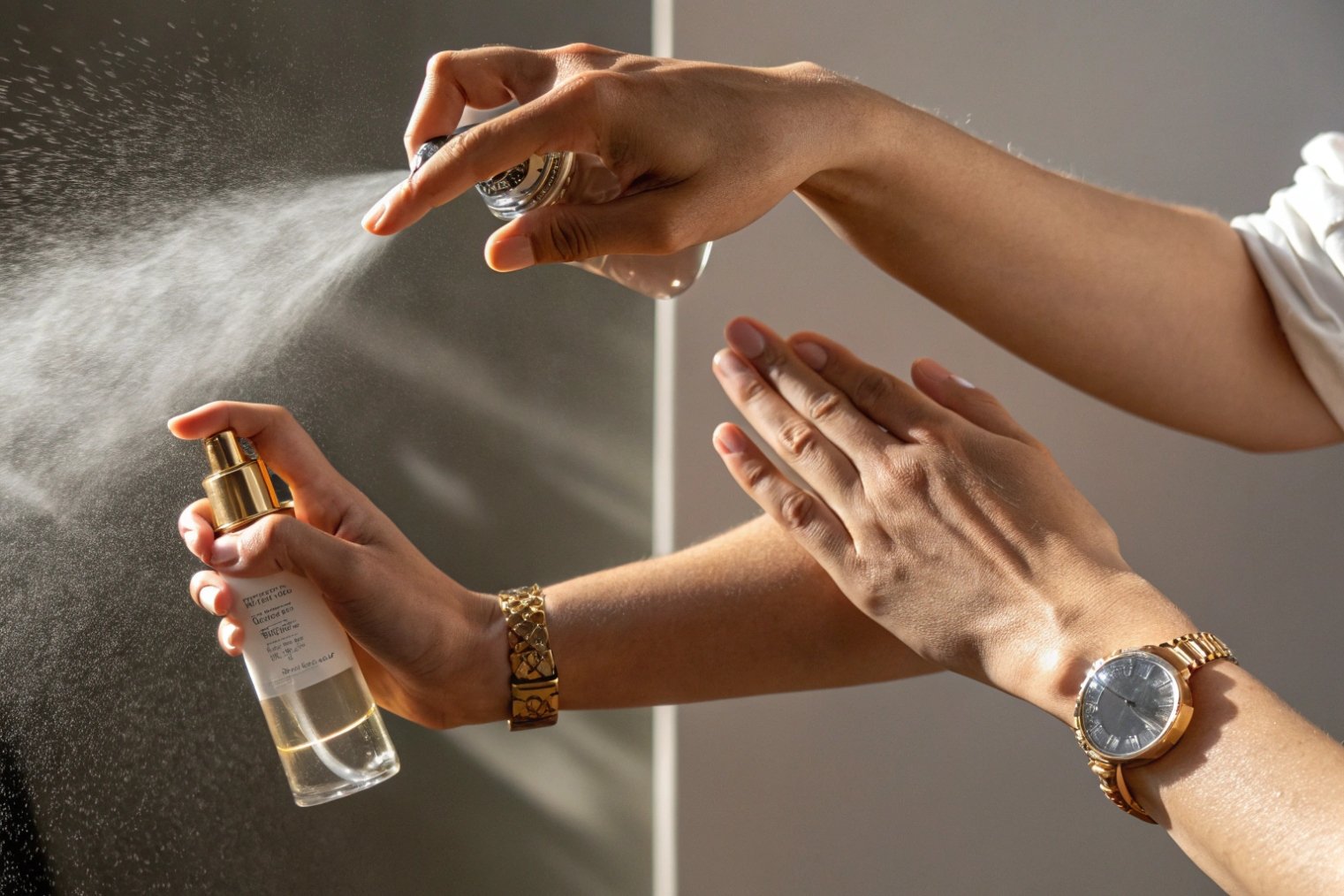
pulse points 3 are warm areas where blood flow sits closer to the skin. The classic ones still work: wrists, neck, inner elbows, and behind knees. Behind the ears can be useful too, but it is easy to overdo if the fragrance is strong. For a cleaner effect, one side of the neck and one inner elbow often gives an even scent cloud without shouting.
The “don’t rub your wrists” rule matters
Rubbing wrists after spraying adds friction and heat. That can crush the top notes and make the opening fade faster. It can also change how the scent unfolds—so refrain from rubbing 4 and let it air-dry. If a spot feels wet, a gentle tap is better than rubbing.
Clothing and hair: long-lasting, but handle with care
Fabric can hold aroma longer than skin. A light mist on a scarf, jacket lining, or the lower edge of a shirt can extend wear. Hair can also hold scent, but direct spraying can dry it out because alcohol is harsh. A safer move is to spray into the air and walk through, or mist a brush lightly. Always avoid delicate fabrics like silk if staining is a risk.
| Application surface | Longevity | Projection style | Main caution |
|---|---|---|---|
| Neck / behind ears | Medium–High | Smooth, personal bubble | Easy to overspray |
| Inner elbows | Medium | Natural waft with movement | Can transfer to clothes |
| Wrists | Medium | Noticeable close-up | Do not rub |
| Clothing (cotton/wool) | High | Long trail | Staining if too close |
| Hair (light mist) | Medium–High | Soft aura | Dryness, buildup |
A good goal is even coverage, not heavy coverage. That is why distance matters. Spray from about 6–8 inches (15–20 cm) so the mist lands evenly instead of pooling.
How do storage habits and bottle color protect the formula?
Many people blame skin chemistry, but the perfume may already be tired. Heat, light, and humidity slowly break the formula down, and the scent loses its sparkle.
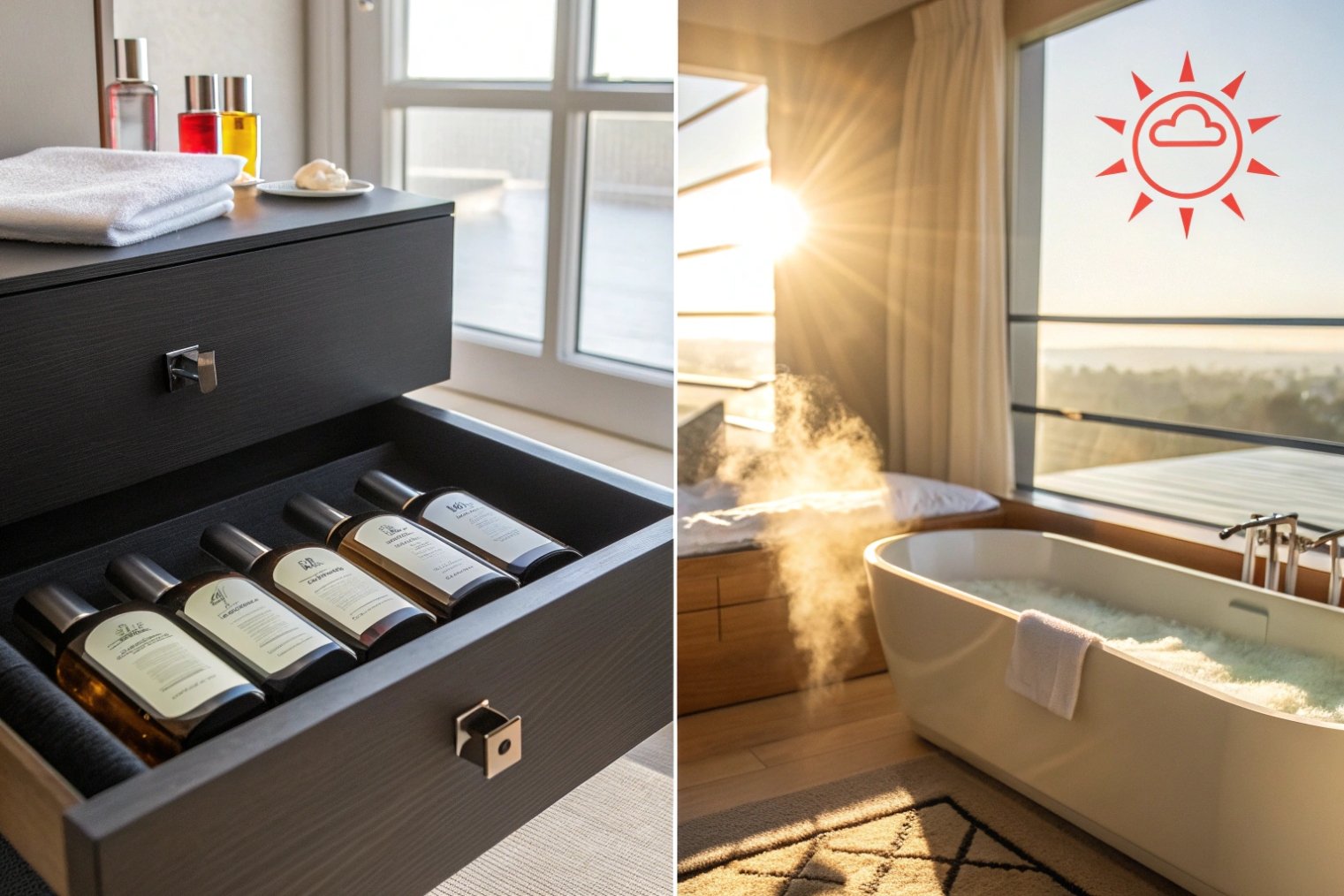
Storage is a major protection tool. Keep perfume cool, dark, and dry, with the cap tight. Bottle color also matters: amber, opaque, or UV-blocking glass protects better than clear glass, which should stay in a box or drawer.
The three main enemies: heat, light, and humidity
Heat speeds up chemical change. Direct light can break down sensitive notes. Humidity can damage labels, boxes, and even some components around the sprayer. That is why bathrooms are risky. If you want a simple rule, store perfume in a dry, dark place 5 (drawer, closet, cabinet) and keep it away from shower heat swings.
Cap tight, sprayer clean, and headspace controlled
Air exposure is a quiet enemy too. Leaving the cap loose can let alcohol and aromatics escape. It can also let oxygen creep in through the pump path over time. Keeping the cap tight and the sprayer clean reduces that. If a bottle leaks or smells “flat,” the issue can be the pump seal, not the juice itself.
Bottle color is real protection, not only design
Clear glass looks premium and shows the juice. Still, it offers less light protection. amber glass and UV protection 6 go together because darker glass blocks more damaging light. If the brand story needs visibility, a UV-blocking coating or tinted glass can be a smart middle path. When the bottle is clear, the best habit is simple: store it in the original box.
| Risk factor | What it does to perfume | Best habit | Bottle color help |
|---|---|---|---|
| Sunlight / UV | Dulls top notes, shifts color | Box or drawer storage | Amber/opaque helps most |
| Heat | Speeds degradation | Avoid windows, cars | Any color, but cooler wins |
| Humidity | Damages packaging, can affect components | Avoid bathroom storage | Color does not fix humidity |
| Oxygen exposure | Softens brightness over time | Cap tight, no leaks | Narrow neck + good pump seal helps |
Good storage does not only preserve longevity on skin. It preserves the truth of the fragrance, so every spray matches the first month of ownership.
Do EDT, EDP, and parfum concentrations change projection?
People often expect a simple rule: higher concentration equals stronger projection and longer wear. Reality is more nuanced, and that nuance helps you choose smarter.
Yes, concentration changes both longevity and projection, but not in a straight line. Parfum often lasts longest and feels closer to the skin. EDP is balanced for wear and presence. EDT can project brightly at first, then fade faster, depending on the formula.
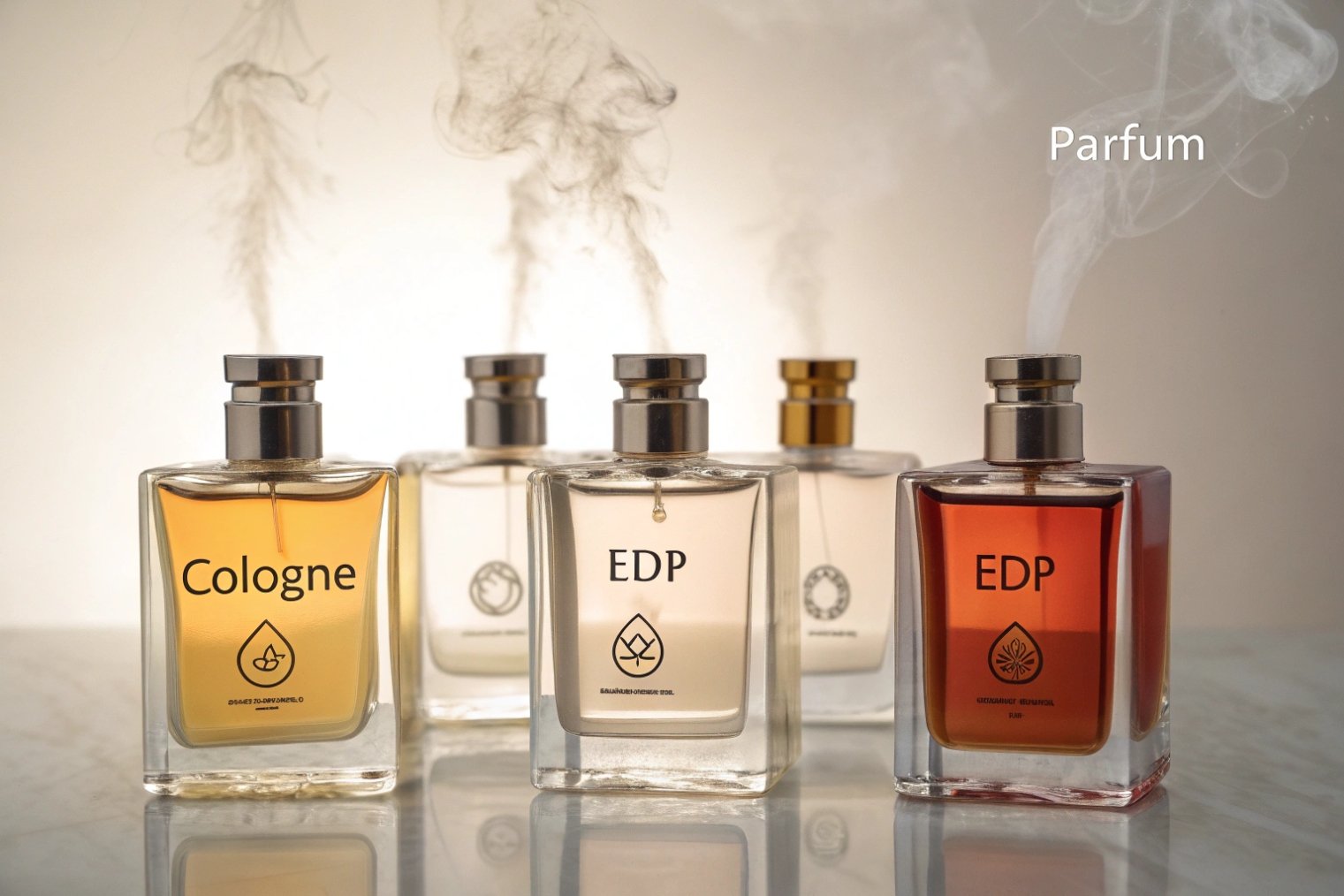
Concentration affects evaporation speed
In general, higher oil concentration can slow evaporation and extend wear. That said, ingredients matter. Citrus-heavy blends can fade fast even at higher concentration. Resinous, woody, or musky structures can last long even at lower concentration. So concentration is a helpful guide, not a guarantee.
Projection is about volatility, not only “strength”
EDT formulas often feel more sparkling and airy. That can create bigger early projection. EDP often feels fuller and steadier through the middle hours. Parfum (or extrait) can feel dense and smooth, but it may sit closer to the skin. That is why some parfums feel intimate, not loud.
How to use this in real life
For daytime and office settings, EDP or a softer EDT with good technique can work well. For long events, parfum or perfume oils often hold up with fewer sprays. Instead of spraying more, adjust placement: moisturized skin plus fabric misting often beats doubling the sprays on bare skin.
If you want a quick reference for how these formats differ, see Eau de Parfum vs. Eau de Toilette 7.
| Type | Typical concentration (general range) | Typical wear time | Projection feel | Best for |
|---|---|---|---|---|
| Eau de Toilette (EDT) | Lower | Medium | Bright, quick lift | Warm days, casual wear |
| Eau de Parfum (EDP) | Medium | Medium–High | Balanced presence | Daily signature, versatile |
| Parfum / Extrait | Higher | High | Smooth, closer aura | Evening, long wear, special use |
When concentration choice matches your setting, you need fewer sprays, and the scent feels more controlled. That control is what people remember as “lasting” and “well applied.”
Conclusion
Moisturized skin, smart pulse-point placement, light fabric misting, correct storage, and the right concentration work together. These eight tips keep your scent lasting, clean, and consistent.
Footnotes
-
Confirms a 15–20 cm (6–8 in) spray distance for even, efficient misting. ↩ ↩
-
Understand how emollients hydrate and smooth skin, supporting better fragrance hold. ↩ ↩
-
Practical guide to where fragrance performs best on the body (and why). ↩ ↩
-
Explains why rubbing after spraying can dull and fade a scent faster. ↩ ↩
-
Expert-backed storage basics: avoid humidity, bathrooms, and light/heat swings. ↩ ↩
-
Shows how amber glass blocks more UV than clear glass for light-sensitive formulas. ↩ ↩
-
Clear, mainstream explanation of EDT/EDP differences and how concentration affects wear. ↩ ↩






