
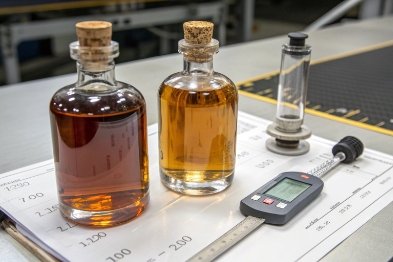
A spirits bottle can look premium and still leak on arrival. One bad closure choice can trigger returns, sticky cartons, and a flavor profile that feels “flat” before the first pour.
For most 40%+ ABV spirits, threaded screw caps deliver the most consistent seal and torque control, while T-top corks win on ritual and premium feel but need tighter spec control to avoid slow evaporation or weeping.
What “better” means for spirits, not wine
Spirits packaging is a different game than wine. Spirits do not need oxygen exchange. They need seal stability across heat, vibration, and long storage. The closure also has to support tax seals, tamper evidence, and bar use. In practice, the “best” closure is the one that protects quality and also matches how the bottle is sold and used.
The four sealing risks that decide the closure
1) Leakage in transit
A closure can pass a simple bench test and still fail after weeks in a container. Heat cycles and vibration change everything. This is where screw caps usually shine, because cap torque control 1 can be measured and standardized.
2) Evaporation over time
Spirits can lose aroma and volume through a weak seal. It is slow, but it is real. Bar-top corks with natural cork shanks can shrink or vary. Screw caps with the right liner tend to be more repeatable.
3) Chemical compatibility
High ABV can stress the wrong liner or glue system. Some materials can swell, crack, or pick up odor. This risk is often ignored until a brand tastes “cap taint” months later. Start with proven cap liner materials 2, then validate with the real formula and storage route.
4) Consumer experience
A luxury bottle is not only a seal. It is also a ritual. Cork wins here. The pop, the grip, the look on shelf. That emotional value can support higher pricing.
| What you optimize for | Screw cap advantage | Cork / T-top advantage | What to test early |
|---|---|---|---|
| Leak resistance | High, repeatable torque | Depends on cork grade and fit | vibration + heat cycle |
| Evaporation control | Strong with correct liner | Can vary with cork shrink | long hold + weight loss |
| Premium ritual | Can feel “industrial” | Strong premium cue | consumer handling test |
| Line efficiency | Fast, low defects | More variation, more QC | capper/corker capability |
| Export stability | Strong in hot routes | Sensitive to humidity and heat | container simulation |
A simple decision filter works: if the brand cannot tolerate leakage or wants to scale fast, screw caps lead. If the brand sells a ritual and a craft story, T-top cork can be the right call, but only with strict specifications.
Some of the most successful projects use a hybrid approach. A screw cap provides the seal, and an overcap or decorative shroud delivers the premium look. That keeps performance stable without giving up shelf presence.
A closure decision feels small. It is not. It touches returns, reputation, and repeat purchase.
A premium spirit can lose its “wow” if the closure feels cheap. At the same time, a beautiful cork means nothing if the bottle arrives with a damp neck and a faint alcohol smell.
T-top corks can elevate premium feel and opening ritual, but they need careful material choice and tight dimensional control to reduce slow evaporation, weeping, or cork degradation over long storage.
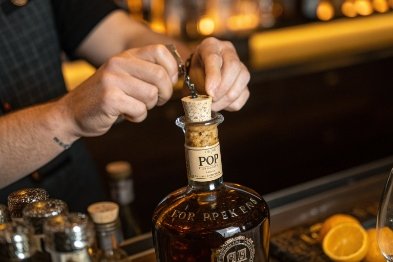
A bar-top (T-top) closure 3 is a performance part and a branding part. The wood or polymer top becomes a signature. The “pop” is a sensory moment. In many spirits categories, that moment signals craftsmanship, gifting, and authenticity.
T-top corks also support design freedom. They look good on tall bottles, short bottles, wide shoulders, and heavy bases. They fit the classic spirits silhouette, and they photograph well.
Where the sealing risk comes from
The risk is not the top. The risk is the shank and the interface with the glass bore.
Common causes of evaporation or weeping:
- Natural cork shanks vary in density and compression.
- Cork can dry and shrink in low humidity, since spirits are stored upright.
- The bore or finish tolerance is loose, so compression is inconsistent.
- The cork surface treatment is not matched to the liquid and storage time.
- Re-insertion after opening is imperfect, so consumers store with a weak seal.
A small personal memory from a client project still matters here. A high-end bottle looked perfect in the studio. Then a summer export run hit a hot route. A small percentage arrived with “neck sweat.” The brand did not lose many milliliters, but the smell in cartons created a quality panic. The fix was not a new bottle. It was a tighter closure spec and a better shank material.
The most practical path is a synthetic shank + premium head. The consumer still gets the ritual, but the seal becomes more repeatable.
Also, match the closure to the finish:
- Control the bore diameter and the lead-in chamfer.
- Specify insertion force and pull force ranges.
- Run heat hold and inversion tests before launch.
| T-top option | Premium feel | Seal repeatability | Best fit |
|---|---|---|---|
| Natural cork shank | Very high | Medium (varies) | small batches, strict QC |
| Micro-agglomerated cork shanks 4 | High | Medium to high | mid to premium tiers |
| Synthetic shank | High | High | export-heavy, stable sealing |
| Decorative head + synthetic core | Very high | High | luxury without leak anxiety |
T-top corks can be the right choice, but the brand should treat them like an engineered component, not a decoration.
Are threaded closures superior for leak and torque stability?
Leakage is the closure failure everyone remembers. It is also the most expensive one because it destroys labels, cartons, and retailer confidence in one shipment.
Threaded screw caps are usually superior for leak control and torque stability because application torque can be measured, controlled, and repeated at high speed, with strong tamper-evident options.

What makes screw caps stable
Threaded closures work well in spirits because the seal mechanism can be designed and measured. The cap compresses a liner against a sealing surface. The capper applies a target torque. The result can be checked with simple QA tools on the line.
Key advantages:
- Lower defect rate at scale
- Fast automation with consistent application
- Strong leak resistance in vibration and temperature swings
- Tamper evidence through bands, bridges, or roll-on pilfer-proof caps (ROPP caps) 5
Screw caps also perform well in hot climates and long export routes. They are less sensitive to humidity swings than natural cork. They also handle frequent opening and re-closing better for many consumers.
The screw-cap failures that still happen
Screw caps are not automatic perfection. Failures still happen when specs are loose or liners are wrong.
Common failure modes:
- Under-torque leads to leaks or slow vapor loss.
- Over-torque strips threads or causes liner creep.
- Thread finish mismatch causes cross-threading.
- Liner not compatible with high ABV causes odor pickup or swelling.
- Cap ovality and glass tolerance stack-up reduces sealing pressure.
So the “superior” part depends on doing the basics right: finish spec, torque window, and liner selection.
How to spec a screw cap like a serious brand
The best approach is to lock:
- Neck finish standard and tolerance
- Target application torque range
- Removal torque range after aging
- Leak test protocol (upright + inverted)
- Transport simulation (vibration + heat cycle)
| What you control | Why it matters | Typical target outcome |
|---|---|---|
| Finish spec + tolerance | prevents cross-thread and weak seal | stable application torque |
| Torque window | balances seal vs damage | low leaks, easy opening |
| Liner type | drives chemical resistance | no odor pickup, no swelling |
| TE system | protects channel trust | visible first-open evidence |
| Aging test | catches creep and relaxation | torque stays in range |
Threaded closures are often the safest choice when performance is the first priority. They also fit modern premium brands when paired with a good overcap, emboss, or capsule design.
How do liner materials interact with high-ABV formulas?
A closure can seal perfectly and still ruin the sensory profile if the liner is wrong. High ABV is an aggressive solvent compared to many food products.
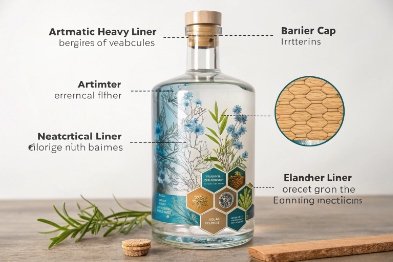
Liner materials must resist ethanol extraction, avoid odor transfer, and maintain compression over time. For spirits, the best liners are those proven for high-ABV contact, with low scalping and stable seal under heat cycles.
What “interaction” looks like in real life
High ABV formulas can cause three practical problems:
1) Extraction
Ethanol can pull trace compounds from some plastics, inks, or adhesives. This can create off-notes that show up as “plastic,” “rubber,” or “chemical.”
2) Swelling or softening
Some liners can swell, then relax. Seal pressure drops. The bottle may not leak quickly, but vapor loss can increase over months.
3) Flavor scalping
Some materials absorb aroma compounds. The spirit can taste flatter, especially for botanicals, citrus notes, and delicate top notes.
This is why liner choice should be tested with the real formula, not only with “generic alcohol.”
Practical liner families and what to watch
Common liner families in spirits packaging include PE-based foams, laminated barrier liners, and specialty compounds. The exact best choice depends on ABV, oils, and storage time—so use liner specs that include chemical-resistance notes for alcohol products 6.
Key questions to ask:
- Is the liner rated for high ethanol contact?
- Does it have a barrier layer to reduce scalping?
- Does it keep compression after heat aging?
- Does it work with the chosen torque window?
A simple test plan that reduces surprises
- Accelerated aging at warm temperature
- Sensory check vs control
- Torque retention after aging
- Inversion leak test
- Headspace odor check
| Formula type | Main risk | Liner need | Notes |
|---|---|---|---|
| Neutral vodka (40%) | odor pickup stands out | very clean liner | sensory testing is critical |
| Gin (botanicals) | scalping of top notes | low-absorption liner | compare fresh vs aged |
| High-proof rum/whisky (50–60%) | extraction + compression loss | ethanol-resistant, stable liner | heat cycle matters |
| Liqueur with oils/sugars | swelling + residue | chemical resistance + easy clean | check long storage |
| Flavored spirits | aroma loss + migration | barrier-focused liner | protect signature notes |
A high-ABV closure is not only a seal. It is part of the flavor protection system. That is why liner selection belongs in PPS testing, not after production.
Which markets prefer one closure for regulatory and channel reasons?
Many teams expect a simple map like “Europe likes cork, USA likes screw caps.” Real life is more mixed. Spirits markets care about different things: fraud control, tax stamps, on-trade practices, and consumer expectations.
Most regulations focus on tamper evidence, traceability, and tax control, not on cork vs screw cap directly. Still, channel norms and compliance tools often push brands toward screw caps in travel retail and some high-risk markets, while cork remains dominant in premium gifting and heritage categories.

What regulators usually care about
Across many markets, the practical compliance needs are:
- Tamper evidence to show first opening
- Tax stamps or excise seals that must adhere and remain readable
- Anti-refill and anti-fraud measures in certain channels
- Traceability through codes, serialization, or controlled distribution
These needs can be met with both cork and screw caps, but screw caps often make it easier because tamper-evident bands and controlled application are built into the closure system—especially where rules require a tamper-evident closure for distilled spirits 7.
Channel preferences that feel “regulatory” in practice
Even when the law does not say “use screw cap,” some channels effectively prefer it:
- Travel retail / duty free often expects strong tamper evidence and leak resistance. Screw caps fit this cleanly.
- Hospitality can prefer closures that reduce spillage and speed service. Some bars like screw caps for consistency.
- Luxury gifting often prefers cork because it matches the ritual and the visual language of premium spirits.
In some regions, tax seals are applied over the closure area. Both systems can work, but the closure shape and capsule design must support smooth seal placement and clean removal without tearing the stamp.
How to choose without guessing the market
The best approach is to decide based on:
- The channel mix (retail vs on-trade vs export)
- The fraud risk level
- The climate route (hot export routes need stable sealing)
- The consumer ritual expectation in the category
| Market driver | Closure that often fits best | Why |
|---|---|---|
| High fraud pressure | Screw cap + strong TE | hard to reseal invisibly |
| Travel retail | Screw cap | leak control + TE is standard |
| Premium gifting | T-top cork or hybrid | ritual and shelf presence |
| Hot climate distribution | Screw cap or synthetic T-top | less humidity sensitivity |
| Strict tax seal handling | Either, with correct capsule design | design must match stamp needs |
A clean solution many brands use is a hybrid: a screw cap for seal reliability, plus a decorative overcap to deliver the cork-like premium silhouette. This keeps compliance and performance strong while protecting the brand’s “opening moment.”
Conclusion
For spirits, screw caps usually win on sealing consistency and torque control, while T-top corks win on premium ritual. The best choice comes from your formula, route, channel, and brand story.
Footnotes
-
Practical guide to controlling application and removal torque for leak-resistant screw caps. ↩ ↩
-
Clear primer on common cap liner materials and why chemical compatibility matters. ↩ ↩
-
Explains bar-top (T-top) closure parts and sizing considerations for spirits bottles. ↩ ↩
-
Compares micro-agglomerated vs natural cork for bar-top stoppers and the consistency trade-offs. ↩ ↩
-
Overview of ROPP closures and how they provide tamper evidence and resealability. ↩ ↩
-
Liner definitions and chemical-resistance notes, including options commonly used with alcohol products. ↩ ↩
-
U.S. guidance describing required tamper-evident closures for distilled spirits in bottles. ↩ ↩






