
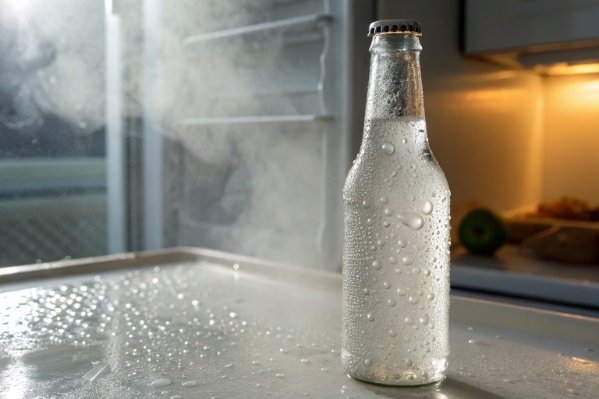
Consumers instinctively reach for a frosty bottle and crack it open, but for brand owners, this moment represents a critical stress test of packaging integrity. Can the sudden release of pressure or the temperature shift turn a refreshing drink into a liability?
It is generally safe for the glass structure to be opened immediately after refrigeration, as glass handles compressive thermal stress well. The primary risks are "gushing" (rapid foam release) in carbonated beverages or cap projectile failure if the contents have partially frozen and expanded.
Dive Deeper: The Physics of Cold Glass
At FuSenglass, we often field questions about "thermal shock," but usually regarding heat (hot-filling). The cold-to-warm transition is physically different. When you take a cold bottle (4°C) into a warm room (25°C), the outer surface of the glass begins to warm up and expand, while the inner surface remains cold and contracted.
This creates compressive stress on the outer skin. Since glass is roughly 10 times stronger in compression than in tension, standard glass bottles handle this "warming up" phase exceptionally well. A simple temperature shift from fridge to hand will almost never break a bottle.
The real danger lies inside the bottle: Pressure Dynamics.
According to Henry’s Law 1, gas solubility increases as temperature drops. A cold beer holds its CO2 well in solution. However, if the bottle has been agitated, or critically, if it has been accidentally frozen (even partially), the physics changes. Ice formation forces CO2 out of the liquid and into the headspace 2, creating a massive pressure spike. Opening a bottle in this state can lead to uncontrolled "gushing" or, in rare cases, glass failure due to the mechanical expansion of ice.
The Cold Open Risk Matrix
| Factor | Physics Involved | Safety Risk |
|---|---|---|
| Glass Structure | Compressive Stress (Outer wall warms) | Low. Glass is strong in compression. |
| Gas Solubility | High solubility at low temp. | Moderate. Sudden pressure drop causes nucleation (foaming). |
| Agitation | Nucleation 3 sites activation. | High. Combined with cold, leads to gushing. |
| Freezing (Accidental) | Water expansion (Ice) + Gas displacement. | Critical. Risk of explosion or cap failure. |
Now, let’s analyze which products are volatile and how to manage the consumer experience.
What risks can happen when opening a chilled glass bottle (pressure release, thermal stress, and sudden foaming)?
While the glass itself is likely stable, the interaction between the closure, the container, and the contents can be unpredictable.
The primary risks are "Gushing" (uncontrolled foaming due to rapid depressurization), "Cap Fly-off" (thread failure from over-pressure), and hand injury from "vacuum lock" in non-carbonated jars where cold solidifies the contents.
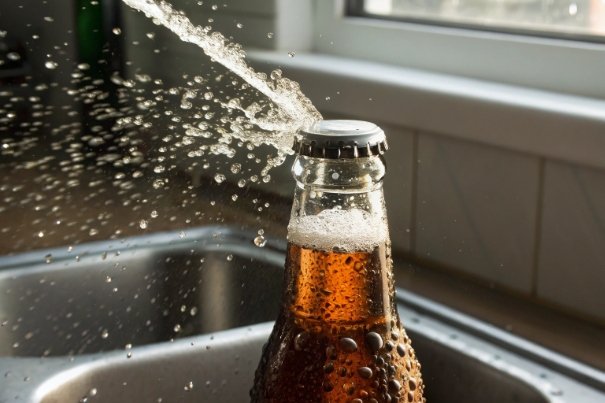
1. The Gushing Phenomenon
When you open a carbonated drink, you release the headspace pressure (from ~2-3 bar down to 1 bar instantly). If the liquid is stable, the gas slowly bubbles out.
-
The Risk: If the bottle was shaken or if "micro-crystals" of ice have formed, these act as millions of nucleation points. The CO2 comes out of solution simultaneously.
-
Result: The liquid ejects violently. This isn’t a glass failure, but it is a "product failure" that consumers hate.
2. Cap Failure (The Projectile)
In Twist-Off (Crown) or ROPP 4 (Screw) caps, the threads hold the pressure.
-
The Risk: If a bottle freezes, the liquid volume expands by ~9%. This reduces the headspace to zero and exerts hydraulic pressure on the cap.
-
Result: When the consumer starts to twist, the thread friction drops, and the internal pressure launches the cap into the air (or the consumer’s eye).
3. Vacuum Lock (The "Stuck" Jar)
For hot-filled sauces (non-carbonated) stored in the fridge:
-
The Risk: Cold contracts the liquid and headspace gas, deepening the vacuum.
-
Result: The vacuum becomes so strong the user cannot open the jar, or they use dangerous tools (knives) to pry it, potentially chipping the glass rim (creating ingestible glass hazards).
Failure Modes by Mechanism
| Mechanism | Cause | Result |
|---|---|---|
| Depressurization | Opening closure | Foam-over / Gushing |
| Hydraulic Expansion | Freezing contents | Glass Burst / Cap Projectile |
| Thermal Contraction | Cooling (Sauces) | Impossible to Open (High Vacuum) |
| Condensation | Humidity on cold glass | Slippage / Drop Breakage |
Which products are most likely to be unsafe to open right away (carbonated drinks, beer, kombucha, hot-fill sauces)?
Not all liquids behave the same at 4°C. Living beverages pose a unique threat compared to stable sauces.
Kombucha and unfiltered beers are the highest risk categories due to "secondary fermentation" which can continue in the fridge, building pressure beyond the glass rating. Hot-fill sauces pose a low safety risk but a high usability frustration due to vacuum lock.
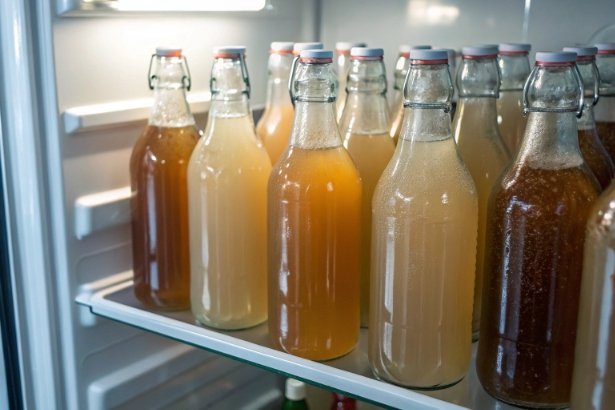
1. Kombucha & Pet-Nats (High Risk)
These are "living" products. Yeast continues to eat sugar and produce CO2, even in the fridge (albeit slowly).
-
The Danger: If the cold chain 5 was broken during transport (the bottle got warm, yeast woke up, pressure spiked), and then it was re-chilled, the bottle is a "pressure bomb."
-
Opening: Opening it immediately can result in a geyser. Unlike commercial soda, the pressure is uncontrolled.
2. Beer & CSD (Moderate Risk)
Commercial beer is filtered and carbonation is fixed.
-
The Danger: Mainly related to accidental freezing (e.g., placed in the freezer for a "quick chill" and forgotten).
-
Opening: Safe unless frozen.
3. Hot-Fill Sauces / Jams (Low Safety Risk)
-
The Danger: Usability.
-
Opening: The vacuum is strongest when cold. While not "unsafe" in terms of explosion, the struggle to open it often leads to consumers banging the jar lid or prying it, which damages the glass finish.
Product Safety Hierarchy
| Product | Pressure Source | Cold Opening Risk | Consumer Advice |
|---|---|---|---|
| Kombucha | Fermentation (Uncontrolled) | High (Explosion/Gush) | Do not shake. Open over sink. |
| Beer / Soda | Carbonation (Fixed) | Medium (If frozen) | Check for ice. If liquid, safe. |
| Sauces | Vacuum (Negative) | Low (Stuck Lid) | Run lid under warm water. |
| Juice | None | Zero | Safe. |
How long should a glass bottle rest after chilling before opening to reduce cracking or “gushing” risk?
If a bottle has been jostled in a grocery bag or just pulled from a super-chiller, patience is a virtue.
For carbonated beverages, a resting period of 1–2 minutes allows the liquid to settle and micro-bubbles to reabsorb, significantly reducing gushing risk. If a bottle is suspected of being frozen, it should NOT be opened and must rest at room temperature until fully thawed.
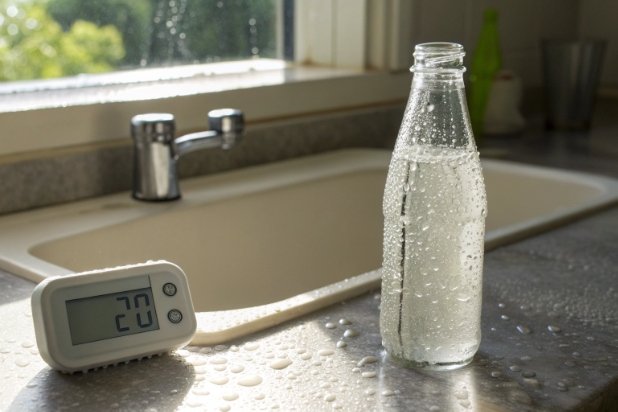
The "Settle" Time
When a bottle is moved, the liquid sloshes. In a carbonated drink, this agitation creates bubbles in the headspace and mixes gas into the liquid bulk.
-
Immediate Open: The gas in the headspace rushes out, dragging the liquid foam with it.
-
2-Minute Rest: The foam subsides. The headspace gas separates from the liquid. Opening releases gas only.
The "Thaw" Time (Critical Safety)
If you see ice crystals floating in the beer or soda:
-
DANGER: Do not open. The ice has displaced the gas, compressing it into a tiny volume. The pressure is nearing the glass burst limit (16+ bar).
-
Action: Let it sit on the counter for 20-30 minutes. As the ice melts, the volume decreases, and the gas re-dissolves into the liquid. The pressure normalizes.
Resting Guidelines
| Condition | Recommended Rest | Why? |
|---|---|---|
| Standard Fridge (4°C) | 0 – 30 seconds | Just to ensure grip (condensation). |
| Transported / Shaken | 2 – 5 minutes | Allow nucleation bubbles to subside. |
| Freezer Chilled (Liquid) | 5 minutes | Equalize temp gradients. |
| Partially Frozen (Ice) | 30+ minutes (Thaw) | Safety. Reduce internal pressure spikes. |
What glass bottle specs and QC tests should brands require for cold-chain use (thermal shock, internal pressure, closure compatibility)?
If your product lives in the fridge, your glass must be engineered for pressure and thermal endurance.
Brands must specify "Pressure Rated" ware (typically >12 bar) for any carbonated cold-chain product, mandate Headspace compliance (min 6% vacuity) to accommodate freezing expansion, and perform "Secure Seal" testing at 4°C to ensure caps don’t loosen when cold.
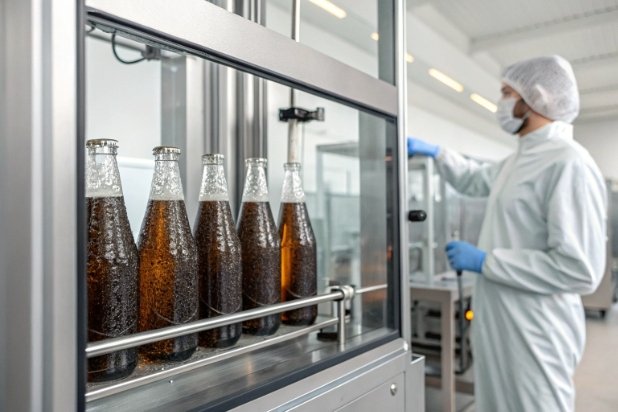
1. Internal Pressure Resistance (ISO 7458)
-
The Spec: Even if your drink is only 3.0 volumes of CO2 (approx 3 bar), you need a bottle rated for 12-16 bar.
-
Why: To handle the accidental freezing scenario. The glass acts as the containment vessel. If it fails, it must not explode; it should crack safely or the cap should vent.
2. Headspace (Vacuity) Verification
This is the most common design error.
-
The Spec: You must leave enough empty space at the top.
-
Why: Water expands 9% when freezing. If you fill to the brim, a frozen bottle will break, no matter how strong the glass is.
-
Rule: Minimum 6% of total volume must be headspace.
3. Thermal Shock (Cooling)
-
The Test: Heat bottle to 42°C, plunge into 4°C water.
-
Why: Simulates a hot summer day -> ice bucket plunge. The glass must survive this shock.
4. Closure Venting
-
The Spec: Use caps designed to "vent" excess pressure before they disengage threads.
-
Why: If pressure is too high, the gas escapes while the cap is still holding onto the bottle, preventing the "flying cap" missile.
Cold-Chain QC Checklist
| Test | Objective | Standard | Passing Criteria |
|---|---|---|---|
| Internal Pressure | Burst Strength | ISO 7458 6 | > 16 Bar (Beer/CSD) |
| Headspace Vol | Expansion Room | Volume Calc | > 6% of Brimful Capacity |
| Thermal Shock | Ice Bucket Safety | ASTM C147 7 | $\Delta T$ 42°C |
| Torque (Cold) | Seal Integrity | ASTM D2063 8 | Retains torque at 4°C |
Conclusion
Opening a refrigerated bottle is a daily ritual that is generally safe, thanks to the compressive strength of glass. However, the variables of carbonation, agitation, and accidental freezing introduce risks that brand owners must manage. By designing sufficient headspace, selecting pressure-rated glass, and educating consumers on the dangers of opening frozen bottles, you ensure that the only thing "popping" is the flavor.
Footnotes
-
Scientific law describing the relationship between gas solubility in a liquid and pressure. ↩
-
The empty space between the liquid surface and the cap, allowing for expansion and gas release. ↩
-
The process where gas bubbles form and grow in a liquid, leading to foaming. ↩
-
Roll-On Pilfer Proof caps, commonly used for sealing wine and spirit bottles. ↩
-
The temperature-controlled supply chain used to maintain the quality of perishable products. ↩
-
International standard for testing the internal pressure resistance of glass containers. ↩
-
Standard test method for internal pressure strength of glass containers. ↩
-
Standard test methods for measuring torque retention of closures on containers. ↩






