
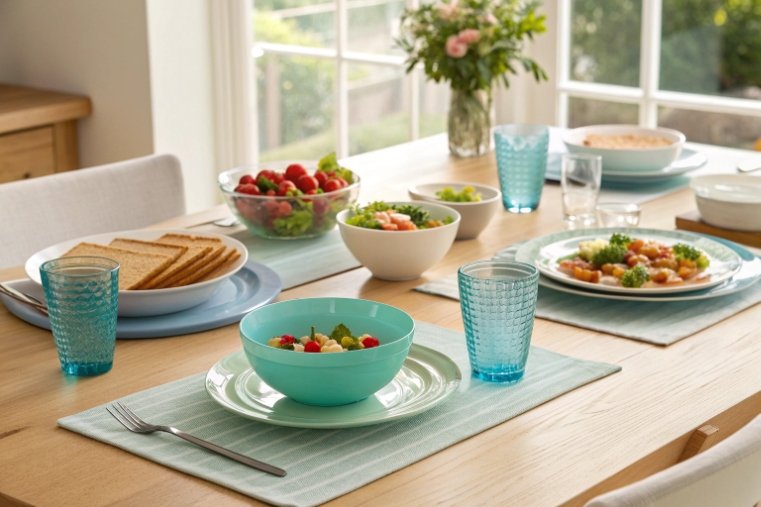
Most glass plates and bowls at home are very safe 1. Problems start when there is hidden lead, bad decorations, or cracks and sudden temperature changes.
Glass tableware is generally safe because it is inert and non-porous, as long as it is food-contact compliant, free from chips and cracks, and used within labeled limits for microwave, oven, and dishwasher use.
The more you know about glass types, labels, and warning signs, the easier it is to enjoy glass every day without worrying about chemicals or surprise shattering. Let’s walk through safety step by step.
How can I verify that glassware is lead-free and food-contact compliant?
Most modern glass is safe, but not every piece with a nice shine belongs near food. Vintage crystal and some painted items can still carry risks.
You can check lead safety and food-contact compliance 2 by buying from reputable makers, reading labels and certifications, and treating old or heavily decorated pieces as display-only if you are not sure.
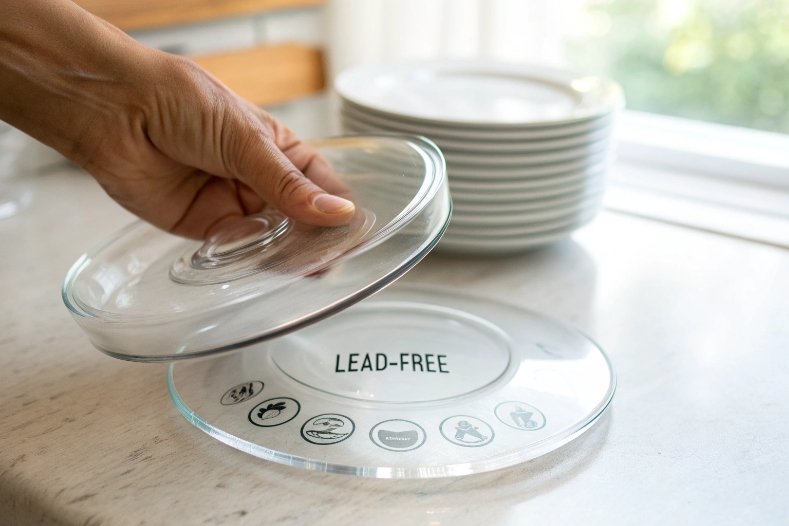
Simple checks for safe, food-ready glass
In daily life, a few habits make a big difference. They help separate safe workhorse pieces from “just for show” glass.
1. Read the packaging and bottom marks
Look for:
- “Food safe” or “for food contact”
- “Lead-free” or “lead-free crystal”
- Country of origin and brand name
- Use markings like microwave/oven/dishwasher symbols
These signals mean the manufacturer expects the glass to be used with food and has designed it to meet basic safety rules in that market.
2. Understand when to worry about lead
Higher risk groups:
- Traditional lead crystal 3 (especially vintage decanters, goblets, and heavy cut glass)
- Old or unknown decorative glass with bright paints or metallic colors on food-contact surfaces
- Very cheap, heavily painted glasses from unknown sources
To play it safe:
- Use lead crystal as serving-only for short contact, not for long storage of wine, juice, or spirits.
- Avoid letting acidic drinks (wine, juice, vinegar) sit in old crystal for hours or days.
- If you are unsure about a painted glass, keep it for flowers or decoration, not for daily drinks.
3. Look for compliance and test reports when sourcing
For bulk buying or brand use, ask suppliers for:
| What to ask for | Why it matters |
|---|---|
| Compliance with FDA / EU / LFGB / GB standards 4 | Confirms limits on heavy-metal migration and chemical stability |
| Test reports for lead and cadmium migration | Shows real lab data, not only a claim |
| Declaration of glass type (soda-lime, borosilicate, opal, crystal) | Helps you match pieces to your use case |
If a supplier cannot give basic information about composition and standards, that is a warning sign.
4. Trust your instincts on “mystery glass”
If a piece has no brand, no label, and heavy, bright internal paint, treat it as decorative. You can still enjoy it on a shelf. Just do not use it for daily drinks or long-term storage.
What precautions prevent thermal shock and sudden breakage?
Glass does not like sudden, extreme temperature changes. Even safe, compliant glass can fail if pushed too far.
You can prevent most thermal-shock breaks 5 by avoiding big hot–cold jumps, pre-warming or pre-cooling gently, and respecting the limits of each glass type.
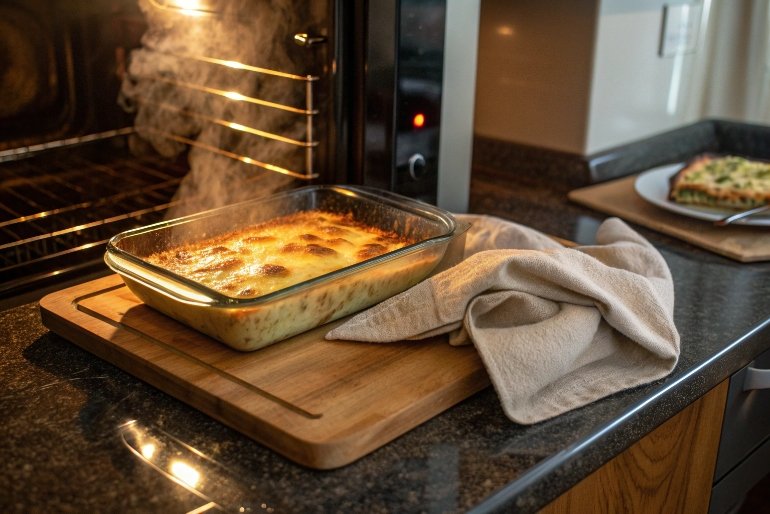
Everyday rules that keep glass from cracking
Thermal shock happens when part of the glass expands or contracts faster than the rest. Stress builds up, and the glass cracks or shatters.
Here is a simple guide:
| Situation | Risk level | Safer practice |
|---|---|---|
| Freezer → hot oven | Very high | Never do this, even with “oven-safe” glass 6 |
| Fridge → microwave | Medium | Let sit a few minutes, heat in shorter bursts |
| Hot dish → cold water in sink | Very high | Let cool first, use warm water, then cooler water |
| Room temp → boiling water pour | Medium–high | Use borosilicate or pre-warm standard glass |
1. Respect the labeled use
Always check:
- “Microwave-safe” before reheating
- “Oven-safe” and maximum temperature before baking
- Any warnings like “no broiler” or “no direct flame”
Even “oven-safe” glass can fail if you place it:
- Directly on a very hot metal rack or stone
- Under a broiler, where heat is intense and direct
- On a stove burner or open flame, unless clearly designed for that
2. Move slowly between temperature zones
Make a habit of gentle transitions:
- After baking, place hot glass on a dry cloth or wooden board, not a cold stone or wet surface.
- Let hot dishes cool on the counter before going into the fridge.
- Before pouring boiling water into a glass teapot or mug, pre-warm it with warm tap water.
Scratches, chips, and deep utensil marks concentrate stress. A dish with old damage is much more likely to fail in the oven or microwave. If a piece has a deep scratch on the bottom or a chip on the rim, retire it from high-heat jobs. Use it only for cold food, or recycle it.
When in doubt, treat glass kindly. Slow changes give the material time to expand and contract safely, and that keeps surprise shattering rare.
Tempered and chip-resistant designs often cost more. The question is whether that extra price saves you money and stress later.
For most busy home kitchens, tempered glass and chip-resistant rims 7 are worth the premium because they reduce day-to-day chipping, improve safety if something breaks, and help sets last longer before you lose key pieces.
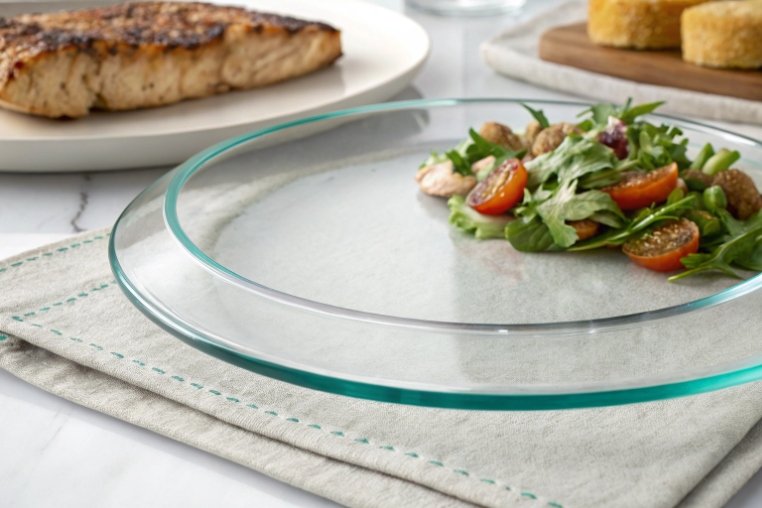
What extra strength really brings at home
Tempered glass is standard soda-lime or opal glass that has been heat-treated. The surface is locked into compression, which makes it more resistant to impact. Chip-resistant rims use shape, thickness, and sometimes extra treatment to protect the most fragile part of the dish.
1. How tempered glass behaves
Key advantages:
- Better resistance to bumps in the sink and on countertops
- Safer break pattern: many small, less sharp pieces
- Often lighter than thick, non-tempered glass of equal strength
However:
- If the surface layer is deeply scratched or chipped, the risk of sudden failure goes up.
- Tempered glass is not unbreakable. It just handles more abuse before it fails.
For families with kids, small kitchens, or slippery sinks, this extra margin is very helpful.
2. Why rim design matters
Rims take most of the hits during:
- Stacking and unstacking
- Loading and unloading dishwashers
- Carrying stacks of plates with one hand
Chip-resistant rims often use:
- Slightly thicker glass at the very edge
- A rounded profile instead of a sharp edge
- A gentle curve that spreads the impact force
A simple comparison:
| Feature | Standard rim | Chip-resistant rim |
|---|---|---|
| Edge thickness | Even with rest of plate | Slightly thicker at the lip |
| Shape | Sharper, more angular | Rounded, smoother transitions |
| Chip risk when stacked | Higher | Lower |
| Feel in the hand | Fine but less forgiving | Softer and more robust |
If you have lost several plates to small rim chips, a chip-resistant design usually pays for itself over time, because you replace dishes less often.
3. When the upgrade is not needed
If you:
- Live alone or in a very careful household
- Use porcelain more than glass for plates
- Rarely stack big piles or wash in a crowded sink
then standard glass may be enough. But for most family kitchens and small restaurants, tempered and chip-resistant features are a smart baseline, not a luxury.
What signs indicate a defective dish I should stop using immediately?
Even the best glass dish has a lifespan. Some warning signs mean “retire this piece now,” not “maybe later.”
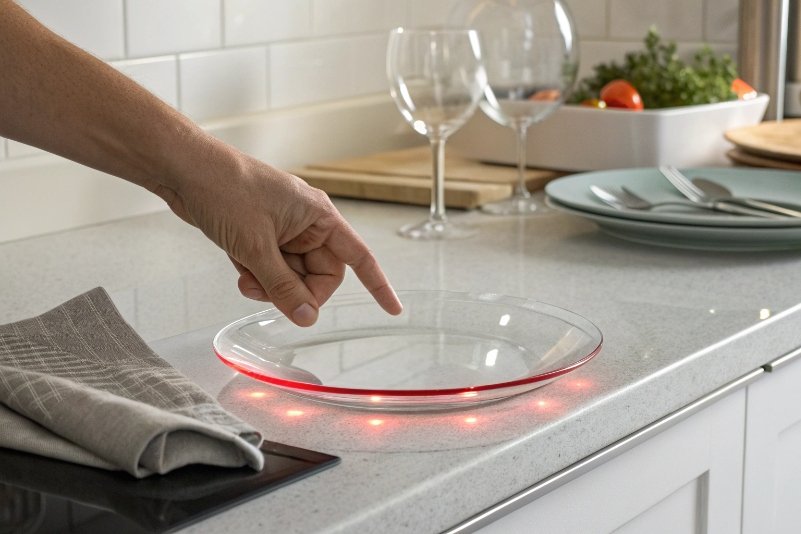
Stop using a glass item for hot food or daily service if you see chips on the rim, cracks, suspicious “starburst” marks, rattling layers, or unstable rocking on a flat surface.
A quick safety checklist for your cupboards
It helps to do a quick inspection when you reorganize or after a breakage event.
1. Chips and cracks
You should pull a piece out of service if:
- The rim has a chip you can feel with your finger.
- You see any crack line, even a short one, anywhere in the glass.
Cracks can spread under heat or impact. A chipped rim can cut lips and fingers during normal use.
2. Starburst or “bruise” patterns
Look for:
- Small, cloudy spots that look like a star or a web under the surface.
- Areas where light refracts strangely compared to the rest of the glass.
These can be stress points from a hard impact. On tempered pieces, such damage may make the whole item more likely to shatter suddenly later, especially in the oven or microwave.
3. Strange rocking or warping
Set the plate or dish on a flat countertop:
- If it rocks a lot, the base may be warped or damaged.
- Warping after oven use may be a sign that the piece has been pushed near or beyond its limits.
A slightly uneven foot is not always dangerous, but a heavily warped base can stress the glass during heat cycles and stacking.
4. Loose, bubbling, or flaking decoration
If you see:
- Bubbles under decals
- Flaking metallic rims
- Rough, peeling printed areas in the eating zone
then that piece is not ideal for contact with food, especially if you do not know the ink or metal type. It may still be useful as a purely decorative plate, but not for daily meals.
5. After an explosion or major break
If one tempered dish has shattered into many pieces, check nearby items. Glass fragments can hit other pieces and leave micro-damage. It is wise to inspect the rest of the stack for starbursts, chips, or strange marks. Discard any that do not look right.
When in doubt, it is cheaper to replace one questionable plate than to risk an injury or a glass explosion in a hot oven.
Conclusion
Glass tableware is safe when you choose verified, food-contact glass, avoid extreme temperature changes, value tempered and chip-resistant designs where needed, and retire any piece that shows chips, cracks, or suspicious stress marks.
Footnotes
-
State public health Q&A explaining when tableware lead is a concern and how to reduce exposure. ↩︎ ↩
-
FDA overview of lead in food, cookware, and tableware, including glass and ceramic items. ↩︎ ↩
-
Health Canada advice on using lead crystalware safely and avoiding long-term storage of drinks. ↩︎ ↩
-
Industry guide summarizing regulatory limits for migratable lead and cadmium in glazed ceramic and glass foodware. ↩︎ ↩
-
Pyrex FAQ outlining safe oven, microwave, and storage practices and how to avoid thermal shock. ↩︎ ↩
-
Consumer article explaining why freezer-to-oven moves can shatter glass cookware and safer handling habits. ↩︎ ↩
-
Restaurant-focused guide to tempered glass dinnerware pros, including strength, safety breakage pattern, and affordability. ↩︎ ↩






