
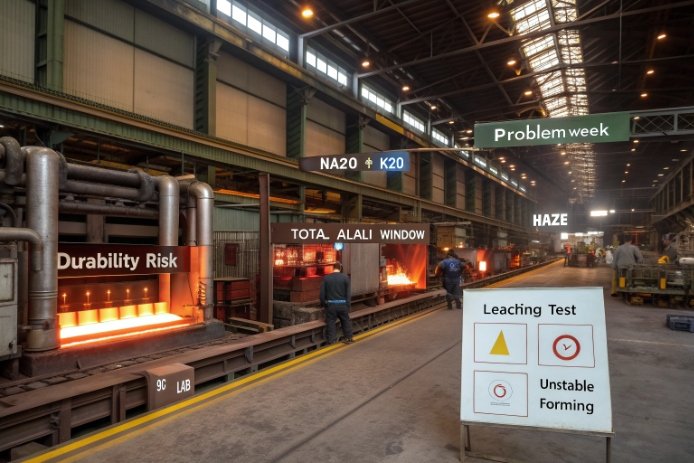
High-speed lines punish small chemistry drift. One week of unstable alkali can show up as haze, weak durability, and a furnace that never feels “steady.”
Na₂O and K₂O make bottle glass melt and form efficiently, but too much raises leaching and weathering risk. Tight control comes from a composition window, cullet discipline, and fast feedback using batch checks, melt tests, and process signals.
Alkali control is a balance between meltability, durability, and process stability
Alkali metal oxides sit at the center of container glass economics. They lower melting temperature, help the batch dissolve, and support stable forming. At the same time, alkalis are the most mobile ions in soda-lime glass. If the alkali level or the Na/K balance drifts, the glass network becomes easier to attack by moisture and water-based products, and the surface can weather into haze or a white “bloom.” That is why alkali control is not a lab-only topic. It is a daily production topic.
A practical control plan starts with a few targets that everyone can understand:
– Total alkali window (Na₂O + K₂O) that keeps melting and forming stable.
– Na/K ratio window that prevents surprise changes in viscosity and conductivity.
– Durability guardrails (leach tests, haze/bloom checks) that confirm the window is safe.
– Volatility and fining guardrails (redox and sulfate behavior) that reduce batch-to-batch drift.
Cost pressure often pushes alkali upward to improve meltability. That can be smart when energy is the bottleneck. But excess alkali tends to lower chemical resistance and increase the chance of surface weathering in humid storage. So the best approach is not “raise alkali” or “cut alkali.” The best approach is to keep alkali in a narrow range and let cullet quality, furnace control, and coatings do the rest.
The control loop that keeps alkali stable
| Control layer | What it prevents | What to measure | What to do when it drifts |
|---|---|---|---|
| Raw materials + cullet | hidden Na/K changes | supplier COA, cullet grade | lock suppliers, blend cullet, reject outliers |
| Batch house | weighing and moisture errors | batch scale checks, moisture trend | calibrate, tighten SOP, fix storage |
| Furnace chemistry | real melt composition drift | XRF/ICP trend on glass | adjust batch corrections and cullet blend |
| Process signals | fast early warning | boost power, conductivity proxy, defects | slow pull changes, stabilize temperatures |
| Product protection | weathering and scuff | bloom checks, coatings, storage | tune coatings, packaging, and humidity control |
A stable alkali plan keeps the furnace calm, keeps the bottle surface clean, and keeps customer claims low.
Now let’s break down the four questions that buyers and plant teams ask most.
A good alkali strategy is simple on paper, but it wins only when it is measured the same way every day.
What functions do Na₂O and K₂O provide?
When a furnace struggles, the first instinct is often “add more flux.” That can fix melting today and create durability problems next month.
Na₂O and K₂O act as fluxes and network modifiers. They lower melting temperature and help glass flow during forming. They also raise ionic mobility, so they change electrical conductivity, thermal expansion, and chemical durability.
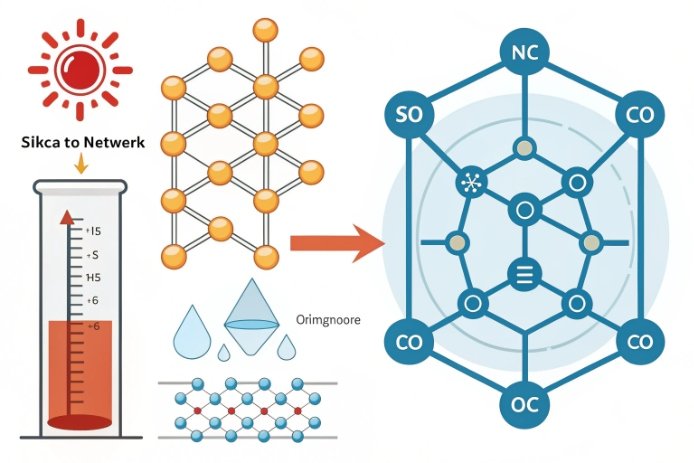
Flux and forming support
Na₂O is the workhorse alkali in most soda-lime container glass. It helps silica dissolve and lowers viscosity in the melting range. That is why soda ash (Na₂CO₃) is a major batch material in many plants. K₂O can play a similar role via potash 1 (K₂CO₃), but it is more often used in smaller amounts, sometimes coming indirectly from feldspar 2 or certain cullet streams.
In production terms, alkalis do three valuable jobs:
– reduce melting load (less time and temperature to melt)
– stabilize gob flow (viscosity control)
– support refining chemistry choices (how sulfate behaves, how foam forms)
Electrical conductivity and heat distribution
More alkali usually means more mobile ions. That increases melt conductivity. For plants using electric boosting, that changes how power couples into the melt. A small alkali drift can shift booster current and temperature distribution even if the pull rate is unchanged.
Durability trade-off
Alkalis depolymerize the silica network. That is useful for melting. It also tends to reduce chemical resistance 3 unless balanced by stabilizers like CaO and by enough network strength (SiO₂, Al₂O₃). This is why “low-alkali” glass is usually more durable, but also harder to melt and form.
Why Na/K balance matters more than most people expect
Na₂O and K₂O are not fully interchangeable. Mixed alkali behavior 4 can create non-linear changes in viscosity and conductivity. In some systems, small substitutions can change low-temperature viscosity more than the same change would suggest from simple mixing. That is why a plant should control not only total alkali but also the Na/K ratio.
| Function | Na₂O (typical role) | K₂O (typical role) | What to control |
|---|---|---|---|
| Melting aid | primary flux | secondary flux | total alkali window |
| Formability | strong impact | strong impact (can be non-linear) | viscosity checkpoints |
| Conductivity | increases strongly | increases, can shift behavior | boost power trend |
| Durability | tends to reduce | tends to reduce | leach and bloom checks |
The right message to buyers is simple: alkalis make glass economical and formable, but they must be kept in a controlled window to protect durability.
Why does excess alkali increase leaching and haze risk?
Haze is not just cosmetic. It is a sign that the surface chemistry is failing under moisture or product contact.
Excess alkali raises the amount of mobile Na⁺/K⁺ near the surface. In humid storage or water contact, these ions exchange with H⁺/H₃O⁺, increasing surface attack and leaving a silica-rich altered layer that can look hazy or develop “bloom.”
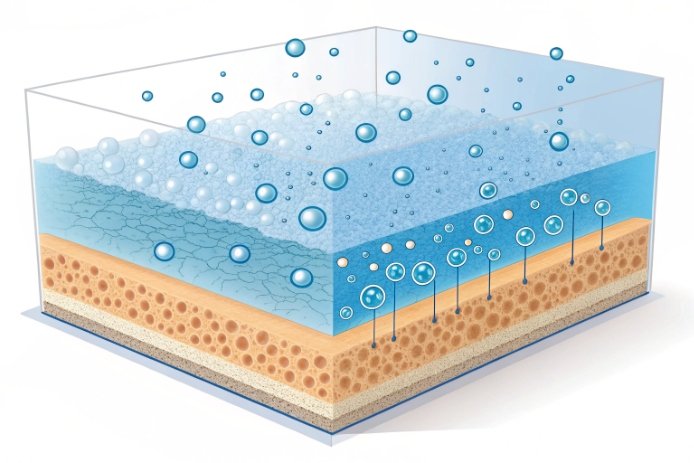
The core mechanism: ion exchange and surface alteration
Most soda-lime glass weathering starts with ion exchange 5. Water at the surface swaps H⁺/H₃O⁺ for alkali ions. The local chemistry shifts. A thin altered layer forms. Over time, this layer can become rough, cloudy, or covered in white deposits depending on humidity cycles and pollutants in the air.
This is why high humidity storage can turn into a claim problem. Bottles can leave the factory bright and clear, then show haze weeks later after condensation cycles in a warehouse or container. In container glass language, that often shows up as “bloom,” “weathering,” or “white haze.”
Why “more alkali” makes this worse
If total alkali is higher, there are more mobile ions available to exchange. That can accelerate the first stage of corrosion. Also, higher alkali generally means a more open network structure. Water can access reaction sites more easily. The surface becomes less stable.
This does not mean alkali must be extremely low. It means alkali must stay inside a window that your storage and distribution realities can tolerate.
What products amplify the risk
Some products and environments make leaching risk more visible:
– long storage in humid climates
– repeated condensation and evaporation on pallets
– alkaline cleaners or rinse water
– high pH product exposure (some detergents, some niche cosmetics)
A bottle that is safe for one brand may weather for another brand, even with the same glass, if the storage and wash conditions differ.
How to reduce haze risk without destroying meltability
A balanced approach works best:
– keep total alkali controlled, not drifting upward
– increase network stabilizers where practical (SiO₂, Al₂O₃, balanced CaO/MgO)
– improve surface protection (hot-end and cold-end coatings)
– improve dry storage and pallet wrap strategy to reduce condensation cycles
| Haze driver | What it looks like | Why alkali matters | Fast prevention move |
|---|---|---|---|
| Humidity cycling | white bloom, dull surface | ion exchange accelerates | drier storage + stronger coatings |
| High-pH contact | permanent haze | alkali extraction speeds | control wash chemistry and rinse |
| Long shelf life | slow haze growth | altered layer builds | durability checks matched to shelf life |
| Dirty pallets/air | localized deposits | reactions in moisture film | packaging hygiene + wrap control |
Excess alkali does not “guarantee” haze, but it reduces the safety margin. In real markets, that safety margin is money.
How to monitor alkali via batch, sensors, and redox?
Control is not a single test. It is a chain. The best plants monitor alkali where it enters, where it melts, and where it shows up as behavior.
Monitor alkali by locking raw material and cullet chemistry, verifying batch accuracy, measuring glass composition routinely (XRF/ICP), and using fast process signals like conductivity/boost power as drift alarms. Redox control matters because it changes sulfate fining and volatilization behavior, which can shift melt stability and effective composition.
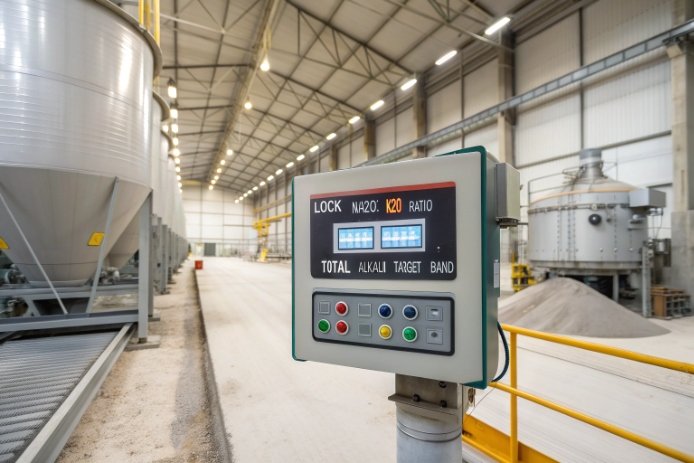
Batch-side control: stop drift before it hits the furnace
Most alkali drift starts with batch reality:
– soda ash purity variations
– moisture pickup in batch materials
– weighing error or feeder drift
– cullet chemistry changing without notice
A practical batch plan includes:
– daily scale checks and calibration schedule
– moisture tracking (especially for soda ash and cullet fines)
– supplier COA review for Na₂O/K₂O contributors (including feldspar)
– cullet grade rules with color and contamination limits
Lab confirmation: make the melt the referee
Periodic glass composition testing turns arguments into facts. XRF 6 is common for major oxides, and ICP methods are often used when deeper validation is needed. The key is consistency: same sampling point, same prep method, same reporting format.
When a plant sees drift, the fastest correction is often not “change the whole recipe.” It is:
– blend cullet differently
– add a small batch correction
– stabilize temperatures and pull changes
– then re-check after the furnace mixing time
Inline sensing: what is realistic right now
True in-melt alkali probes are still not common in container plants. But online and nearline elemental sensing has become more practical, especially for batch and cullet streams. LIBS 7-based systems are one example of technology aimed at measuring batch composition quickly to reduce surprises.
On the furnace side, many plants already have a strong proxy signal:
– electrode current/voltage (if boosting)
– power demand patterns
– forehearth temperature stability
– foam and fining behavior
These signals do not “measure Na₂O.” But they detect the effects of alkali drift fast enough to protect stability.
Where redox fits into alkali control
Redox control is often discussed for color and fining. It also matters for batch reactions involving sulfate fining agents. If redox is too reducing, sulfate behavior changes. Gas release timing changes. Foam risk changes. That can change melting efficiency and volatility patterns, which can indirectly affect composition stability and how much alkali ends up where you expect it.
| Monitoring point | What to check | Typical speed | Action trigger |
|---|---|---|---|
| Incoming soda ash/potash | purity + moisture | per lot | COA deviation, moisture drift |
| Cullet stream | Na/K trend + contamination | weekly to daily | color drift, stones, metals |
| Batch mixing | weigh accuracy + homogeneity | per shift | feeder drift, recipe errors |
| Melt glass sample | Na₂O, K₂O, total alkali | daily/weekly | out-of-window chemistry |
| Process proxies | boost power, conductivity proxy | continuous | sudden shift alarms |
A monitoring plan is successful when it catches drift early enough that the correction is small.
Are partial K₂O substitutions commercially viable now?
K₂O sounds attractive when you want to tune viscosity or conductivity. The problem is usually cost and control complexity.
Partial K₂O substitution is viable when it solves a clear problem (working range, viscosity at lower temperatures, or stability with certain cullet blends). It is less attractive as a pure cost move, because potash sources are often priced above soda ash and the mixed-alkali effect can make properties less linear.
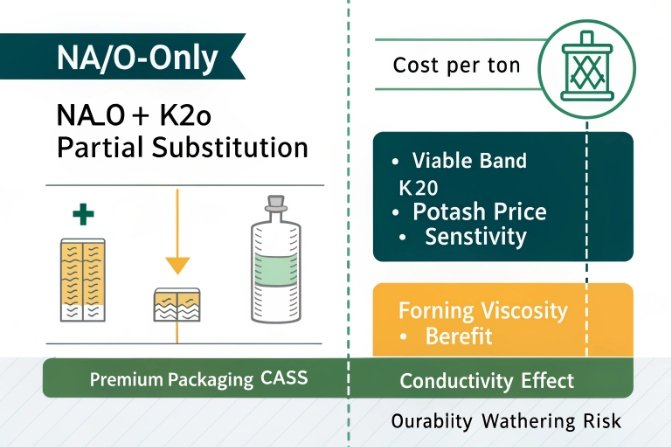
What “partial substitution” looks like in real container recipes
Many commercial soda-lime glasses already contain small K₂O levels, often below a few percent, because K enters through feldspar and some recycled streams. Small K₂O content is normal. The question is whether it is smart to push it higher on purpose.
Technically, partial substitution can be used to:
– adjust viscosity behavior near annealing/softening ranges
– tune electrical conductivity behavior in mixed-alkali systems
– accommodate cullet chemistry where K₂O is already present
But it demands tighter control of Na/K than many plants are used to, because mixed-alkali behavior can be non-linear.
Cost reality: flux choice is also a commodity decision
In many markets, sodium carbonate is the standard flux for container glass because it tends to be cheaper and more available than potassium carbonate. Potassium carbonate pricing can stay high and region-dependent. So K₂O substitution is rarely a “save money” move unless local supply conditions make it favorable or unless it reduces total cost by improving yield or energy enough to beat the batch cost increase.
When K₂O substitution makes sense commercially
K₂O becomes commercially sensible in four situations:
1) A premium program needs a specific processing window and the plant can hold tight Na/K control.
2) A plant uses high cullet where K₂O content is unavoidable and must be stabilized rather than fought.
3) A process constraint exists (like a viscosity or conductivity issue) where a small Na/K change solves a larger operational cost.
4) A long-term supply contract makes potash pricing stable enough to plan with confidence.
A cautious decision table for buyers and plants
| Reason to add K₂O | Likely benefit | Main risk | “Go / No-go” check |
|---|---|---|---|
| widen working comfort | better viscosity behavior in some ranges | mixed-alkali non-linearity | verify viscosity checkpoints and defects |
| tune boosting behavior | smoother electrical response | unpredictable drift with cullet | lock Na/K ratio with cullet spec |
| handle high-K cullet | stabilize final chemistry | hard to control if cullet varies | incoming cullet chemistry trend |
| cut raw cost | rarely true | batch cost rises | compare total cost per good bottle |
Partial K₂O substitution is not a trend that replaces Na₂O broadly. It is a targeted tool. When the target is clear and the controls are tight, it can be a smart commercial choice.
Conclusion
Control Na₂O and K₂O with a clear composition window, disciplined cullet and batch control, and fast drift signals. Small, stable alkali beats big, cheap alkali every time.
Footnotes
-
Potash: Potassium carbonate, a source of K₂O used as a flux in glassmaking, often more expensive than soda ash. ↩
-
Feldspar: An aluminosilicate mineral that introduces alumina and alkalis (Na₂O, K₂O) into the glass batch. ↩
-
Chemical resistance: The ability of glass to withstand corrosive attack by water, acids, and alkalis, crucial for product stability. ↩
-
Mixed alkali behavior: A phenomenon where mixing two different alkali ions (like Na and K) leads to non-linear changes in glass properties. ↩
-
Ion exchange: A process where alkali ions in the glass surface are replaced by hydrogen ions from water, leading to weathering. ↩
-
XRF: X-ray Fluorescence, an analytical technique used for elemental analysis of glass composition. ↩
-
LIBS: Laser-Induced Breakdown Spectroscopy, a rapid analysis method suitable for online monitoring of materials. ↩






