
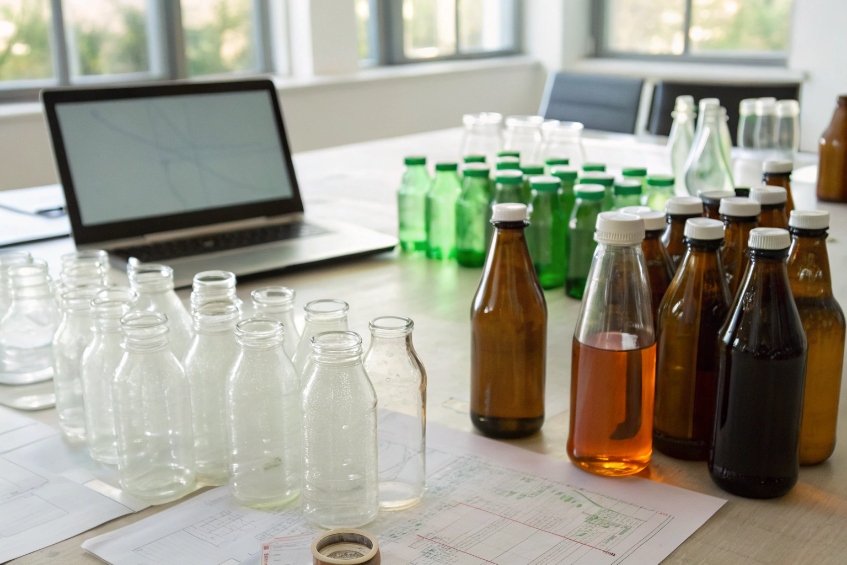
Vinegar is simple on the label, but it is not simple for packaging. Acetic acid, aromas, light, and oxygen all fight with your glass, liner, and cap every day.
The best vinegar bottle starts with food-grade soda-lime glass, an acid-resistant liner, and a light strategy that fits your product, not with the most expensive glass type.
When you match glass type, color, and closure to real use scenarios, vinegar stays bright, aromatic, and safe on the shelf. When you ignore these details, you get dull flavor, rusty caps, and complaints. So let us walk through each choice step by step.
Which glass type—soda-lime or borosilicate—is best for acetic acid resistance?
Vinegar buyers sometimes worry that “ordinary” glass is not safe for acid. This fear pushes them toward expensive lab glass that they may not need.
For table-strength vinegar, food-grade soda-lime glass is the standard choice; borosilicate is useful only for special high-temperature or lab-style conditions.
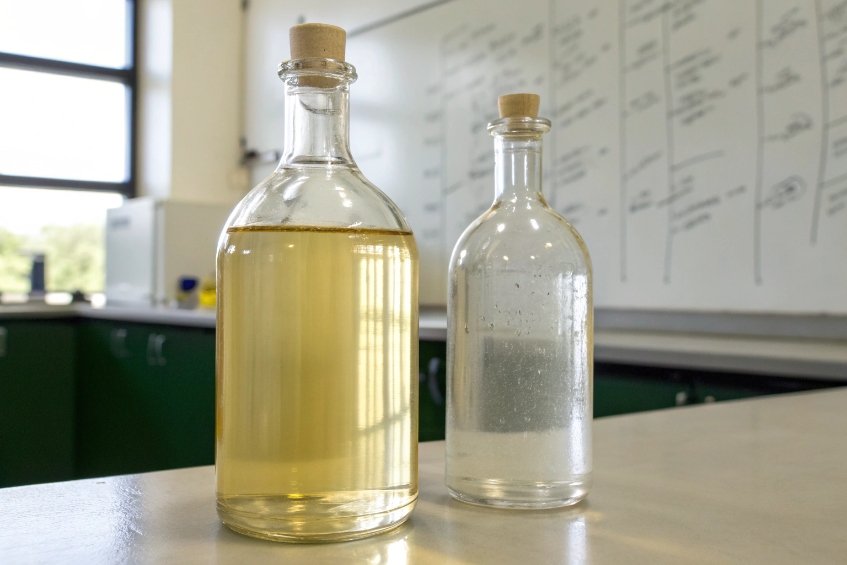
Acid resistance in real vinegar conditions
Vinegar for food usually sits between 4–10% acetic acid, at room temperature, sometimes filled warm but not at extreme temperatures. Good soda-lime container glass 1 is designed for this.
Pharma and food packaging standards usually classify soda-lime containers as Type III by default. This is already suitable for acidic products like vinegar when the glass composition and forming process are controlled. Some suppliers also add internal surface treatment (often called Type II upgrade). This reduces alkali release from the glass. So it lowers the risk that long-term storage will slightly shift pH or create haze. (Background reference: Type I/II/III glass container classification 2)
Borosilicate glass has a lower coefficient of thermal expansion and very high hydrolytic resistance. It is great for lab acids, autoclave cycles, and very hot filling. But those use cases are far beyond normal vinegar bottling lines. In daily vinegar projects, the weak points are almost always closure, liner, headspace oxygen, and storage conditions, not the body glass.
So in short: when a buyer asks, “Do I need borosilicate for vinegar?” the honest answer in most food scenarios is no. It adds cost, it limits shape options, and it does not fix the typical vinegar failures.
Practical comparison: soda-lime vs borosilicate for vinegar
Here is how I position both materials with vinegar buyers:
| Aspect | Soda-lime glass (food grade) | Borosilicate glass |
|---|---|---|
| Acid resistance (4–10% acetic) | Fully adequate for table vinegar | Also fully adequate |
| Hydrolytic class | Type III standard, Type II with surface treatment | Type I high resistance |
| Thermal shock tolerance | Good, but needs control for hot filling | Very high, handles stronger thermal swings |
| Shape and design freedom | Very wide, many stock vinegar molds | More limited, often lab-style shapes |
| Cost per unit | Lower | Higher, sometimes 2–3× |
| Typical use for vinegar | Retail bottles, catering, bulk food service | Lab storage, special high-heat or R&D applications |
For wholesale vinegar in the food and beverage channel, soda-lime glass with proper quality control is the base recommendation. A move to borosilicate only makes sense if the process includes extreme heat steps or if the customer wants a lab-style story for a very niche product.
Should I pick clear, amber, or green glass to protect vinegar flavor and shelf life?
Vinegar looks harmless on the shelf. But aromatic vinegars, infused vinegars, and colored balsamics can fade or brown when they meet light every day.
Use amber glass for light-sensitive vinegars, clear glass for controlled-light display, and green glass when you need a middle ground between protection and a “natural” look.
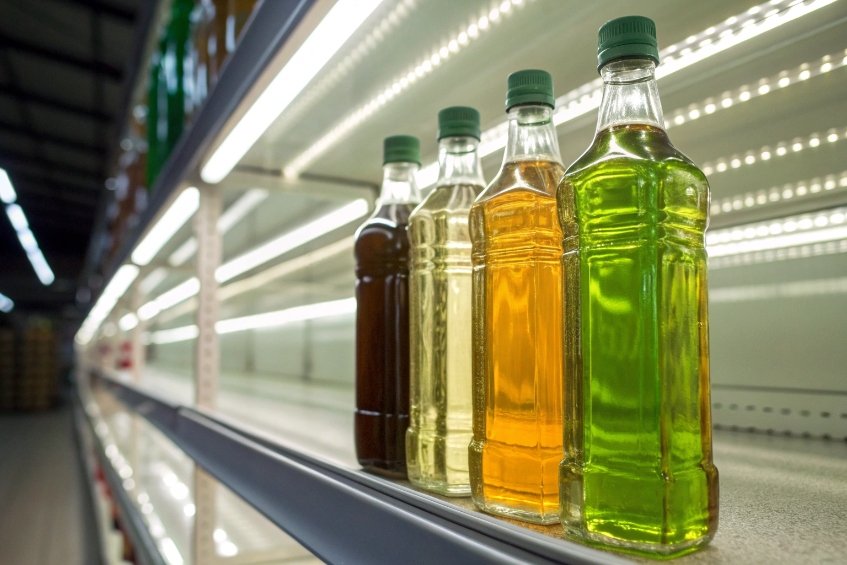
How light affects vinegar and when color matters
Acetic acid itself is fairly stable. The sensitive parts are pigments, natural flavors, added herbs, fruits, and spices. UV and parts of visible light can slowly break these molecules. The result is color shift and dull aroma. This is most obvious in pale wine vinegars, herbal infusions, and premium balsamic dressings that sit on open shelves.
Amber glass provides UV protection for light-sensitive contents 3 and blocks most UV and a large part of the short-wavelength visible spectrum. So it protects light-sensitive vinegars better over time. Green glass gives moderate protection and a traditional European food look, especially for wine-based products. Clear (flint) glass gives almost no light blocking, but it shows every bubble and note of color. For some brands this “see the product” factor is essential.
Because of this, the right choice is not just about physics. It is also about sales channel. If the bottle stands in a closed box, a dark pantry, or a shaded restaurant shelf, clear glass works very well. If the bottle will live under bright LED supermarket lighting all day, color matters more.
Comparing clear, amber, and green for vinegar
Here is how I usually explain the trade-offs to buyers:
| Glass color | Light protection | Shelf-life impact for sensitive vinegars | Branding and display notes | Typical cost vs flint |
|---|---|---|---|---|
| Clear | Almost no UV blocking | Needs controlled storage to avoid fade | Best product visibility, clean modern look | Base price |
| Amber | Very strong UV blocking | Best for long shelf life and infusions | “Apothecary” or premium craft feel | Slight upcharge |
| Green | Moderate UV blocking | Acceptable for many wine vinegars | Traditional, rustic, or Mediterranean look | Similar to flint |
A simple rule helps many projects:
- Everyday white vinegar and basic cooking vinegar that rotates fast can use clear glass.
- Infused vinegars, fruit vinegars, and slow-moving premium lines stay safer in amber.
- Wine-linked brands that play on region and tradition often pick green, then control light with cartons or shelf design.
Frosted or coated glass is another option. These finishes reduce light transmission and also give more decoration space. But you should always confirm that coatings and inks are food-safe and durable during washing and transport.
What closure and liner materials are vinegar-safe (e.g., PP/PE caps, phenolic with PTFE, EVA)?
If the glass body is strong but the cap fails, the consumer does not blame the cap. They blame the bottle. Cap corrosion, vinegar smell in the thread, or leakage will damage trust quickly.
Choose closures with acid-resistant liners, avoid bare metal contact, and design the pour so that vinegar does not sit under the cap after each use.
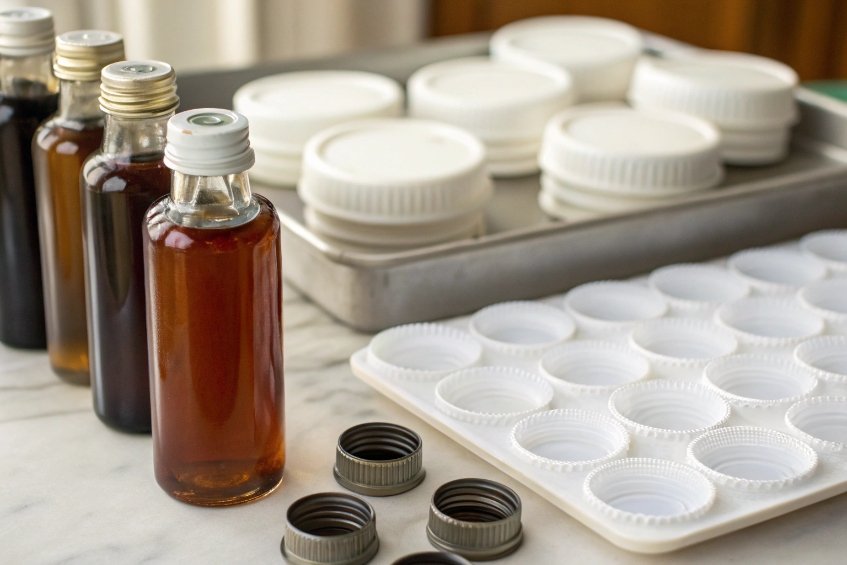
Why the closure is usually the real weak point
Acetic acid plus humidity and oxygen is harsh on many metals and elastomers. When vinegar touches an unprotected metal cap from the inside, you can see rust, pitting, or metallic off-flavors over time. Natural cork can swell, shrink, or pass corky taints into the product. Some rubber droppers and low-grade elastomers also harden or carry smells.
So the inner surface of the closure system must resist acid. This job belongs to the liner. The glass itself does not corrode in any visible way in normal vinegar use. This is why, in complaints, the problem often shows as rusty caps, sticky threads, or leaking pours, not as broken bottles.
Good vinegar-safe systems use plastic caps (PP or PE), lacquered metal caps with proper liners, or phenolic caps with PTFE or EVA liners for more demanding products. The finish of the bottle must also match the cap type. Tight tolerances help the liner seal correctly, which limits oxygen ingress and evaporation.
Closure and liner options for vinegar
Below is a simple map of closure choices that work well with vinegar:
| Component | Common options for vinegar use | Notes |
|---|---|---|
| Cap body | PP or PE screw cap / ROPP (roll-on pilfer-proof) closures 4 / lug cap | Chemically resistant, cost-effective, widely available |
| Metal caps | ROPP or lug with food-grade internal coating | No bare metal exposed to liquid, use with acid-resistant liner |
| Premium caps | Phenolic caps | Good chemical resistance, solid feel, often used with PTFE liners |
| Basic liner | PE foam, EPE, or EVA | Fine for standard table vinegar, short to medium shelf life |
| Higher barrier | Co-extruded liners (e.g., PE with barrier layer) | Better oxygen barrier for premium flavored vinegars |
| Chemical best case | PTFE-faced liners 5 | High chemical resistance, good for strong acids or long shelf life |
| Pour control | Drip-free ring neck, restricted orifice inserts | Keeps vinegar off the cap, improves dosing and cleanliness |
For everyday household vinegar, a PP cap with a good EPE or EVA liner is normally enough. For flavored, organic, or premium vinegars that sit longer on shelves, many brands move to better barrier liners or phenolic + PTFE systems.
Two more design habits make a big difference:
- Avoid natural corks and rubber droppers for daily use. They are better for gifts and short-term use, not for year-long storage.
- Prefer bottle shapes with a narrow neck and a controlled pour ring. They reduce drips, so they keep acid away from the cap and thread area, which extends closure life.
How do food-grade certifications, MOQ, and cost per unit compare for wholesale vinegar bottles?
A good technical design still fails if the factory cannot pass audits, meet MOQ expectations, or hold cost targets. Packaging buyers often think glass is “just glass” until a retailer asks for documents.
For wholesale vinegar bottles, confirm food-contact compliance and factory certifications first, then balance MOQ and unit price between stock molds and custom designs.

What to check before you talk about price
Before price, the key risk points are compliance and capacity. Food-contact regulations cover both the bottle and the closure. For vinegar, you want the glass composition, surface treatment, and decoration system to fit the target market rules. Typical documents include FDA food-contact guidance 6 or EU food-contact requirements 7, migration test reports, and heavy metal content limits. Many buyers also ask for ISO-based quality systems or similar certifications from the factory.
Once these basics are in place, MOQ and cost structure shape your project. Stock vinegar bottles (like “woozy” or ring-neck forms) usually offer low tooling cost or no tooling cost. They are friendly for new brands or for test orders. Custom shapes need private molds. These molds increase upfront investment, so factories set higher MOQ to make the project viable.
Closures and decoration add their own MOQ layers. Screen printing, hot stamping, and special coatings often start to make sense above a few thousand units. Lined ROPP or phenolic caps may also have separate MOQs from cap makers. So the “real MOQ” for a complete vinegar bottle set is sometimes the highest MOQ in the chain.
Balancing certifications, MOQ, and cost in practice
Here is a simple view that helps many B2B vinegar buyers plan:
| Factor | Typical situation for stock bottles | Typical situation for custom bottles |
|---|---|---|
| Food-contact tests | Already available on standard specs | Need confirmation and sometimes new tests |
| Factory certifications | Often ISO-based, reusable across clients | Same, but may need line-specific documentation |
| Bottle MOQ | Lower, often a few thousand units | Higher, often from around 10,000 units upward |
| Tooling cost | None or very low | Mold cost added at the start |
| Unit price (bottle) | Lower due to shared production | Higher, but you gain unique design |
| Closure and liner MOQ | Can match bottle MOQ | Sometimes driven by cap supplier requirements |
| Best use case | New product, private label, fast launch | Mature brand, long-term line with clear volume |
Cost per unit moves with:
- Glass type: soda-lime is standard; borosilicate adds a clear premium.
- Color: amber and some special colors add a small extra, green often stays close to flint.
- Weight: heavy “premium” bottles cost more in glass and transport.
- Decoration: every process step (spray, frosting, hot stamping) adds cost and sometimes yield loss.
- Closure system: simple PP cap is most economical; phenolic, PTFE liners, or custom pourers add cost but often support a higher retail price.
For vinegar, the most efficient setup in many markets is:
- Food-grade soda-lime glass bottle in clear or amber, with shape matched to filling line.
- ROPP or lug closure with proven acid-resistant liner.
- Decoration kept simple but clean, so the bottle remains flexible for future line extensions.
When volume grows and the brand position is stable, then it makes sense to move toward custom shapes, heavier glass, or more complex surface treatments.
Conclusion
The “right” vinegar bottle is not the most complex one. It is the one where glass type, color, and closure quietly fit your acid, your process, and your shelf life target.
Footnotes
-
Overview of soda-lime glass composition and common uses in food packaging. ↩︎ ↩
-
Explains Type I/II/III classifications and surface treatments that affect chemical resistance. ↩︎ ↩
-
Learn how amber glass reduces UV/blue transmission for protecting light-sensitive contents. ↩︎ ↩
-
Defines ROPP closures and how roll-on threading creates tamper-evident sealing. ↩︎ ↩
-
PTFE reference for chemical resistance and suitability in aggressive product-contact sealing. ↩︎ ↩
-
FDA overview of food-contact substances and key packaging safety considerations. ↩︎ ↩
-
Official EU framework regulation for materials and articles intended to contact food. ↩︎ ↩






