
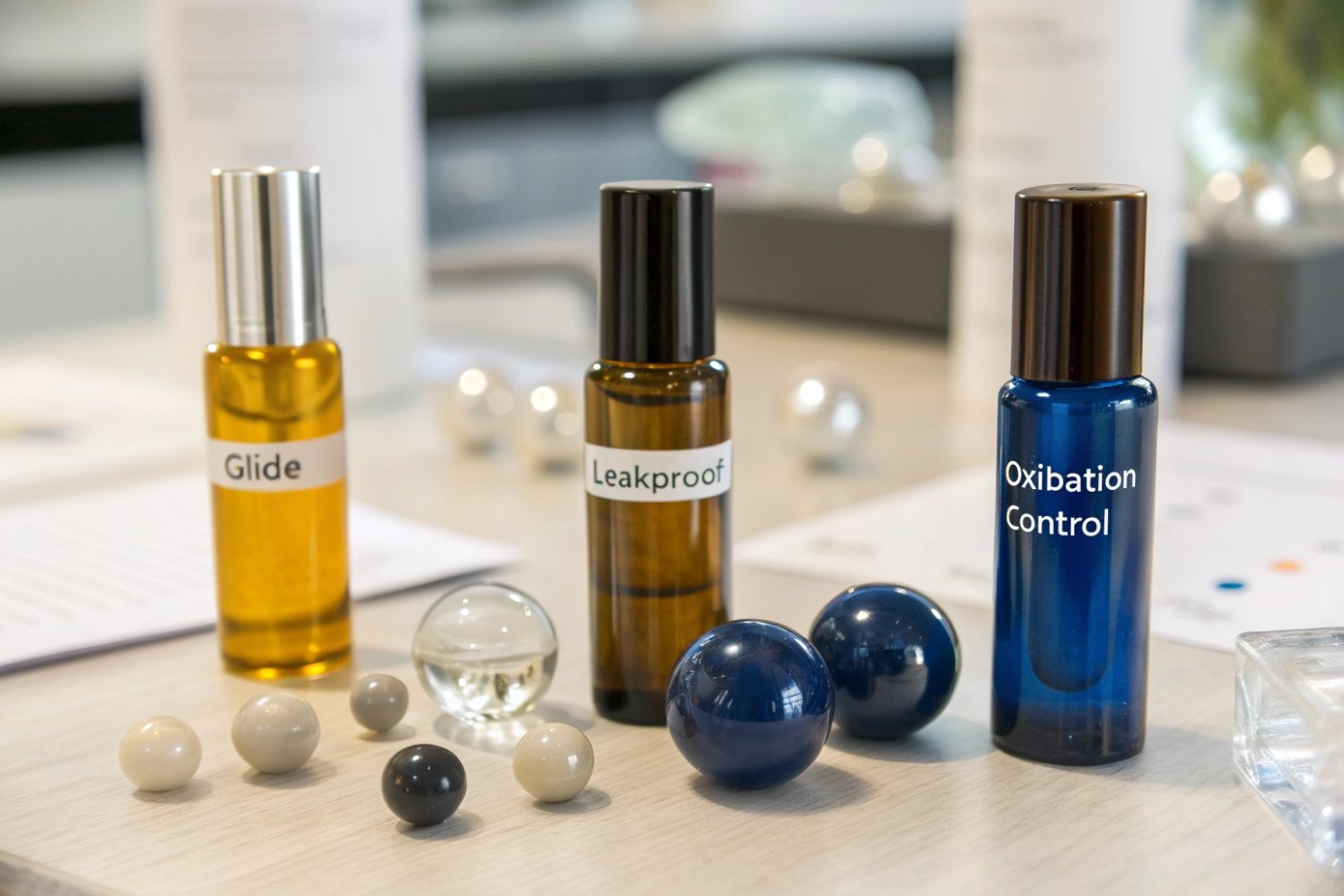
Roller bottles look simple, but the wrong size or ball fit can leak, stain labels, and wreck an oil blend before customers finish the first week.
Choose roller bottles by matching size and neck finish to how people use the product, then match the roller ball and sealing system to your formula. Prove leak resistance with torque and transport tests before bulk production.
The real job of a roller bottle
A roller bottle is a small dispensing system, not just a glass container. It must deliver a controlled flow, feel smooth on skin, and stay sealed through heat, vibration, and repeated opening. The bottle body, roller ball, housing, and cap work as one system. If any part is mismatched, the product experience becomes messy.
A good roller bottle choice starts with the product behavior. Perfume is thin and volatile, so sealing and evaporation control matter. Essential oils and blends can be thin but aggressive to some plastics and gaskets, so chemical compatibility matters. Aromatherapy blends often travel in bags, so leak resistance matters more than perfect shelf aesthetics.
The second decision is the user habit. Some customers apply a small amount on wrists, so 5–10 mL is enough. Some apply on neck, chest, and pulse points multiple times per day, so 10–30 mL fits better. The bottle shape and mouth diameter also affect rolling feel. Wider balls can feel smoother, but they can dispense more product per pass, which some formulas cannot afford.
The third decision is how the brand wants to look. Amber can signal protection and apothecary style. Cobalt blue can signal premium. Clear can signal transparency and freshness, but it also needs extra protection for light-sensitive blends.
A simple selection framework keeps the process clean:
| Decision layer | What to match | Why it matters | What to lock in writing |
|---|---|---|---|
| Use case | travel, daily carry, home use | determines size and cap design | capacity, bottle height, cap type |
| Formula | alcohol, EO blend, carrier oil | drives ball material and gasket choice | compatibility list + soak plan |
| Dispensing feel | flow rate and glide | affects customer satisfaction | ball size, housing design |
| Protection | leak + evaporation + light | prevents returns and complaints | torque range + leak tests |
| Brand look | color + decoration | supports shelf differentiation | color standard + print spec |
A roller bottle is small, but it touches many big outcomes: repeat purchase, review quality, and shipping loss rate.
If the goal is fewer surprises at scale, the next sections break down the four decisions that matter most in real bulk orders.
A clean decision today saves months of fixing later.
Which roller bottle size and neck finish should you choose for perfumes, essential oils, and aromatherapy blends?
A roller can feel perfect in hand, but if the size is wrong, customers either run out too fast or stop carrying it. If the neck finish is wrong, caps and housings “fit on paper” and still leak.
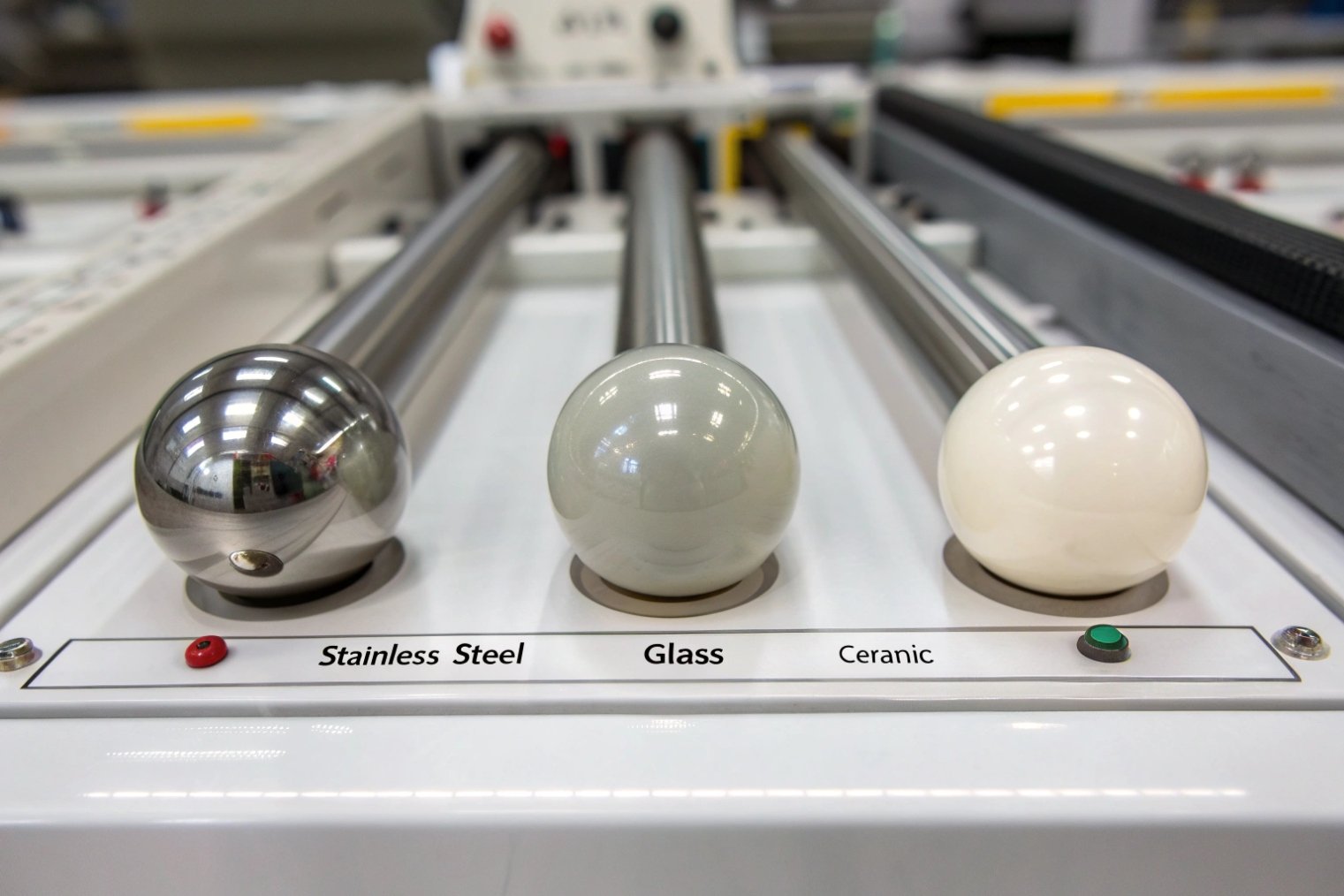
Pick size by usage frequency and portability, then lock the exact neck finish standard so the housing and cap truly match. For most roll-ons, 5–10 mL is travel-friendly, while 10–30 mL fits daily users who reapply.
Choose size by real application behavior
For perfumes and strong blends, small sizes often win because customers apply a little at a time and prefer portability. For diluted blends or body-use oils, larger sizes can make sense. In bulk programs, 10 mL is often the “safe middle” because it is small enough to carry and large enough to feel valuable.
Capacity is not only volume. It is also height and stability. A tall, slim bottle can look elegant, but it tips easier and can stress the housing under impact. A short, wide bottle is stable but may not fit certain premium cap styles.
Neck finish is a system choice
Roller bottle performance depends on the neck finish thread and the land area that seals. Many suppliers use specific small neck standards for roller bottles. Two bottles can look similar but have different thread specs, and that difference can cause cap cross-threading, weak torque retention, or slow seepage.
The clean approach is to lock the neck finish by:
- requesting a technical drawing for the bottle and closure
- confirming the thread standard and tolerance
- running a fit check with the real housing and cap, not a “similar” part
Size and neck finish quick guide
| Product type | Best common size | Why it fits | Neck finish approach |
|---|---|---|---|
| Perfume oil | 5–10 mL | portable, controlled dosing | lock a proven roll-on neck standard |
| Essential oil blend | 10 mL | daily carry and refillable | match housing and cap from one system |
| Aromatherapy blend | 10–30 mL | frequent use, larger area | confirm torque window for bigger caps |
| Sample / gift set | 2–5 mL | trial and discovery | focus on leak-free shipping |
A smart habit is to choose the closure system first (ball + housing + cap) and then choose the bottle that matches it. That prevents expensive “compatibility puzzles” later.
Next, the ball material choice decides glide feel, chemical resistance, and long-term consistency.
What roller ball materials work best (stainless steel, glass, or plastic) for smooth rolling and chemical compatibility?
A roller that drags or squeaks feels cheap, even if the formula is premium. A roller that reacts with the formula can create odor shifts and customer complaints.
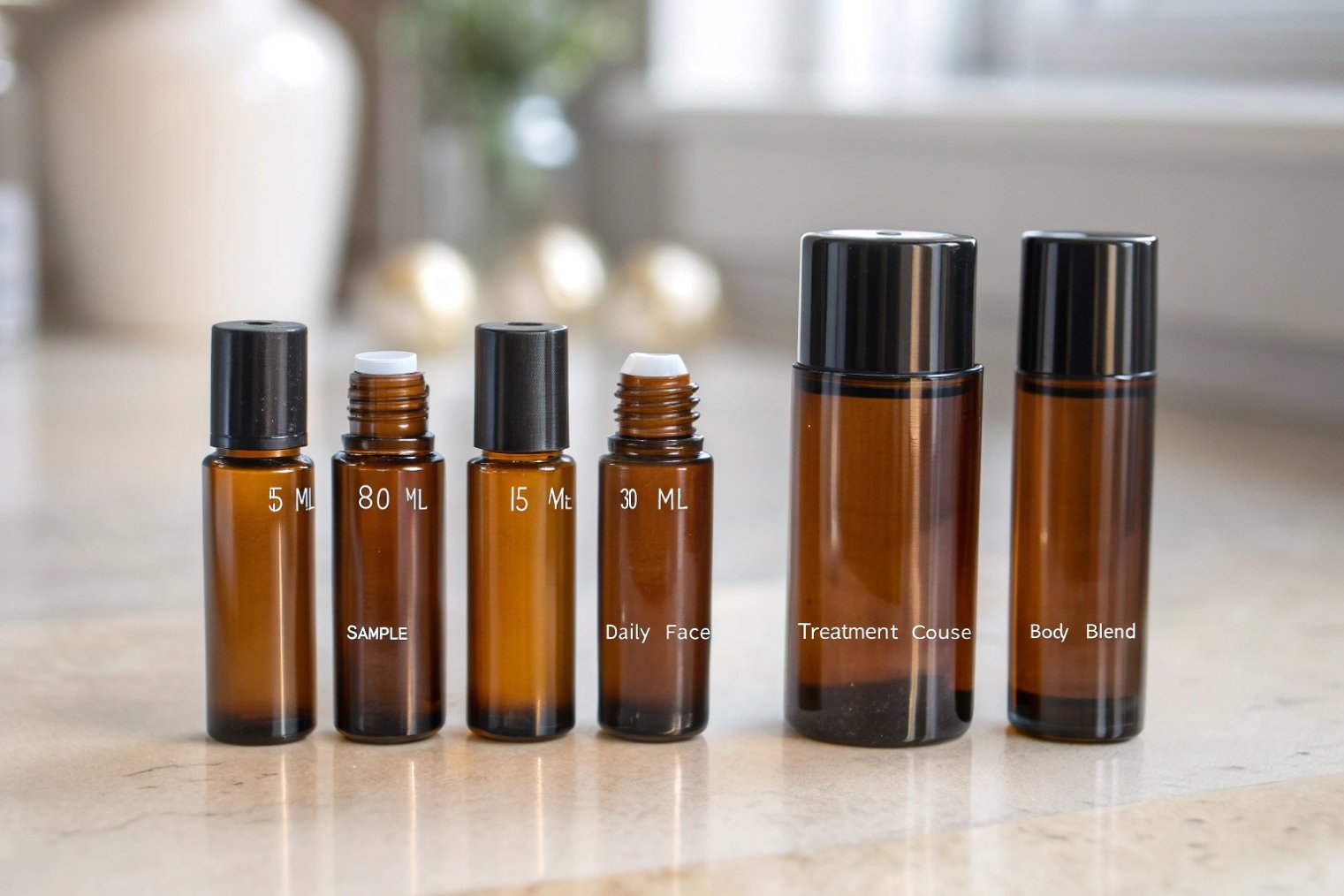
Stainless steel usually gives the smoothest glide and strong durability, glass is the most inert for sensitive blends, and plastic is the budget option that needs strict compatibility proof. Choose ball and housing materials together, not separately.
Stainless steel: smooth feel and durability
Stainless steel balls are popular because they roll smoothly and feel cool on skin. This “cooling” feel can support premium positioning for aromatherapy and skincare. Stainless balls also resist wear, so flow stays consistent across months of use. For many essential oil blends and carrier oils, stainless works well.
The key is to treat stainless as part of a full system. A stainless ball still sits in a plastic housing in many designs, and the housing material must also resist the formula.
Glass: inert and clean for sensitive formulas
Glass balls are inert and can be a strong choice for brands focused on purity messaging. They can work well for sensitive blends and fragrance systems where material neutrality matters. The trade-off is that some glass ball systems can feel less “fast” in rolling if tolerances are not tight, and they can be more sensitive to small particles or crystallization in the formula.
Plastic: cost-saving, but must be proven
Plastic balls can reduce cost, but they often need more validation with essential oils, alcohol, and fragrance-heavy formulas. Some plastics can swell, soften, or absorb fragrance components over time. That can change rolling feel and flow rate. Plastic can still be fine for mild formulas and short shelf-life products, but proof is needed.
Ball choice table
| Ball material | Glide feel | Chemical tolerance (typical) | Best fit products | Main risk |
|---|---|---|---|---|
| Stainless steel | very smooth | good for many blends | premium roll-ons, daily use | housing compatibility still matters |
| Glass | smooth, neutral | excellent inertness | sensitive blends, “purity” brands | tolerance and particle sensitivity |
| Plastic | acceptable | depends on resin | budget lines, mild formulas | swelling, odor pickup, wear |
A practical testing method is a soak-and-roll test: fill with the real formula, store at warm temperature, then test rolling feel and odor weekly. This catches early material problems without waiting for full stability data.
Once the ball material is set, leak-proof performance becomes the big success factor, especially for travel and e-commerce.
How do you ensure leak-proof performance—ball fit, housing design, cap liner, and torque testing?
A roller bottle leak is not a small problem. It destroys labels, ruins cartons, and makes customers blame the formula. Most leaks come from tiny fit issues, not from dramatic defects.
Leak-proof performance comes from tight ball-to-housing tolerances, a stable press-fit housing design, a compatible cap liner or gasket, and controlled application torque. Validate with leak tests, vacuum/altitude simulation, and repeat open-close cycles.
Ball fit and housing geometry control flow and sealing
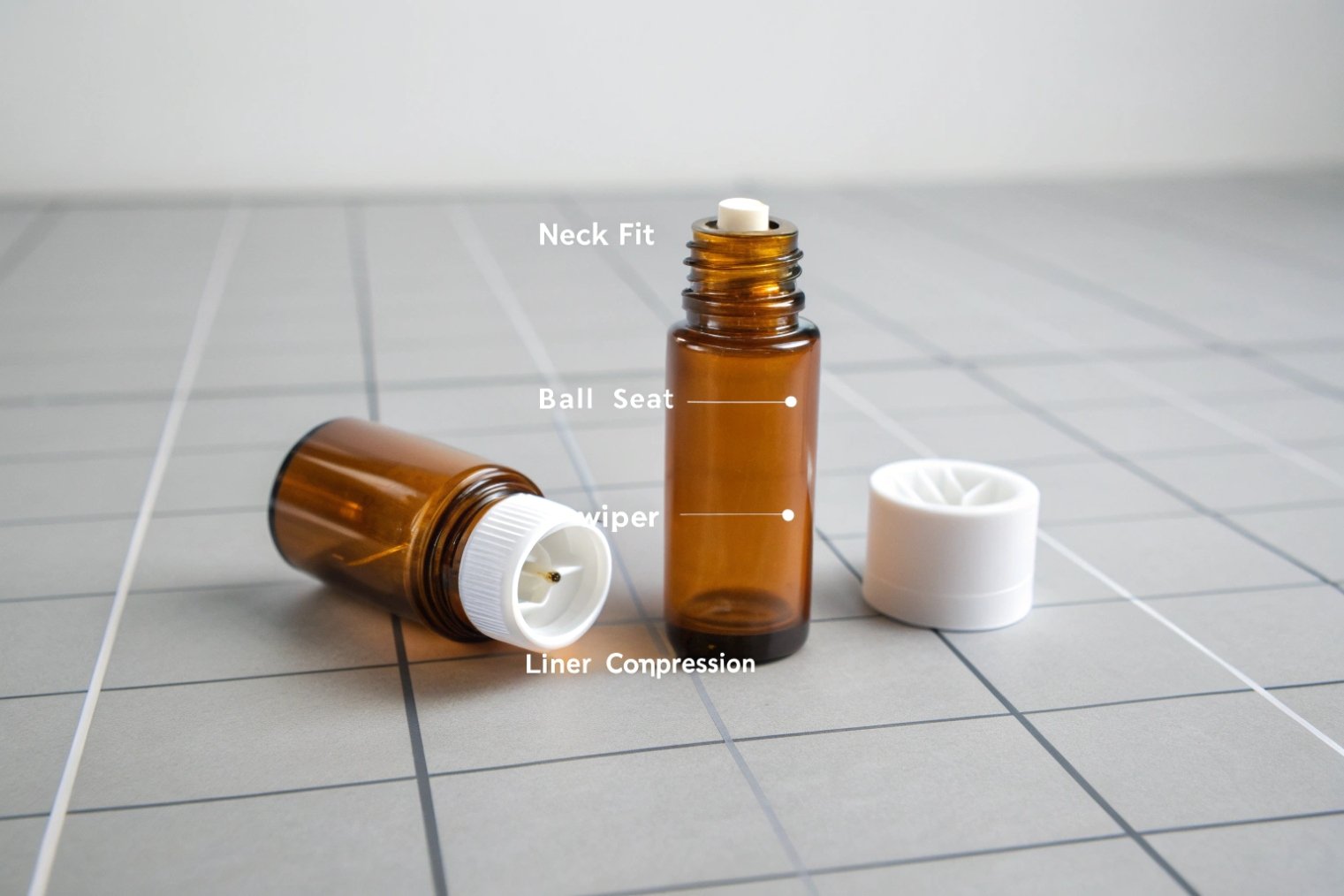
The ball must sit securely in the housing. If the fit is too loose, the bottle weeps under heat or pressure changes. If the fit is too tight, rolling feels rough and dispensing becomes inconsistent. Housing design also controls flow rate. Thin perfumes may need tighter flow control. Carrier oil blends may tolerate higher flow, but they still must not leak in a bag.
A good housing also stays stable after repeated use. Some housings loosen over time if the plastic relaxes. This can show up as “leaks after two weeks,” which is the worst type of complaint because it feels random.
Cap liner and gasket choice is not optional
The cap must seal the neck finish consistently. Liners and gaskets are where many projects win or lose. A liner that is fine with water-based products may fail with oils. A gasket that is fine in cool rooms may soften in summer shipping. For high-confidence sealing, chemically resistant liner systems should be considered, especially for fragrance-heavy blends.
A common upgrade path is using fluoroelastomer (FKM) seals 1 and/or PTFE-faced liners 2 when oils or solvents raise compatibility risk.
Many bulk issues come from torque variation. Under-torque leaks. Over-torque strips threads or distorts liners. A torque window should be defined, then verified on the line using a method aligned with ASTM D2063 torque retention testing 3. It is also smart to test torque retention after heat cycling because liners can relax.
Leak-proof test plan
| Test | What it reveals | Simple setup | Pass goal example |
|---|---|---|---|
| Inverted storage | slow weeping | 48–72 hours at warm temp | no seepage at ball or threads |
| Bubble leak / pressure check | micro-leaks | submerge + pressure method | no bubbles |
| Altitude/vacuum simulation | transport leaks | vacuum chamber or simulation | no leakage, no cap loosening |
| Torque audit | sealing consistency | torque meter sampling | within defined window |
| Open-close cycling | long-use performance | 50–100 cycles | no loosening, smooth roll |
A small improvement that helps a lot is adding a cap liner that matches the formula and tightening the housing press-fit quality control. Those two changes often reduce leak complaints more than any marketing upgrade.
Next, bulk buying requires more than a good sample. It needs a system for color, decoration, sampling, and shipping protection.
What should you evaluate for bulk orders—color consistency, decoration options, MOQ, sampling, and shipping protection?
A roller bottle can pass a sample approval and still fail in bulk. Color shifts appear. Print scuffs appear. Shipping damage appears. Bulk success comes from controls, not hope.
For bulk orders, lock a color standard, choose decoration that survives rubbing and oils, set clear MOQ and lead time expectations, approve pre-production samples, and validate shipping with drop and vibration checks.
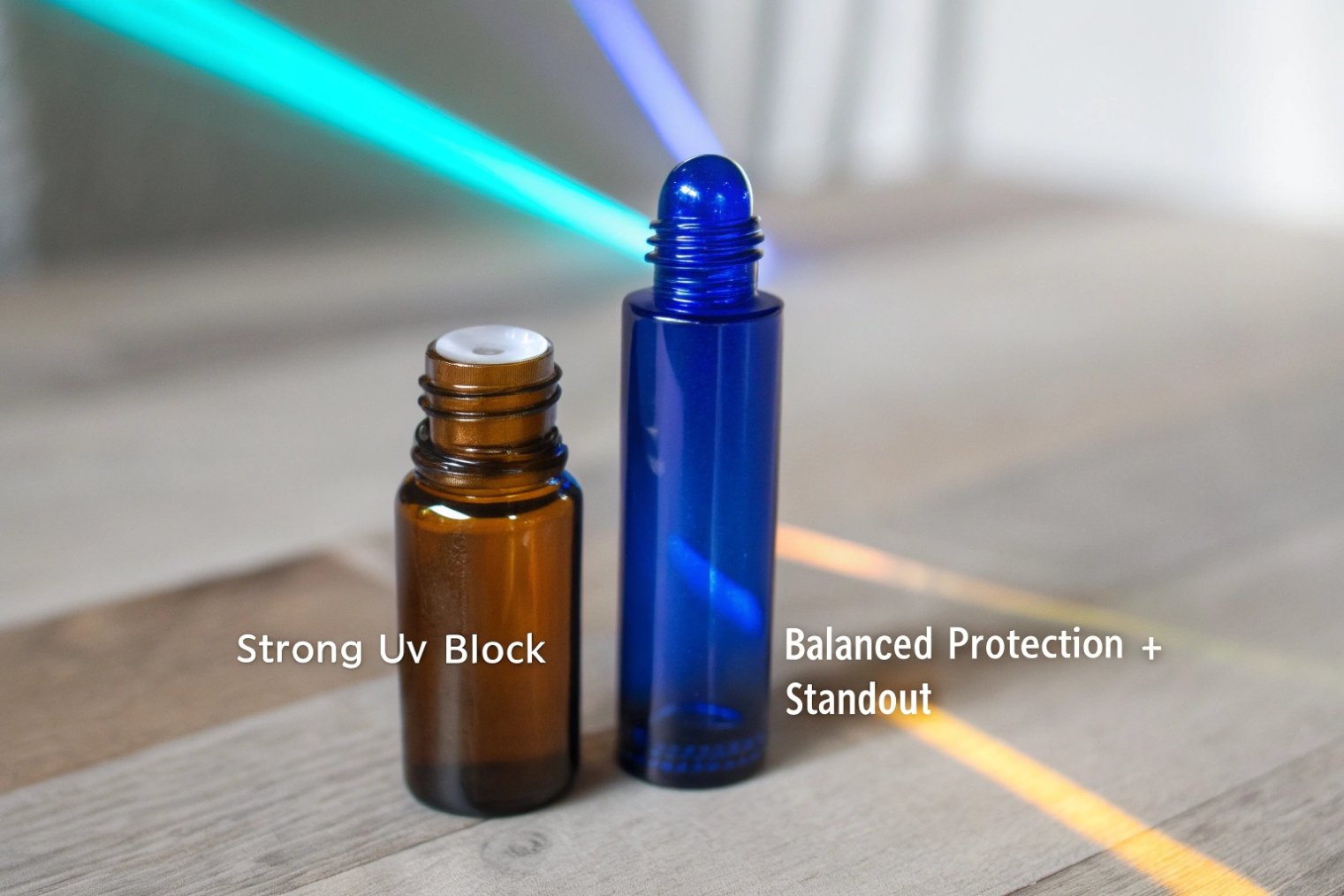
Color consistency: treat color as a specification
Colored glass can vary by batch. Amber can run warmer or darker. Cobalt blue can shift slightly in saturation. For a premium brand, this becomes obvious on shelf. The best practice is to approve a golden sample and require batch-to-sample comparison under controlled lighting. If the brand needs tighter control, a measurable tolerance can be used, but even a strict visual standard reduces surprises.
Decoration options that work for small cylinders
Roller bottles have limited print area, so clean design wins. Common decoration approaches include:
- Screen printing for a “printed-on” premium look
- Hot stamping for small metallic logos (best as an accent)
- Labels for multi-SKU flexibility, barcodes, and compliance text
If oils are present, label adhesive and overlaminate choice matters because oil can creep and lift edges. If the bottle is carried in a bag, rub resistance matters because friction will scuff weak coatings.
MOQ and lead time: plan for tooling and components
MOQ depends on whether the bottle is standard or custom, and whether decoration is involved. Screen printing and hot stamping add setup steps and time. Roller housings and caps can also drive lead time, especially if custom colors or special liners are required.
Shipping protection: prevent glass-to-glass contact
For glass roller bottles, the shipping goal is simple: no bottle-to-bottle impact. Dividers, trays, and protective sleeves reduce damage. If the order ships by parcel, validate the pack against a known procedure like ISTA 3A parcel shipment testing 4, then stress the design with ASTM D5276 drop testing 5 and ASTM D999 vibration testing 6 to catch breakage and scuff risks early.
| Bulk topic | What to ask for | Why it matters | What to approve before mass |
|---|---|---|---|
| Color | lot comparison method | keeps shelf look consistent | golden sample + acceptance rule |
| Decoration | rub and adhesion proof | prevents scuffs and peeling | rub test sample + tape check |
| MOQ/lead time | production schedule | protects launch timing | confirmed timeline with milestones |
| Sampling | pre-production sample set | catches drift early | PPS for bottle + closure + print |
| Shipping | carton and pallet plan | reduces breakage | drop test carton + pallet photo |
| Quality plan | controls bulk drift | ISO 2859-1 AQL sampling plan 7 | defect list and limits |
A reliable bulk order process includes a short pilot run, then a pre-shipment inspection focused on three items: leakage, cosmetic defects, and decoration durability. This is where most issues are found early enough to fix.
Conclusion
Roller bottles succeed when size, neck finish, ball system, and sealing are matched to the formula. Prove performance with leak and rub tests, then lock color and packing specs before scaling.
Footnotes
-
Quick reference on FKM properties and chemical resistance for oil-heavy or solvent-rich formulations. ↩︎ ↩
-
Background on PTFE’s chemical inertness, useful for evaluating liner-facing choices in aggressive blends. ↩︎ ↩
-
Practical torque-retention test guidance to prevent leaks, thread damage, and liner distortion. ↩︎ ↩
-
Overview of a widely used parcel-shipment test sequence for validating e-commerce protective packaging. ↩︎ ↩
-
Defines drop-test methods for loaded packages to verify dividers, cushioning, and glass-to-glass protection. ↩︎ ↩
-
Explains vibration test methods that simulate transport and reveal loosening, scuffing, and damage risks. ↩︎ ↩
-
Official attribute-sampling (AQL) framework to set clear inspection accept/reject rules. ↩︎ ↩






