
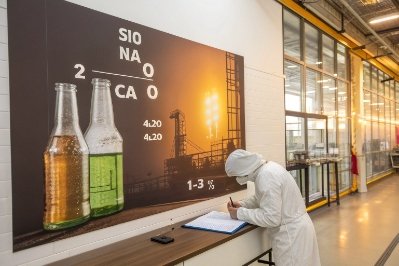
A bottle can meet shape and weight, yet still fail durability or stress tests months later. Often the root cause is a recipe that is “almost right” but not balanced for long-term stability.
Al₂O₃ level should be set by balancing durability and strength gains against viscosity and melting penalties. The best method is to define performance targets first, then lock an Al₂O₃ window using viscosity and durability data, plus raw material consistency controls.
Al₂O₃ is a stability tool that must be tuned for both performance and forming
Why Al₂O₃ decisions should start from performance, not from tradition
In container glass, Al₂O₃ is often treated as a “small ingredient,” but it acts like a control knob for multiple properties at once. It can improve hydrolytic resistance 1 and mechanical strength, but it can also raise viscosity 2 and increase melting load. This is why the right Al₂O₃ number is never universal. It depends on:
- product sensitivity and storage conditions
- forming speed and forehearth stability
- lightweight targets and stress margins
- cullet ratio and raw material variability
A practical way to determine Al₂O₃ level is to treat it as a controlled window, not as a fixed value. The window should be proven by plant data, not by a brochure.
How Al₂O₃ affects the buyer’s real-world experience
Buyers do not request “Al₂O₃.” They request outcomes:
- fewer breakages in logistics
- stable clarity and low haze
- stable chemical behavior for food and beverage
- longer shelf life confidence for sensitive fills
- fewer rejects in hot-fill or pasteurization-like steps
Al₂O₃ supports these outcomes because it strengthens the glass network and reduces ion mobility. But it also can make the melt stiffer. If the plant is already close to viscosity limits, adding too much Al₂O₃ can create forming variability and defects that buyers notice faster than durability gains.
A clean decision flow for setting the Al₂O₃ window
A strong process usually follows this sequence:
1) Define target durability and mechanical performance.
2) Establish the working viscosity window for the bottle family and line speed.
3) Run a composition sweep or controlled trial to map Al₂O₃ vs viscosity and durability.
4) Select an Al₂O₃ window with enough safety margin for cullet and raw material drift.
5) Lock incoming raw controls so the window stays real.
| Decision input | What it controls | Why it matters | What to measure |
|---|---|---|---|
| Product risk (water, acids, heat) | Durability requirement | Prevents late stability complaints | Hydrolytic and leaching trend |
| Line speed and forming window | Viscosity limit | Avoids weight drift and thin-wall defects | Viscosity proxy, forehearth stability |
| Lightweight target | Stress margin | Prevents impact failures | Stress/impact and breakage SPC |
| Cullet ratio | Chemistry variability | Cullet can shift Al₂O₃ and alkali | XRF by shift and cullet tracking |
| Raw source quality | Drift risk | Keeps Al₂O₃ stable lot-to-lot | COA audit + incoming checks |
With this structure, Al₂O₃ becomes predictable. Without it, Al₂O₃ becomes a hidden variable that only appears after an issue.
Now let’s answer the first technical question clearly: what does Al₂O₃ do inside the glass network?
What network-former role does Al₂O₃ serve?
Al₂O₃ is not a simple filler. It changes how the silica network is built and how tightly ions can move inside it.
Al₂O₃ behaves as an intermediate oxide that can act like a network former when charge-balanced by alkali or alkaline earth ions. It increases network connectivity and makes the structure more resistant to chemical attack.

Al₂O₃ acts as a “network builder” when the chemistry supports it
In silicate glass, SiO₂ is the main network former 3. Al₂O₃ can enter the network in a way that increases connectivity, but it needs charge balancing. That charge balance is typically provided by modifiers like Na⁺, K⁺, Ca²⁺, or Mg²⁺. When Al is integrated properly, the network becomes more stable and less open.
This network effect is why Al₂O₃ tends to:
- reduce ion diffusion and leaching
- improve resistance to water attack
- support higher mechanical performance for the same thickness
In procurement language, it helps the bottle behave more consistently over time.
Why Al₂O₃ is called an “intermediate”
Al₂O₃ is often described as an intermediate oxide 4 because it can behave differently depending on the overall recipe. In a well-balanced container glass, it strengthens the structure. In a poorly balanced system, it can raise viscosity without delivering the full durability benefit.
So the decision is never “add more Al₂O₃.” The decision is “add Al₂O₃ within a recipe balance that keeps forming stable.”
What Al₂O₃ changes in the “network budget”
A simple way to visualize it is to think of the recipe as a budget:
- Too many modifiers (alkali) make melting easier but can weaken durability.
- More stabilizers (CaO/MgO) improve durability but can raise devit risk.
- Al₂O₃ tightens the network, improving durability and strength, but can stiffen the melt.
| Network effect | What Al₂O₃ tends to do | Why the plant cares | Why the buyer cares |
|---|---|---|---|
| Network connectivity | Increases | Viscosity can rise | Strength and stability improve |
| Ion mobility | Decreases | Less leaching variability | Better product stability |
| Structural stability | Increases | Process window may narrow | Fewer failures over shelf life |
| Melt reactivity | Can decrease | Needs better melting energy/time | More consistent quality |
Once the network role is clear, the next question becomes easier: why does Al₂O₃ improve strength and hydrolytic resistance in bottles?
Why does Al₂O₃ enhance strength and hydrolytic resistance?
Bottles fail in two broad ways: mechanical breakage and chemical attack. Al₂O₃ helps address both, but only if the rest of the recipe stays balanced.
Al₂O₃ enhances strength by increasing network rigidity and reducing micro-structural weaknesses. It enhances hydrolytic resistance by reducing how easily water can attack the network and extract ions.

Strength: fewer weak points for cracks to start
Glass strength in real packaging is dominated by surface flaws and stress. Al₂O₃ cannot erase scratches, but it can raise the material’s resistance to crack growth in a practical way by tightening the network.
In production, this can show as:
- fewer random breakages at the same wall thickness
- improved impact performance stability across lots
- better performance in lightweight designs where stress margins are thin
This is why Al₂O₃ is often increased when a program needs lighter bottles without losing safety.
Hydrolytic resistance: keeping the glass “quiet” in water contact
Hydrolytic resistance matters for:
- beverages stored for months
- food acids and salty environments
- aqueous cosmetics and personal care
- pharmaceutical and nutraceutical products in some cases
Water attacks glass by breaking bonds and extracting modifiers. Al₂O₃ helps slow this because it increases network connectivity and reduces ion mobility 5. In plain terms, the surface does not change as fast, so the bottle stays clearer and more stable.
The downside: Al₂O₃ gains are real, but not linear
At low to moderate levels, Al₂O₃ can deliver clear improvements in durability and stability. But beyond a point, the penalty in viscosity and melting can grow faster than the benefit. That is why window-setting is essential.
| Target outcome | How Al₂O₃ helps | Best way to verify | Hidden tradeoff |
|---|---|---|---|
| Fewer breakages | More stable structure | Impact and breakage SPC | Higher viscosity can raise forming defects |
| Better hydrolytic resistance | Slower water attack | Hydrolytic/leaching trend | Longer melting time or energy load |
| Longer shelf-life confidence | More stable surface | Product stability studies | Needs consistent cullet and raw control |
| Better reuse performance | Improved chemical stability | Wash-cycle aging tests | Surface damage still dominates |
These benefits explain why many buyers value higher-quality glass with controlled Al₂O₃. But plants also have real limits. Too much Al₂O₃ can raise viscosity and hurt forming. The next section focuses on setting targets without losing process stability.
How do you set Al₂O₃ targets without raising viscosity too much?
A recipe that is “stronger” on paper is not useful if it causes thin walls, weight drift, or more rejects. The line must stay stable.
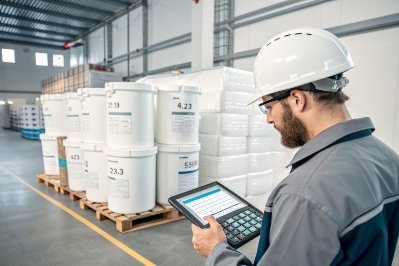
Set Al₂O₃ targets by defining a viscosity ceiling at key forming temperatures and then selecting the highest Al₂O₃ level that meets durability goals while staying inside the working range. Use small-step trials and keep cullet chemistry tightly tracked.
Use a controlled trial map, not a single change
The clean method is a sweep:
- Adjust Al₂O₃ in small steps.
- Keep other oxides stable as much as possible.
- Measure viscosity proxies, forming behavior, and durability outcomes.
Even a modest step change can shift:
- forehearth temperature needed for the same gob viscosity
- press-and-blow or blow-and-blow stability
- weight and wall variation
- seed rate due to melting load changes
This is why the decision must include both lab and line metrics.
Use compensation levers, but keep them disciplined
If Al₂O₃ is increased, some plants offset viscosity by small adjustments elsewhere. Common levers include:
- alkali balance adjustments
- small changes in MgO/CaO ratio
- managing silica ratio within product constraints
The danger is uncontrolled multi-variable changes. If three oxides move at once, it becomes impossible to prove cause and effect to a buyer.
A safer approach is:
- Change Al₂O₃ first in small steps.
- Stabilize the process.
- Then apply minor compensation only if needed, with one lever at a time.
Build an Al₂O₃ window that survives cullet drift
Cullet is the silent driver of Al₂O₃ variability. Mixed cullet can add Al₂O₃ from labels, coatings, and other glass streams. If cullet sorting is loose, finished Al₂O₃ will drift even when raw materials do not.
A strong program includes:
- cullet chemistry tracking by supplier and by lot
- limits on coated/printed cullet streams
- periodic XRF checks on finished glass by shift
| Control item | What to do | Why it keeps viscosity stable | What to watch |
|---|---|---|---|
| Forming viscosity ceiling | Set a max viscosity proxy at forming temp | Protects line stability | Weight drift and thin walls |
| Al₂O₃ step trials | Small increments with stable base recipe | Maps true sensitivity | Forehearth temp shift |
| Cullet chemistry tracking | Track Al₂O₃ and modifiers in cullet | Prevents hidden upward drift | Surprise viscosity rise |
| Single-variable tuning | Adjust one lever at a time | Keeps learning clear | Confusing multi-change results |
| Post-change validation | Re-run durability tests + line SPC | Proves performance to buyers | Claims after shipment |
Once this method is used, Al₂O₃ stops being risky. It becomes a controlled tool. The final question is about better control: do more reactive Al₂O₃ sources help reduce variation and tighten targets?
Are reactive sources enabling tighter Al₂O₃ control?
Many plants still use feldspar, clay, or other mineral sources for alumina. These sources can vary. Some projects now ask for “more reactive” alumina sources to improve control.
Yes. More reactive Al₂O₃ sources can enable tighter control because they dissolve faster and more predictably, reducing unmelted inclusions and lowering lot-to-lot variability. The tradeoff is cost and handling discipline.
Why source reactivity matters
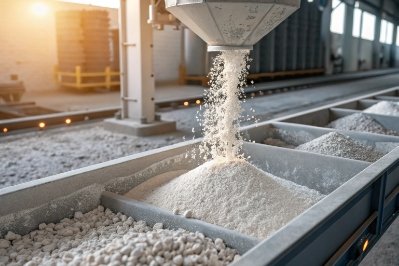
Al₂O₃ delivery can come from:
- feldspar and similar minerals (also bringing alkali)
- kaolin 6/clay (also bringing impurities and variability)
- synthetic alumina or calcined alumina 7 sources (cleaner, more consistent)
Mineral sources can be cost-effective but often introduce more variability in impurity levels and melting behavior. More reactive sources typically:
- dissolve faster
- reduce stone and cord risk linked to undissolved particles
- make the finished Al₂O₃ level more predictable
This is especially useful for high-clarity bottles, extra-white programs, and tight durability specs.
What changes in quality when reactive sources are used
When the Al₂O₃ source is cleaner and more predictable, plants often see:
- fewer stones linked to unmelted alumina-bearing grains
- more stable viscosity behavior at the same recipe targets
- better color consistency because trace impurities are lower
This is not automatic. It still depends on mixing and furnace control. But it makes the job easier.
How to decide if the upgrade is worth it
Procurement should treat this like a total-cost decision:
- If rejects, rework, or buyer claims are expensive, reactive alumina can pay back.
- If the product is low-risk and tolerances are wide, mineral sources may be enough.
| Source type | Control benefit | Common downside | Best use case |
|---|---|---|---|
| Feldspar / mineral blends | Low cost, common supply | Variable impurities and melting behavior | Standard bottles with wide tolerances |
| Clay/kaolin sources | Adds alumina with silica | Impurity and consistency issues | Some balanced recipes, not extra-white |
| Calcined alumina / synthetic | Tight chemistry, high reactivity | Higher cost, dust/handling needs | Premium clarity, tight durability, low defect targets |
| Pre-blended batch additives | Process convenience | Supplier dependency | High-volume stable programs |
Reactive sources can improve consistency, but the real win is still the system: clear Al₂O₃ window, stable cullet control, and disciplined furnace operation.
Conclusion
Determine Al₂O₃ by mapping durability gains against viscosity limits, then lock a proven window with strong cullet and raw control. Reactive alumina sources can tighten that control when specs are strict.
Footnotes
-
A measure of how resistant glass is to chemical attack by water and moisture. ↩ ↩
-
The resistance of a fluid to flow, a key factor in shaping molten glass. ↩ ↩
-
Oxides that form the structural backbone of glass, such as silicon and aluminum. ↩ ↩
-
Compounds that can act as either network formers or modifiers depending on glass composition. ↩ ↩
-
The ability of ions to move through a material, affecting chemical durability and leaching. ↩ ↩
-
A natural clay mineral often used as an alumina source in industrial glass batches. ↩ ↩
-
High-purity aluminum oxide processed to improve chemical reactivity and melting efficiency in glass. ↩ ↩






