
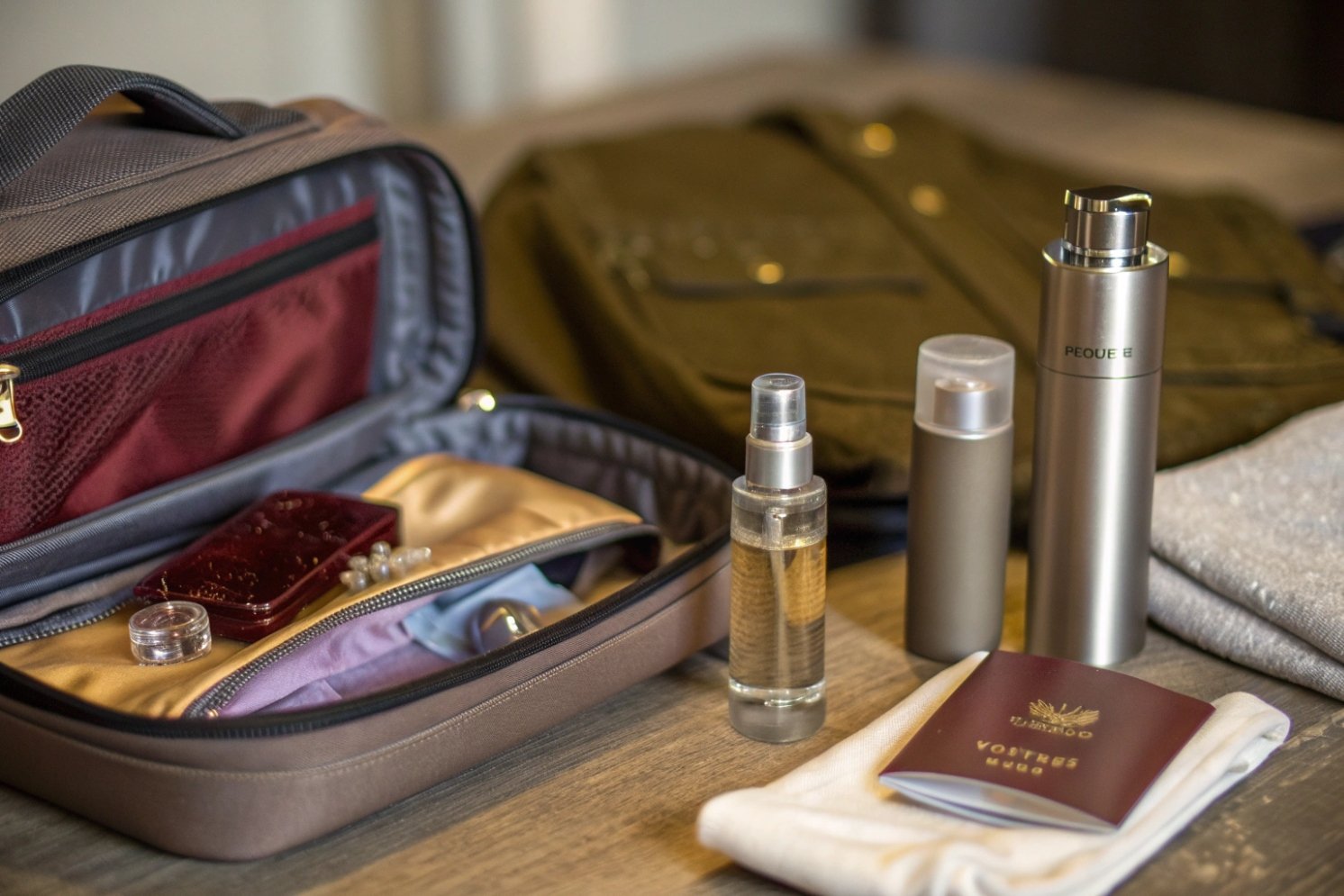
You pack your favorite fragrance, land in a new city, open your bag…and find leaks, broken glass, or a scent that smells “off”. The right travel bottle avoids all of that.
Choose a 5–10 ml, TSA-compliant atomizer with a leak-proof pump, inert glass or metal contact surfaces, and a fingerprint-resistant finish so your fragrance stays stable, secure, and easy to use on the move.
Travel fragrance packaging is a balance. It must satisfy airport rules, survive pressure changes and rough handling, and still feel premium in the hand. When you break the decision into size, pump type, refill strategy, and outer finish, it becomes much easier to choose a design that works for both users and brands.
Are 5–10 ml atomizers TSA-compliant for carry-on baggage?
You want enough perfume for the trip, but you do not want a security agent pulling your bag aside because of a tiny bottle.
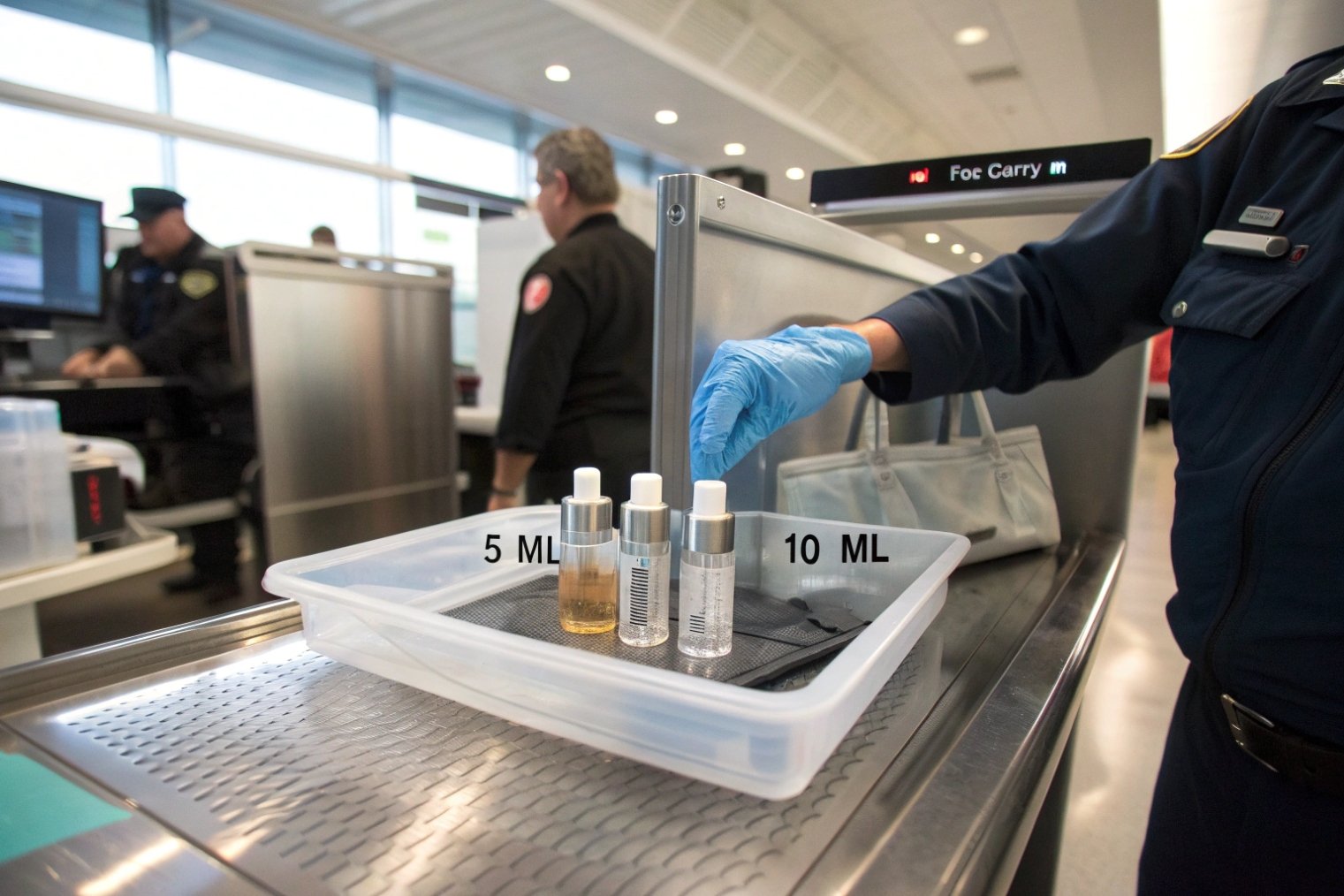
Yes. 5–10 ml atomizers are well under the 100 ml carry-on liquid limit, so they are TSA-compliant as long as each container is ≤100 ml and fits in the standard quart-size liquids bag.
Understanding the liquid rules
Most aviation security rules focus on container volume, not how full the bottle is. The common standard for hand luggage liquids is:
- Maximum 100 ml (3.4 oz) per container.
- All containers must fit inside one resealable 1-quart / 1-liter plastic bag.
In the U.S., the TSA Liquids, Aerosols, and Gels Rule 1 is the clearest reference for these limits.
A 5–10 ml perfume atomizer sits far below that limit. Even a set of two or three still leaves space in the liquids bag for skincare and other items.
For checked luggage, most airlines allow larger perfume bottles, but the main risks there are breakage and leaks, not size limits. If you want a conservative safety reference for toiletries and similar liquid items, the FAA PackSafe medicinal & toiletry articles 2 page is a helpful baseline.
Why 5–10 ml hits the sweet spot
From a user view:
- 5 ml gives about 40–60 sprays, depending on pump output.
- 10 ml gives about 80–120 sprays.
That covers anything from a weekend to several weeks if the wearer uses 2–4 sprays a day.
From a brand view, 5–10 ml:
- Feels generous enough for discovery sets or GWPs.
- Uses little juice, so cost per unit stays manageable.
- Works well as a refillable format without becoming bulky.
A quick guide:
| Trip length | Suggested size | Notes |
|---|---|---|
| 2–4 days | 3–5 ml | Ultra-compact, fits pockets |
| 1–2 weeks | 5–10 ml | Most common sweet spot |
| >2 weeks / heavy user | 10–15 ml | Still within rules, slightly larger |
Practical design choices
When you design or choose a 5–10 ml travel bottle, volume is only step one. You also want:
- Clear marking of ml / fl.oz on the base or sleeve.
- A shape that stands well on a bathroom counter but still packs flat.
- A cap that cannot be knocked off easily in a tight liquids bag.
This way, the traveler can move through security with confidence, and the brand avoids customer complaints about “confusing” or unmarked travel sizes.
Which pump types minimize evaporation and leakage on flights?
Cabin pressure changes, overhead bins, and cramped bags are harsh on small atomizers. A bad pump will either mist your clothes or slowly bleed your top notes in storage.
Crimp or well-engineered screw pumps with tight gaskets, low back-leakage valves, and locking overcaps minimize both in-flight leakage and slow evaporation from alcohol-based perfumes.
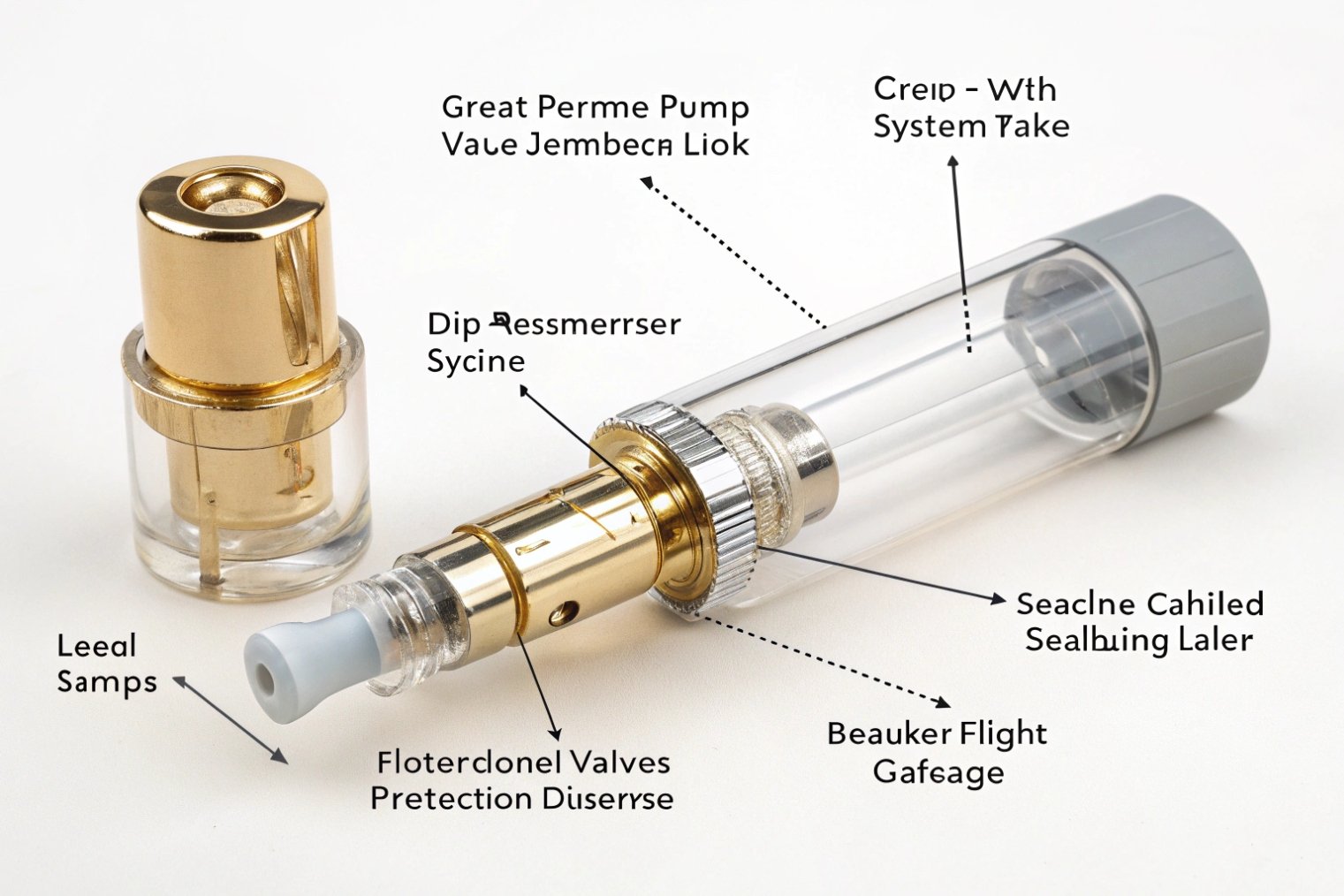
What actually leaks in flight?
During climb and descent, pressure around the bottle drops and rises. Because aircraft cabin pressurization 3 changes ambient pressure relative to the container, trapped air inside the atomizer can expand and contract.
Inside the bottle you have:
- Ethanol and fragrance oils that want to evaporate.
- A small air pocket over the liquid that expands and contracts.
If the pump has weak seals or a loose stem, expanding air can push liquid up the dip tube and out through the nozzle. Even if it does not spray, tiny amounts can wick into the cap and make a mess.
Evaporation is slower but just as important. Poorly sealed pumps allow vapor to escape over weeks or months. That changes the juice balance and weakens the scent.
Comparing pump options
Common options for travel atomizers:
| Pump type | Leak / evaporation resistance | Typical use cases |
|---|---|---|
| Basic screw pump | Medium, depends on gasket | Low-cost minis, samples |
| High-spec screw pump | High with good gaskets | Premium travel atomizers |
| Crimp pump (glass neck) | Very high when well crimped | Full-size bottles, some luxe travel formats |
For brands considering crimp hardware, the crimping process for sealing perfume bottles 4 is worth understanding because the seal quality is highly process-dependent.
For small travel formats, good screw pumps with:
- A silicone, fluoroelastomer (FKM) gasket 5 or EPDM gasket under the collar.
- Well-fitted threads.
- A protective overcap that covers the actuator head.
often give the best mix of performance and refillability.
Features that reduce risk
You also want to pay close attention to:
- Locking systems:
- Twist-to-lock bezels or push-down locks stop accidental sprays.
- Cap design:
- Deep, firm snap or screw caps resist knocks in bags.
- Dip tube fit:
- Tube should reach near the base, but not bend or press hard into the corner.
Pump output around 0.08–0.12 ml per spray usually feels right. It gives a nice cloud without draining the bottle in a week. A consistent, fine mist also uses less force on the pump mechanism, which helps sealing parts last longer.
When I evaluate pumps, I like to test them filled, capped, and stored:
- Upright, horizontal, and upside down.
- At room temperature and slightly warm.
- Through a few “flight cycles” in a heated chamber or simple hot–cold cycles.
If the collar and cap stay clean and the spray pattern remains fine, you know the pump design is doing its job.
Refillable vs. prefilled minis: which is better for brand gifting?
For travel and gifting, brands must decide: send juice out in fixed minis, or give people a nice empty atomizer and ask them to fill it.
Prefilled minis give full control of juice quality and user experience, while well-designed refillable atomizers add sustainability and “ritual” value; the best choice depends on whether the priority is sampling reach or long-term brand object.
What prefilled minis do well
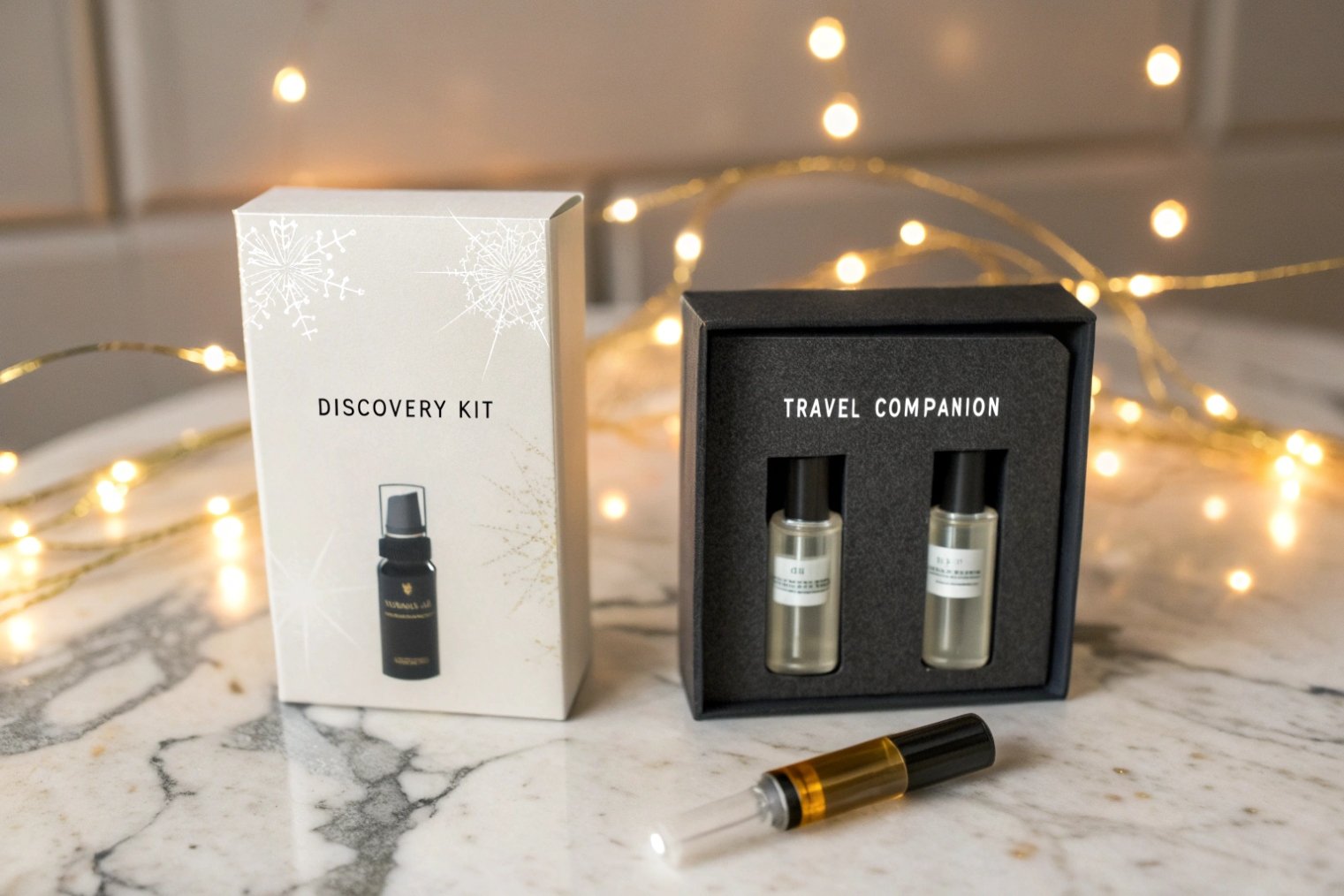
Prefilled travel bottles (5–10 ml with your fragrance already inside) are strong tools when you want:
- Guaranteed formula quality – filled in a controlled environment.
- Consistent headspace and oxygen exposure – better shelf stability.
- Instant use – no funnel, no spills, no instructions needed.
They are ideal for:
- Discovery kits.
- Gift-with-purchase campaigns.
- Airline and duty-free sets.
Production is more complex than a plain empty bottle, but you deliver a complete experience. The downside: once empty, many users throw them away, even if they are technically refillable.
Where refillable atomizers win
Refillable travel cases or atomizers:
- Invite the user to keep the object and refill from full bottles or counters.
- Fit sustainability stories, especially when made from glass and aluminum.
- Can become a small brand talisman that stays in the customer’s bag for years.
Refillable formats also map neatly to established reusable packaging business models 6 (refill-at-home, return-from-home, and similar systems), which can help brands frame the story beyond “less waste.”
However, they also bring a few challenges:
- Filling through a funnel can be messy for some users.
- Spray-to-fill designs that dock to the full-size bottle must match specific pumps.
- If the consumer uses many different fragrances in the same atomizer, the scent memory of older fills can linger.
Choosing by goal
For gifting and travel, it helps to decide what the main job is:
| Brand goal | Better primary choice |
|---|---|
| Sampling many people cheaply | Small prefilled glass minis |
| Premium gift experience | Prefilled travel atomizer in case |
| Long-term brand presence | Robust refillable with strong design |
| Sustainability focus | Refillable, easy to clean and reuse |
Of course, you can also combine them: a prefilled, branded refillable atomizer. The customer enjoys the first fill straight away, then keeps the object and refills it later. That way you control both the first impression and the long-term relationship.
What materials and finishes resist fingerprints and abrasion in handbags?
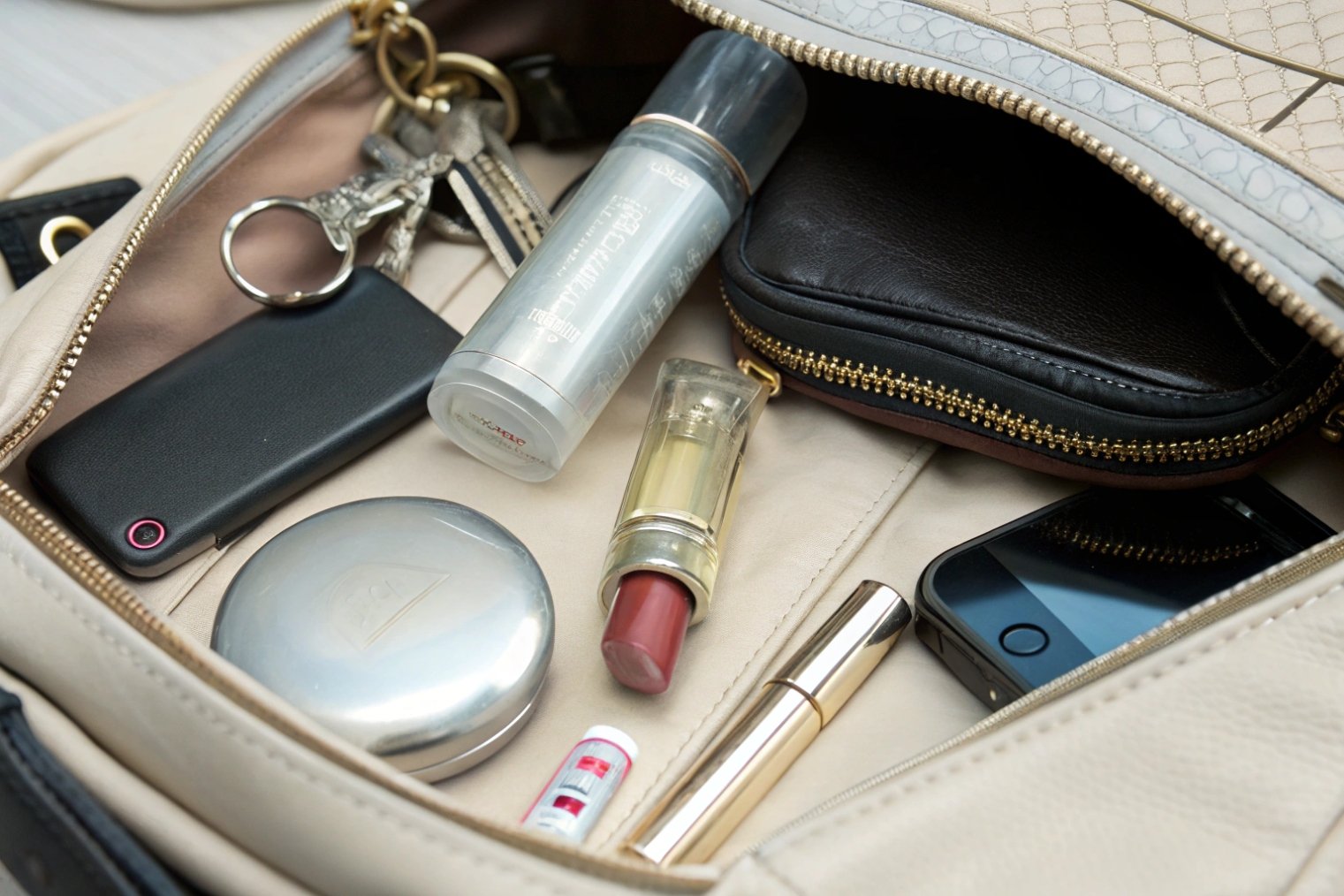
A travel bottle lives a hard life. It rubs against keys, lipstick cases, and zipper teeth. Every mark shows up faster on shiny finishes.
Thick glass with anodized aluminum sleeves or matte / frosted finishes hides fingerprints and scuffs better than bare high-gloss plastic, keeping the travel atomizer looking clean and premium in real handbag use.
Picking durable materials
Inside, contact surfaces should be:
- Glass wherever possible for the juice itself.
- Chemically resistant plastics and elastomers only where needed for pumps.
Outside, you want materials that resist both scratches and fingerprints:
- Thick-walled glass for weight and crack resistance.
- Aluminum shells or sleeves for extra impact resistance.
- Stainless steel components for high-wear zones.
Cheap, thin plastic shells scuff and haze quickly. They may feel light but can drag down perceived quality after a few months in a busy bag.
Finishes that hide real life
Fingerprints and micro-scratches show most on mirror gloss. For travel, matte is much more forgiving:
- Frosted glass hides smudges and fine scuffs.
- Bead-blasted or anodized matte aluminum 7 resists visible scratches better than painted metal.
- Soft-touch coatings feel nice but can show wear or shine-through sooner if the chemistry is not robust.
A practical comparison:
| Finish type | Fingerprint visibility | Abrasion appearance | Notes |
|---|---|---|---|
| Clear glossy glass | High | Scratches bright and clear | Beautiful, but high-maintenance |
| Frosted / matte glass | Low | Scratches blend in | Ideal for travel and unisex designs |
| Glossy painted metal | Medium–high | Chips and scuffs obvious | Needs very good lacquer |
| Matte anodized aluminum | Low | Fine wear looks “patina-like” | Strong travel choice |
| Soft-touch lacquer | Low at first | May polish or mark over time | Test for handbag abrasion and oils |
Small details that extend life
A few design choices help a lot:
- Slightly rounded corners and edges to avoid paint chipping.
- Recessed logos or laser marks instead of fragile printed graphics in high-contact zones.
- Caps that do not rattle or loosen easily, so they do not rub the actuator during transport.
When these details are correct, the travel bottle keeps its “new” look much longer, even for people who toss everything into one big tote or backpack every day. That protects both user satisfaction and the brand image each time they reach for a spray.
Conclusion
A good travel perfume bottle is a small system: right size, tight pump, smart refill strategy, and tough, fingerprint-friendly finishes so the fragrance and the object both survive real journeys in style.
Footnotes
-
Official TSA overview of carry-on liquid limits and bag requirements. ↩ ↩
-
FAA guidance on toiletry items and quantity limits for air travel. ↩ ↩
-
Explains how cabin pressurization changes pressure differentials that can push liquid through valves. ↩ ↩
-
Packaging industry explanation of the crimping process that helps prevent evaporation and leaks. ↩ ↩
-
Definition and properties of fluoroelastomer (FKM) materials used for chemical-resistant seals. ↩ ↩
-
Framework of reusable packaging business models for brands considering refill and return systems. ↩ ↩
-
Quick reference on aluminum anodizing and why it improves wear and corrosion resistance on metal sleeves. ↩ ↩






