
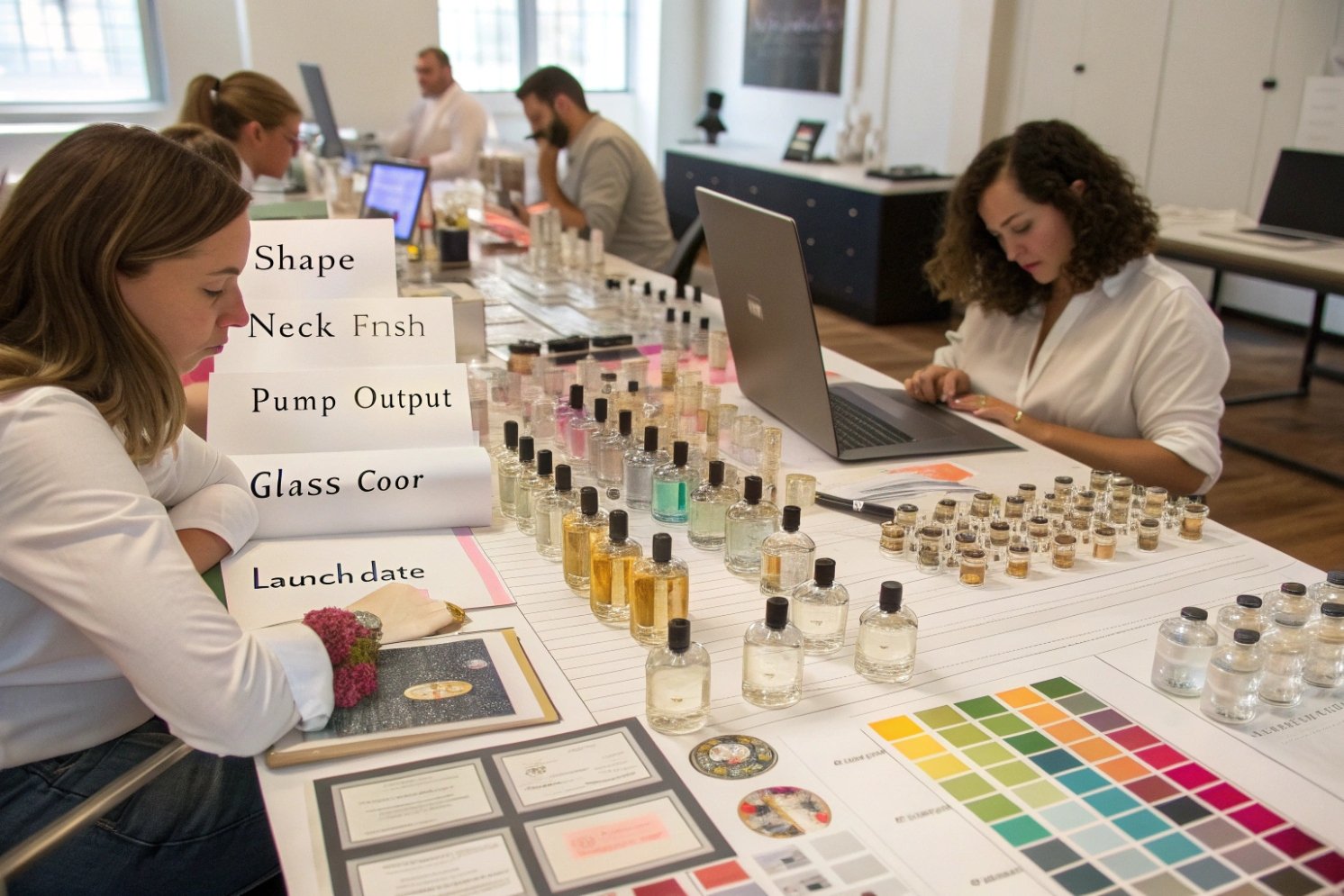
A perfume can be perfect, then the bottle ruins it. Leaks, weak spray, ugly labels, and fast oxidation can turn a launch into returns and bad reviews.
Choose a perfume bottle by balancing brand story, hand feel, pump compatibility, light protection, and supply timing. The best choice protects the formula, sprays well, ships safely, and still looks like your brand from five feet away.
Protect the fragrance first, then design the “face”
Perfume packaging is not only decoration. It is a functional system: glass + neck finish + gasket + pump + cap + decoration + secondary pack. When any one part is weak, the whole product suffers.
Start with the formula reality, not the mood board
High-ethanol perfume is tough on poor metals and soft plastics. Essential oils and aroma chemicals can also pull out smells from low-grade parts. That is why inert glass 1 is the default choice for long-term stability. Clear glass looks nice, but light can damage many materials in a formula. So the glass color and any UV-blocking treatment should be decided early, not at the end.
Decide the “user moment” and size before the silhouette
Size is not only a marketing choice. It changes headspace and oxidation risk. A 5–10 mL travel bottle has a different user moment than a 50 mL daily bottle. Larger volumes can increase headspace after use, so headspace oxygen levels 2 and oxidation risk grow over time if the design leaves too much air. Narrow necks and smart fill levels help. Filling close to the shoulder often gives a cleaner oxygen profile than leaving a big air pocket.
A simple selection map that keeps teams aligned
| Decision area | What to optimize | What can go wrong | My practical rule |
|---|---|---|---|
| Glass material | Inert, stable, low interaction | Off-odor pickup from plastics | Default to quality compiler-grade glass for long storage |
| Light protection | UV resistance without “hiding” the juice | Color shift, top note loss | Use amber/opaque or UV coatings when formula is light-sensitive |
| Atomizer | Fine mist + tight seal + durable internals | Drips, clogging, corrosion | Use corrosion-resistant internals and test spray output early |
| Size & headspace | Real usage pattern | Faster oxidation in large headspace | Match size to use-case, keep headspace low |
| Durability | Thick walls, stable base | Breakage in shipping | Choose a wide base and consider sleeves or shells |
| Decoration | Label fit, print adhesion | Peeling, crooked labels | Favor label-friendly panels and stable cap alignment |
A perfume bottle is a promise. The promise is: the scent stays the same, the spray feels premium, and the product looks right every day on a vanity or in a bag.
If this foundation is clear, the next steps become easy.
Now it makes sense to talk about shape, compatibility, glass color, and supply timing in a way that leads to fewer surprises.
Which shapes best express your brand story and ergonomics?
Pretty shapes sell online, but awkward shapes lose in the hand. If a bottle is hard to hold, it becomes a shelf object instead of a daily habit.
The best shape is the one that matches your brand story and the user’s grip. A strong silhouette should look “on brand” from distance, then feel stable, balanced, and easy to spray with one hand.
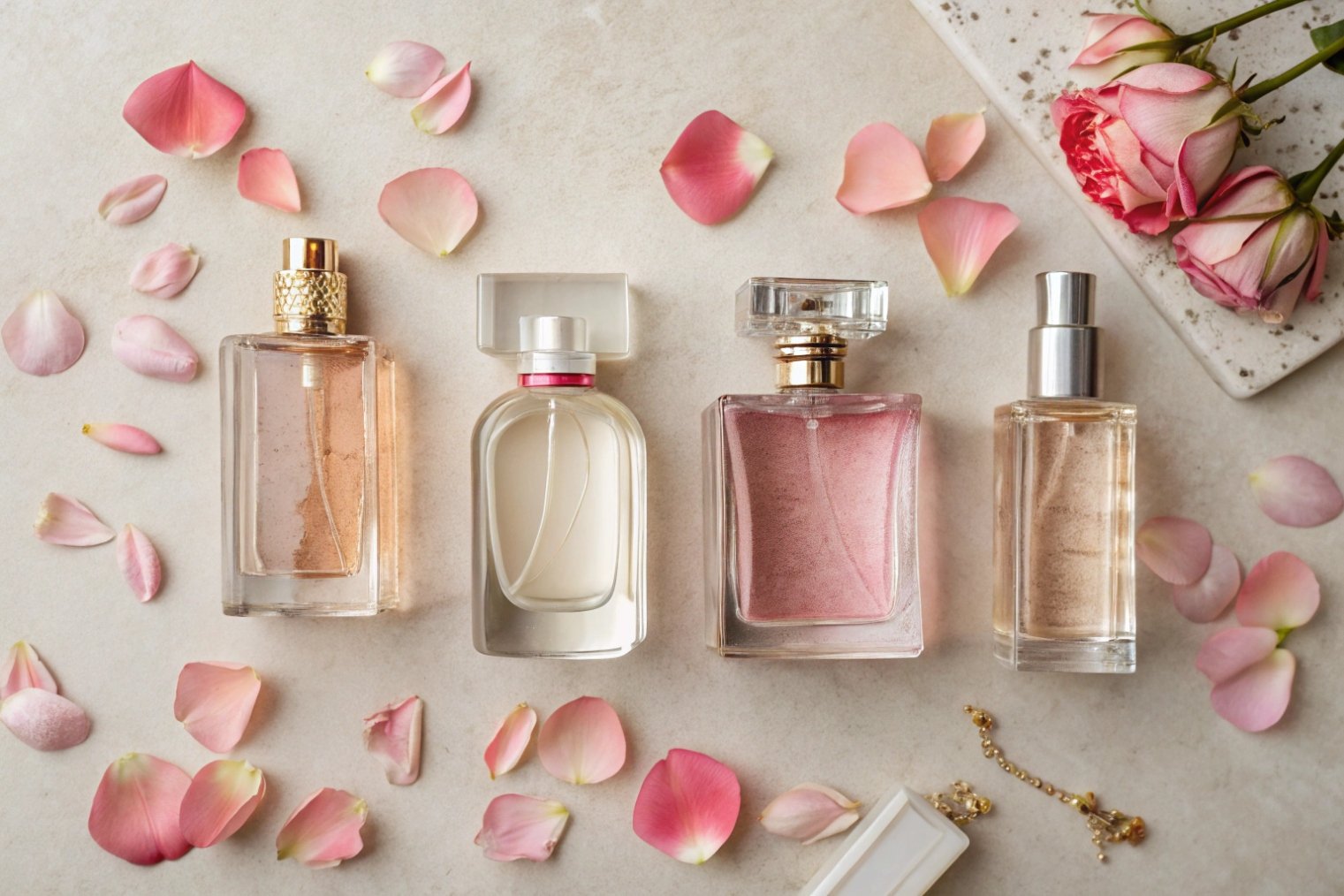
Shape speaks before the label
Most buyers read a bottle before they read text. Curves often feel soft and intimate. Sharp geometry often feels modern and bold. Tall slim profiles can feel elegant, but they can also feel unstable if the base is narrow. Short wide profiles can feel grounded, but they may reduce shelf impact if the front face is too small.
Ergonomics is a real conversion lever
In daily use, the index finger presses the actuator while the hand stabilizes the bottle. If the bottle is too wide, small hands struggle. If it is too tall with a small base, it tips. If the shoulders are too round, labels can wrinkle or lift. These details affect reviews more than teams expect.
Match the shape to the “use scene”
A travel bottle needs anti-slip grip and bag safety. A vanity bottle can be heavier and more sculptural. A refill program may need a design that is easy to open and refill without spills, which often means a sprayer that can be removed and a neck that supports clean decanting.
| Brand story cue | Shape direction | Ergonomic check | Packaging note |
|---|---|---|---|
| Minimal / modern | Cylinder, rectangle, clean edges | One-hand spray balance | Flat label panel helps alignment |
| Luxury / prestige | Heavy base, thicker wall, sculpted shoulders | Stable base, comfortable cap pull | Secondary box is part of the “feel” |
| Artisan / niche | Unique silhouette, subtle texture | No sharp pinch points | Decoration should not chip easily |
| Eco / refill | Modular, simple geometry | Easy to grip when wet | Refill-friendly closure strategy |
When shape and ergonomics agree, the bottle becomes a ritual object. That is where repeat purchases start.
And once the shape is set, the next risk is technical: making sure every component actually fits and performs.
How do neck finish and pump specs ensure compatibility?
A bottle can look perfect, then the pump does not seal. That mistake shows up as leaks, evaporation, weak spray, and customer complaints.
Neck finish and pump specs ensure compatibility by matching dimensions, sealing surfaces, and thread or crimp standards. When the finish, gasket, and pump are designed as one system, you get a tight seal and consistent spray.
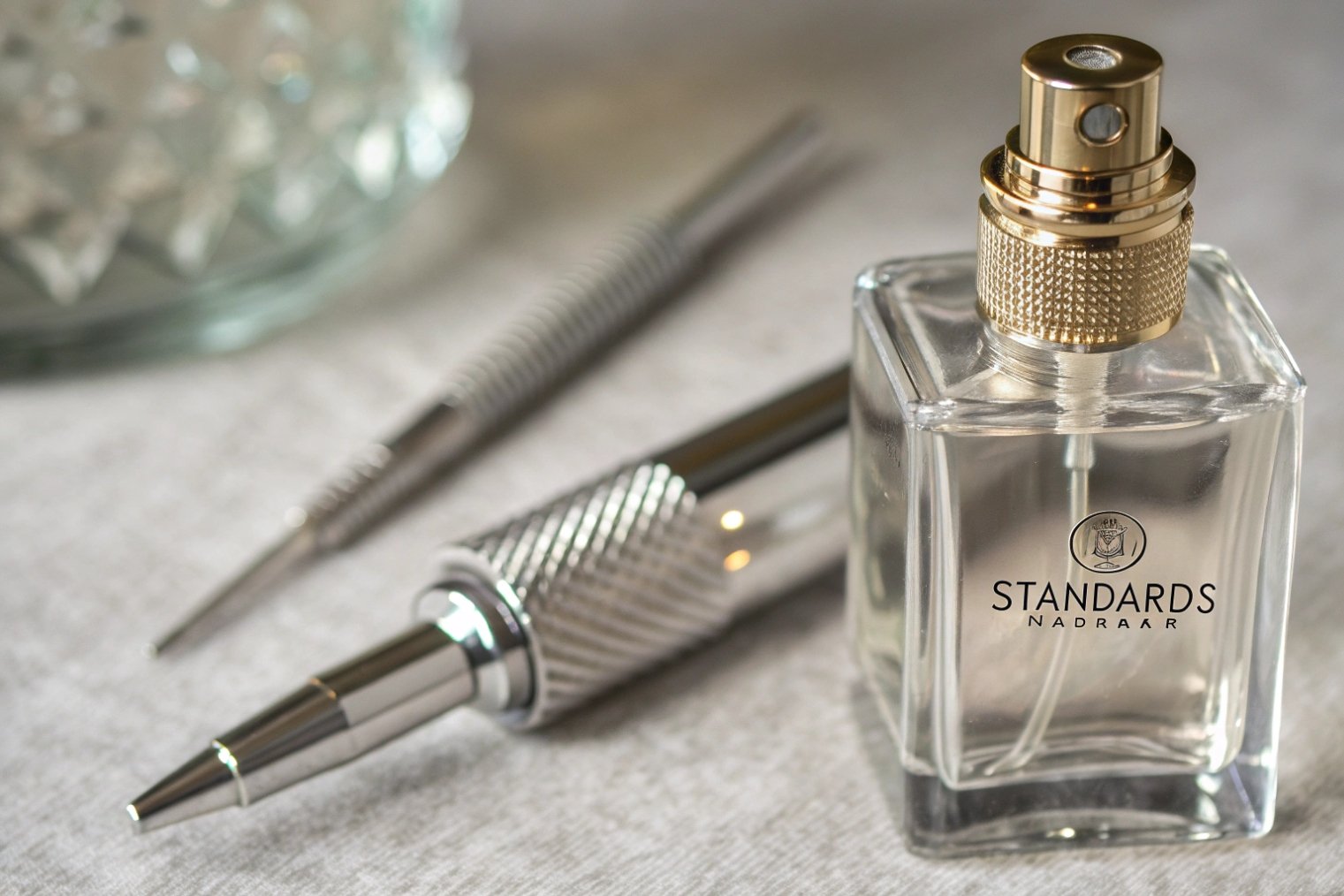
Think in systems: finish + gasket + pump + cap
Compatibility is not only “it screws on.” It is also: does it seal under temperature swings, vibration, air shipping pressure, and daily handling? A strong system uses proper gaskets like PTFE or EPDM gaskets 3 for chemical resistance and sealing stability, and aligns to common industry finishes such as the FEA neck finish 4. Rubber droppers and natural corks look romantic, but they are risky for long-term perfume storage because they can absorb or react and they can leak.
Pump internals must survive high ethanol
High-ethanol liquids can pit weak alloys. Zinc or low-grade pot-metal parts can fail over time. Corrosion-resistant internals, like stainless steel springs and compatible plastics, reduce risk. A tight seal also helps slow oxygen exchange and evaporation.
Spray feel is a spec, not a guess
Output per spray matters for dosing and brand experience. Many brands target a consistent fine mist and a predictable output (often around 0.08–0.12 mL per spray, depending on design goals). Consistency matters for consumer trust and for compliance testing.
| Spec area | What to confirm | Why it matters | Quick test idea |
|---|---|---|---|
| Finish type | Thread/crimp standard + tolerances | Prevent leaks and wobble | Trial assembly with torque window |
| Gasket material | PTFE / EPDM choice | Chemical resistance and seal | Soak test with formula for weeks |
| Dip tube | Length and material | Full evacuation, no curling | Check bottom clearance and uptake |
| Spray output | mL per spray + pattern | Dosing and premium feel | 50-spray average measurement |
| Cap fit | Snap/press feel and alignment | User satisfaction and leakage cover | Drop + vibration test with cap on (e.g., ISTA 3A transit testing 5) |
If the pump is removable, refilling and cleaning become easier, and decanting becomes less messy. Wide-mouth options also help decanting, but they must be balanced with sealing needs.
Once compatibility is stable, the next question becomes visual protection: what color protects the perfume without killing the “juice” story.
What glass color maximizes UV protection without hiding the juice?
Light damage can be silent. The perfume still sprays, but the top notes flatten, and the color can shift. That can cost repeat orders.
Amber and opaque glass offer strong light protection, while UV-blocking coatings or tinted glass can protect the formula without fully hiding the liquid. The best choice depends on how light-sensitive the formula is and how important “showing the juice” is to your brand.
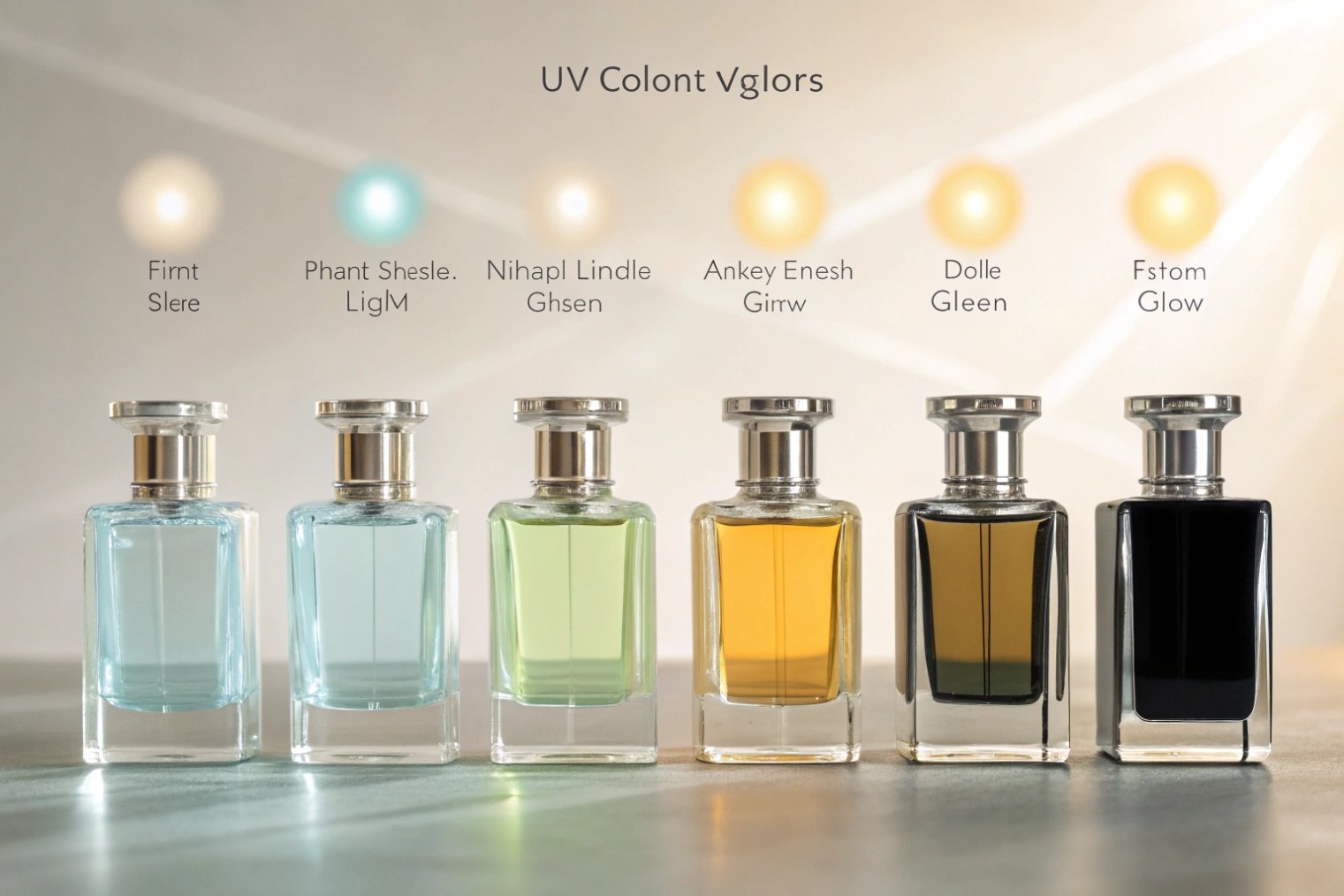
Start with how light-sensitive the formula is
Some formulas tolerate light well. Others do not. Citrus, some naturals, and certain aroma chemicals can degrade faster under UV and visible light. If a formula is sensitive, clear glass is mostly a marketing choice, not a protection choice. Amber, black, and fully opaque options reduce light exposure and help shelf stability.
“Show the juice” is not only about clear glass
There are middle paths:
- Light tints that still show color.
- Frosting that softens visibility but keeps a premium look.
- External coatings designed to block UV while keeping a clean visual, such as transparent UV protective varnish 6.
- Secondary packaging that blocks light even if the bottle is clear.
Avoid the trap of pretty-but-fragile decoration
Some metallized finishes and heavy coatings can chip in shipping. If the brand relies on a perfect look, durability tests matter. Thick-walled glass and stable bases reduce breakage. Protective sleeves or metal shells can also improve durability without changing the core bottle.
| Glass option | UV protection level | Visibility of liquid | Best for |
|---|---|---|---|
| Clear flint | Low | Full | Stable formulas, “color as story” brands |
| Light tint (smoke/green) | Medium | High | Balanced protection + visibility |
| Frosted clear | Low–Medium | Medium | Premium feel, softer “juice” display |
| Amber | High | Medium | Light-sensitive formulas, classic protection |
| Fully opaque / coated | Very high | None | Maximum stability, bold brand blocks |
Even with good glass, storage guidance matters. Cool and dark conditions extend shelf life. That message can be built into the secondary pack and customer education.
After design and protection, the final reality check is timing. MOQ, tooling, and lead time can decide whether a launch hits the market window or misses it.
How do MOQ, tooling, and lead time affect launch timing?
Many launches fail for simple reasons: the bottle arrives late, the pump is backordered, or the decoration needs rework. The calendar becomes the enemy.
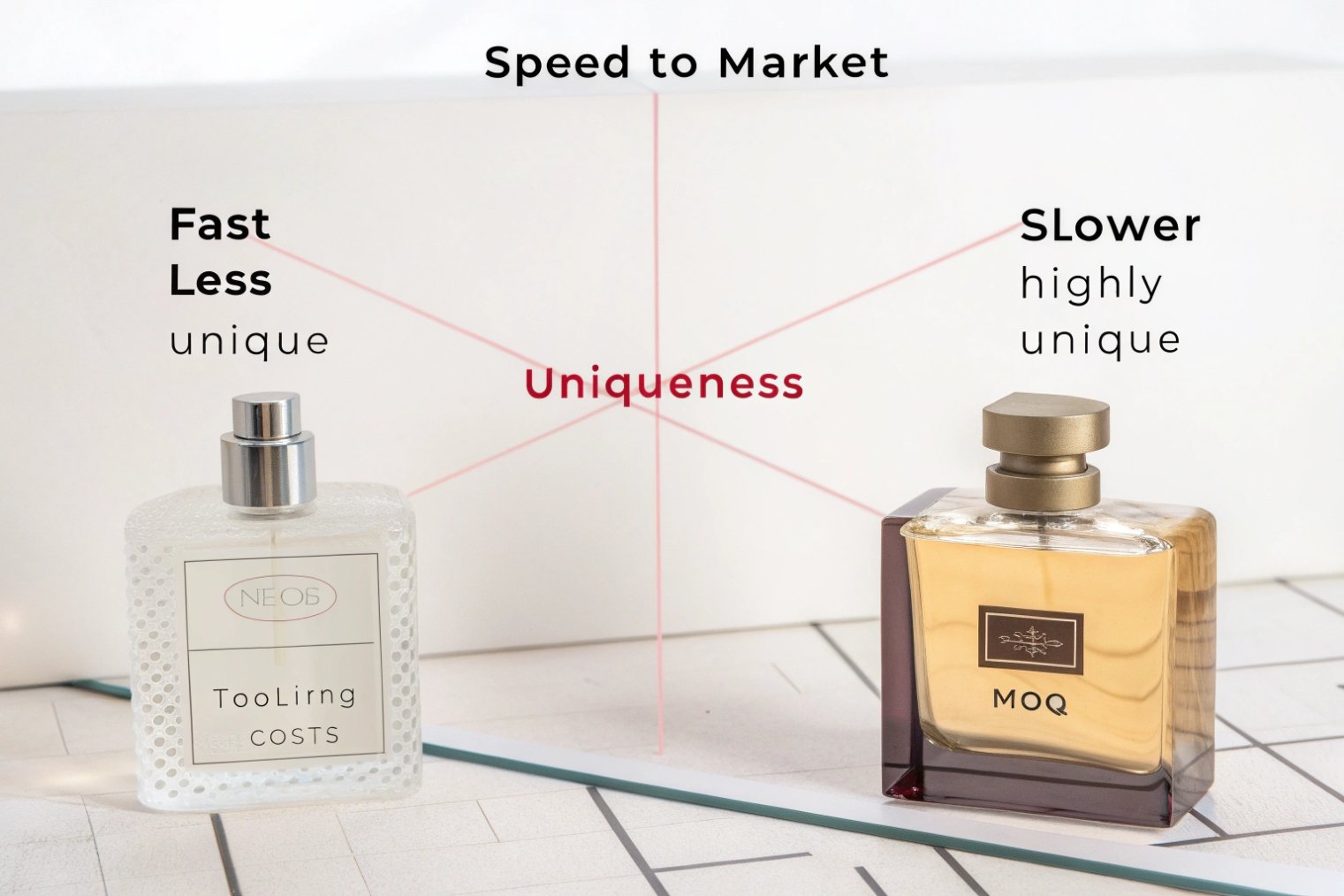
MOQ, tooling, and lead time affect launch timing because custom molds, custom pumps, and decoration steps add weeks or months. A smart plan uses standard components for the first run, then upgrades to full custom once demand is proven.
MOQ is not only a cost number
Minimum order quantity (MOQ) 7 is also a risk number. A high MOQ forces a big inventory bet before market proof. For new brands, it often makes sense to launch with a stock bottle and a strong decoration plan, then move to a custom mold once reorder signals are real. This approach keeps cash flow healthier and reduces dead stock risk.
Tooling changes the critical path
Custom tooling can include mold development for the glass, plus special parts for the pump, cap, or collar. Every custom element adds:
- Engineering time (drawings, tolerances, sampling).
- Sampling cycles (first samples, corrections, second samples).
- Testing time (leak, spray, chemical compatibility, shipping).
Skipping tests saves time today and costs time later. Leaks and spray failures create rework and reputational damage.
Lead time is a chain, not one date
Lead time includes glass production, decoration, pump procurement, assembly, inspection, and shipping. If one component is late, the full system is late. That is why it helps to lock “interface specs” early: neck finish, pump spec, and cap fit.
| Launch stage | Best bottle strategy | Why it helps timing | Risk to watch |
|---|---|---|---|
| Concept to sample | Standard bottle + standard finish | Fast sampling and quick visuals | Ensure label panel is usable |
| Pilot launch | Standard bottle + verified premium pump | Fewer unknowns, better reliability | Confirm spray output and seal |
| Scale launch | Semi-custom decoration or custom cap | Brand distinct look without full mold | Decoration durability in shipping |
| Flagship upgrade | Full custom mold + custom components | Iconic shape that locks brand identity | Longer tooling and higher MOQ |
A practical timeline habit is to treat packaging like product development, not like an afterthought. Specs should be frozen early, and testing should run in parallel with branding work.
When shape, compatibility, protection, and timing are planned as one system, the bottle stops being a cost line and starts being a growth tool.
Conclusion
A great perfume bottle protects the formula, feels right in the hand, fits the pump perfectly, blocks harmful light, and matches a supply plan that does not delay the launch.
Footnotes
-
FEVE on glass properties — Explains why glass is impermeable and virtually inert. ↩ ↩
-
Headspace oxygen stability studies — Shows how oxygen in container headspace can impact product stability. ↩ ↩
-
Parker O-Ring Handbook — Helps compare PTFE/EPDM sealing materials and chemical compatibility. ↩ ↩
-
CETIE overview of the FEA neck finish — Background on FEA finish standards for fragrance closures. ↩ ↩
-
ISTA 3A overview — Reference for common parcel drop and vibration testing conditions. ↩ ↩
-
HEINZ-GLAS INVISIBLE UV Protection — Examples of transparent UV-protective coatings used in perfume packaging. ↩ ↩
-
NetSuite guide to minimum order quantity — Clarifies how MOQs affect cost, inventory risk, and cash flow. ↩ ↩






