
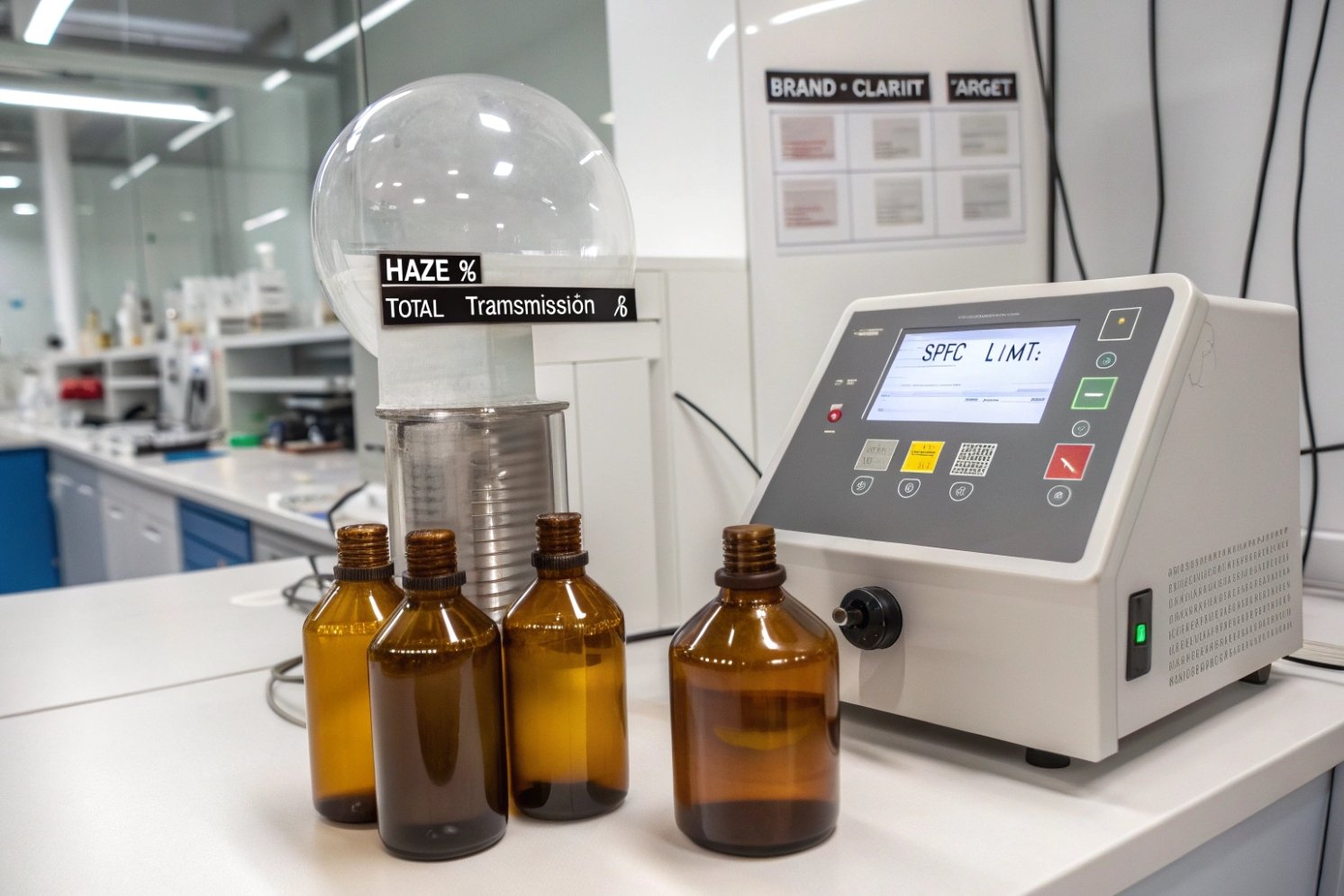
A bottle can be “clear” at first glance and still look cheap on shelf. Mild cloudiness can hide defects. Then customers doubt the product before they even open it.
Haze is the part of transmitted light that gets scattered inside or on the glass, which makes the bottle look milky or foggy. We evaluate haze with controlled optics tests, then tie limits to visual expectations, printing needs, and process stability.
A practical framework to evaluate haze on real glass bottles
Haze is not the same as “dark” or “colored.” It is about optical scattering 1. Scatter can come from inside the glass or from the surface. A bottle with higher haze can still pass basic dimensional checks. It can still pass leak tests. But it can fail the shelf test because the product looks dull, labels look less sharp, and the whole pack feels less premium.
The first step is to separate three ideas that people often mix:
-
Total transmittance: how much light gets through at all.
-
Haze: how much of that transmitted light is scattered.
-
Clarity: how sharp an image looks through the material.
Common haze sources and what they look like
Haze can be “bulk haze” (inside the glass) or “surface haze” (on the surface). Both look like fog. But the roots differ, so the fixes differ.
| Haze source | What it looks like | Typical root cause | Practical prevention |
|---|---|---|---|
| Micro-bubbles / seeds | cloudy areas, sparkling specks | melt fining 2 not stable | tighter furnace control |
| Stones / unmelted bits | local cloudy spots | poor raw material | raw material screening |
| Cords / striae | faint waves or streaks | mixing and temperature | furnace stirring control |
| Surface roughness | “frosty” shine, poor gloss | mold wear | mold maintenance |
What does “haze” mean in packaging optics tests?
Haze terms get used loosely. One person calls it “cloudy.” Another calls it “low clarity.” If the team does not define haze, the test report will not match what the brand sees.
In packaging optics, haze means the portion of transmitted light that becomes scattered, so the bottle looks less clear and images behind it look washed out. A low haze value means more straight-through light and a cleaner, sharper look.
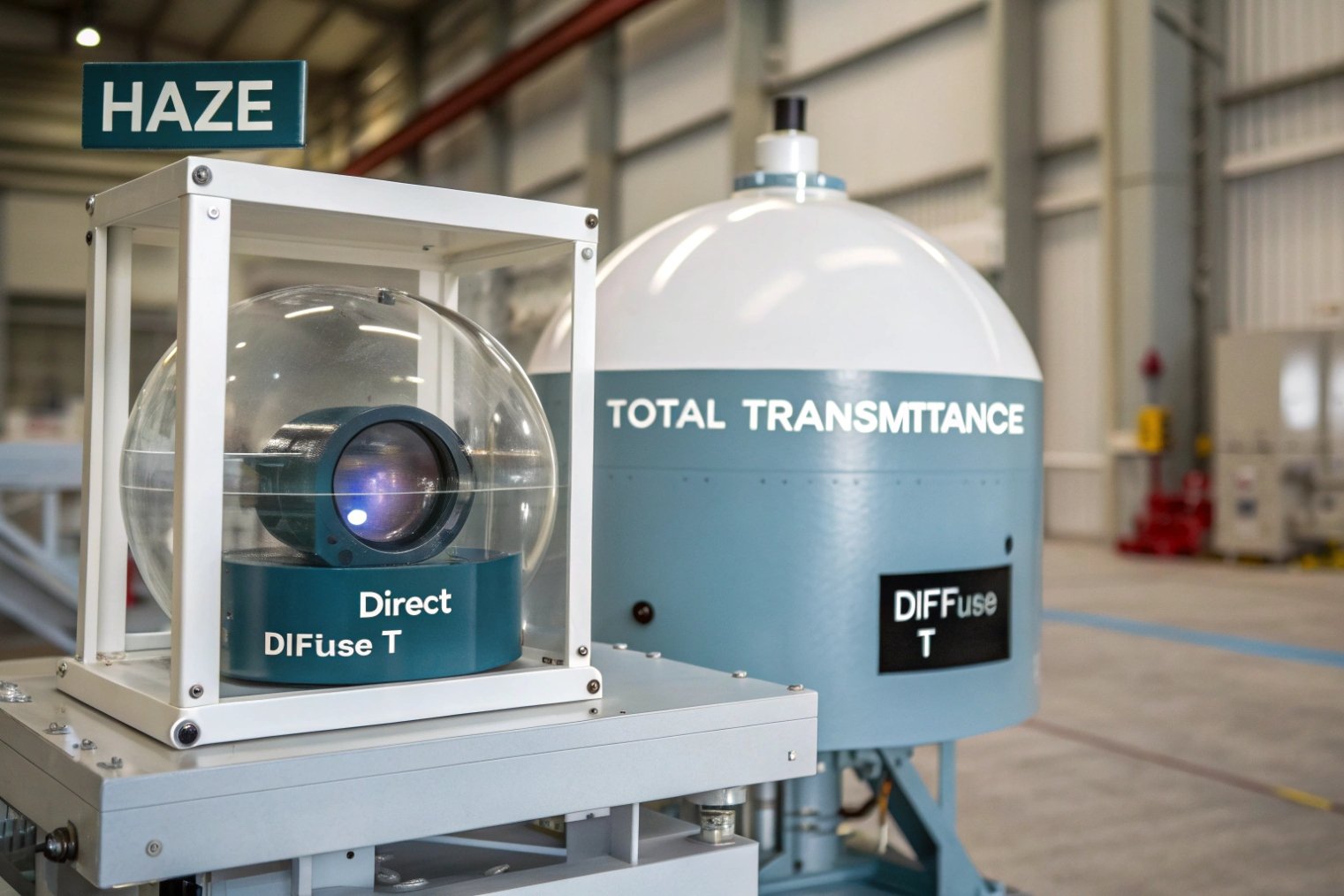
Haze is about scatter, not just “how much light”
A bottle can transmit a lot of light and still look hazy. That happens when light goes through, but it spreads out instead of staying directional. In short, haze is a “direction problem,” not only a “quantity problem.” To quantify this, labs often refer to ASTM D1003 3 protocols.
Why does low haze matter for brand presentation and QC?
Haze is a silent brand killer. Customers do not describe it as “haze.” They describe it as “cheap,” “dirty,” or “not premium.” That reaction can happen even when the product itself is perfect.
Low haze matters because it improves product visibility, label sharpness, and perceived cleanliness. It also matters for QC because haze often signals process drift, which can later show up as higher defect rates or unstable decoration results.

Brand presentation: clear glass sells “clean”
Packaging optics is part of brand presentation 4. A low-haze bottle makes liquid color look true. It makes air bubbles in the product easier to judge. It makes premium liquids look richer. For cosmetics, it makes textures look more controlled. For food and beverage, it supports “fresh” and “pure.”
How do we measure haze on curved bottle surfaces?
Curved surfaces create measurement traps. The bottle works like a lens. If the setup is not controlled, the haze reading can reflect geometry, not real scatter.
We measure haze on curved bottles by standardizing the measurement zone and using fixtures that control alignment and aperture. Common approaches include testing matched flat coupons, cutting controlled body sections, or using dedicated bottle fixtures with integrating-sphere haze meters and repeatable positioning.
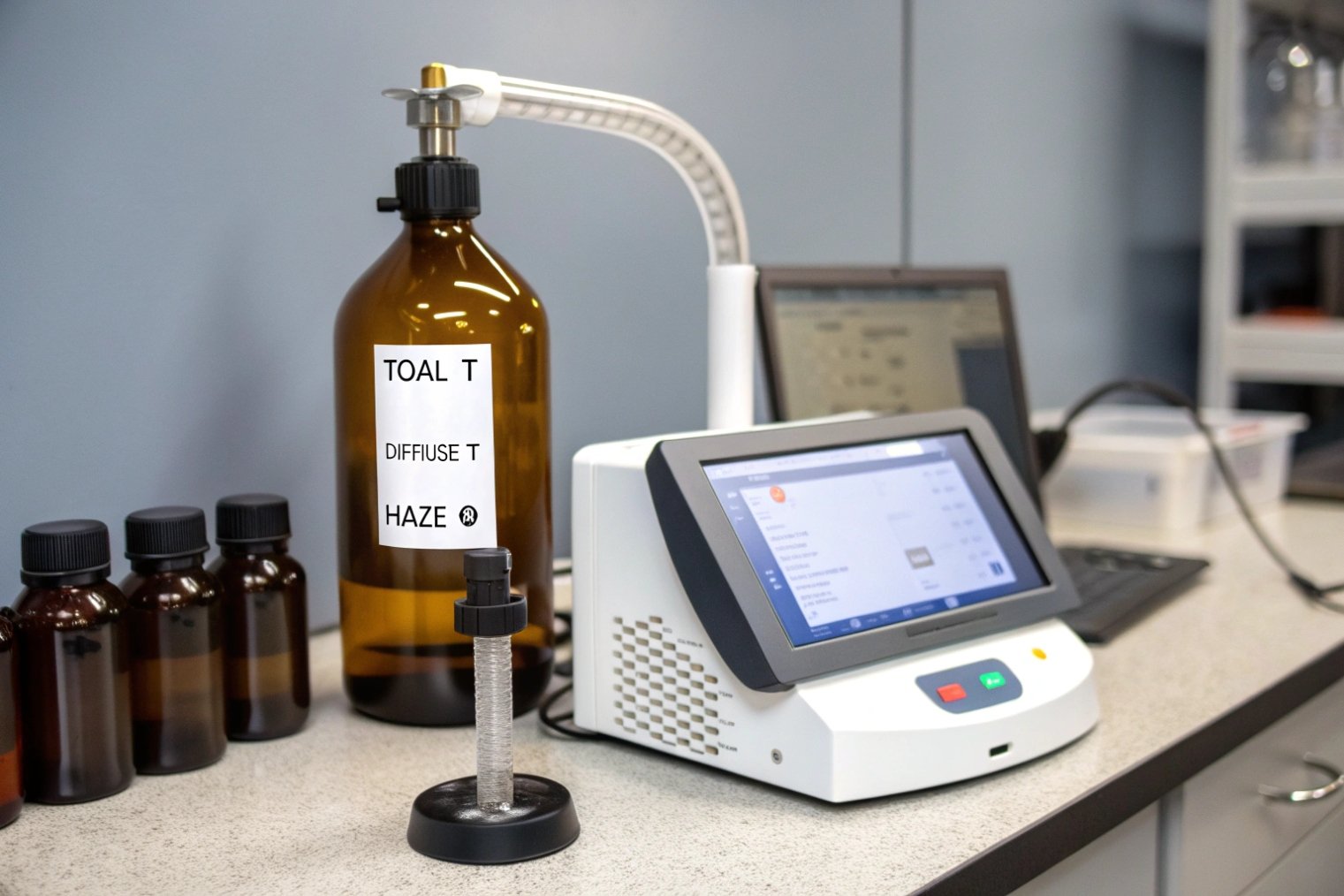
Approach 3: Non-destructive bottle measurement with dedicated fixtures
For buyer-facing QC, a non-destructive method is often needed. The key is using an integrating-sphere 5 to collect light properly.
- lock the bottle position and angle every time
- use a defined measurement window on the body
- control beam size so it does not cross curves and ribs
Are inline haze sensors improving real-time production control?
Plants want to catch haze drift before pallets are wrapped. Inline sensors are starting to help, but they work best when used as trend tools tied to periodic lab correlation.
Inline haze sensing is improving real-time control by tracking scattering proxies with cameras, lasers, and controlled backlights. These systems can flag drift by cavity or time window, but they still need calibration to a reference haze method and they must handle confounders like color, thickness, and surface coatings.
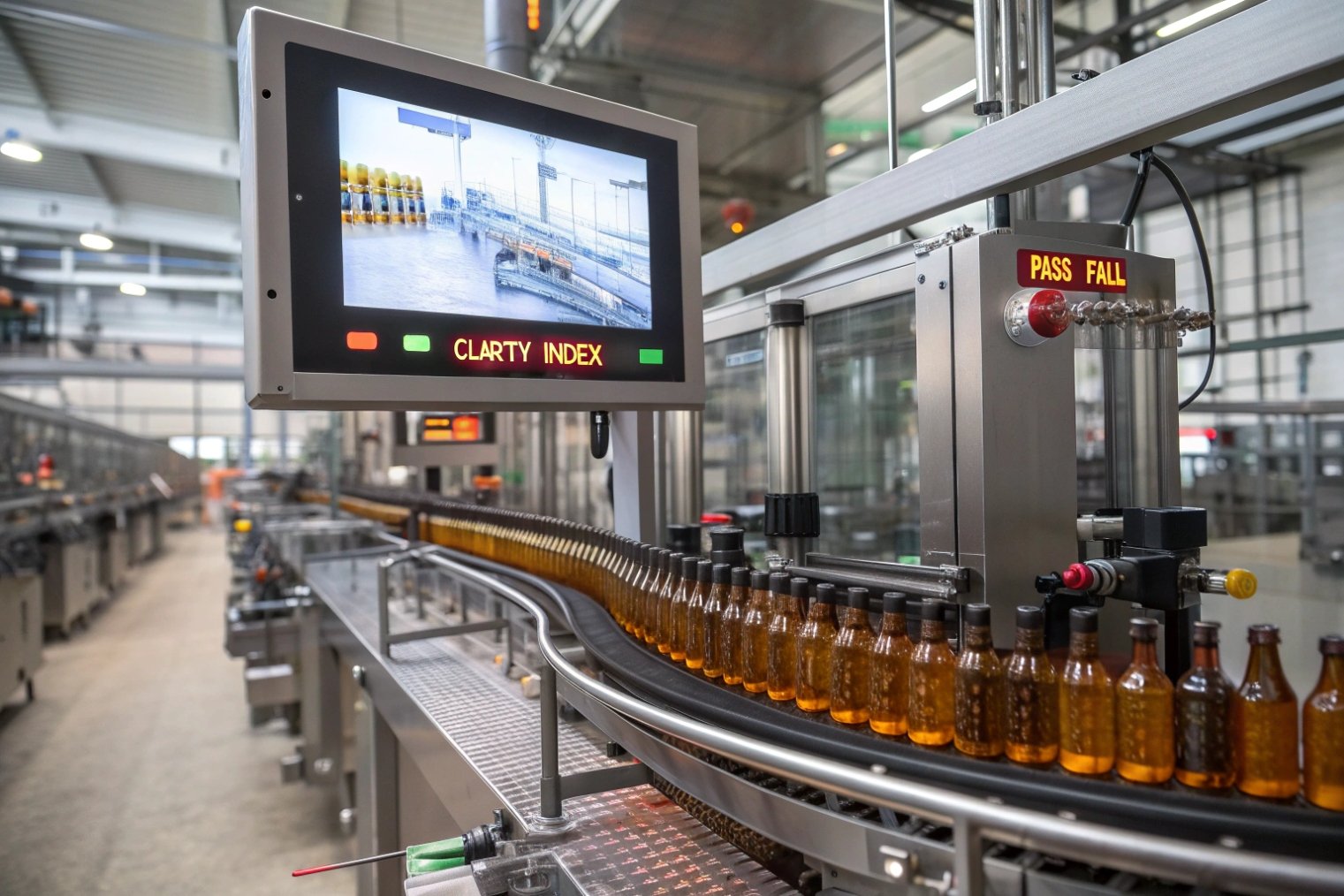
What limits inline accuracy
Inline haze tools face real confounders such as surface roughness 6 and color density.
What buyers should ask for when suppliers claim “inline haze control”
A buyer can keep this simple by requesting data from inline sensors 7:
- ask for the correlation plan between inline index and lab haze
- ask for control charts by cavity and by shift
- ask for alarm thresholds and hold rules
Conclusion
Haze is scattered transmitted light that makes bottles look foggy. A clear test setup, curved-surface fixtures, and inline trend monitoring turn haze into a controlled spec instead of a shelf surprise.
Footnotes
-
Learn about the physics of optical scattering and how light interacts with translucent materials. ↩ ↩
-
Understanding the glass melting process and how fining removes unwanted gaseous inclusions. ↩ ↩
-
The industry standard test method for measuring haze and luminous transmittance of transparent materials. ↩ ↩
-
Insights into how packaging clarity influences consumer trust and premium brand positioning. ↩ ↩
-
Technical details on integrating spheres used to collect scattered light for precise optical measurements. ↩ ↩
-
An overview of surface texture metrics used to assess mold quality and glass finish. ↩ ↩
-
How advanced machine vision and sensors automate quality control in high-speed glass production lines. ↩ ↩






