
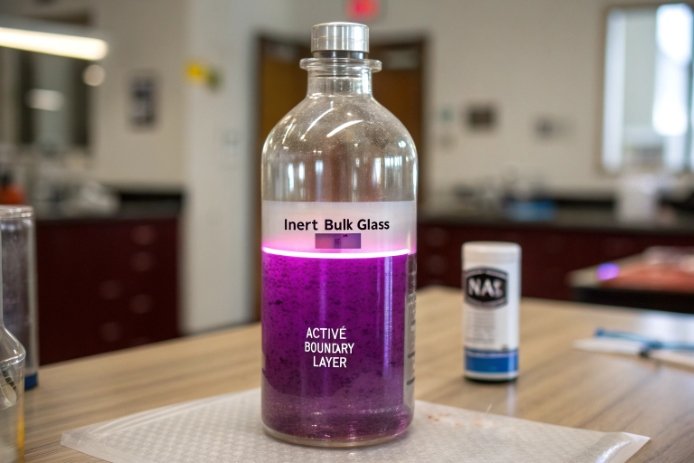
A great drink can taste “wrong” after packaging, and nobody can see the cause. If the bottle gets blamed, the brand loses time and trust.
Glass is mostly inert, but composition still matters because it controls surface alkalinity, residue behavior, and defect risk, which can create flavor carryover or sensory drift during hot-fill, pasteurization, and humid storage.
Why “inert glass” can still create real sensory problems
Glass does not breathe like plastic, so it rarely transfers aromas through the wall. Still, real-world bottles have a surface that can change, and that surface touches the product. When people talk about odor or taste “migration” from glass, the root cause is usually one of these paths:
Surface ion exchange and pH drift
Soda-lime glass 1 contains alkali ions. In warm or wet conditions, a tiny amount of Na⁺/K⁺ can exchange with H⁺ at the surface. This can raise local pH at the liquid–glass boundary. For sensitive products, even a small pH drift can change flavor balance, especially in low-buffer drinks, light teas, and some cosmetics.
Residues and deposits that sit on top of the glass
Most sensory failures are not bulk-glass leaching. They are surface residues: sulfate/chloride salts, hot-end/cold-end carryover, dusty storage, and rinse water spots. These can create off-notes, metallic hints, or a “stale” perception. They can also react with product acids and create a short-lived but noticeable taste spike.
Defects that trap films and “hold” odors
Cords, stones, and micro-roughness can trap thin films and cleaning residues. That does not mean the glass itself smells. It means the surface holds contaminants better. Under pasteurization, those films can release, and the product picks up a faint carryover note.
Heat makes every risk bigger
Hot-fill and pasteurization speed up surface reactions and can pull more ions from the boundary layer. Heat also increases the chance that residues dissolve and re-deposit, which is why the same bottle can pass a room-temperature test but fail after a thermal cycle.
| Sensory risk path | What customers notice | What chemistry controls | Best first measurement |
|---|---|---|---|
| Alkali release / pH drift | “Flat,” “soapy,” changed acid bite | Na₂O/K₂O level, Al₂O₃ durability | Extract pH + Na/K in hot-water extract |
| Surface residues (S/Cl, lubricants) | “Chemical,” “salty,” “stale” | Furnace SO₃, wash/rinse quality | Conductivity + ion chromatography 2 on rinse |
| Defects trapping films | Random lots fail after heat | Devit/cord rate, surface roughness | Visual + defect map + TOC rinse |
| Color/redox side effects | Different taste perception by lot | Redox stability, sulfate behavior | Redox KPI + residue checks |
A reliable sensory program treats glass as a system: formulation + cullet + furnace redox + surface handling + washing. The next sections answer each of your questions with formulation targets and practical controls that work at scale.
Which oxides and impurities (Na₂O/K₂O level, Fe₂O₃, S/Cl residues) most affect surface chemistry and flavor carryover?
When odor or taste carryover appears, alkali and residue control should be checked before anything else. Many “glass taste” complaints are really a surface chemistry and cleanliness issue.
Total alkali (Na₂O/K₂O) most affects surface alkalinity and pH drift, while S/Cl residues and deposits often cause the strongest off-notes; Fe₂O₃ usually impacts color and redox behavior more than direct flavor, but redox drift can increase residue risk.
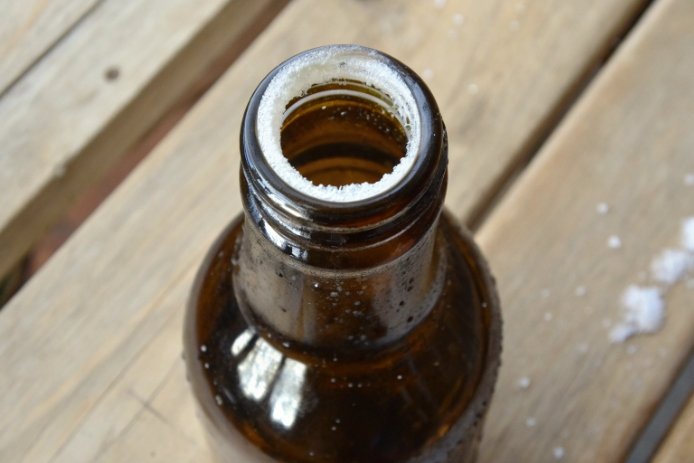
Total alkali: the pH lever
Higher Na₂O/K₂O generally increases ion mobility at the surface. In hot-fill or pasteurization, this can slightly increase alkali release into the boundary layer. The product may not become “unsafe,” but flavor can shift if the product is low-buffer and sensitive to pH. This effect is stronger when bottles sit in humid storage before filling because the surface can pre-hydrate and exchange ions faster.
Sulfur and chloride residues: the “instant off-note” lever
Sulfate fining 3 and furnace vapor behavior can leave sulfate-related residues on bottles. Chloride can enter through raw materials, recycled streams, or handling salts. These residues can:
-
Change wetting and cause water spots
-
Dissolve into product in the first minutes of contact
-
Create salty, mineral, or “chemical” impressions in sensitive drinks
This is why rinse and dry control matters as much as oxide targets.
Iron (Fe₂O₃): indirect but important through redox
Iron in glass is usually not a flavor source by itself because it is locked in the network. The sensory risk is indirect:
-
Redox drift changes Fe²⁺/Fe³⁺ balance, which can change furnace reactions and deposit tendencies.
-
If redox becomes more reducing, reduced sulfur behavior can rise and residue patterns can change, which can affect organoleptic results.
Practical targets and checks
| Factor | Sensory mechanism | Risk level for hot-fill | Best control |
|---|---|---|---|
| Na₂O/K₂O high or drifting | pH drift at interface | Medium | Tight alkali window + hot-water extract trend |
| S/Cl residues on surface | Direct taste/odor note | High | Rinse conductivity + ion strip tests |
| Redox drift (Fe²⁺/Fe³⁺) | Deposit and residue changes | Medium | Redox KPI + residue audit by zone |
| Moisture exposure before fill | Faster surface exchange | Medium | Storage RH control + pre-fill rinse |
A stress-free way to reduce flavor carryover is to keep total alkali stable, keep Al₂O₃ at a durability baseline, and run a residue control plan that prevents salts from reaching the filler.
Do decolorizers and fining agents (Se/Co balance, CeO₂, Sb₂O₃, SO₃) introduce sensory risks or help suppress off-notes?
Decolorizers and fining agents sit inside the glass network, so direct “chemical smell from glass” is uncommon. Still, these additives can change residue behavior, redox stability, and surface cleanliness, which can show up as sensory tests.
Se/Co, CeO₂, and Sb₂O₃ rarely create direct taste migration when properly melted, but SO₃-driven fining and redox swings can increase surface residues and deposits that cause sensory failures; strong redox control often reduces off-notes by preventing residue drift.
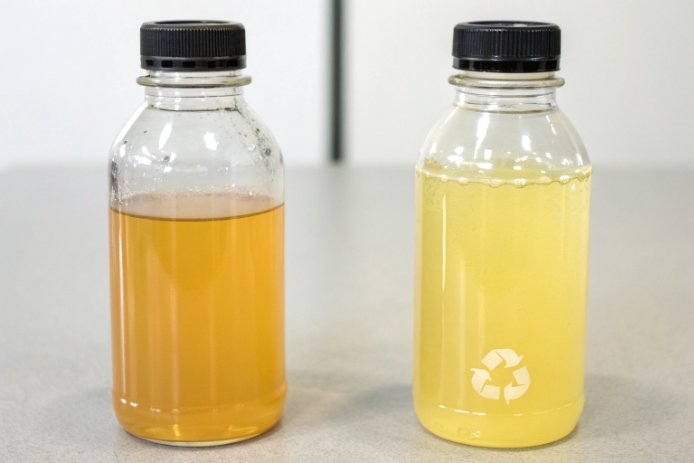
Se/Co balance: mostly a color and redox tool
Selenium and cobalt are used for color correction. In a clean melt, they are not typical sensory drivers. The practical risk is not “Se taste.” The practical risk is redox drift that changes how these agents behave and how sulfate chemistry behaves. If the furnace redox swings, the same fining recipe can create different deposit patterns, which then show up as taste/odor complaints.
CeO₂: often helps stability by supporting oxidizing conditions
Cerium oxide 4 (CeO₂) can support a more oxidizing environment in the melt system, depending on overall chemistry and furnace conditions. A stable oxidizing window can reduce reduced-sulfur byproducts and can stabilize sulfate fining behavior. This can reduce deposit and residue drift, which supports better sensory repeatability.
Sb₂O₃: treat as a control and compliance item, not a flavor driver
Antimony trioxide 5 (Sb₂O₃) is used in some fining strategies. In well-controlled glass, it is not known for strong organoleptic impact. The bigger concerns are compliance, customer requirements, and keeping chemistry stable so fining performance does not drift. If fining becomes unstable, seed/cord rates rise, and those defects can trap residues that later cause sensory noise.
SO₃ (sulfate fining): main sensory link is surface residue, not bulk leach
SO₃ is a powerful fining lever, but it can also increase the chance of sulfate-related surface residues if furnace conditions and downstream handling allow deposition. For sensory, the biggest win is consistency:
-
Stable SO₃ input
-
Stable furnace redox
-
Strong rinse/dry controls
| Additive | Direct sensory risk | Indirect sensory risk | Best management |
|---|---|---|---|
| Se/Co | Low | Medium via redox drift | Lock redox window, keep cullet stable |
| CeO₂ | Low | Often reduces drift | Track redox KPI, verify residue trend |
| Sb₂O₃ | Low | Medium via fining stability | Monitor seeds/cords, align with customer specs |
| SO₃ | Low as bulk leach | High via residues/deposits | Residue audits + rinse quality + redox stability |
The safest approach is to treat fining and decolorizing as “surface repeatability” tools. When redox and sulfate behavior stay steady, sensory results become predictable.
How do cullet quality and trace contaminants (organics, heavy metals, TiO₂/ZrO₂) influence organoleptic performance after hot-fill or pasteurization?
Cullet saves energy and cost, but it can also bring the widest set of unknowns. For organoleptic performance, cullet quality is often more important than small oxide adjustments.
Clean, low-organic cullet supports stable redox and low residues, while contaminated cullet can introduce organics, salts, and inclusions that increase stains, deposits, and off-notes; TiO₂/ZrO₂ matter most when they drift or arrive as particles that create micro-defects and trap films.
Labels, inks, food residues, and plastics on cullet 6 burn in the furnace and can push local reducing conditions. This can shift:
-
Iron redox balance
-
Sulfate fining behavior
-
Deposit patterns on glass surfaces
After hot-fill or pasteurization, any residue film becomes more active. What looked like a clean bottle at room temperature can release trace off-notes after heat.
Heavy metals: more about inclusions than flavor
In most cases, heavy metals in dissolved trace form are not a flavor source because the glass network locks them. The risk is fragments and inclusions (stainless, ceramics, refractory chips). These inclusions create micro-roughness and local surface defects that trap rinse films, detergents, and salts. That trapped film is what causes sensory noise.
TiO₂/ZrO₂: drift and particles are the problem
Small, stable levels of TiO₂/ZrO₂ usually do not create organoleptic issues. The risk appears when:
-
The level drifts due to mixed cullet streams
-
Particles enter as undissolved specks, acting like stones
-
The surface becomes more micro-rough and holds films
Why heat steps expose cullet problems
Hot-fill and pasteurization accelerate ion exchange, dissolve surface salts faster, and amplify any “boundary layer” chemistry. So cullet-driven drift often shows up only after a thermal cycle.
| Cullet/contaminant | What it changes | Sensory symptom after heat | Best specification |
|---|---|---|---|
| High organics | Redox drift, deposits | “Chemical” or “stale” notes | LOI limit + washed cullet requirement |
| Mixed salts/fines | Residues on bottle | Salty/mineral hints | Conductivity limit + fines control |
| Metals/ceramics | Micro-defects, trapped films | Random failures by lot | Optical + magnetic/eddy sorting requirements |
| TiO₂/ZrO₂ drift | Scatter + micro-inclusions | Visual haze + secondary sensory noise | Trace window + particle rejection audits |
If organoleptic performance is a selling point, the most direct improvement is to treat cullet like a controlled raw material with real specs, not just “recycled glass.”
What formulation and treatment choices (Type II de-alkalization, internal SiO₂ coatings) best meet sensory limits for food and cosmetics?
When a brand has strict sensory limits, the best strategy is layered: make the base glass durable, then control the surface, and finally prove it with the right tests.
A durability-focused soda-lime recipe (higher SiO₂, Al₂O₃ baseline) plus surface controls like Type II de-alkalization or internal SiO₂ barrier coatings can meet tight sensory targets by reducing alkali release, residues, and surface variability.
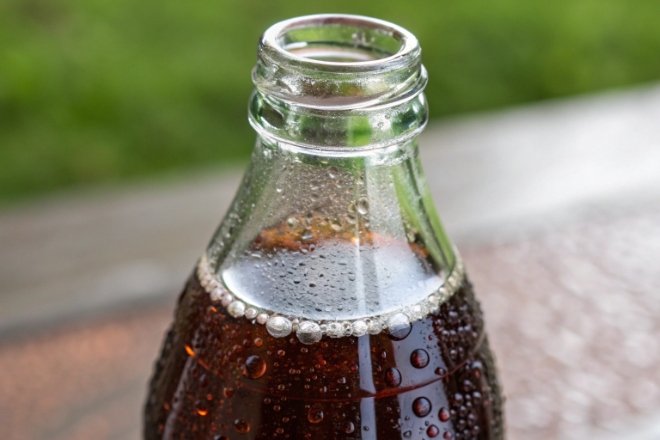
Formulation choices that reduce sensory drift
For food and cosmetics, the base formulation goal is stable surface chemistry:
-
Keep total alkali stable and not excessive
-
Maintain Al₂O₃ at a durable baseline (often ≥1–2%)
-
Support SiO₂ high enough to reduce ion exchange
-
Balance CaO/MgO to protect devitrification margin and keep the melt homogeneous
This combination reduces alkali release and reduces the chance of cords and stones that trap films.
Type II de-alkalization: a surface conversion tool
Type II treatments are used to reduce alkali release from soda-lime glass surfaces by creating a more resistant surface layer. For sensory performance, the advantage is clear: lower surface alkalinity means less pH drift and fewer “soapy” impressions in sensitive products. The key is consistency and verification, because the benefit is only real if the treated layer is uniform and survives handling.
Internal SiO₂ (SiOx) barrier coatings: for very strict needs
Internal SiO₂-type coatings add a thin barrier that reduces direct contact between product and the soda-lime surface. This can be valuable when:
-
The product is very low-buffer and sensitive
-
Hot-fill and pasteurization are used
-
Long shelf life demands stable taste
These coatings require strong process control and compatibility checks with filling and cleaning systems.
A practical QA plan for sensory compliance
Sensory needs proof, not assumptions. The most useful QA stack includes:
-
Hot-water extract pH and conductivity
-
Na/K/other ion extract (audit level testing)
-
Residue checks on finished bottles (rinsate conductivity and ion profile)
-
Sensory triangle tests 7 after hot-fill/pasteurization simulation
-
Storage aging under humidity before fill, then repeat tests
| Option | Best for | Main benefit | What must be controlled |
|---|---|---|---|
| Durable base recipe (SiO₂ + Al₂O₃ baseline) | Most foods/cosmetics | Lower leaching + stable surface | Devit margin, refining, cullet stability |
| Type II de-alkalization | Sensitive products, warm processes | Reduced surface alkalinity | Treatment uniformity and handling damage |
| Internal SiO₂ barrier coating | Very strict organoleptic limits | Barrier against ion exchange | Coating integrity, cleaning compatibility |
| Strong rinse/dry + low-residue handling | All projects | Removes the true root cause often | Water quality, time-to-fill, storage RH |
For scale production, the best path is often: durable recipe + strict cullet specs + residue control + a targeted surface treatment only when the product demands it. This keeps cost controlled while still meeting tight sensory limits.
Conclusion
Taste and odor issues usually come from surface alkalinity and residues, not “smelly glass.” Stable alkali/Al₂O₃ chemistry, clean cullet, redox control, and proven surface treatments deliver repeatable organoleptic performance.
Footnotes
-
Soda-lime glass accounts for about 90% of manufactured glass, including most bottles and jars. ↩
-
Ion chromatography separates ions and polar molecules based on their affinity to the ion exchanger. ↩
-
Fining is the process of removing gas bubbles from molten glass. ↩
-
Cerium oxide is used in glass polishing and as a decolorizing agent. ↩
-
Antimony trioxide is used as an opacifying agent and flame retardant synergy. ↩
-
Cullet is broken or waste glass used in glassmaking to facilitate melting. ↩
-
Triangle test is a discriminative method used in sensory science to determine if an overall difference exists between two products. ↩






