
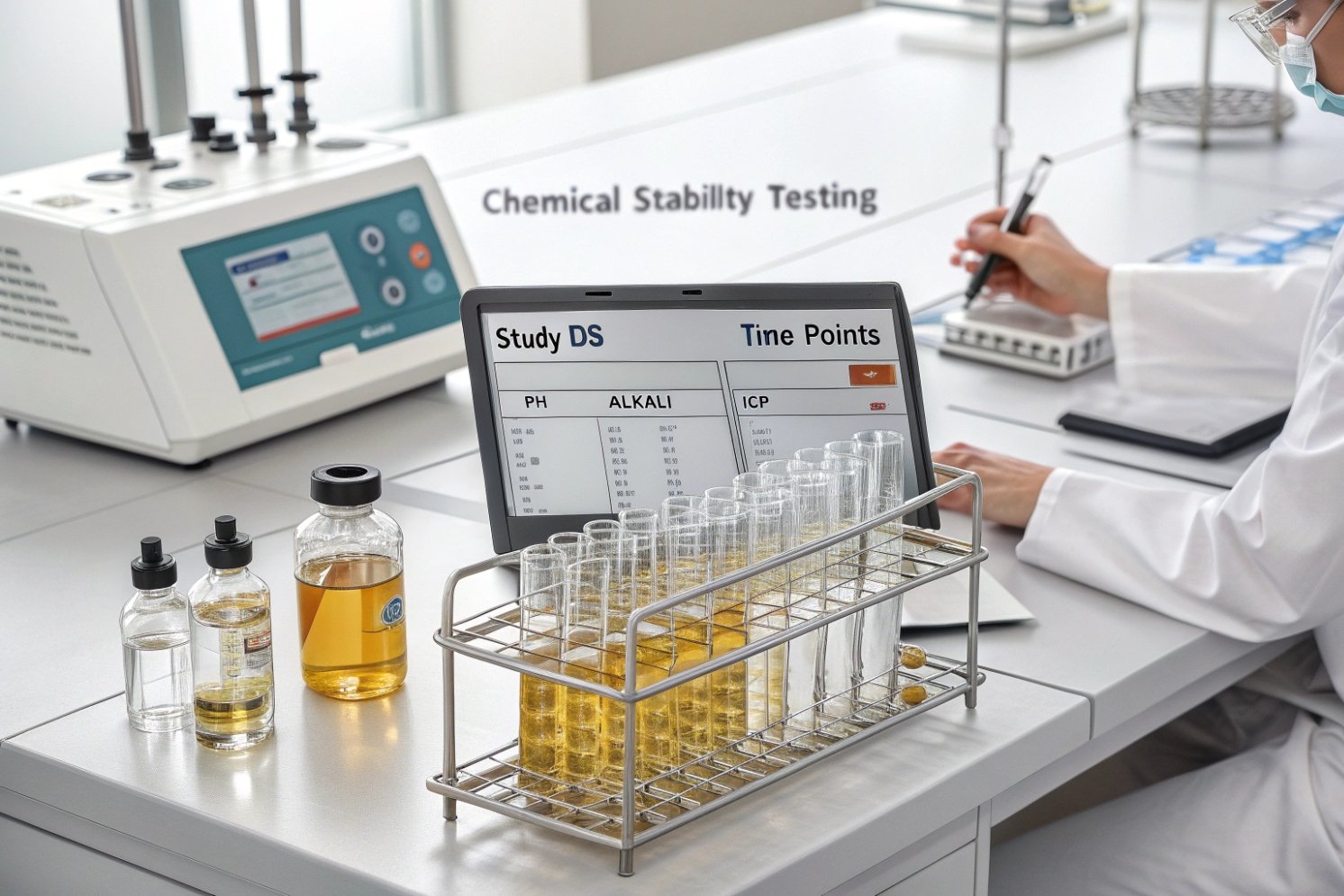
Drug products can sit in glass vials for years, so any small instability can turn into recalls and complaints. Careful chemical stability testing keeps those failures away from the market.
Chemical stability of pharmaceutical glass bottles is tested by combining standardized hydrolytic resistance assays, extractables profiling, pH and alkali release measurements, and delamination risk studies run under product-like conditions and sterilization cycles. Together these tests predict how the container will behave over shelf life.
When we design stability studies for a new vial or bottle, we do not start from zero. We build on pharmacopeial chapters like USP <660> Containers—Glass 1, USP <1660> Evaluation of the Inner Surface Durability of Glass Containers 2, Ph. Eur. general chapter 3.2.1 (glass containers for pharmaceutical use) 3 and the ISO 4802-1:2023 hydrolytic resistance test 4, then extend them with more sensitive analytical tools. :contentReference[oaicite:0]{index=0} This mix of standard tests and custom studies helps us show regulators, and our customers, that the glass and the drug will live together safely for many years.
Which methods evaluate extractables, pH shift, and alkali release?
Many teams worry that glass will “leach” into their product and slowly change its quality. That fear is valid, but we can quantify it with the right set of tests.
Extractables, pH shift, and alkali release are evaluated using hydrolytic resistance tests on containers and glass grains, solution titration or spectrometric assays for alkali, direct pH and conductivity tracking, plus element profiling by ICP-based methods that reveal trace-level glass dissolution long before visual damage appears.
Core compendial tests for alkali release
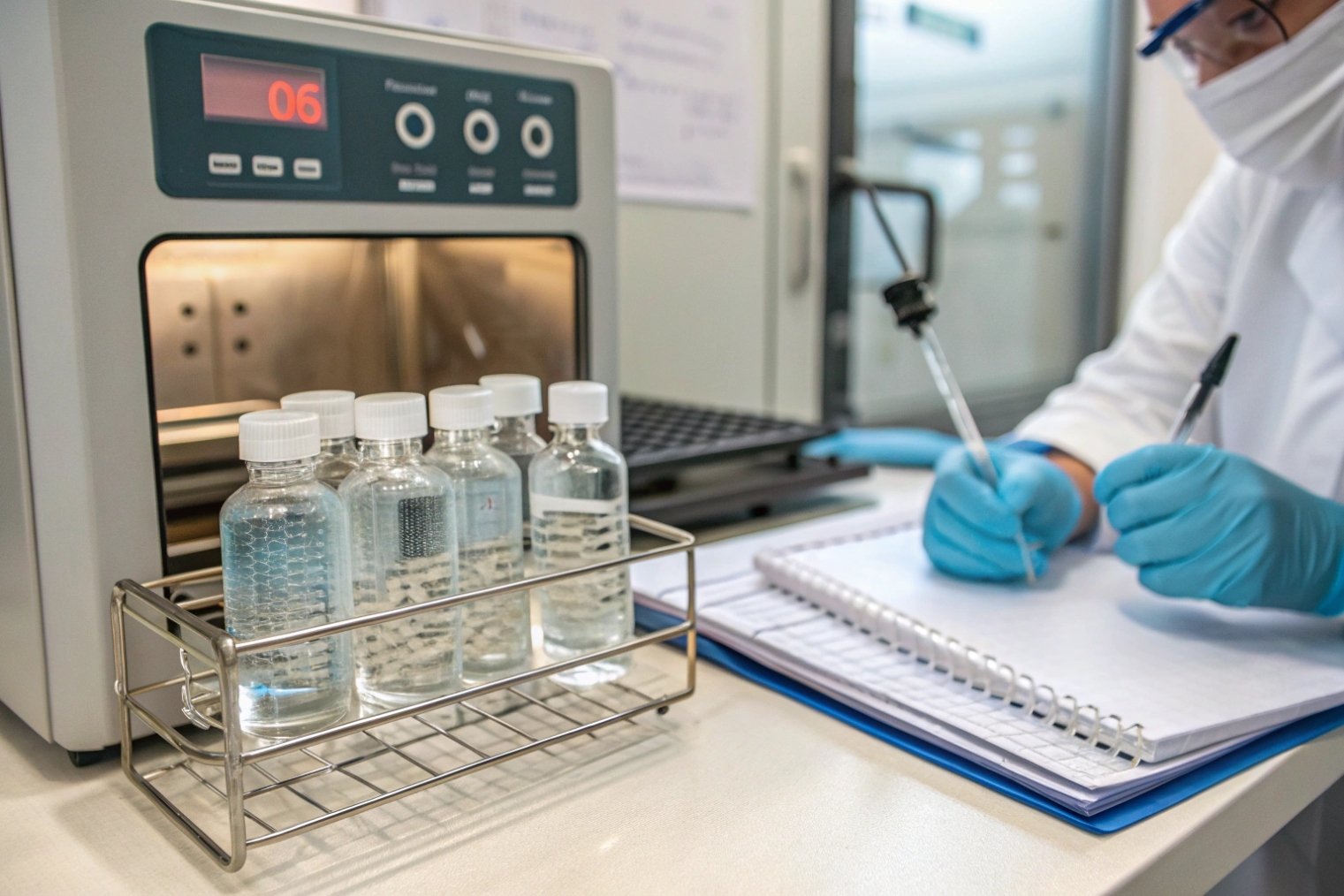
The backbone of chemical stability testing for glass is the hydrolytic resistance test. In the ISO 4802-1 / Ph. Eur. / USP approach, we fill containers with purified water, autoclave them at 121 °C for about 60 minutes, then titrate an aliquot of the extract with standardized acid. :contentReference[oaicite:1]{index=1} The more acid we need, the more alkali came out of the glass. Hydrolytic resistance is basically “inverse acid consumption”.
For raw-glass control, we use the glass grains (powdered-glass) test, which grinds glass into a defined particle size, autoclaves it with water at 121 °C, and again quantifies alkali released by titration. ISO 720:2020 glass grains test 5 and the related Ph. Eur. and USP procedures classify the glass into Type I, II, or III based on this hydrolytic behavior. :contentReference[oaicite:2]{index=2} This tells us if the base composition is durable enough before it ever becomes a vial or bottle.
On finished containers, USP <660> and Ph. Eur. 3.2.1 require a Surface Glass Test on every lot. We fill a defined number of pieces with purified water, autoclave at 121 °C, then titrate the extracts. If the titrant volume stays below the pharmacopeial limit for the claimed glass type, the lot passes. :contentReference[oaicite:3]{index=3} This connects actual production lots to hydrolytic performance, not just glass recipes on paper.
pH shift and advanced extractables profiling
Titration tells us total alkali release, but not the complete story. For a more realistic picture, we expose containers to model solutions that bracket the product’s pH range: acidic, neutral, and especially alkaline media, where ion exchange and network dissolution are fastest. We then track pH over time. Even a small drift, like +0.2–0.3 pH units in a sensitive biologic, can signal significant glass–product interaction.
To see what actually leached, we move beyond acid consumption and use ICP-MS or ICP-OES. These instruments quantify trace elements such as Na, K, B, Al, Ca, and Mg in the extract at very low levels. :contentReference[oaicite:4]{index=4} Early increases in these ions can appear while titration is still within limits, so this is a powerful early-warning system for long-term durability issues.
For treated soda-lime glass (Type II), we also run a Surface Etching Test. This removes the dealkalized layer and repeats the hydrolytic test, so we can separate the inherent durability of the bulk glass from the effect of the treatment. :contentReference[oaicite:5]{index=5} If high resistance disappears after etching, we know the performance depends strongly on that surface process and must be controlled tightly.
In real projects, we often test coated or siliconized vials “as finished”, with their coatings intact, because these layers can both protect the glass and introduce new organic extractables. The goal is to show that the full system, not just bare glass, behaves well across the drug’s pH and processing conditions.
How do accelerated and real-time studies compare in predictiveness?
Every development team wants a fast answer to a slow problem: “Will this glass stay stable for five years?” It is tempting to rely only on accelerated tests, but we have learned the hard way that reality is more complex.
Accelerated studies are excellent for ranking designs and spotting high-risk glass–product combinations, but real-time studies under the true storage and processing cycle are still needed to confirm long-term predictiveness and support final shelf-life claims.
What accelerated studies can and cannot tell us
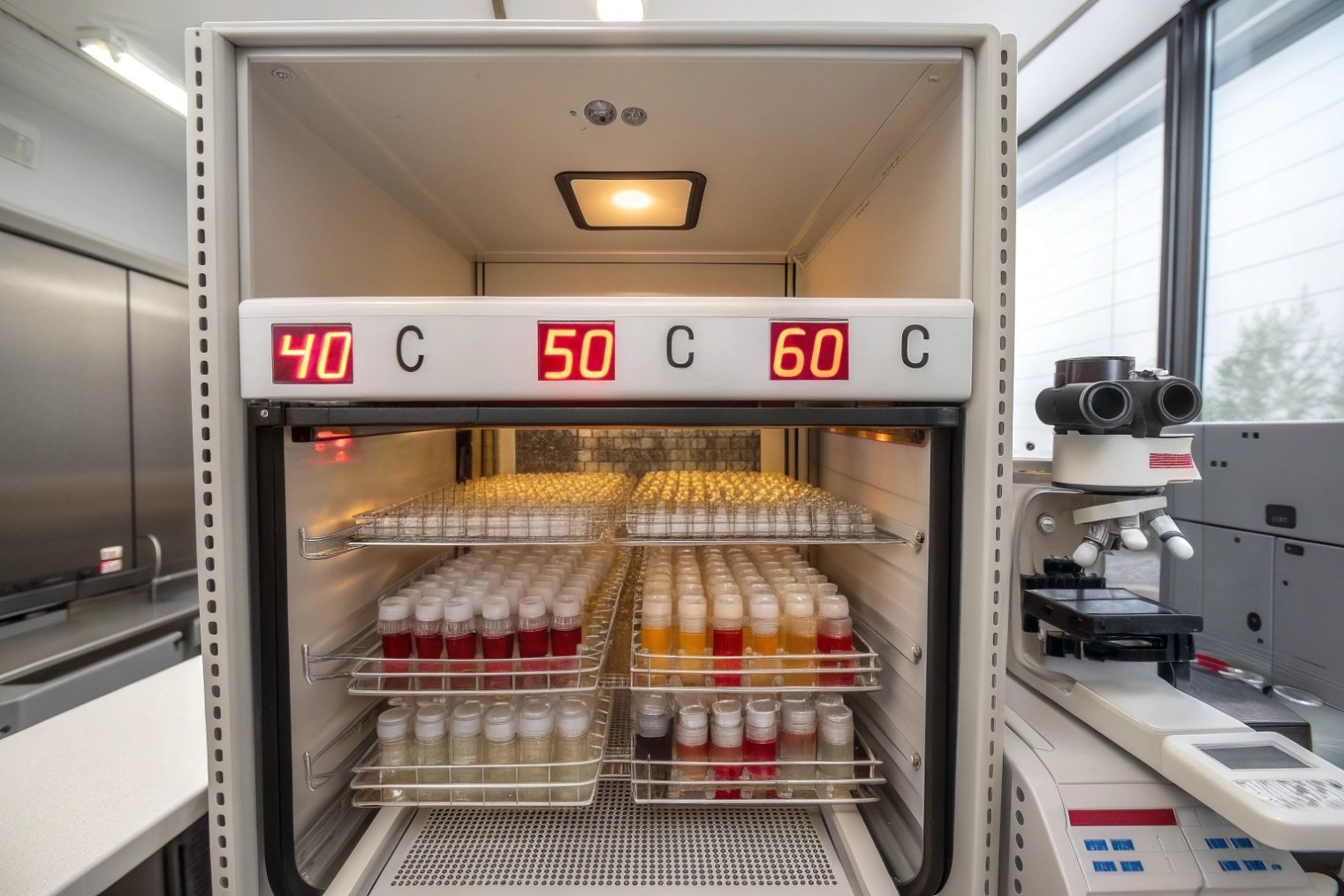
In stability programs, we often combine several stress layers: elevated temperature (for example 40 °C or 50–60 °C), extended autoclave or dry-heat exposure, worst-case pH media, and long contact times. These conditions accelerate glass hydration, ion exchange, and silica network attack. Under USP <1660>, such “stress” contacts are used to probe delamination risk: we expose vials to model solutions, run sterilization cycles, then look for flakes both visually and using microscopic and microanalytical tools. :contentReference[oaicite:6]{index=6}
These tests are very predictive for relative ranking. If one vial design shows no lamellae, low elemental release, and minimal pH drift at high temperature and aggressive pH, while another fails visibly, we know which is safer. Stress tests are also useful when we tweak something in the process, like a new depyrogenation profile or surface treatment; we can quickly see if durability is trending in the wrong direction.
But glass reactions with water are not always linear with temperature or time. Some mechanisms dominate early (fast ion exchange), then slow; others, like deeper network dissolution, may become more important only later. So a vial that looks fine after harsh short-term stress can still show slow delamination or haze after years at room temperature, especially if the real product has buffering, chelators, or surfactants that behave differently from our simple test media.
Why real-time and process-simulated studies matter
So we always combine accelerated tests with real-time studies that mimic the full container–closure system, fill volume, headspace, and sterilization cycle. For example, a realistic study for a parenteral vial might include:
- Washing and depyrogenation of vials exactly as in production
- Filling with real or close model formulation at target concentration and pH
- Stoppering and crimping with the intended closure set
- Terminal sterilization at 121 °C, if used, with the real cycle parameters
- Storage at intended long-term conditions (for example 25 °C) plus one accelerated condition (for example 40 °C)
We then monitor visual appearance, pH, subvisible and visible particles, and elemental release at multiple time points. USP <1660> gives a structured approach to design these studies, not only for new containers but also when there are changes in glass, coatings, or processes. :contentReference[oaicite:7]{index=7}
In one project story, a customer had vials that passed all classic hydrolytic tests and short, harsh stress studies. Only after 18 months of real-time storage with the actual biologic, and the full sterilization cycle, did we start to see faint opalescence and trace lamellae under the microscope. That case made us even more strict about pairing accelerated and real-time work, and about simulating the exact manufacturing process.
What container and closure interactions can bias test results?
Even a perfect glass recipe can look bad in a poorly designed test. Many failures are not pure “glass problems”; they are container-closure system problems.
Container and closure interactions can bias results through pH buffering by rubber stoppers, adsorption or leaching from coatings, residues from washing, headspace gas effects, and incorrect surface-area-to-volume ratios that overstate or mask glass contribution.
When we test “glass”, we must always ask what else is touching the solution. Common sources of bias include:
-
Elastomeric closures and seals
Stoppers can absorb or release ions, organic additives, or CO₂, which shifts pH and can either accelerate or mask glass corrosion. Some stoppers buffer alkaline solutions, making the glass look better than it really is. -
Coatings, siliconization, and surface treatments
Silicon oil, plasma coatings, or polymer barriers can protect the glass, but they can also add their own extractables. If we test only bare vials while the commercial pack uses a coated version, our results may not match reality. The reverse is also true: testing only coated vials hides the intrinsic durability of the base glass, which we still want to understand. -
Washing and depyrogenation residues
Detergent, alkali, or surfactant residues from vial washing can strongly increase pH at the start of a test, then slowly rinse away. This can make glass appear much less resistant than it really is. We prevent this by qualifying and monitoring the washing process and, for some studies, including a controlled “blank” cycle without glass. -
Headspace gas and CO₂
CO₂ absorption lowers pH in unbuffered solutions, which can actually reduce glass attack. A capped vial with little CO₂ in the headspace can behave differently from an open container used in a lab test. -
Surface-area-to-volume ratio and orientation
Small fill volumes in large vials exaggerate the surface-area-to-volume ratio, which increases apparent extractables. Orientation (upright vs inverted) also changes which surface is stressed. Pharmacopeial tests define specific filling ratios and configurations for this reason. :contentReference[oaicite:8]{index=8}
Because of all this, we usually run two types of studies:
- Glass-focused tests that minimize other materials (for example, open vials or inert caps) to understand the glass itself, plus surface etching or glass grains tests to see inherent durability. :contentReference[oaicite:9]{index=9}
- System tests that use the exact final container-closure configuration, coatings, and process steps, so we can assess the true risk seen by the drug.
By comparing these, we can say with confidence whether a problem is mainly glass, mainly closure, or an interaction of both. That helps customers fix the real root cause, not just change suppliers.
Which acceptance thresholds align with pharmacopeial guidance?
At the end of all these tests, we still need a simple answer: pass or fail. The good news is that pharmacopeias give a clear starting point.
Acceptance thresholds should at least meet pharmacopeial limits for hydrolytic resistance (Type I, II, or III) and absence of visible delamination, while internal specs can tighten pH drift, elemental release, and particle levels to match product sensitivity.
Building specifications around compendial limits
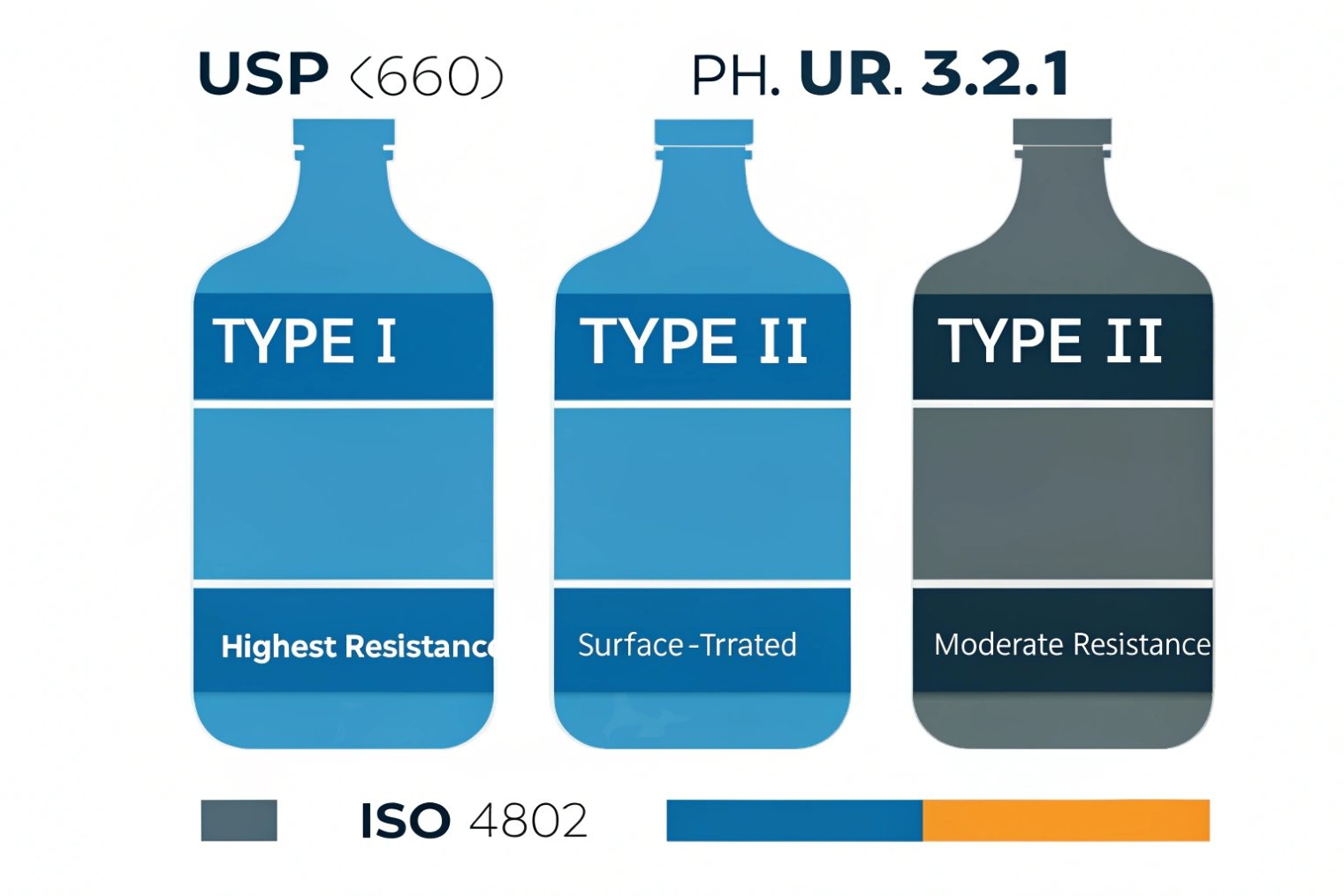
USP <660> and Ph. Eur. 3.2.1 both define how to classify glass types based on hydrolytic resistance, using the surface glass test and glass grains test. :contentReference[oaicite:10]{index=10} Each type has a maximum allowed acid consumption (or equivalent limit when flame spectrometry is used) after autoclave extraction at 121 °C. ISO 4802-1 and -2 provide aligned methods that use titration or flame spectrometry for the same purpose. :contentReference[oaicite:11]{index=11}
For parenteral products and most sensitive injectables, regulators expect Type I performance. So for those containers we normally set our release criterion as “must comply with pharmacopeial Type I limits for both glass grains and surface tests”, and we often tighten the internal limit a bit to keep process variation away from the borderline.
For extractables and pH shift, pharmacopeias do not give hard numeric limits for every situation, but USP <1660> explains how to build science-based criteria. :contentReference[oaicite:12]{index=12} In practice, we often use:
- No visible delamination or flakes under defined visual inspection conditions
- Subvisible particles within product-specific limits or general injection requirements
- pH drift less than a small band (for example ±0.2 units) from the starting pH over the claimed shelf life, unless the product specification allows a wider range
- Elemental release (Na, B, Al, etc.) that stays low and stable over time, normally well below any safety concern and consistent with early time points
We also link metal and non-metal extractables to broader impurity guidance such as the ICH Q3D(R2) elemental impurities guideline 6 (for elemental impurities) and relevant leachables guidelines for organic materials, even though glass itself is mostly inorganic. These references keep our specifications in line with global expectations.
Recent revisions of USP <660> and Ph. Eur. 3.2.1 have moved more toward performance-based definitions of glass types but kept the hydrolytic resistance test principles and acceptance criteria. :contentReference[oaicite:13]{index=13} When teams build delamination screening or investigations, it also helps to cross-check external learnings like the FDA summary of recent findings related to glass delamination 7 to ensure study conditions and failure modes are understood consistently.
Conclusion
Robust chemical stability testing combines pharmacopeial hydrolytic methods, sensitive extractables analytics, realistic process simulations, and smart specifications, so pharmaceutical glass bottles stay a neutral, invisible partner to every drug product.
Footnotes
-
Official USP chapter outlining performance-based glass classification and hydrolytic resistance tests for pharmaceutical containers. ↩ ↩
-
USP guidance on screening for glass particle formation and delamination risk under product-like conditions. ↩ ↩
-
EDQM update explaining revised Ph. Eur. 3.2.1 tests and how glass types are defined by hydrolytic resistance. ↩ ↩
-
ISO standard describing the 121 °C water-attack titration method for container inner-surface hydrolytic resistance. ↩ ↩
-
ISO method for hydrolytic resistance of glass grains used to qualify base glass composition durability. ↩ ↩
-
International guideline defining risk-based control of elemental impurities, supporting limits for leached elements measured by ICP methods. ↩ ↩
-
FDA overview of delamination mechanisms, risk factors, and study findings that inform screening and investigation of glass flakes. ↩ ↩






