
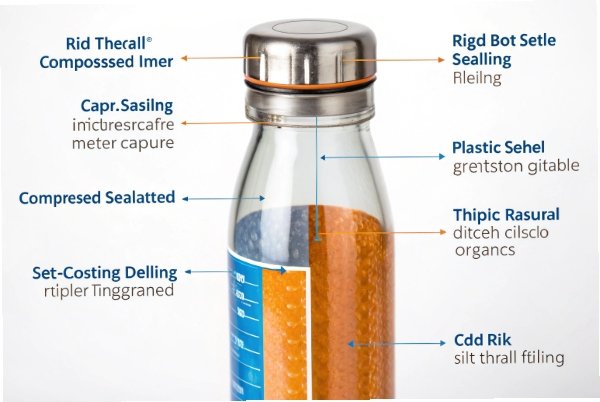
A glass bottle is an impermeable fortress, but the cap liner is the gatekeeper. If this thin disc of material fails under the thermal stress of your production line, the entire package’s integrity is compromised, leading to leaks, spoilage, and devastating recalls.
A cap liner must possess a Heat Deflection Temperature (HDT) at least 10°C higher than your peak process temperature. Ideally, it must resist "Compression Set" (permanent deformation) to maintain "Removal Torque" and vacuum integrity even after the bottle cools and the internal pressure shifts.
🛡️ The Critical Role of Thermal Stability in Sealing
At FuSenglass, I often emphasize to our clients—whether they are multinational beverage giants or boutique sauce makers—that the liner (gasket) is the single most critical component of the closure system. It is the functional interface between the rigid glass finish and the rigid cap (whether metal or plastic). Its job is to deform just enough to fill the microscopic irregularities of the glass surface, creating a hermetic seal 1.
However, heat changes the rules of engagement. Most liner materials 2 are polymers. By definition, polymers are viscoelastic; they behave like a solid at low temperatures and like a viscous liquid at high temperatures. When you subject a liner to the heat of a filling line, you are pushing it closer to its glass transition 3 or melting point. If the material softens too much, it loses its "elastic memory"—the ability to push back against the sealing surface. This is fatal.
For example, a standard Low-Density Polyethylene 4 (LDPE) foam liner is excellent for cold water. But if you expose it to hot tea at 90°C, the gas bubbles inside the foam expand and then collapse (burst), and the polymer matrix softens. The liner effectively flattens out. When the bottle cools, the liner does not rebound. The result? A loose cap that consumers can spin with zero effort, and a product that has lost its vacuum. In my 20 years in the industry, I have seen entire production runs scrapped because a buyer tried to save a fraction of a cent by using a "cold-fill" liner specification on a "hot-fill" line.
Thermal Segments in Packaging
We must categorize liner performance not just by "maximum temperature," but by the nature of the heat—wet vs. dry, pressure vs. vacuum.
| Process Type | Temperature Range | Duration | Thermal Challenge | Typical Liner Class |
|---|---|---|---|---|
| Cold / Ambient Fill | 20°C – 25°C | N/A | Chemical compatibility only. | EPE Foam / LDPE |
| Tunnel Pasteurization | 60°C – 65°C | 45 – 60 mins | Saturated Humidity. Moisture absorption leads to delamination. | PVC Plastisol / High-Density PE |
| Hot-Fill (Standard) | 85°C – 92°C | 2 – 5 mins | Thermal Shock. Rapid heating causes expansion; cooling causes vacuum. | Plastisol / Solid PP / TPE |
| Steam Sterilization (Retort) | 121°C – 135°C | 20 – 60 mins | Pressure + Heat. Polymer degradation and volatile release. | Silicone / PTFE-faced Silicone |
🌡️ What temperature and time requirements should be specified for cap liners?
Specifying a generic "heat resistant" liner is a recipe for failure. You must define the precise thermal load profile to ensure the material retains its sealing properties throughout the entire shelf life.
You should specify a "Continuous Service Temperature" that exceeds your peak process temp: 100°C for Hot-Fill, 75°C for Pasteurization (with humidity resistance), and 130°C for Steam Sterilization. Crucially, specify the "Compression Set" at these temperatures to be less than 20%.
Defining the Thermal Load
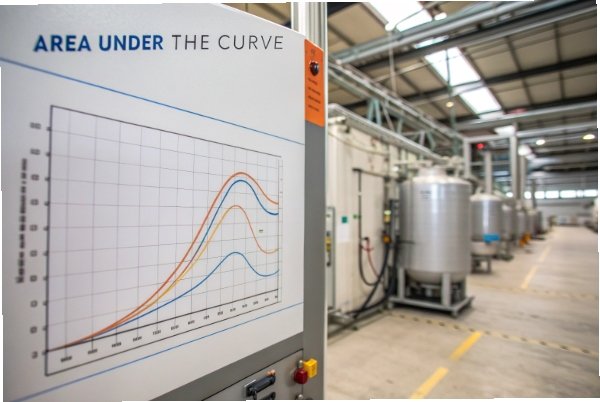
When writing specifications for your closure supplier, you need to be explicit about the "Area Under the Curve"—the total heat energy the liner will absorb.
-
Hot-Fill Specifications:
- The Scenario: Liquid enters at 92°C. Cap is applied immediately. Bottle is inverted for 30 seconds.
- The Spec: "Liner must withstand 95°C liquid contact for 5 minutes without physical deformation or tackiness. Material softening point 5 > 110°C."
- Why: If the liner becomes tacky, it will bond to the glass rim, tearing upon opening.
-
Pasteurization Specifications:
- The Scenario: Sealed bottle travels through a tunnel. Zone 3 (62°C – Hold for 20 mins). Total time ~60 mins.
- The Spec: "Liner must withstand 65°C at 100% Relative Humidity for 60 minutes. Water absorption < 1%."
- Why: Moisture can cause "duplex" liners to delaminate in tunnel pasteurization 6 environments.
-
Retort / Steam Sterilization Specifications:
- The Scenario: Autoclave at 121°C at 15 psi pressure for 30 minutes.
- The Spec: "Liner must withstand 125°C pressurized steam sterilization 7 for 60 minutes. No volatile migration."
- Why: At 121°C, many plastics break down and release off-odors.
🧪 Which liner materials are best for high-heat sealing and why?
Material selection is a hierarchy of cost versus performance. Moving up the temperature scale requires moving to more advanced, cross-linked, and expensive polymers.
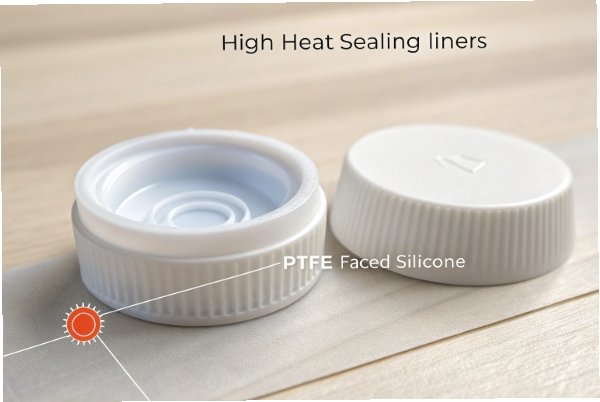
For extreme heat (121°C+), Silicone and PTFE-faced Silicone are the only reliable options. For standard Hot-Fill (90°C), PVC Plastisol (for metal caps) and solid TPE/PP (for plastic caps) are standard. EPE foam and LDPE must be strictly avoided for any heat application due to structural collapse.
Material Comparison Table
| Material | Max Service Temp | Seal Type | Best Use Case |
|---|---|---|---|
| EPE Foam | 60°C | Compression | Cold Water, Carbonated Drinks |
| Plastisol | 105°C (Retort 121°C) | Flow-in / Lug | Jams, Sauces, Pickles |
| TPE / PP | 125°C | Bore / Liner | Hot-Fill Juice, Tea |
| Silicone Rubber | 200°C+ | Compression | Pharma, Lab, Retort Food |
| PTFE/Silicone | 260°C | Septa / Barrier | Aggressive Chemicals |
Advanced Elastomers
Silicone Rubber 8 is unique because it is an inorganic-organic hybrid. Its backbone is Silicon-Oxygen, providing the best "Compression Set" resistance of any elastomer. For screw caps on hot-filled beverages, high-performance thermoplastic elastomer 9 (TPE) grades can handle 125°C, ensuring a secure seal during rapid pressure shifts.
📉 How do torque and pressure changes during heating affect leak risk?
The physics of a cooling bottle are violent. The liner is trapped in a tug-of-war between the shrinking cap, the rigid glass, and the powerful internal vacuum forces.
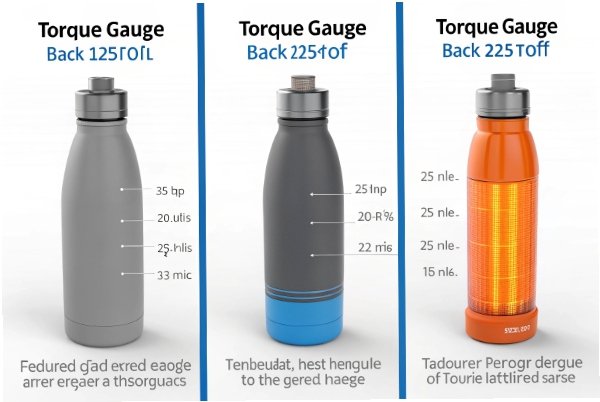
Heat induces "Stress Relaxation" in the liner, causing "Torque Back-Off" where the cap loosens itself. Simultaneously, the cooling phase creates an internal vacuum that pulls the cap center down ("Doming"), which can lift the liner off the sealing surface if the material lacks rebound elasticity.
🔬 What QC tests should be required to qualify cap liners?
Trusting the datasheet is dangerous. You must simulate the violence of your thermal process in the lab to verify the liner’s survival.
You must perform "Removal Torque Retention" testing (Pre vs. Post Heat), "Secure Seal Vacuum Testing" (ASTM D3078) on thermally cycled bottles, and rigorous "Sensory Migration" testing to ensure the heated polymer doesn’t taint the flavor.
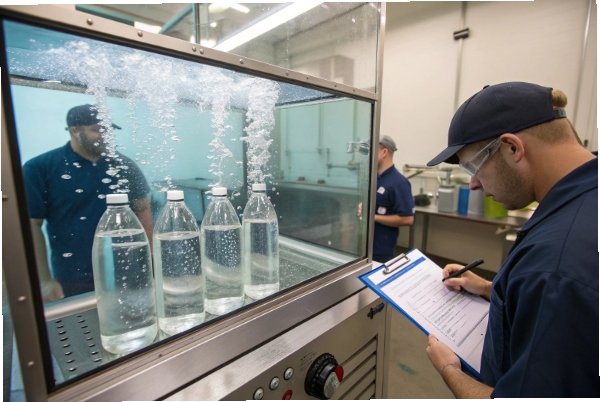
Essential Quality Control Checklist
| Verification Test | Purpose | Target Standard |
|---|---|---|
| Removal Torque | Mechanical Integrity | > 8 in-lbs (Post-Cool) |
| Secure Seal | Hermeticity | ASTM D3078 10 (No Bubbles) |
| Sensory Panel | Chemical Safety | Zero Off-Flavor / Migration |
| Pull-Up | Application Depth | Specific Measurement Limits |
Footnotes
-
A robust airtight closure preventing gas or liquid exchange between the container and the external environment. ↩
-
A comprehensive guide to the physical properties and regulatory compliance of polymers used in food packaging. ↩
-
The critical temperature range where a polymer transitions from a hard state to a soft, rubbery state. ↩
-
A versatile plastic known for moisture resistance but limited stability in high-temperature liquid applications. ↩
-
The specific temperature at which a material begins to lose rigidity and starts to flow under load. ↩
-
An industrial process used to stabilize beverages by heating them to kill microorganisms after final bottling. ↩
-
A high-pressure sterilization method using saturated steam to eliminate all microbial life from glass containers. ↩
-
An advanced polymer noted for extreme thermal stability and superior compression set resistance in gaskets. ↩
-
A class of copolymers that combine the processing advantages of plastics with the elasticity of rubber. ↩
-
The international standard test method for determining leaks in flexible packaging by the bubble emission method. ↩






