
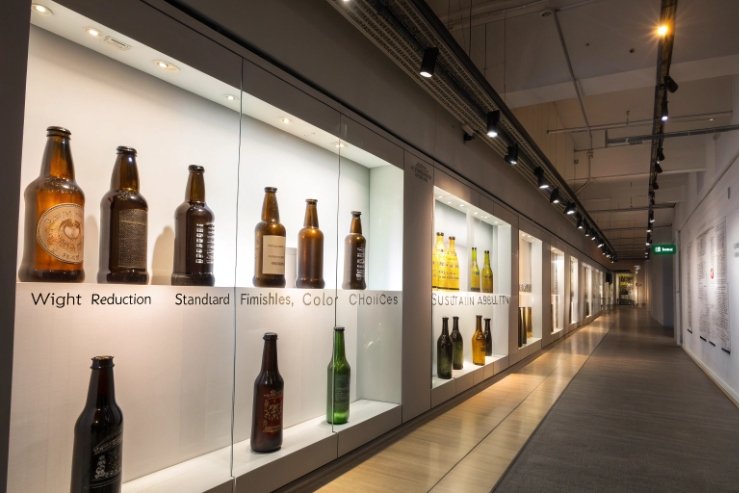
When you line up historic beer bottles next to modern longnecks, it looks like evolution in fast-forward: heavy, crude glass slowly turning into lean, standardized, brandable shapes.
Beer bottles evolved from thick, hand-blown containers into today’s standardized, lightweight, brand-driven formats through three big drivers: returnable pools and crown caps, light-strike science, and the recent push for lighter, more sustainable glass.
If we zoom out, almost every design choice we see today—amber color, long necks, twist-off finishes, heavier returnables—comes from someone solving a specific problem: safety, shelf life, logistics cost, or now, carbon footprint.
Did returnable pools and crown caps drive standardization?
Early breweries filled whatever glass was available, and breakage, leaks, and inconsistent sizes were normal. That only really changed when two forces arrived together: smarter reuse and a clever little metal closure.
Yes. Deposit-return pools and the crown cap pulled the market toward common finishes, heights, and diameters, because shared bottles and automated lines only work when everyone follows the same basic geometry.
From hand-blown chaos to mold control
The first beer bottles were hand-blown, thick, and dark. Glassmakers aimed for “strong enough not to explode” more than precise volume or consistent necks. As mold-made glass spread in the 19th century, breweries finally got:
- More uniform wall thickness
- Repeatable volumes and heights
- Necks that could accept consistent closures
This opened the door to real standardization, but something else had to happen first: a better closure.
How the crown cap changed everything
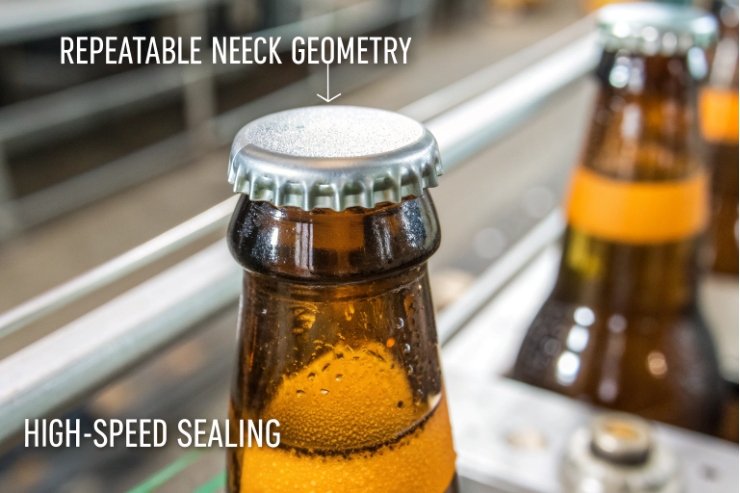
The crown cap closure 1 was a quiet revolution. It gave brewers:
- A cheap, single-use metal cap with a corrugated edge
- A liner that could grip glass and hold carbonation
- A closure that could be crimped at high speed
To use crowns efficiently, glassmakers needed to give everyone similar crown finishes. That pushed neck diameters, bead shapes, and tolerances toward common ranges. Once those were in place, automated bottling, capping, and pasteurization had something to work with.
In many European markets, refillable bottles with deposits became the norm, often organized through deposit-return scheme playbooks 2. Brewers realized they could:
- Share a common bottle design across brands
- Collect empties through retailers and wholesalers
- Wash and refill the same sturdy bottles many times
This only works when bottles are standardized. So pool systems settled on fixed:
- Heights and diameters (to fit crates and washers)
- Neck finishes (to match crowns and caps)
- Weights and wall profiles (to survive many cycles)
At the same time, one-way markets like North America also leaned into a standard longneck, because bottling and cartoning lines worked best when everyone used roughly the same geometry.
A simple timeline view:
| Era | Key change | Effect on standardization |
|---|---|---|
| Hand-blown | Thick, inconsistent glass | Little standardization, local shapes |
| Mold-made | Repeatable shapes | Early export and common “styles” |
| Crown cap adoption | Standard crown finishes | Neck/finish geometry becomes more uniform |
| Returnable pools | Shared refillable designs | Fixed heights/diameters across many breweries |
| High-speed lines | ISB/longneck, pool PCs | Modern global and regional standards we see today |
So yes, today’s “normal” beer bottle is basically the child of two parents: the crown cap and the returnable pool.
How did light-strike studies push amber dominance?
For a long time, breweries knew that some bottles “kept beer better”, but no one had language for skunking or UV curves. Once science caught up, color stopped being just a tradition and became a technical specification.
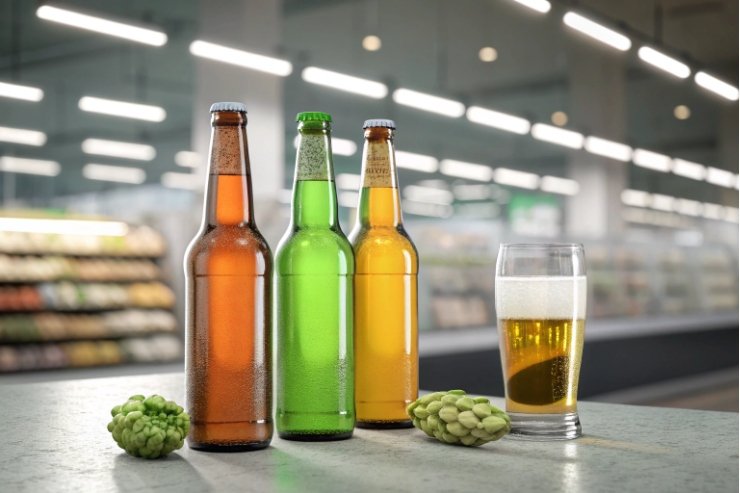
Light-strike research showed that amber glass blocks the wavelengths that create skunky off-flavors, so amber became the default for quality-focused beer, while green and flint survived mostly for brand and style storytelling.
What light does to beer
Certain hop compounds react with UV and some visible light to form “skunky” molecules—often discussed as lightstruck off-flavors in beer 3. Clear and lightly tinted glass let most of that light through. In outdoor displays or bright fridges, this damage can happen surprisingly fast.
As brewing science matured, tests showed:
- Amber glass blocks most of the harmful UV band
- Green glass blocks less, but not enough for full protection
- Clear glass blocks almost none, unless combined with special hops or sleeves
Breweries that wanted stable hop aroma began to treat amber as a functional requirement, not a style choice—reinforced by technical comparisons like an American Glass Research color-protection report 4.
How amber became the default, and why green still exists
Once data made the case, many producers shifted core beers into amber. This:
- Reduced lightstruck returns and complaints
- Let them worry less about exact display conditions
- Turned amber into a silent quality signal for many consumers
Green did not disappear, because some brands had built entire identities on it. Strong associations with European imports, heritage lagers, and specific famous labels kept green alive. In some cases, these brands:
- Modified hopping to be less light-sensitive
- Relied on cartons and controlled lighting in the chain
- Simply accepted some flavor risk for the sake of brand image
Clear glass grew in flavored, mass-market, and “see-through” segments, where liquid color and lifestyle cues matter more and hop loads are lower or treated with more stable bittering compounds.
Color choice as a three-way trade
You can think of it like this:
| Color | UV defense | Technical stability | Brand / emotional role |
|---|---|---|---|
| Amber | Strong | Best for hop stability | “Serious beer”, craft, quality |
| Green | Medium | Needs help from process | Heritage, iconic European brands |
| Flint | Weak | Depends on recipe/shelf | Lifestyle, flavor visibility, freshness |
Modern designs still start from these trade-offs. When a brewer chooses flint or green today, they do it with open eyes, not by accident.
Where did lightweighting and twist-off gains occur?
Once bottles were safe and stable, attention turned to cost and convenience. Glass is heavy, and heavy glass is expensive to move. At the same time, consumers wanted easier opening. That is where lightweighting and twist-offs came in.
Lightweighting and twist-off finishes took off wherever one-way bottles and mainstream convenience mattered most, especially in North America, while returnable markets moved more slowly to protect durability and pool compatibility.
Twist-off: convenience on the finish
Twist-off crowns use a threaded finish instead of a simple crown bead. The cap is formed and sealed in a way that allows:
- Factory application with similar equipment
- Easy opening by hand, without an opener
If you want a clear mechanical explanation, see how manufacturers define twist-off crown caps and pry-off crowns 5.
They showed up first on:
- Mass-market lagers in supermarkets
- Stadium and event beers
- Single-serve convenience formats
Twist-off worked best with one-way bottles, where you do not need to preserve pristine threads through multiple wash cycles. In some returnable systems, twist-offs were avoided because thread wear and damage from washing could compromise performance.
Lightweighting: less glass, same pressure
As furnaces, glass formulations, and forming tools improved, engineers began to trim weight. The aim was simple:
- Use less glass per bottle
- Keep the same internal pressure rating and impact resistance
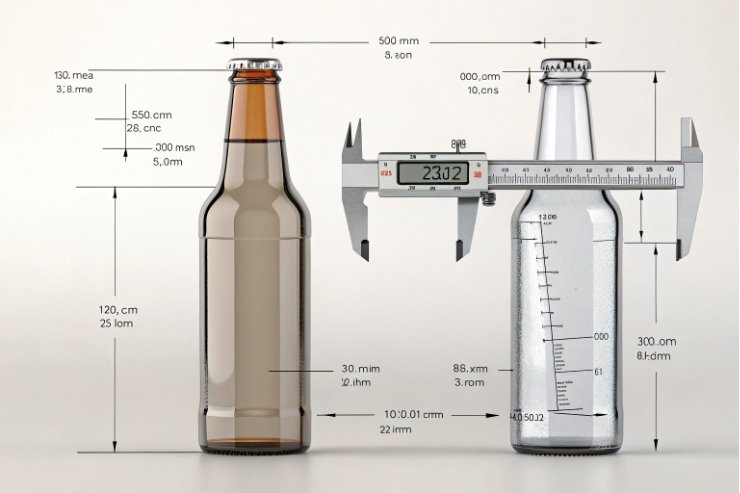
- Maintain the same external dimensions for line compatibility
This happened in stages:
- Wall thickness reduced where stress levels were lower
- Base and heel geometry refined with better modeling
- Shoulder and neck transitions smoothed to reduce stress points
In many markets, common longneck weights fell by 20–30% over several decades, and some brewers have publicized headline cuts such as the 150 g longneck lightweighting milestone 6. Breweries saved on:
- Raw glass cost
- Transport fuel (lighter pallets and trucks)
- Lifting strain in warehouses and distribution centers
Returnable bottles saw more cautious reductions. The bottle must still:
- Survive many washing cycles at high temperature
- Handle crate impacts and drops
- Provide enough “meat” to survive printing and re-embossing in some cases
Where gains landed
A simple overview:
| Segment | Twist-off adoption | Lightweighting intensity |
|---|---|---|
| NA one-way mainstream | High | High |
| NA craft longneck | Mixed (often pry) | Medium (balance with premium feel) |
| Western EU returnable pools | Lower (more pry) | Moderate, constrained by pool rules |
| One-way export / specialty | Medium | Medium–High, case by case |
| Swing-top and large formats | Low | Low–Medium, focus on strength |
So, twist-offs and lightweighting are not “everywhere”. They live more strongly where every gram and every second of opening time is money.
Which sustainability trends shape current formats?
Now the conversation has moved beyond cost into climate and waste. Cans compete hard with bottles. Policymakers push deposit systems and recycling targets. Breweries want to talk about carbon, not just cold.
Today’s beer bottle designs are shaped by sustainability in four main ways: more cullet, smarter lightweighting, renewed interest in refillables, and decoration choices that keep bottles recyclable and pool-friendly.
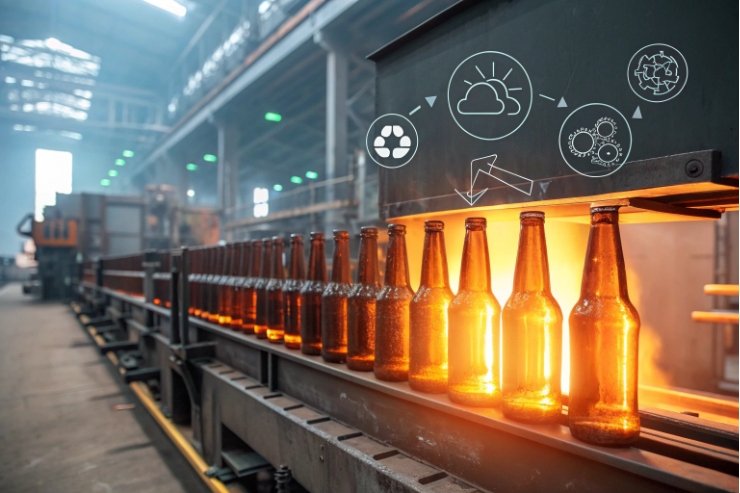
More recycled glass, same performance
Most modern beer bottles already contain some recycled cullet. Targets are rising. Higher recycled glass cullet content 7:
- Reduce energy use in the furnace
- Cut CO₂ per bottle
- Support circular-economy messaging
Design now considers:
- Color streams (amber cullet is easier to reuse in amber)
- Stable glass chemistry that tolerates more recycled input
- Internal quality controls to keep strength consistent at higher cullet levels
This is largely invisible to drinkers, but it has a big effect on lifecycle metrics.
Smarter, not just thinner, lightweighting
In the sustainability era, lightweighting returns as “doing more with less”. But it must not:
- Increase breakage and waste
- Feel cheap in the hand
So we see:
- Fine-tuned shapes that keep material where stress is highest
- Slightly taller profiles with refined curves to maintain stiffness
- Distinct weight steps for value vs premium lines within the same family
Breweries can now talk about “lighter bottle, same strength” as a positive story, not a compromise.
Returnables and local refill systems
Refillable glass never fully left some markets. Now it is re-entering the conversation even in places that moved heavily to one-way packaging.
Trends include:
- Local breweries testing branded refillable bottles and growlers
- Retailers piloting refill schemes using pool bottles
- Some governments encouraging refillables through deposit policies
This pulls certain designs back toward:
- Heavier, more robust walls and bases
- Standardized pool shapes that multiple brands share
- Embossed codes and markings that help sorting and tracking
It is a different kind of “premium”: less about heavy one-way glass, more about repeated use.
Decoration and “design for recyclability”
Sustainability also touches the surface:
- Avoiding full-body shrink sleeves that block sorting cameras, or replacing them with perforated, easy-remove versions
- Choosing inks and coatings compatible with local glass-recycling systems
- Reducing heavy metallization on everyday SKUs and keeping it for limited runs
Labels and print now balance shelf impact with end-of-life impact. For many brands, a clean amber bottle with a strong paper label is easier to defend than a fully metallized novelty bottle in a world of carbon accounting.
A quick snapshot of current sustainability levers:
| Lever | What changes in bottle design |
|---|---|
| Cullet content | Glass spec and color strategy |
| Lightweighting | Wall/base profiles, premium vs value splits |
| Refillability | Heavier pool designs, standardized geometry |
| Recyclability | Simpler decorations, easier label removal |
So today’s beer bottle is the product of hundreds of years of learning, but also very recent pressure to show that glass can be part of a low-carbon beer story, not just a nice shape on a shelf.
Conclusion
Beer bottles evolved from heavy, hand-blown curiosities into today’s slim, branded longnecks by following pressure, light, logistics, and now carbon, turning each new constraint into a more refined piece of glass.
Footnotes
-
Engineering-history overview of the crown cap system and why it enabled reliable, high-speed sealing. ↩ ↩
-
Policy brief explaining deposit-return schemes and why standardized bottles make collection, washing, and reuse workable. ↩ ↩
-
Plain-language explanation of lightstruck beer chemistry (MBT) and why light exposure quickly creates skunky aromas. ↩ ↩
-
Technical comparison of how amber, green, and flint glass affect beer flavor stability under light exposure. ↩ ↩
-
Manufacturer explanation of pry-off vs twist-off crowns and how threaded finishes enable opener-free removal. ↩ ↩
-
Example of modern longneck lightweighting targets and claimed CO₂ savings from cutting bottle grams at scale. ↩ ↩
-
Quick facts on cullet benefits, including energy savings from higher recycled-glass use in container furnaces. ↩ ↩






