
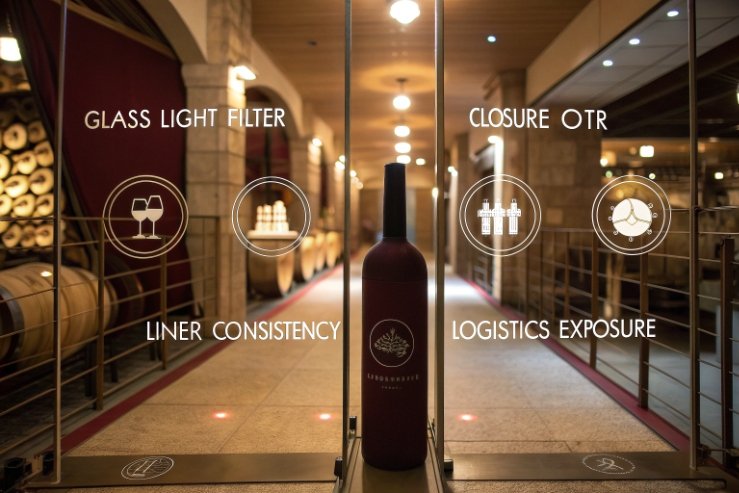
A great wine can still taste tired if packaging lets in oxygen or light. The bottle might look premium, but the shelf life can quietly shrink.
Packaging affects wine quality by controlling oxygen ingress, blocking damaging light, and protecting free SO₂. Glass color, closure OTR, and liner design decide how fast a wine evolves and how long it stays fresh.
Wine packaging is a set of barriers and behaviors. The bottle blocks oxygen and light. The closure sets the oxygen transmission rate (OTR) 1. The liner decides how consistent that OTR stays. Then logistics and retail lighting decide how hard the package gets tested.
Do light transmission and OTR differ by color and closure?
Clear glass can make a wine photogenic, but it can also make the wine vulnerable. A low-OTR closure can protect freshness, but it can also push some wines toward reduction.
Light risk is driven by glass color and shelf exposure, while OTR is driven mainly by closure and liner. The best package matches wine style, retail lighting, and the time it must survive.
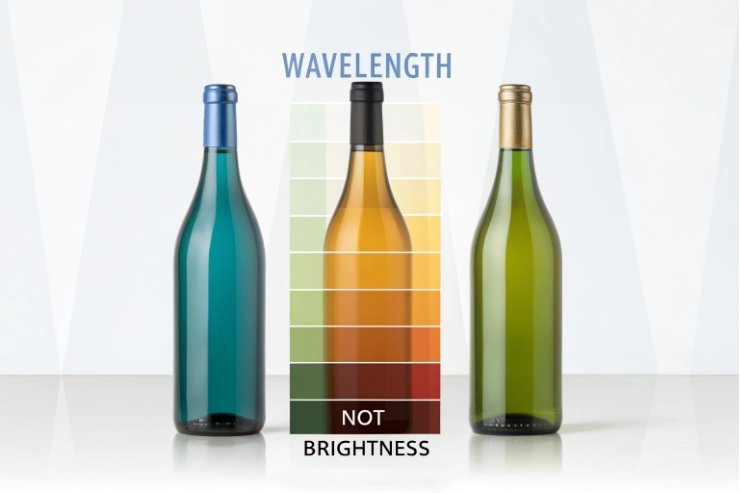
Light-struck risk starts with wavelength, not “brightness”
Light damage is not only about “strong light.” The problem is the wrong wavelengths hitting a sensitive wine. Delicate whites and rosés can develop light-struck notes 2 when exposed to the blue/near-UV range. That risk climbs fast when the bottle is clear and the wine sits under bright store lights.
Glass color is a filter, and filters are not equal
Glass does not block all harmful light in the same way. Clear flint shows the wine well, but it offers weak protection in the upper UV and blue range. Green helps, but it still lets a lot through. Amber blocks much more and is the safest choice when light exposure is unavoidable.
If you want to quantify bottle shade consistency across lots (instead of arguing visually), track CIE L*a*b* values 3 against an approved master.
OTR is mostly a closure decision
For still wine, the glass body is close to an oxygen “wall.” The oxygen pathway is the closure system: the stopper or cap, plus its liner. Natural cork can vary bottle to bottle. Technical cork tends to reduce that variability. Screw caps tend to be consistent, and their liner choice matters a lot.
Research that uses in situ measurement of light transmission into wine bottles 4 is also a good reminder: “green vs amber vs flint” is a real performance difference, not just a brand aesthetic.
| Packaging choice | What changes most | What the wine “feels” | Typical risk if mismatched |
|---|---|---|---|
| Clear (flint) glass | Light transmission | Faster light-struck risk | Skunky/onion notes in whites/rosés |
| Green glass | Light transmission | Moderate protection | Light damage on bright shelves |
| Amber glass | Light transmission | Strong protection | Low risk, but brand look changes |
| Natural cork | OTR variability | Bottle-to-bottle spread | Random oxidation or uneven aging |
| Technical cork | OTR control | More uniform evolution | If too low OTR, reductive edge |
| Screw cap (low OTR liner) | Very low OTR | Very slow oxygen-driven aging | Reduction if oxygen is too low |
| Screw cap (higher OTR liner) | Low to moderate OTR | Slightly faster evolution | Oxidation if wine is fragile |
A good decision comes from the route-to-market. A white wine in clear glass on a top shelf needs more light defense than a red wine in a case, stored cool, and sold quickly. The same bottle can be “fine” in one channel and a problem in another.
How do liners and SO₂ management shape shelf life?
Some wines fade early even when the closure is “high barrier.” The reason is simple: the wine entered the bottle with too much oxygen, and free SO₂ had to pay the bill fast.
Liners shape shelf life by setting closure OTR and consistency, while SO₂ management handles the oxygen that enters at bottling and through the closure. The best results come from pairing liner OTR with low dissolved oxygen and a realistic free SO₂ target.
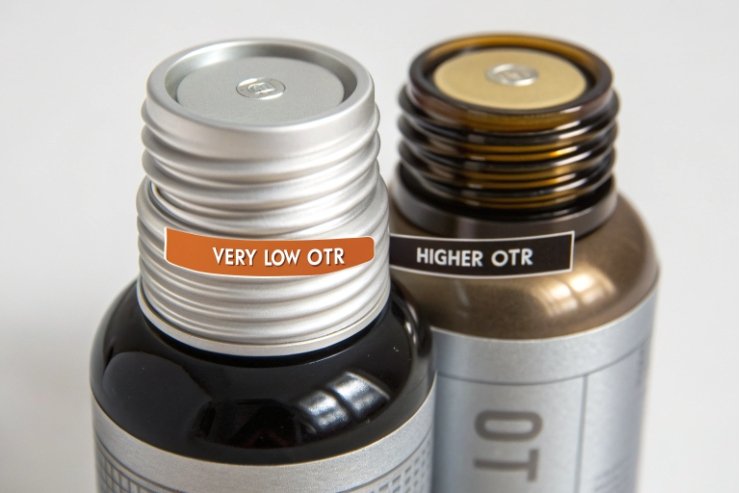
Liners decide the “real” behavior of many screw caps
Two screw caps can look identical and age wine very differently because the liner is different. A low-OTR liner can keep aromatics fresh longer, but it can also trap a wine in a low-oxygen state. A higher-OTR liner can reduce reductive risk, but it can shorten shelf life if the wine is already oxygen sensitive.
If you want a simple “what liner does what” reference for screw caps, start with Saran Tin liners vs Saranex liners 5.
SO₂ is not only a lab number, it is a protection budget
Free SO₂ protects wine by reacting with oxygen-driven compounds and slowing sensory oxidation. If oxygen at bottling is high, the wine can lose a big portion of free SO₂ 6 early. That early drop is the hidden reason behind “it tasted great pre-bottling, then it went dull.”
This is why a closure choice cannot fix a messy bottling line. A tight closure can even make the early oxygen hit more obvious, because the bottle becomes almost sealed after that first day.
Build a simple “closure + oxygen” playbook
In practice, a winemaking team needs a simple target system:
- Measure and control dissolved oxygen (DO) and oxygen pick-up during packaging 7
- Choose a liner that fits the wine’s reduction/oxidation risk
- Set free SO₂ targets that match pH and desired shelf life
- Track free SO₂ decline on retain samples in real storage conditions
| Wine goal | Closure/liner direction | Bottling oxygen goal | SO₂ management focus | Common failure mode |
|---|---|---|---|---|
| Fresh, aromatic, early-drinking | Low to very low OTR | Very low DO + low headspace O₂ | Protect aromatics, avoid early SO₂ crash | Reduction if OTR is too low |
| Textured whites with some development | Low to moderate OTR | Low DO + controlled headspace | Balance oxygen for evolution | Premature oxidation if oxygen is high |
| Reds built for long aging | Consistent low OTR with stability | Low DO, stable closures | Even aging across cases | Bottle variation with natural cork |
| High-light retail exposure | Prioritize light defense first | Standard low oxygen | Protect from light-struck | Light fault even when OTR is perfect |
A packaging spec should include liner type and a closure performance expectation, not just “screw cap.” The shelf life depends on consistency, not only the average OTR.
Can heavier glass improve consumer perception?
Heavy glass often feels premium in hand. Many brands use it as a signal, like a thicker business card. Still, the wine does not automatically age better because the bottle is heavier.
Heavier glass can lift perceived value, but it rarely improves oxygen or light protection by itself. Premium cues come from design, decoration, and consistency, while quality protection comes from color, closure OTR, and good bottling oxygen control.
Weight is a cue, not a chemical advantage
A heavier bottle can feel more “serious.” It can also support deep punts, thick bases, and sharp embossing. Those features can raise shelf impact. Still, glass weight does not change the basic fact that the bottle wall is already a strong oxygen barrier. The closure and the fill matter more.
Heavy bottles can add cost and risk
Weight increases shipping cost, handling strain, and carbon impact. It can also increase damage if secondary packaging is weak, because heavier bottles can hit harder inside a carton during vibration.
In my projects, the best premium SKUs do not rely on weight alone. They rely on:
- consistent color and clarity
- crisp seams and clean embossing
- a closure that performs the same across lots
- a label or decoration system that does not scuff
| Decision | What gets better | What gets worse | When it makes sense |
|---|---|---|---|
| Heavier base | Hand-feel, shelf presence | Freight cost, CO₂, handling | Ultra-premium gifting, high margin |
| Standard weight with strong design | Balanced premium + efficiency | Less “wow” by weight alone | Most premium brands with scale |
| Lightweighting | Logistics, sustainability story | Perception risk in some markets | DTC, volume brands, eco-led lines |
[Story placeholder: a retail buyer once compared two identical blends and called the heavier bottle “more expensive” before tasting. After tasting, the buyer chose the better wine, not the heavier glass.]
The key is honesty: heavier glass can support perception, but it should not be sold internally as “quality protection.” Color and closure do that job.
When are cartons or sleeves needed for UV defense?
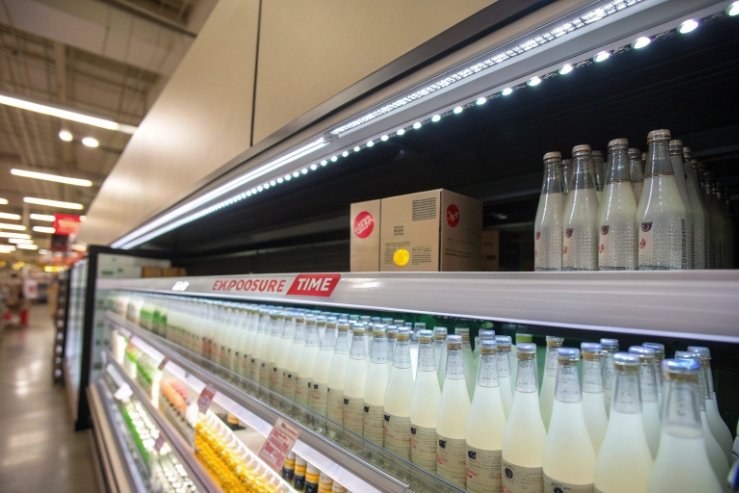
Some brands assume “green glass is enough.” Then they place clear or pale green bottles under bright lights for months. That is when light-struck risk turns from theory into returns.
Cartons and sleeves are needed when wine is light-sensitive, glass is clear or lightly tinted, and retail exposure is long or intense. Secondary packaging is the cheapest UV insurance when brand design requires clear glass.
Secondary packaging is a light strategy, not only a shipping tool
Cartons, paper wraps, and opaque sleeves block light in the exact place where wine gets punished: retail shelves and warm displays. Many wines travel in darkness inside cases, but they can spend weeks under store lights. That last step is where protection matters most.
Decide based on exposure time and glass color
A simple rule works:
- If the wine is in clear glass and it will sit in light, add a sleeve or carton.
- If the wine is in green glass and it will sit in strong light, consider a sleeve for whites and rosés.
- If the wine is in amber glass, secondary UV protection is usually optional unless the store lighting is extreme.
Sleeve and carton choices should match the brand and the channel
Secondary packs can do more than block UV. They can:
- prevent label scuffs in transit
- reduce bottle-to-bottle impact
- create a premium “gift” experience
- hide closures and keep a clean shelf look
| Channel or shelf condition | Light risk level | Recommended defense | Notes for execution |
|---|---|---|---|
| Top shelf, bright store lighting | High | Opaque sleeve or full carton | Best for whites/rosés in clear glass |
| Long retail dwell time | High | Sleeve/carton + darker glass if possible | Protects aroma and color |
| Fast turnover, case-only storage | Low | Standard shippers | Focus on closure and oxygen control |
| DTC shipping with display unboxing | Medium | Sleeve + strong shipper | Adds scuff protection and premium feel |
| Duty-free / window displays | Very high | Carton + dark glass | Sunlight is unforgiving |
Secondary packaging is not a failure. It is a design choice. If the brand needs clear glass to show color, then a sleeve is often the cleanest way to protect quality without changing the bottle.
Conclusion
Wine quality protection comes from smart barriers: darker glass when needed, the right closure and liner OTR, tight oxygen control at bottling, and sleeves or cartons when shelf light is harsh.
Footnotes
-
AWRI fact sheet summarizing closure OTR ranges and why liners matter. ↩ ↩
-
Study showing how light exposure and bottle color affect wine quality under retail-like lighting. ↩ ↩
-
Quick reference for CIE Lab* and ΔE tolerancing to make “shade drift” measurable. ↩ ↩
-
Research quantifying UV–violet transmission differences across bottle colors using in-bottle measurements. ↩ ↩
-
Practical liner guidance explaining why Saran Tin and Saranex can age wines differently. ↩ ↩
-
Clear primer on free SO₂ and how it protects wine from oxidation and microbial spoilage. ↩ ↩
-
Explains total package oxygen sources and why headspace oxygen drives early SO₂ loss. ↩ ↩






