
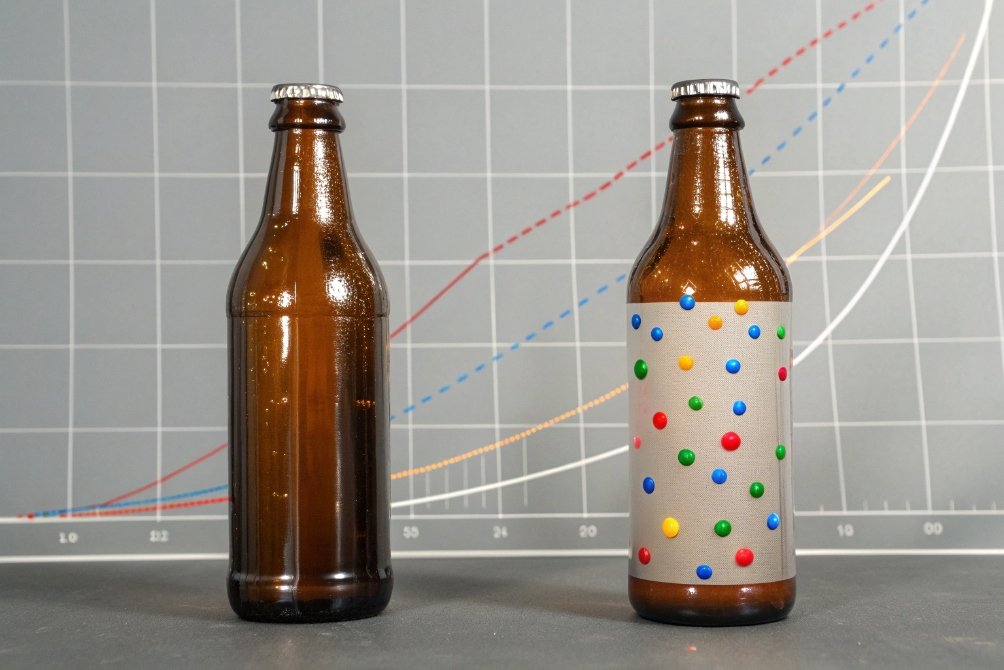
A bottle that “passes burst” in the lab can still fail on a pallet. Pressure tests only help when they feed back into design, closures, and secondary packaging.
Validated burst margins reduce real-world breakage because they connect glass strength, CO₂ levels, temperature, and handling limits into one clear safety envelope that production, logistics, and brand teams can actually use.
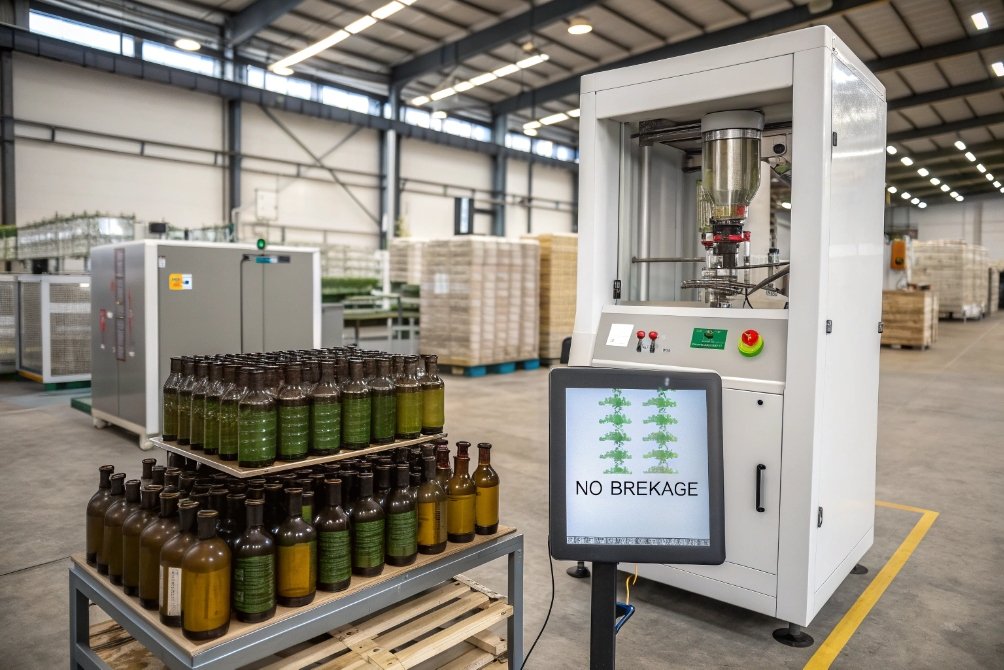
Once pressure data is clear, it stops being just a test report. It becomes a design tool for light-weighting, a negotiation tool for CO₂ settings, and a checklist for caps, cartons, and pallet patterns.
Can validated burst margins reduce distribution breakage?
A lot of “mystery” breakage in warehouses and trucks is not random. It often starts from bottles that sit too close to their pressure limits once heat, CO₂, and stacking load all add up.
Yes. When burst and proof-pressure tests show a clear margin above worst-case internal pressure, teams can set safe CO₂ levels, filling temperatures, and stacking rules that sharply cut breakage in distribution.
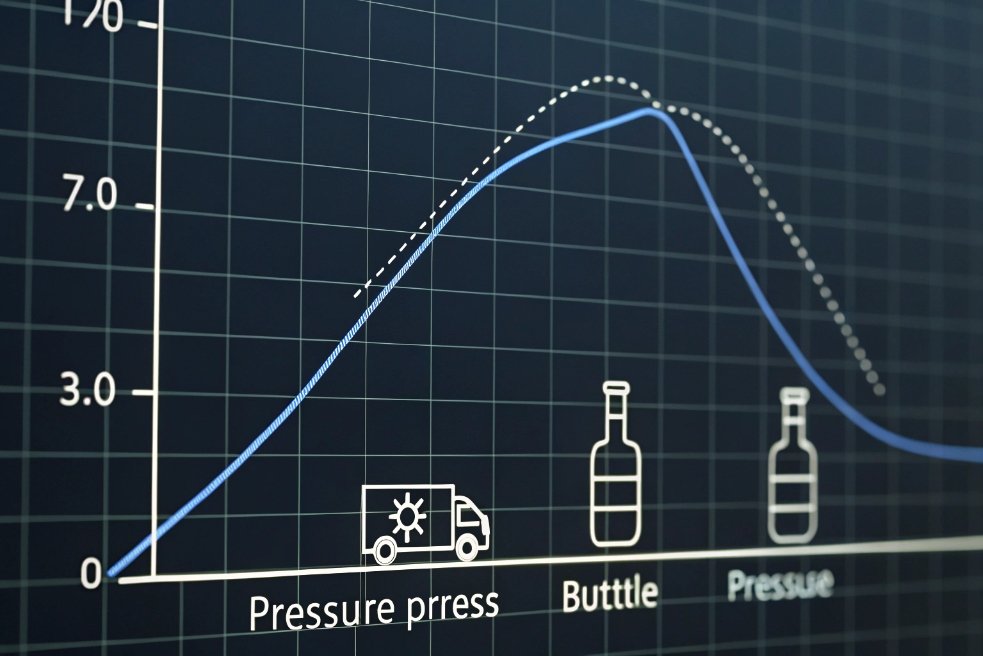
How burst margins translate into fewer failures
Pressure testing per ISO 7458:2004 internal pressure resistance 1 / ASTM C147 internal pressure strength 2 gives two numbers that matter most in real life:
- Proof pressure: a hold test level that good bottles survive without damage.
- Burst pressure: the level where the weakest bottles in the lot start to fail.
For a carbonated drink or beer, internal pressure depends on CO₂ volume and temperature (use a practical CO₂ pressure–temperature carbonation chart 3). At a physics level, this follows Henry’s law 4 and CO₂ solubility behavior. When those two meet the burst curve from the tester, we know whether the design is safe or risky.
A simple way to think about it:
| Item | Example value |
|---|---|
| Worst-case service pressure | 1.6 MPa internal (hot warehouse) |
| 5th percentile burst pressure | 2.2 MPa |
| Safety factor (burst / service) | 1.38× |
If that safety factor is small, the pallet has no “buffer” against shocks. A hot truck, a stacking overload, or a dropped pallet can push a few bottles past their limit. Those first failures then damage neighbours, and a small issue becomes a full-pallet loss.
When the safety factor is healthy and validated, several things improve:
- Operations keeps CO₂ set-points and pasteuriser temperatures inside the proven safe window.
- Logistics can set clear rules for stacking height and load.
- Quality sees drift early if new moulds or new batches give lower burst values.
Regular sampling (often structured via ISO 2859-1 acceptance sampling plans 5) at proof pressure plus periodic burst tests give a living picture of bottle strength over time. That information lets the team prevent “glass storms” in trucks and warehouses, instead of cleaning them up.
How do results guide bottle weight and geometry changes?
Light-weighting is always tempting until the first burst on the filler. Pressure testing is what separates smart material savings from dangerous cost cutting.
Pressure test curves show exactly how much strength is available, which zones are weak, and how glass redistribution or geometry tweaks can keep the same burst margin even when bottle weight drops.
Using pressure data as a design tool
When we compare old and new designs on the pressure tester, we see three important things:
- Change in burst level – did the minimum and average burst pressure go up, down, or stay the same after light-weighting?
- Shift in failure location – did breaks move from sidewall to heel, or from shoulder to finish?
- Spread of results – did the distribution become tighter (more consistent) or wider (more random)?
Geometry changes usually affect these points:
- Heel radius and thickness: too sharp or too thin and most pressure failures will start here.
- Shoulder and neck transitions: tight curves concentrate stress when the bottle is pressurised or hit.
- Body panels and embossing: deep panels and sharp emboss can lower local strength.
Design and mould teams can use burst maps to guide changes:
| Design lever | Typical effect on pressure performance |
|---|---|
| Increase heel radius | Higher burst, fewer heel starts |
| Smooth shoulder transition | Lower stress spikes, more even break pattern |
| Redistribute glass upward | Stronger shoulder / finish, lighter base |
| Reduce sharp emboss edges | Fewer premature breaks at logos or decoration |
Light-weight projects often follow a loop:
- Propose a new geometry and weight.
- Run burst and proof tests on pilot moulds.
- Adjust thickness and radii where failures cluster.
- Re-test until the minimum burst and safety factor meet the target.
On top of that, many markets follow packaging source-reduction rules (for example aligned with the EU’s Packaging and Packaging Waste Regulation (EU) 2025/40 6). That means we should remove glass where we can prove it is not needed for performance. Pressure testing is one of the cleanest proofs we can offer to both customers and regulators.
When it is done this way, light-weighting becomes a controlled engineering exercise, not a gamble that moves risk from cost accounting into the supply chain.
Will higher pressure ratings alter cap torque targets?
A stronger bottle does not automatically mean a “tighter” cap. But pressure testing, especially hydrostatic tests, often leads to adjustments in closure design and torque settings.
Higher validated pressure ratings mainly affect cap torque through seal design and creep under load; torque targets sometimes change, but only after seal tests confirm leak-free performance at the new pressure.
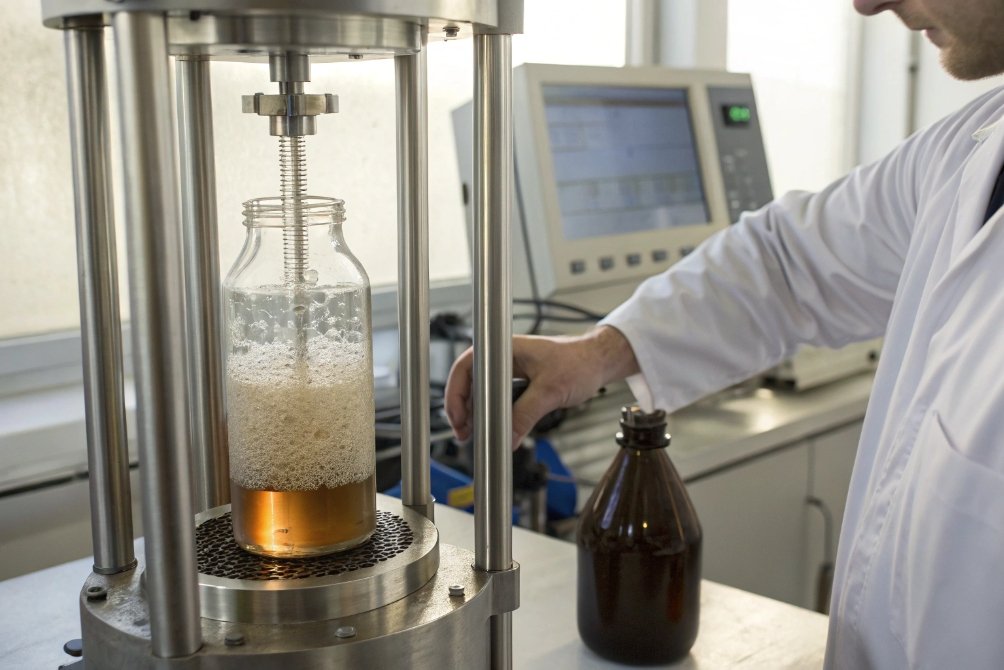
Linking internal pressure, seal design, and torque
Pressure tests come in two flavours:
- Internal burst tests on glass alone.
- Hydrostatic or secure-seal tests on the full bottle-plus-closure system.
The second type is what really links pressure rating to torque. In these tests, the bottle is filled (often with water), sealed with the actual closure, and pressurised internally. The lab checks two things:
- Does the closure leak at or below the target pressure?
- Does the cap back off over time when pressure is held (creep or relaxation)?
From there, torque targets and closure design follow a few simple rules:
-
If pressure rating rises (more CO₂ or higher pasteurisation temperature), seal load must rise too. That can come from:
- Higher applied torque.
- Different liner material.
- Changed thread or finish dimensions.
-
However, torque cannot keep increasing forever. Too much torque causes:
- Consumer opening complaints.
- Closure or finish damage.
- Stress at the thread that may reduce overall safety.
So the sequence is usually:
- Confirm new internal pressure levels from product and process (for example new carbonation target).
- Validate that the existing closure at current torque survives hydrostatic tests without leakage.
- Only if leakage or back-off appears, adjust:
- Torque window.
- Liner type (for example move to a better compressible or more chemical-resistant liner).
- In extreme cases, closure design or bottle finish.
In other words, higher pressure rating does not force higher torque by default. It forces better closure engineering and proof tests that cover the real pressure scenario. Sometimes that means slightly higher torque; sometimes it only means a smarter liner or tighter thread control.
Do cartons, dividers, and pallets need redesign post-test?
Pressure testing feels like something that only concerns glass and fillers. In reality, once we understand the real pressure margin of the bottle, secondary and tertiary packaging often need an update too.
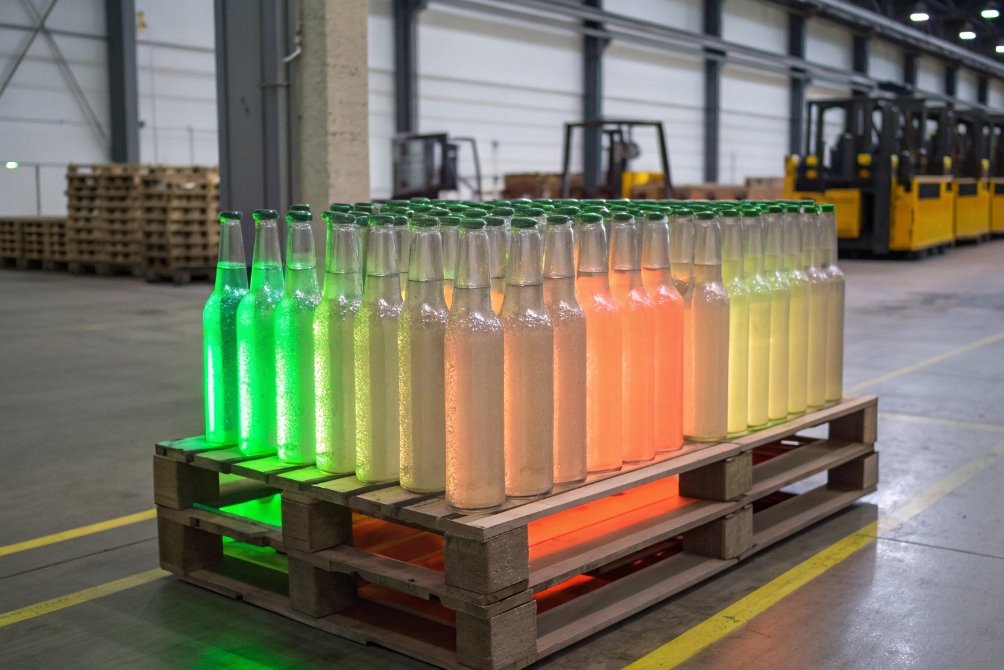
Yes. Once burst margins and stacking limits are clear, carton board grades, divider styles, and pallet patterns often need adjustment so they do not push bottles beyond safe loads or expose the weakest zones to impact.
Connecting lab results to real-world packaging
Pressure testing shows the internal limit of the bottle. Vertical load testing (ISO 8113) 7 and impact tests show the external limits. When we combine them, we can design packaging that does not create worst-case combinations by accident.
A few examples:
- A narrow burst margin means we should avoid very high pallets in hot climates, because temperature raises internal pressure.
- Sensitive heel areas (seen in burst and impact mapping) mean dividers should protect the heel zone, not just the shoulder.
- Very light-weighted bottles with good pressure strength may still have lower vertical strength, so cartons and pallets must support more load.
Here is how pressure data often changes packaging choices:
| Area | What might change after pressure testing |
|---|---|
| Cartons | Board grade, flute type, vent holes vs closed walls |
| Dividers | Full-height vs U-dividers, heel protection, material thickness |
| Pallets | Pattern (interlocked vs column), max layers, use of trays |
| Stretch wrap | Tension level, use of corner boards to spread load |
When the bottle is validated for a given pressure and vertical load, packaging engineers can:
- Set maximum stacking height and pallet weight that stay within those limits.
- Decide where ventilation is needed so pallets do not overheat in storage.
- Choose divider styles that stop bottles rubbing and hitting the most fragile zones.
Often, the first round of pressure tests exposes a small group of “nasty” scenarios: hot warehouse corners, summer containers, or long road routes. Once these are identified, small changes in pallet pattern or carton design can remove several percent of breakage with very little extra cost.
The key is to treat pressure data as shared information, not a laboratory secret. When design, filling, and logistics teams see the same burst curves and margins, it is much easier to agree on sensible carton, divider, and pallet rules.
Conclusion
Pressure testing does more than “tick a standard.” It defines safe limits for glass, closures, and pallets so the whole packaging system survives the real pressures of production and distribution.
Footnotes
-
Official ISO method for glass container internal pressure resistance; aligns proof and burst test terminology. ↩︎ ↩
-
ASTM’s internal pressure strength method used widely in North America for comparing suppliers, moulds, and lots. ↩︎ ↩
-
Links CO₂ volumes, temperature, and pressure—useful for defining worst-case “hot warehouse” service pressure. ↩︎ ↩
-
Quick chemistry basis for why dissolved gas pressure changes with temperature—handy for technical alignment discussions. ↩︎ ↩
-
Explains AQL-based acceptance sampling—how to set sample sizes and accept/reject numbers for lot decisions. ↩︎ ↩
-
EU-wide packaging rules that influence lightweighting, compliance claims, and design-for-minimization decisions. ↩︎ ↩
-
Defines the vertical load (top-load) test for glass containers to support stacking and capping load specifications. ↩︎ ↩






