
Thermal cracks do not warn you. A bottle passes visual checks, then breaks in hot-fill or cold storage, and the whole line pays the price.
Glass composition sets CTE by changing how tight the network is and how it reacts to heat. More alkali usually raises CTE, while Al₂O₃, MgO, and borosilicate routes can stabilize or lower it, so stress and cracking risk drops.
The CTE “control knobs” inside a bottle recipe
CTE starts with network flexibility, not with the bottle shape
CTE is the material’s expansion response to temperature. In a bottle plant, CTE acts like a stress amplifier. When temperature changes fast, the glass tries to expand or shrink. If the expansion is uneven, stress builds. If stress beats the real strength of the surface, a crack starts. Composition controls the first part of that chain: how much the glass wants to move per degree.
Most container glass is a silicate network. Some oxides build a tight network. Some oxides open it. A tighter network tends to expand less and behave more predictably. A more open network tends to expand more and react faster to temperature swings. This is why alkali oxides 1 often push CTE up. These oxides make melting easier, but they also make the network more flexible.
Why CTE control is a “stability” job, not a single test
CTE issues often come from drift, not from a bad target. A lot can pass one week and fail the next week because:
-
the cullet stream shifts and adds different glass families
-
Na₂O and stabilizers drift in opposite directions
-
minor impurities change the melt and stress pattern
A stable CTE program uses chemistry control, not only testing. In my work with buyers, the fastest way to reduce disputes is to connect coefficient of thermal expansion 2 limits to a chemistry window and a cullet rule. This makes CTE predictable.
What composition changes usually do to CTE in bottle glasses
| Composition move | Typical CTE direction | Why it happens | What the plant must watch |
|---|---|---|---|
| Higher Na₂O / K₂O | Higher | Network becomes more open | Durability drop, stress sensitivity |
| Higher SiO₂ | Lower | Network becomes more connected | Higher melting demand |
| Higher Al₂O₃ (balanced) | Lower or more stable | Connectivity increases, mobility drops | Viscosity rise, melt quality |
| Higher MgO (modest) | Often stabilizes and can lower | Stabilization and tighter structure | Devit risk if pushed |
| Add B₂O₃ (borosilicate route) | Lower (strong effect) | Borate network reduces expansion response | Different family and process needs |
A bottle does not need the lowest CTE on the planet. A bottle needs a CTE that matches the process window and stays stable lot after lot.
If the CTE story is clear, the next step is to define CTE in buyer language and show how it is tailored in glass.
What is CTE and how is it tailored in glass?
When CTE is unclear, teams chase temperature. Temperature chasing creates stress, defects, and random breaks that nobody can explain.
CTE is the coefficient of thermal expansion. It tells how much glass expands per degree. Glassmakers tailor CTE by changing oxide balance, then locking a safe window with test method, chemistry SPC, and change control.
CTE is measured over a range, so the range must be stated
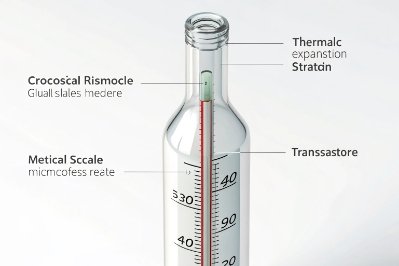
CTE is not always a single universal value. It depends on the temperature range and the test method. Two labs can report different values if ranges differ. This is one reason buyer–supplier arguments happen. A good spec always states:
-
the CTE temperature range used for acceptance
-
the method and sample type
-
the pass window
This is simple, but it prevents a lot of confusion.
Tailoring CTE has two levels: glass family and fine tuning
The first decision is the glass family. Soda-lime container glass is made for scale and cost. Borosilicate glass 3 families are built for lower expansion and higher thermal shock tolerance, but they demand a different chemistry balance and often a different production setup.
After the family is chosen, CTE is tuned inside that family:
-
In soda-lime: control Na₂O/K₂O, stabilize with CaO/MgO, and use Al₂O₃ for network strength within a viscosity-safe window.
-
In borosilicate: B₂O₃ becomes a major part of the network, so CTE drops, but forming and melting rules also change.
How to write a CTE control plan that people can run every day
A practical plan ties CTE to the numbers the plant already tracks:
-
XRF chemistry by shift
-
cullet source and color class
-
forehearth temperature demand to hold gob weight
-
stress check results by lot
| Control layer | What to lock | Why it matters | Evidence to keep |
|---|---|---|---|
| CTE window | Range + test temperature range | Prevents lab mismatch | CTE report template |
| Chemistry window | Na₂O, MgO, Al₂O₃, CaO ranges | Prevents drift | XRF trend chart |
| Cullet rule | Allowed streams and glass family limits | Stops mixed-family surprises | Cullet COA + sorting record |
| Change control | What triggers re-qualification | Keeps buyers calm | Change log + trial records |
When CTE is tailored this way, it becomes a controlled feature, not a hidden risk. The next section explains why alignment is the real goal, because cracks are caused by mismatch.
Why CTE alignment prevents stress and cracking?
Bottles do not fail because CTE exists. Bottles fail because CTE does not match the process and the temperature profile.
CTE alignment prevents cracking because it reduces thermal strain mismatch across the bottle and across any coatings or decorations. Lower mismatch means lower stress peaks, so thermal shock and handling damage trigger fewer cracks.
Alignment matters most when temperature changes fast
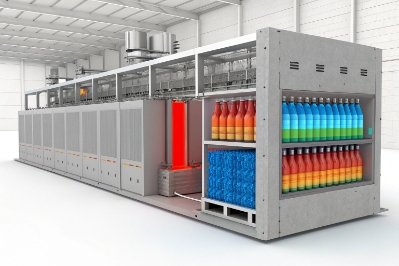
Thermal stress comes from gradients, not from average temperature. Hot-fill is a clear example. The inside heats fast. The outside lags. The glass wants to expand differently across the wall. If CTE is high or unstable, stress rises quickly. A similar risk exists in cold shock. Rapid chilling can pull the surface into tension. This is why thermal shock 4 programs and hot-fill programs both care about CTE.
CTE alignment also matters in decoration. Some coatings and inks create stress when they see thermal cycling. If the bottle expands and the layer expands differently, micro-cracks can appear. Even if the coating stays in place, the stress can weaken the bottle surface.
Alignment includes annealing and residual stress
A good anneal removes stress. Still, annealing settings depend on how the glass behaves as it cools. If composition drifts and CTE shifts, the same annealing profile can leave different stress patterns. Then the bottle becomes more sensitive to temperature shocks and to small scratches from conveying.
This is why CTE is connected to repeatability. A stable CTE helps stress stay stable. Stable stress improves yield. It also improves customer confidence.
Simple alignment checks that reduce disputes
A strong customer-facing method uses a short set of checks:
-
CTE window confirmation (with a stated temperature range)
-
thermal shock pass rate at an agreed ΔT profile
-
correlation with chemistry windows
| Alignment case | What goes wrong when misaligned | What to do first | What to verify |
|---|---|---|---|
| Hot-fill | Cracks after fill or during cooling | reduce ΔT step, stabilize CTE | thermal shock pass rate |
| Cold-chain | cracks during rapid chill | stabilize CTE, improve stress control | cold shock test + stress check |
| Decoration | micro-cracks, coating failure | align coating stack and bake cycle | cycling test + adhesion |
| Mixed lots | random crack spikes | lock cullet and chemistry | XRF drift + CTE drift |
Alignment is the goal because it reduces stress peaks. The next section moves from “why” to “how” with the most asked tuning question: Na₂O, MgO, and B₂O₃.
How to adjust Na₂O, MgO, and B₂O₃ for CTE?
CTE tuning fails when people change three things at once. Then nobody knows why the line changed, and the plant loses weeks.
Na₂O is the strongest CTE-raising lever in bottle glass. MgO is a stabilizing lever that can refine CTE and durability. B₂O₃ is a strong CTE-lowering lever, but it usually means a borosilicate path, not a small soda-lime tweak.

Na₂O: the fast path to meltability, and the fast path to higher CTE
Na₂O is used because it lowers melting temperature and viscosity. It helps forming speed and throughput. Still, it also opens the network and usually raises CTE. For hot-fill and thermal shock risk, excess Na₂O is often the first place to check. A modest reduction can stabilize stress behavior, but it can increase melting load. This is why a Na₂O move must be paired with furnace capacity checks and forehearth stability checks.
A plant should not aim for “low Na₂O at any cost.” The plant should aim for “XRF chemistry 6 inside a proven window that still forms well.” The best window is set by linking chemistry to forming KPIs like gob weight stability and defect rate.
MgO: a practical tuning knob inside soda-lime limits
MgO supports durability and often improves long-term weathering behavior. In many dolomitic recipes 7, MgO also helps stabilize behavior under repeated alkaline wash exposure. For CTE control, MgO can help make the system less sensitive to small shifts, but it must stay inside a devit-safe and forming-safe window. If MgO is pushed too far without balance, the plant can see stones, haze, or a tighter working range.
MgO tuning works best when it is done in small steps and when cullet chemistry is stable. This keeps the learning clean.
B₂O₃: the low-CTE tool that changes the whole system
B₂O₃ can reduce CTE strongly because it builds a different type of network. This is why borosilicate families have lower expansion and better thermal shock tolerance. Still, B₂O₃ is not a “minor additive” for most bottle plants. It often implies a different glass family and a different process window, plus different raw control and melting behavior.
| Lever | CTE effect | Best reason to use it | Main tradeoff |
|---|---|---|---|
| Lower Na₂O | Lower and more stable CTE | reduce thermal shock cracks | higher melting demand |
| Tune MgO (modest) | refine and stabilize CTE behavior | improve long-term stability and wash performance | devit and working range sensitivity |
| Add B₂O₃ (borosilicate) | strong CTE reduction | aggressive thermal cycling programs | different family and process cost |
The safest tuning rule is simple: change one lever, measure CTE and stress, then lock the window before the next change. This keeps production stable and keeps buyer approvals faster.
Now the market question is next: cold-chain distribution is growing, and many teams ask if low-CTE mixes can expand cold-chain options.
Are low-CTE mixes expanding cold-chain options?
Cold-chain failures look like handling damage, but temperature gradients often start the crack. Low CTE can add margin, but it must fit the real supply chain.
Low-CTE compositions can expand cold-chain options because they reduce strain per degree during rapid cooling. Borosilicate routes offer the biggest gain, while stabilized soda-lime windows can offer moderate gains when chemistry and cullet stay consistent.

Why cold-chain needs more margin than people expect
Cold-chain is not only “stored cold.” It includes transitions:
-
warm warehouse to chilled truck
-
fast chill before packing
-
temperature cycling during distribution
These transitions create gradients. Gradients create stress. If CTE is high and stress is already present from forming or handling, the bottle cracks.
Low-CTE glass reduces strain for the same gradient. This increases the survival window. Still, cracks can still happen if:
-
the bottle has high residual stress
-
the surface is scratched
-
the heel design creates stress concentration
So low-CTE does not replace good annealing and good handling.
What low-CTE options look like in real bottle programs
Most programs fall into two paths:
-
Improved soda-lime control: keep the same family, tighten Na₂O/CaO/MgO windows, stabilize cullet streams, and reduce drift.
-
Borosilicate or low-expansion family: use B₂O₃-based systems for higher thermal shock and more aggressive cold-chain cycles.
The first path is easier for many plants because it keeps the high-volume forming ecosystem. The second path can unlock tougher cycles, but it changes economics and capacity.
How to qualify low-CTE for cold-chain in a buyer-friendly way
A strong qualification package includes:
-
CTE window with stated measurement range
-
cold shock and hot shock test profiles
-
stress checks by lot
-
proof that optical specs and durability remain stable
| Cold-chain risk | What low CTE improves | What still needs control | Proof to provide |
|---|---|---|---|
| Rapid chill cracks | lower strain per °C | annealing, scratches | cold shock pass rate |
| Lot-to-lot failures | more predictable stress response | cullet chemistry drift | XRF + CTE trend |
| Decoration stress | lower thermal mismatch | coating process control | cycling + adhesion |
| Lightweight cold-chain | more margin at thin walls | design transitions, handling | drop tests + thermal cycling |
Low-CTE mixes are opening new options, but the winning projects treat composition, stress control, and logistics profile as one system.
Conclusion
CTE follows oxide balance: alkalis raise it, MgO can stabilize it, and B₂O₃ can lower it strongly in borosilicates. Stable CTE alignment reduces cracks in hot-fill and cold-chain windows.
Footnotes
-
Compounds that modify glass networks to lower melting points while significantly influencing thermal expansion. ↩ ↩
-
A scientific definition of how materials change size in response to temperature variations. ↩ ↩
-
A specialized glass family known for exceptional thermal resistance and very low expansion coefficients. ↩ ↩
-
The sudden stress experienced by glass when subjected to rapid and uneven temperature changes. ↩ ↩
-
An optical instrument used to visualize and measure internal stress patterns within glass containers. ↩ ↩
-
A non-destructive analytical technique used to monitor the elemental composition of glass batches. ↩ ↩
-
Batch formulations utilizing magnesium-rich minerals to stabilize glass properties and improve chemical durability. ↩ ↩






