
Thermal shock failures feel random until they hit a full pallet. Then the line stops, product gets wasted, and every team starts blaming “handling.”
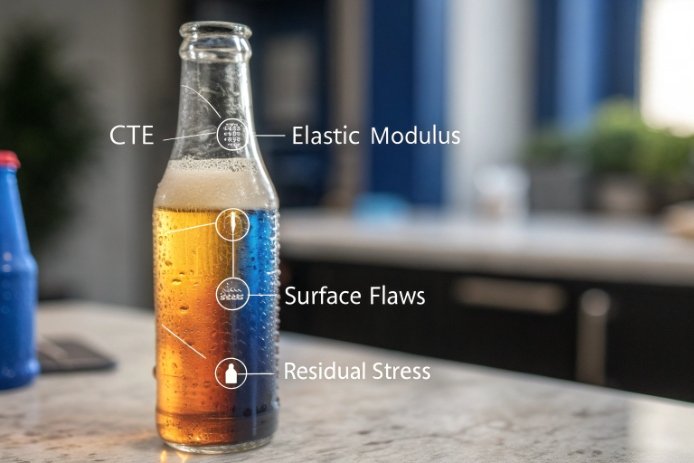
Glass composition affects thermal shock resistance mainly by controlling CTE, elastic behavior, and flaw sensitivity. Lower CTE and a stable, strong surface raise ΔT tolerance, while high alkali and unstable chemistry can raise stress and breakage risk on hot-fill and cooling steps.
Thermal shock resistance is a composition + design + process system
Thermal shock is a stress problem created by temperature gradients
Thermal shock 1 happens when one part of the bottle heats or cools faster than another part. The temperature gradient creates stress. If that stress exceeds the bottle’s real strength (which is controlled by surface flaws and residual stress), the bottle cracks.
Composition influences this system through:
-
CTE (coefficient of thermal expansion): higher CTE increases thermal strain for the same temperature change.
-
Elastic response (modulus): stiffer glass tends to generate higher stress for a given gradient.
-
Viscosity behavior and annealing response: affects residual stress left in the bottle.
-
Chemical durability and surface condition: affects how easily flaws grow with use and washing.
This is why thermal shock resistance is never solved by “thicker wall only.” Thickness can help in some cases, but it can also increase gradients if heating is uneven.
The bottle fails at the surface, not in the center
Real bottle strength is dominated by surface damage: scratches, scuffs, and micro-cracks from conveying and packing. A composition that improves surface durability 2 and keeps chemical attack low helps thermal shock resistance indirectly because it preserves the surface. In hot-fill lines and returnable systems, this indirect effect can be as important as CTE.
Composition moves that usually help hot-fill programs
-
Increase network stability (SiO₂ and modest Al₂O₃) to support durability and consistent properties.
-
Maintain stabilizers (CaO and MgO) to reduce leaching and preserve surface condition.
-
Avoid excess alkalis that raise CTE and increase mobility and surface change.
-
Control cullet chemistry so CTE and viscosity do not drift shift-to-shift.
| Composition lever | What it changes | How it affects thermal shock | Main tradeoff |
|---|---|---|---|
| Lower CTE chemistry | Thermal strain per °C | Higher ΔT tolerance | Can reduce meltability |
| Higher Al₂O₃ (within window) | Strength and durability | Better flaw resistance over time | Higher viscosity |
| Balanced CaO/MgO | Surface stability | Fewer flaw growth issues | Devit risk if pushed |
| Excess Na₂O/K₂O | Higher CTE and mobility | Lower ΔT tolerance | Easier melting but weaker durability |
| Stable cullet stream | Property consistency | More predictable ΔT performance | Supply constraint |
Thermal shock is the meeting point of chemistry and real manufacturing. The next sections break down what controls ΔT tolerance, why hot-fill lines are harsh, how to tune CTE and strength, and what compositions are enabling lighter hot-fill bottles.
What factors control ΔT tolerance in bottles?
Thermal shock tolerance is often described as a single ΔT number, but the real tolerance depends on bottle design and how fast the temperature changes.
ΔT tolerance is controlled by CTE, elastic modulus, thermal conductivity, wall thickness, residual stress, and surface flaw population. Composition mainly influences CTE, stiffness, and long-term surface condition.
CTE is the most visible composition driver
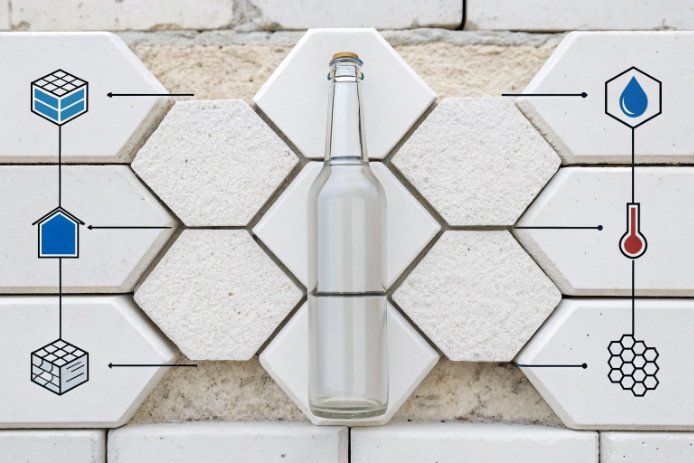
CTE sets how much the glass wants to expand per degree. For the same temperature gradient, higher CTE creates higher strain, which creates higher stress. Lower CTE reduces stress and helps the bottle survive a larger temperature jump.
Soda-lime bottle glass has a higher CTE than borosilicate 3. That is one reason borosilicate performs better in thermal shock. Still, most beverage bottles are soda-lime for cost and production scale reasons, so tuning soda-lime within realistic limits matters.
Strength is controlled by flaws and residual stress, not only by composition
Even if CTE is stable, a bottle with heavy scratches will fail early. Residual stress from poor annealing can also reduce tolerance. Composition affects annealing behavior through viscosity-temperature response, but process control is usually the bigger lever.
Still, composition helps preserve strength by improving chemical durability and reducing surface weathering. A more durable surface stays smoother and less crack-prone.
Wall thickness and thermal gradient behavior matter
Thicker walls can increase the temperature gradient during fast heating or cooling. That can raise stress. Thin walls heat more evenly, but they are weaker mechanically. So ΔT tolerance is a balance, not a simple “thicker is better” rule.
| Factor | What it does to ΔT tolerance | Composition influence | Process/design influence |
|---|---|---|---|
| CTE | Lower CTE increases tolerance | Strong | Medium |
| Elastic modulus | Higher modulus can raise stress | Medium | Low |
| Thermal conductivity | Higher conductivity reduces gradients | Low | Medium (coatings, design) |
| Wall thickness | Controls gradients and stress | None | High |
| Residual stress | Low residual stress increases tolerance | Medium | Very high (annealing) |
| Surface flaws | Fewer flaws increases tolerance | Indirect (durability) | Very high (handling) |
Once the plant knows which factor is limiting, the corrective action becomes clear. For hot-fill, the limiting factor is often the combination of fast temperature change and handling damage. That is why thermal shock drives breakage on hot-fill lines.
Why thermal shock drives breakage on hot-fill lines?
Hot-fill lines create the perfect storm: high temperature gradients, wet surfaces, and high-speed conveying. A bottle that survives in a warehouse can fail on the line in seconds.
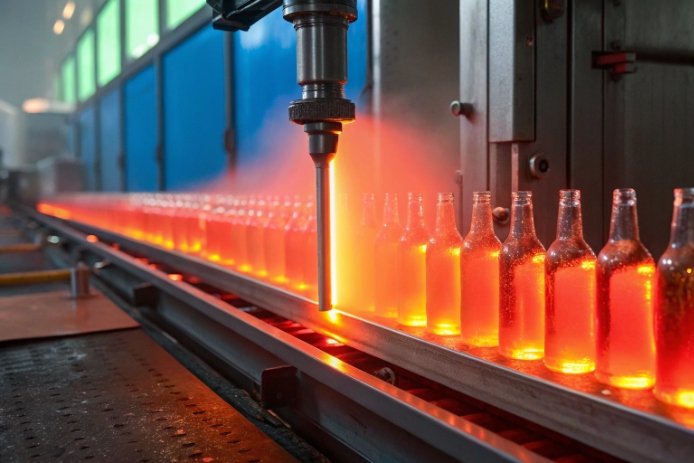
Thermal shock drives breakage on hot-fill lines because hot liquid rapidly heats the inner wall while the outer wall is cooler, creating tensile stress at the surface. Cooling steps then reverse gradients and add more stress, especially if the bottle has scratches or residual stress.
The classic hot-fill shock path
A common sequence looks like this:
-
Bottle enters the filler at ambient temperature.
-
Hot product hits the inner wall first.
-
Inner wall expands, outer wall lags.
-
Stress peaks, often near heel, shoulder, or thickness transitions.
-
Bottle exits to cooling or inversion steps, creating another gradient.
If the bottle already carries residual stress 4 from annealing or has surface damage from conveying, the stress margin becomes small. A minor ΔT that seems “safe” on paper can cause a crack.
Why the heel and shoulder zones are frequent crack origins
These zones often have:
-
geometry transitions
-
thickness changes
-
higher forming stress history
-
more frequent contact and scuff events in handling
Even with perfect composition, these are high-risk zones. Composition helps by keeping CTE consistent and by improving surface durability so scratches do not grow into crack starters.
What hot-fill teams should monitor beyond “temperature”
A hot-fill failure is rarely only about product temperature. It is also about:
-
bottle pre-warm strategy
-
conveyor wetting and friction
-
annealing quality and stress distribution
-
surface scuff rate and packaging materials
-
cooling profile and time
| Hot-fill stress source | What it does | Fast mitigation | Long-term fix |
|---|---|---|---|
| Inner-to-outer gradient | Creates tensile stress | Pre-warm bottles, reduce ΔT step | Tune CTE + improve anneal |
| Rapid cooling after fill | Reverses stress direction | Control cooling profile | Design process window and validate |
| Surface scratches | Lowers strength | Improve conveyance and packaging | Improve durability + add protective treatments |
| Residual stress | Reduces stress margin | Stress audit, anneal correction | Stable viscosity/anneal control |
Composition is a key part, but it must be tuned to the process window. That leads to the next question: how to tune CTE and strength so the bottle performs in real forming and hot-fill conditions.
How to tune CTE and strength for process windows?
A bottle needs to form fast, stay light, and survive thermal shock. The safest approach is to tune chemistry in small steps, while locking a forming window and a hot-fill window at the same time.
Tune CTE by controlling the modifier–stabilizer balance (Na₂O/K₂O vs CaO/MgO) and supporting network formers (SiO₂/Al₂O₃). Tune strength by improving surface durability and controlling residual stress through annealing. Select chemistry windows that keep viscosity workable for the line.
CTE tuning: control alkalis first, then stabilize
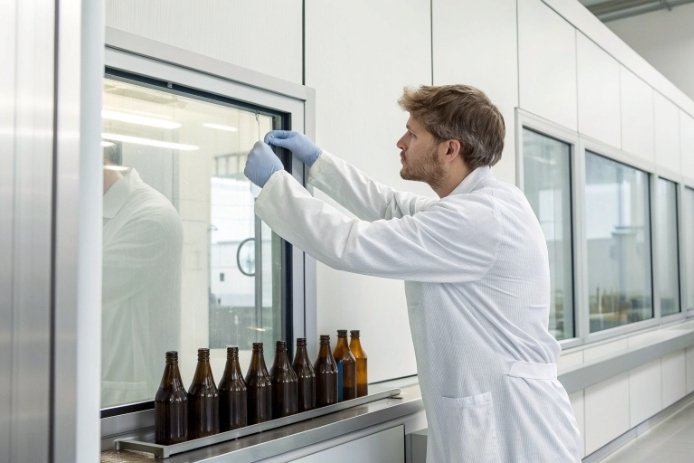
In soda-lime container glass, alkalis generally raise CTE and make the network more mobile. If the bottle is failing thermal shock, one common chemistry direction is:
-
avoid excess Na₂O/K₂O
-
keep CaO and MgO adequate to stabilize
-
use Al₂O₃ 5 as a network-strength tool, within a viscosity-safe window
-
keep cullet chemistry stable so CTE does not drift
This aligns with what has worked in many durable bottle programs: stable Na/Ca/Mg balance prevents random stress behavior.
Strength tuning: build margin with alumina and surface stability
Al₂O₃ can raise strength margin in two ways:
-
it tightens the network and supports higher intrinsic durability
-
it supports lightweighting without losing resistance to aggressive fills or repeated washing
Still, Al₂O₃ raises viscosity. So the plant must lock an Al₂O₃ window that meets both forming speed and durability. This usually requires:
-
reactive Al₂O₃ sources (or well-melted alumina carriers)
-
good mixing and fining control 6
-
validation trials with forehearth temperature tracking
Write the tuning as a “two-window” spec
A strong internal spec uses two windows:
-
chemistry window (Na₂O, CaO, MgO, Al₂O₃, SiO₂ ranges, plus ratio control)
-
process window (forehearth temperature, stress pattern limits, hot-fill ΔT profile)
| Tuning goal | Chemistry action | Process action | Acceptance evidence |
|---|---|---|---|
| Lower thermal stress | Keep CTE stable by controlling Na/K | Pre-warm + controlled cooling | Thermal shock pass rate by lot |
| Raise strength margin | Add Al₂O₃ within safe window | Improve annealing, reduce scuffs | Impact/breakage SPC + stress audit |
| Maintain forming speed | Avoid over-stiff melt | Lock forehearth settings | Weight and thickness stability |
| Reduce drift | Stabilize cullet chemistry | Change control | XRF by shift + complaint trend |
The point is not to chase the lowest CTE possible. The point is to keep a stable CTE and a strong surface while staying inside the forming window. That stability is what makes thermal shock performance predictable.
Now the final question: are compositions enabling lighter hot-fill bottles? The answer is yes, but it requires a controlled network and strong process discipline.
Are compositions enabling lighter hot-fill bottles?
Lightweighting is always a target, but hot-fill adds stress. A lighter bottle has less margin, so chemistry and surface control must improve to compensate.
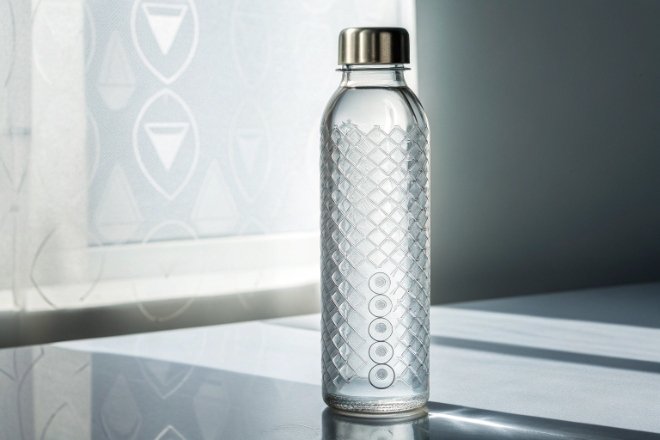
Yes. Lighter hot-fill bottles are enabled by compositions that maintain durability and strength (often with higher Al₂O₃ and well-balanced CaO/MgO) while keeping viscosity workable. The win also depends on surface protection and stress control, not only chemistry.
Why Al₂O₃ is often part of lightweight hot-fill programs
Al₂O₃ strengthens the network and improves hydrolytic resistance. That allows wall thickness to drop without losing chemical stability or strength margin. Many lightweighting 7 programs fail when they reduce thickness but keep the same scratch rate and stress level. Better composition helps, but only when handling and annealing are also improved.
Why stable MgO and dolomitic balance matters in service
Higher-MgO dolomitic recipes often show better long-term weathering and alkaline detergent exposure behavior than low-MgO mixes. This supports reuse and cleaning conditions that can weaken surfaces over time, which indirectly protects thermal shock performance.
What changes are actually realistic for many plants
For most high-volume bottle plants, radical chemistry shifts are limited by furnace constraints and raw availability. The practical path is:
-
small composition tuning within soda-lime limits
-
improved surface protection and handling controls
-
validated hot-fill process windows
Some projects use coatings 9 or surface treatments to preserve the surface and reduce scuffs. These do not change CTE, but they can raise effective strength by reducing flaw growth.
| Lightweight lever | What it improves | What it risks | How to control it |
|---|---|---|---|
| Higher Al₂O₃ (within window) | Strength and durability | Higher viscosity | Use reactive sources + monitor forehearth drift |
| Balanced CaO/MgO | Surface stability and durability | Devit risk if pushed | Monitor stones + maintain ratio |
| Reduced Na₂O excess | Lower stress sensitivity | Higher melting demand | Furnace energy and fining stability |
| Stable cullet chemistry | Predictable CTE and viscosity | Supply constraint | Closed-loop/verified cullet + XRF |
| Surface protection | Less scuff-driven breakage | New process complexity | Adhesion/aging validation |
A lighter hot-fill bottle is possible when chemistry, process, and handling are treated as one system. If any one part is weak, thermal shock 10 shows up first.
Conclusion
Thermal shock resistance depends on stable CTE, low residual stress, and strong surfaces. Composition helps by balancing Na/K with Ca/Mg and using Al₂O₃ for strength, enabling lighter hot-fill bottles within proven process windows.
Footnotes
-
[Scientific definition of thermal shock resistance and the material properties governing it.] ↩
-
[Standard test methods for quantitative measurement of glass surface durability.] ↩
-
[Technical details on borosilicate glass, known for its low coefficient of thermal expansion.] ↩
-
[Techniques and importance of measuring residual stress in glass manufacturing.] ↩
-
[Chemical properties of Aluminum Oxide and its role in glass network strengthening.] ↩
-
[Process description of glass melting and fining to remove bubbles and ensure homogeneity.] ↩
-
[Industry overview of glass container lightweighting trends and benefits.] ↩
-
[Explanation of cullet (recycled glass) and its critical role in glass production cycles.] ↩
-
[Overview of hot-end glass coatings used to improve scratch resistance and durability.] ↩
-
[Standard test method for thermal shock resistance of glass containers.] ↩






