
Standard glass bottles are fragile vessels in a world of extreme temperature shifts. When production demands require resistance to boiling, freezing, or rapid sterilization, relying on basic soda-lime formulations is a recipe for catastrophic line failure.
Yes, adding Boron (in the form of Boron Trioxide, B₂O₃) drastically improves heat resistance. It chemically alters the glass network to lower the Coefficient of Thermal Expansion (CTE), effectively immunizing the bottle against the thermal shock that shatters ordinary glass.
The "Boron Effect" in Glass Physics
At FuSenglass, we typically deal with high-volume soda-lime glass for the beverage industry. However, when clients approach us with requirements for medical-grade vials, laboratory glassware, or premium heat-resistant kitchenware, the conversation immediately shifts to Boron.
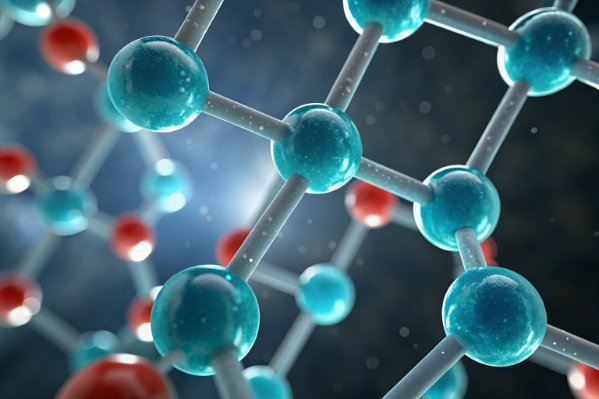
Standard glass is mostly Silica (sand) and Soda Ash. It expands significantly when heated. Boron acts as a "network former" that works alongside Silica but with a unique superpower: it creates a much tighter, more rigid atomic structure. When you replace alkali fluxes (like Sodium) with Boron, you reduce the material’s tendency to expand.
Think of thermal expansion 1 like a crowded room. When heated, atoms (people) start dancing and pushing each other apart. In soda-lime glass, the structure is loose, so they push far apart (high expansion). In borosilicate glass, the Boron acts like rigid handcuffs linking the atoms; even when heated, they cannot move much. This lack of movement means lack of stress.
The Thermal Hierarchy
The impact of Boron is not linear; it creates distinct classes of glass.
| Glass Class | B₂O₃ Content | CTE (x 10⁻⁶/K) | Thermal Shock Limit (ΔT) |
|---|---|---|---|
| Soda-Lime (Standard) | < 0.5% | ~9.0 | ~40°C |
| Neutral Borosilicate (5.0) | 8% – 10% | ~5.0 | ~120°C |
| High Borosilicate (3.3) | 12% – 13% | ~3.3 | ~170°C |
| Quartz (Pure Silica) | 0% (Pure) | ~0.5 | >1000°C |
For most industrial bottle applications, "Neutral Borosilicate" (often called Type I glass) is the gold standard for pharmaceutical and high-stress use cases.
But why does this chemical shift matter for your bottom line? It dictates whether you can hot-fill at boiling temperatures or autoclave your product without a 20% breakage rate.
How does increasing boron content change thermal expansion and thermal shock resistance in glass bottles?
Thermal shock is simply the physical manifestation of differential expansion. By virtually eliminating expansion, Boron eliminates the root cause of the stress.
Increasing boron content creates a "low-expansion" glass matrix. By reducing the Coefficient of Thermal Expansion (CTE) from ~9.0 to ~3.3 or ~5.0, the glass absorbs less mechanical stress during rapid temperature changes, allowing it to survive ΔT shocks of over 100°C.
The CTE Mechanism
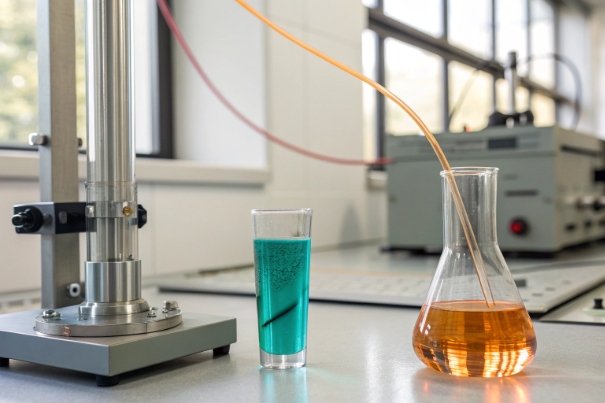
The Coefficient of Thermal Expansion 2 (CTE) is the defining metric.
-
Soda-Lime: High CTE. When hot liquid touches the bottom, the bottom expands rapidly while the walls stay cold. The difference tears the bottle apart.
-
Borosilicate: Low CTE. When hot liquid touches the bottom, it barely expands. Because there is almost no change in volume, there is almost no stress exerted on the cold walls.
Structural Integrity
Boron forms "boroxol rings" within the silica network. These 3D structures are incredibly stable. Unlike the chaotic, loose structure of soda-lime glass 3 (which is filled with sodium ions that make it easy to melt but easy to break), the boron-silica network is tight and strong.
This doesn’t just help with heat. It helps with Thermal Endurance (resistance to holding high heat for long periods) and Chemical Stability (resistance to acid/alkali attack). This is why vaccines and injectable drugs are stored in borosilicate glass 4—it doesn’t react with the contents, even when sterilized.
What boron range is typically required to qualify a bottle as borosilicate for hot-fill or sterilization use?
Labeling a bottle "heat resistant" is marketing; defining the boron content is engineering. There is a strict chemical threshold that separates "modified" glass from true borosilicate.
To qualify as "Type I" Borosilicate Glass suitable for pharmaceutical sterilization or extreme hot-fill, the glass must contain at least 8% to 13% Boron Trioxide (B₂O₃). Anything less (e.g., <5%) is often just "modified soda-lime" and will not offer the requisite thermal safety.
The Two Main Categories
In the industry, we distinguish between two main types of borosilicate glass based on their expansion coefficient (COE):
-
Borosilicate 3.3 (High Boron):
-
Borosilicate 5.0 (Neutral Boron):
-
B₂O₃ Content: 8% – 10%
-
Performance: "Neutral" glass. Excellent chemical resistance and good thermal shock resistance.
-
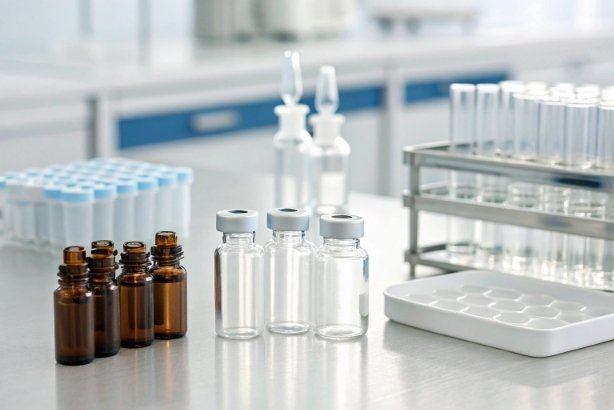
Application: Injectable vials, ampoules, high-end cosmetic serum bottles.
-
Is "Low-Boron" Worth It?
Some manufacturers offer "Low-Boron" or "Semi-Boro" glass with 3% – 5% B₂O₃.
-
Pros: Cheaper than Type I.
-
Cons: It is not Type I glass. It does not meet the USP/EP pharmacopeia 6 standards for hydrolytic resistance. It provides only a marginal improvement in thermal shock over well-made soda-lime.
-
Verdict: For true thermal sterilization (autoclaving at 121°C) and freeze-drying (lyophilization), you must specify Neutral Borosilicate (COE 5.0 or lower).
| Application | Required Glass Type | Min B₂O₃ Content | Max Temp Shock |
|---|---|---|---|
| Juice/Sauce Hot Fill | Soda-Lime (Type III) | 0% – 1.5% | 40°C |
| Pharma Vials (Liquid) | Neutral Boro (Type I) | > 8% | 120°C |
| Freeze-Drying (Lyophilization) | Neutral Boro (Type I) | > 8% | 140°C |
| Lab/Ovenware | High Boro (3.3) | > 12% | 170°C |
What manufacturing trade-offs come with higher boron (melting temperature, forming stability, defects, and cost)?
High performance comes at a high price. The physical properties that make borosilicate glass strong also make it incredibly difficult to manufacture.
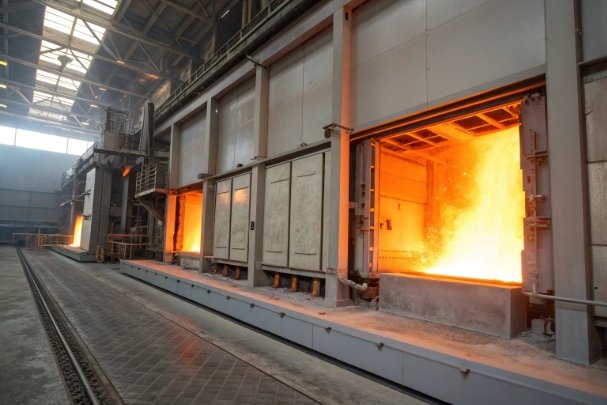
High boron content requires significantly higher melting temperatures (>1600°C), specialized oxygen-fuel furnaces, and results in volatile boron evaporation. This leads to a 3x-5x higher production cost compared to soda-lime glass and limits the complexity of shapes that can be molded.
The Melting Challenge
Borosilicate glass is "refractory," meaning it resists melting.
-
Temperature: We need to push the furnace to over 1600°C (compared to 1500°C for soda-lime). This requires expensive energy sources, often Oxy-Fuel or electric boosting.
-
Volatility: Boron is volatile. At these high temperatures, B₂O₃ tries to evaporate out of the melt! This changes the chemistry of the surface glass, leading to "silica scum" or defects. We have to install expensive filtration and "batch charger" systems to manage this.
Forming Difficulties
Standard soda-lime glass has a "long working range"—it stays soft for a while, allowing us to blow complex shapes, embossed logos, and sharp corners.
Borosilicate glass is "short." It sets (hardens) very quickly.
-
Shape Limitations: It is difficult to blow borosilicate into square shapes or detailed fancy molds. It prefers simple cylindrical forms (like vials or beakers).
-
Tube vs. Molded: Because it is so hard to mold, much high-grade borosilicate packaging is actually made from Glass Tubing (converted glass) rather than being blown directly from a gob 7 of molten glass (molded glass). This restricts the size and design options.
The Cost Equation
Due to the raw material cost (Borax 8 is expensive) and the energy intensity:
-
Soda-Lime Bottle: $0.15 / unit
-
Borosilicate Bottle: $0.60 – $1.00 / unit
For a mass-market beverage, this cost is prohibitive. This is why borosilicate is reserved for high-margin pharmaceuticals or reusable luxury items.
You cannot "see" boron in glass. A cheap soda-lime vial looks exactly like a premium borosilicate vial. Verification is the only defense against fraud.
You must demand a "Coefficient of Thermal Expansion (CTE)" report from a Dilatometer test, and a "Hydrolytic Resistance" test (USP <660>) to confirm Type I status. Chemical analysis (XRF) is useful but physical performance data is definitive.
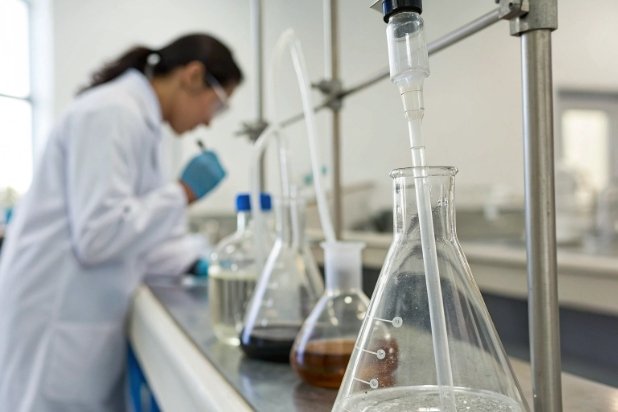
1. The Dilatometer Test (The Smoking Gun)
The most direct proof of boron content is the expansion rate.
-
The Result: The report will give you a curve and a number (Mean CTE).
-
If result is 8.0 – 9.0: It is Soda-Lime. (No Boron benefit).
-
If result is 4.9 – 5.5: It is Neutral Borosilicate (Type I). PASS.
-
If result is 3.2 – 3.4: It is High Borosilicate (3.3). SUPERIOR.
-
2. Hydrolytic Resistance (Type I Classification)
Boron locks the alkali ions (sodium) in place. Therefore, borosilicate glass does not release pH-altering ions into water.
-
Test: USP <660> / EP 3.2.1 Surface Glass Test.
-
Method: The glass is autoclaved with water, and the water is then titrated to see how much alkalinity leached out.
-
Result: Low titration values confirm it is Borosilicate (Type I). High values mean it is Soda-Lime (Type III) or Treated Soda-Lime (Type II).
3. Glass Density Check
A quick "factory floor" check. Borosilicate glass is lighter (less dense) than soda-lime glass.
-
Soda-Lime Density: ~2.5 g/cm³
-
Borosilicate Density: ~2.23 g/cm³
-
If you weigh two identical bottles and one is significantly lighter, it is likely the borosilicate one.
| Verification Document | Key Metric to Check | Target for Borosilicate |
|---|---|---|
| Physical Data Sheet | Coeff. of Expansion (0-300°C) | < 5.5 x 10⁻⁶/K |
| COA (Chemical) | B₂O₃ % (Boron Trioxide) | > 8.0% |
| USP <660> Report | Alkalinity Release (mL 0.01N HCl) | < 1.0 mL (Size dependent) |
| Density Measurement | Specific Gravity | ~ 2.23 g/cm³ |
Conclusion
Boron is the critical element for thermal mastery. If your process involves sterilization, freeze-drying 10, or extreme thermal shock (>50°C ΔT), you cannot rely on soda-lime glass. Specifying Type I Neutral Borosilicate ensures that your packaging is as robust as the science behind it.
Footnotes
-
The tendency of matter to change its shape, area, volume, and density in response to a change in temperature. ↩
-
A material property that describes the fractional change in length per degree of temperature change. ↩
-
The most common commercial glass type, composed primarily of silica, soda, and lime. ↩
-
A type of glass with silica and boron trioxide as the main glass-forming constituents, known for low thermal expansion. ↩
-
A brand of clear, low-thermal-expansion borosilicate glass used for laboratory glassware and kitchenware. ↩
-
United States Pharmacopeia standards for pharmaceutical packaging quality. ↩
-
A precise lump of molten glass cut from the feeder and delivered to the forming machine. ↩
-
A white mineral salt (sodium borate) used as a flux in glass and ceramics. ↩
-
Standard test method for linear thermal expansion of solid materials with a push-rod dilatometer. ↩
-
A dehydration process typically used to preserve a perishable material or make the material more convenient for transport. ↩






