
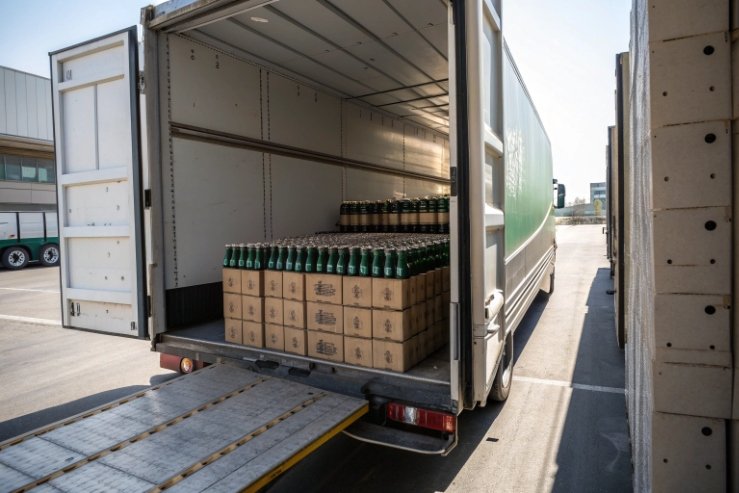
Broken bottles do not only waste product. They delay deliveries, trigger claims, and ruin brand trust. Most damage starts from small movement that turns into shock.
Glass bottles ship safely when every bottle is isolated, every carton is rigid and fully packed, and every pallet is locked as one unit. The goal is simple: no glass-to-glass contact and no load shift.
The best packaging plan is not “more padding.” It is controlled contact points, stable stacking, and repeatable pallet rules. Once those three are set, breakage drops fast and the cost stays predictable.
Which cartons and dividers minimize shock and glass-to-glass contact?
One bottle that touches another bottle will chip sooner or later. One carton with empty space will turn vibration into repeated impacts. That is how “mystery breakage” happens.
The safest system is a rigid outer carton plus a fitted inner that holds each bottle in place. Use partitions, molded pulp, or foam so bottles never touch and cannot rattle.
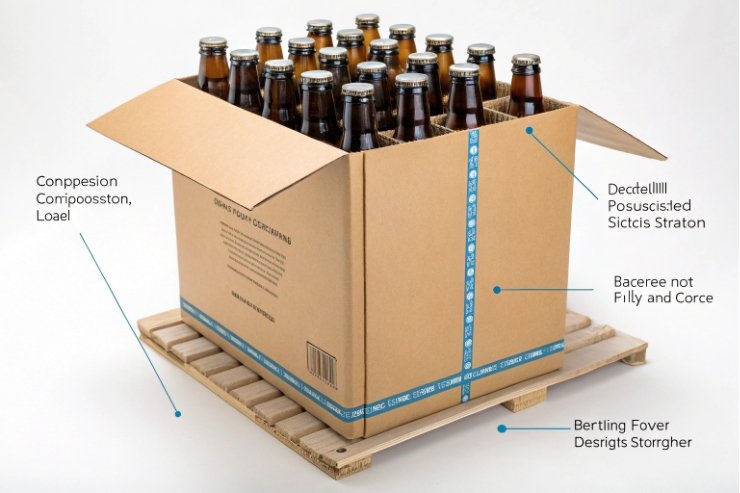
Start with the outer carton, not the void fill
For most wholesale routes, a double-wall corrugated fiberboard 1 carton is the baseline. For heavy spirits bottles, long export routes, or stacked pallets, a stronger grade or triple-wall may be needed. The carton must resist compression because glass hates top-load shock. A weak carton collapses, then the bottles take the load.
Also, design the carton so it stays “full.” If the pack count is 12, do not ship 11 with loose filler. That extra space becomes momentum during drops and turns.
Choose dividers that stop both impact and rubbing
Simple corrugated partitions work well when the fit is tight and the bottles are not too heavy. For premium or tall formats, molded pulp trays (top and bottom) or die-cut corrugated inserts provide better neck control. Foam can work, but only when it is shaped to the bottle. Loose foam sheets still allow movement.
A detail that matters: protect the shoulder and neck. Many breaks start at the shoulder when bottles knock under vibration. A top tray that locks the neck is often more valuable than more padding at the base.
Fill every void, but do it the right way
Void fill only helps if it prevents movement. If the bottle can shift, air pillows can pop or migrate. For parcel networks, use firm cushioning like molded pulp, engineered paper, or foam that keeps shape.
| Shipping reality | Best inner support | Why it works | Common mistake |
|---|---|---|---|
| Parcel / courier | Molded pulp or foam-in-place | Stops movement after drops | Bubble wrap only, bottles still rattle |
| LTL mixed freight | Die-cut corrugated + neck support | Handles vibration and side hits | Partitions with too much clearance |
| FTL / container | Tray packs + strong carton | Controls stacking compression | Thin cartons that soften in humidity |
| Empty bottles bulk | Layer pads + cell dividers | Prevents scuffing and chips | No separation, glass rubs for days |
When the goal is low breakage, the rule stays the same: make the bottle part of a fixed structure. Do not let it “float” inside the case.
Do corner boards, anti-slip sheets, and stretch/shrink wrap really help on pallets?
A good case pack can still fail if the pallet acts like a loose stack. Most pallet damage is not one big crash. It is small shifts, then a corner collapses, then cartons crush.
Yes, load-stabilizing parts matter. Corner boards protect edges, anti-slip sheets reduce layer slide, and correct stretch or shrink wrap turns cartons into one stable unit load.
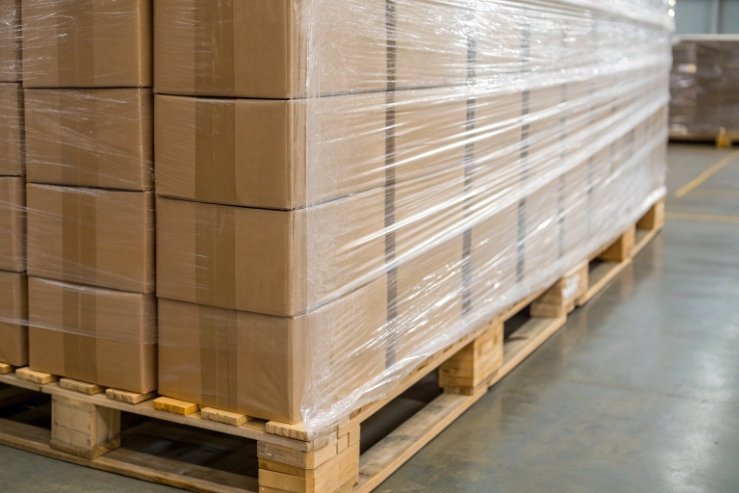
Build the pallet like a “single block”
Cartons should not overhang the pallet. Overhang causes edge crush and makes forklift bumps more damaging. Keep the load square and aligned. Use a top sheet to spread strap or wrap pressure and to reduce dust and moisture contact.
Corner boards do two jobs. They protect carton edges from wrap tension. They also stiffen the stack so impacts do not dent the corners. Edge protectors on long sides help when strapping is used.
Slip sheets 2 are simple but powerful. They stop layer-to-layer creep during braking and turns. They also reduce the need for extreme wrap tension, which can crush lower cartons.
Wrap technique is as important as wrap material
Too little wrap allows shifting. Too much wrap crushes cartons and transfers stress into glass. A repeatable wrap program matters more than a thicker film. Most stable loads use:
-
strong wrap at the base, to lock to the pallet deck
-
consistent overlap and enough revolutions
-
a mid-load band for stiffness
-
a top cap or top sheet under the final wraps
Shrink wrapping can work well for full pallets, but it needs correct heating and ventilation. If done poorly, it creates weak spots and warped cartons.
Pallet patterns and layer discipline
For compression strength, column stacking is often best because vertical corners line up. For stability, interlock patterns can resist slide, but they reduce compression strength. Many glass shippers use column stacking plus anti-slip sheets to get both benefits.
| Stabilizer | Main benefit | Best use | Risk if misused |
|---|---|---|---|
| Corner boards | Edge protection + stiffness | Tall pallets, export, LTL | Too short, does nothing |
| Anti-slip sheets | Stops layer slide | High vibration routes | Wrong size, wrinkles create tilt |
| Stretch wrap | Load unitization | Most pallet shipments | Too tight, carton crush |
| Strapping | Extra restraint | Heavy loads, long export | Cuts cartons without protectors |
| Top sheet / cap | Spreads pressure | Any strapped or wrapped load | Skipped, wrap bites corners |
These add-ons look small, but they prevent the “first shift.” Once a pallet shifts, breakage rises fast.
How do bottle orientation and TI/HI planning reduce damage?
Many teams focus on the case design and forget the pallet math. Orientation and TI/HI choices decide where the load travels and how stable the center of gravity is.
Ship bottles upright when possible, because glass handles vertical load better than side load. Then use TI/HI planning to keep pallets short, square, and compression-safe, with heavy cases low and no overhang.
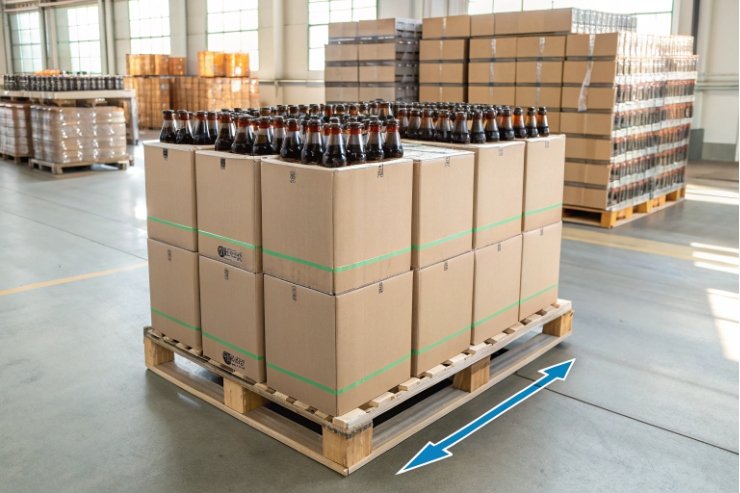
Orientation: upright is usually safer for filled bottles
Upright bottles load the base and the standing ring area. That is a strong path, especially when cases are designed for it. Sideways bottles can create point loads on shoulders and closures. They can also leak if the closure system is not built for side pressure and temperature swings.
There are exceptions. Some retail packs and wine shippers use horizontal layouts for presentation or fit. When that happens, the insert must cradle the shoulder and neck so the bottle does not become the “beam” of the package.
For empty bottles, upright tray packs are common because they reduce scuffing and keep finishes cleaner. Still, empty bottles chip easily at the mouth. A top tray that locks finishes is critical.
TI/HI planning: make the pallet stable before you make it tall
TI is cases per layer. HI is layers per pallet. This is not only about fitting more product. It is about reducing compression, reducing wobble, and matching equipment limits.
A pallet that is too tall becomes top-heavy. It tips easier and sees more sway during transport. It also suffers more from wrap stretch and layer slide. In many routes, a slightly lower HI saves more money in damage than it costs in freight.
A strong plan usually follows these rules:
-
keep a consistent footprint, no overhang
-
keep heavy SKUs on lower layers
-
keep the height within warehouse and trailer limits
-
use the same pattern every time, so wrapping and handling stay consistent
| Planning choice | What it changes | Better choice for glass | Why |
|---|---|---|---|
| Upright vs side | Load direction | Upright for most filled bottles | Less shoulder stress, less leak risk |
| High HI | Height and sway | Moderate HI | Less tip risk and carton crush |
| Loose mixed layers | Weak corners | Full layers by SKU when possible | Stronger compression path |
| Overhang | Edge crush | Flush to pallet edges | Fewer corner failures |
When TI/HI is treated as engineering, not guesswork, the load becomes calmer. Calm loads break less glass.
Which ISTA tests simulate real route hazards for glass bottles?
Many packaging failures look random, but the hazards are repeatable. Drops, vibration, compression, and impact happen on every route. Testing turns “maybe safe” into “proved safe.”
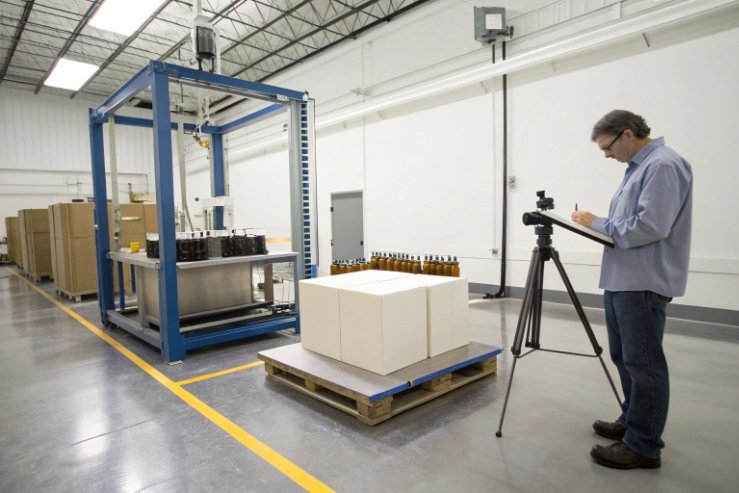
ISTA tests simulate common distribution hazards through controlled sequences of drops, vibration, compression, and impact. For glass bottles, ISTA 3-series is often used for real-world simulation, while retailer 6-series targets specific networks.
Match the test to the distribution channel
The biggest mistake is picking one test for every shipment. Parcel is not the same as pallet freight. Ocean container is not the same as local truck.
Common matching logic looks like this:
-
Parcel delivery: many drops, many handoffs, strong random vibration
-
LTL freight: forklift bumps, edge impacts, stacking compression, mixed loads
-
Unitized pallets: long vibration plus compression, plus occasional impacts
-
Export container: long vibration, humidity cycles, and handling at ports
ISTA procedures 3 are structured around these realities. The 1-series is more basic screening. The 2-series adds more realism. The 3-series is more like a distribution simulation. Retailer 6-series procedures can be strict because they reflect known handling in those networks.
What to watch during testing for glass
Glass damage is not only “broken.” Chips, scuffs, and micro-cracks matter because they become returns later. During tests, track:
-
bottle-to-bottle contact marks
-
neck and finish chipping
-
base heel cracks
-
carton corner crush and bulge
-
pallet shift and wrap failure (for unit loads)
A strong habit is to test, then cut open the pack and inspect contact points. Most improvements come from removing a single movement path.
| Route type | Typical hazard | ISTA-style focus | Packaging improvement target |
|---|---|---|---|
| Parcel | Drops + high vibration | Drop + random vibration 4 + compression | Lock bottles, stiff carton, stop rattle |
| LTL freight | Side hits + stacking | Impact + compression + vibration | Edge protection, corner strength, anti-slip |
| Full pallet | Shift + long vibration | Unit load vibration + compression | Wrap program, corner boards, pattern discipline |
| Export | Humidity + long handling | Long vibration + compression | Moisture-resistant cartons, stronger pallets |
Testing is also a language for suppliers and buyers. When the test is agreed, the packaging spec becomes clear, and damage arguments fade.
Conclusion
Preventing breakage is controlled motion management: isolate every bottle, stiffen every carton, lock every pallet, and validate with channel-matched ISTA-style tests.
Footnotes
-
Material consisting of a fluted corrugated sheet and one or two flat linerboards, widely used for shipping boxes. ↩ ↩
-
Thin pallet-sized sheets made of plastic, fiberboard, or corrugated board used to stabilize stacked loads. ↩ ↩
-
Standards for package testing to ensure protection during transport, developed by the International Safe Transit Association. ↩ ↩
-
A testing method simulating real-world transport conditions where vibration intensity and frequency vary unpredictably. ↩
` ↩






