
When a new bottle sample arrives, the key question is simple: can this container really protect your product and your brand on a fast production line?
To judge glass bottle quality, we look at visual defects, neck and finish geometry, weight and wall distribution, strength tests, and residual stress patterns under a polariscope.
Once we move beyond “it looks fine,” bottle inspection becomes a system. We define which defects are critical, how far dimensions can drift, and what level of stress or wall variation we accept before we reject a lot.
Which visual defects in a glass bottle are critical rejects?
Some flaws only hurt appearance, but others can lead to leaks, glass splinters, or sudden breakage before the product even reaches a customer.
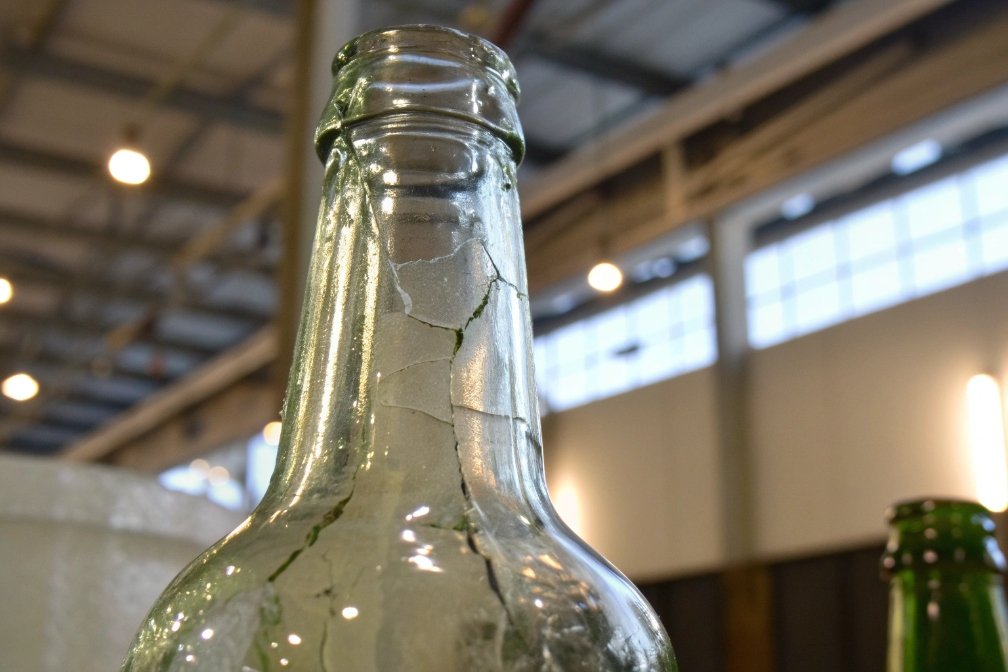
Critical visual defects include cracks, deep blisters and large bubbles, stones, cords, bird swings, sharp seams, and any chips in the sealing finish or load-bearing base.
Critical vs major vs minor defects
In real production we cannot look for absolute perfection. So we divide defects into three groups and apply an AQL (Acceptable Quality Level) sampling plan 1{#fnref1} to each lot:
- Critical: safety or function risk. Any unit with these is a hard reject.
- Major: affect function or appearance enough to upset a customer.
- Minor: only cosmetic, and the product still works and seals.
For critical defects, the allowable level is usually zero. We either have none, or we stop and investigate the lot. This is because one cracked or badly chipped bottle can cause injury, line stoppage, or full product recalls.
Major and minor defects have higher AQL values. For example, a light cosmetic scuff may be acceptable up to a low percentage, while a misshaped shoulder that still seals might have a stricter limit.
Typical critical visual defects in glass bottles
When we train inspectors, we give them real samples and a simple message: “If you see this, reject it without debate.” These usually include:
- Cracks anywhere in the body, neck, or base.
- Finish chips and nicks on the lip, thread, or sealing surface.
- Deep blisters or large bubbles near the surface, especially on the neck or base.
- Stones (hard inclusions of unmelted batch or refractory).
- Cords (streaks of glass with different composition and refractive index).
- Bird swings (fine glass strings that span the internal space).
- Sharp, over-pronounced seams with edges that can cut or break easily.
- Heavy checks around the heel or shoulder.
If you need a shared vocabulary for these, a quick reference on common glass container defects (stones, blisters, cords, checks) 2{#fnref2} helps align suppliers, inspectors, and brand teams.
These defects either create stress points or give a poor sealing surface. Stones and cords can act like internal cracks when the bottle is under load, pressure, or thermal shock. Bird swings can break into shards inside the product. Sharp seams and chips can cut operators or end users.
We also watch for:
- Large surface scratches and abrasion bands.
- Heavy scuffing from conveyor contact.
- Serious misshaping of the base that affects standing stability.
Some of these will be major rather than critical, but they still damage shelf image and can raise breakage rates in real distribution.
| Defect type | Typical class | Why it matters |
|---|---|---|
| Cracks / heavy checks | Critical | High breakage and injury risk |
| Finish chips | Critical | Poor sealing, glass splinters |
| Stones / cords | Critical | Local stress, early breakage |
| Bird swings | Critical | Internal glass shards |
| Deep surface blisters | Critical | Weak wall and stress concentration |
| Heavy seam flash | Major–Critical | Cuts, break risk, poor appearance |
| Light scuffs | Minor | Cosmetic, but may grow with handling |
How do neck straightness and finish flatness predict sealing performance?
Even if the body looks perfect, a crooked neck or warped finish ring can destroy sealing performance and create complaints about leaks or flat product.
Neck straightness, finish flatness, roundness, and thread accuracy tell us how well a closure will center, compress its liner, hold torque, and keep the product sealed over shelf life.
What we check on the neck and finish
The neck and finish are where glass and closure meet. So we look at them with much tighter tolerances than the rest of the bottle. Key points include:
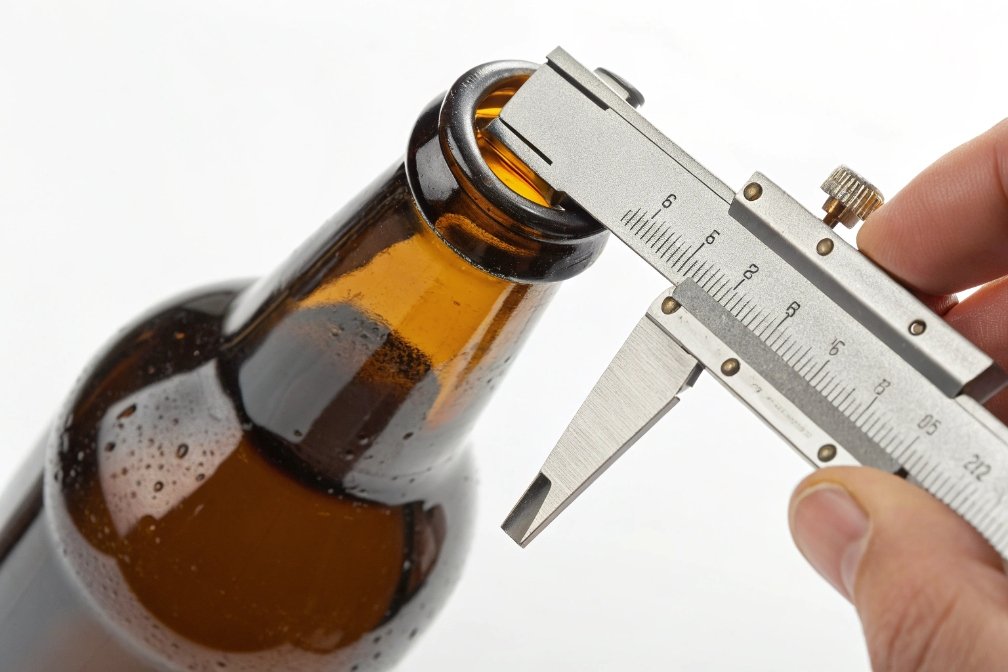
- Neck straightness: the neck axis must align with the bottle axis. If the neck leans, cappers struggle to place closures straight. This can cause cross-threading or uneven liner contact.
- Finish flatness: the top sealing surface must be level within a small tolerance. A tilted or wavy top land leaves gaps under the closure liner.
- Roundness / ovality: an out-of-round finish cannot compress the liner evenly, and some areas may leak.
- Thread or lug profile: height, pitch, lead, and start must match the closure drawing.
We confirm these with:
- Simple visual checks and backlit inspection.
- Ring and plug gauges to check the finish dimensions.
- Profile projectors or 3D measuring devices for detailed checks.
Where brands often get surprised is that “close enough” geometry can still leak under real torque and shelf-life conditions. That’s why closure suppliers publish guidance on glass container finishes and matching closures 3{#fnref3} (finish type, liner choice, application conditions).
How sealing problems show up later
If neck and finish geometry drift out of control, the problems appear at different stages:
- On the filling line, cappers may show high reject rates for skewed caps or torque out of range.
- In warehouse storage, bottles may weep, leak, or lose carbonation.
- On shelf and in transport, we may see sticky labels, mold on necks, or flat beverages.
So we do not judge the finish alone. We check it under real closing conditions:
- Measure application torque and removal torque on filled bottles.
- Run vacuum or pressure tests depending on the product.
- Do tip tests or inverted storage to see if any seepage appears over time.
If the neck is straight, the finish is flat and round, and the threads are clean and correct, closures center well and compress their liners evenly. This protects carbonated drinks, sensitive sauces, perfumes, and pharmaceutical products against leaks, oxygen ingress, and loss of aroma.
| Finish feature | Main risk if out of spec | How we detect it |
|---|---|---|
| Neck lean | Cross-threading, uneven torque | Visual, neck concentricity tests |
| Top land flatness | Local leaks, low vacuum retention | Flatness gauges, dye/fit checks |
| Ovality | Partial liner contact | Roundness measurement, ring gauge |
| Thread profile defects | Loose caps, over-torque, pop-offs | Gauges, torque curves |
Can weight and wall thickness variation forecast breakage on the line?
Two bottles can weigh the same, but if one has thin spots at the shoulder or heel, it will break first under pressure, impact, or thermal shock.
Weight and wall variation tell us how well glass is distributed; tight control reduces on-line breakage, improves impact and pressure strength, and stabilizes stacking performance.
Why total weight is not enough
A bottle drawing often gives a target weight. But real strength comes from where the glass sits. Too much glass in the label panel and too little at the heel or shoulder creates weak points, even if the total weight looks correct.
So we do two types of checks:
- Gross weight
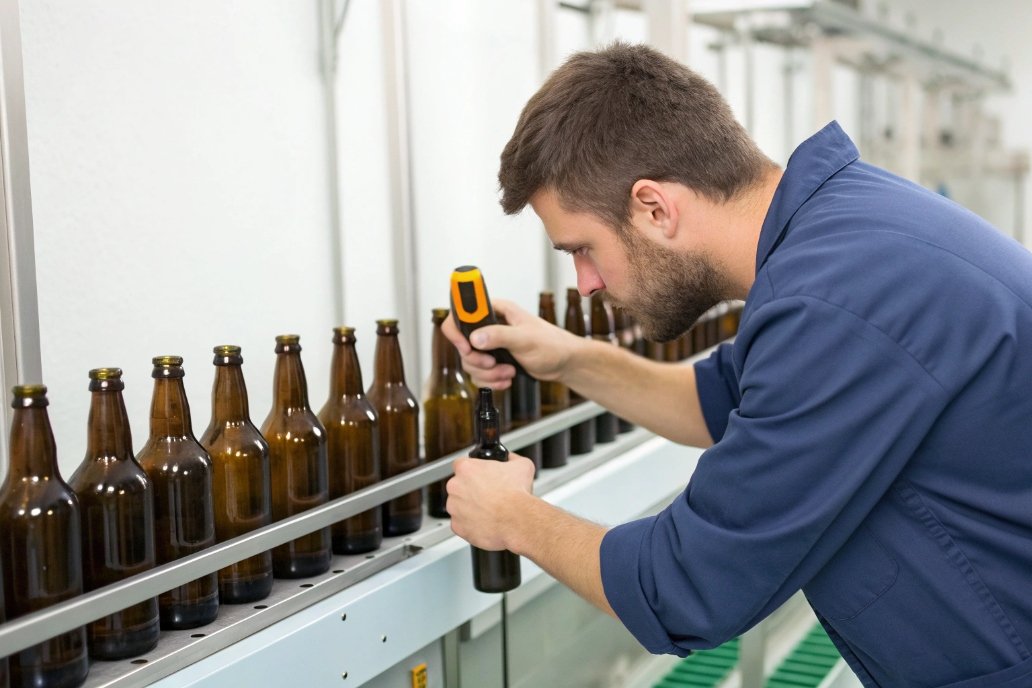
We weigh single bottles to confirm they match the nominal weight within a small tolerance. Large deviations signal forming problems or wrong gob weight. - Section weight / wall thickness
We use wall thickness gauges or run destructive tests by cutting and measuring sections at:- Shoulder
- Body (label panel)
- Heel
- Base and push-up
We want a smooth distribution that matches the design. No extreme thin stripes and no heavy, wasted glass in low-stress areas.
How wall variation relates to breakage
Thin local areas raise stress concentrations. In production and real life, these show up as:
- Impact breaks at the heel after contact with conveyors or dividers.
- Vertical load failures under top load in pallets or under heavy caps.
- Burst failures under internal pressure from carbonation or hot filling.
- Thermal shock failures during hot wash, pasteurization, or rapid cooling.
So strength tests go hand in hand with thickness checks. A practical overview of common glass bottle mechanical tests (internal pressure, vertical load, impact) 4{#fnref4} can help teams pick the right test package for their product.
Handling, friction, and surface durability
Wall variation is not the only factor that forecasts breakage. The surface condition also matters:
- Scratches from rough conveyors, guides, or dirty crates can create crack starters.
- High coefficient of friction (COF) between bottles causes shingling, jams, and side scuffs.
If you are diagnosing line jams and scuffing, it helps to understand how COF affects packaging conveyance and handling 5{#fnref5} (especially for coated glass on wet or dusty lines).
So we check:
- Abrasion and scratch resistance on coated bottles.
- Static and dynamic COF on real production lines.
- Condition of hot-end and cold-end coatings.
Good glass distribution plus clean, low-friction handling keeps on-line breakage low and extends bottle life in returnable systems.
| Check item | What it predicts |
|---|---|
| Gross weight | Gob and forming stability |
| Wall thickness profile | Impact, pressure, and thermal strength |
| Vertical load test | Stacking and capping safety |
| Burst test | Carbonation and handling pressure |
| COF and abrasion resistance | Conveyor behavior and scuffing |
What does a polariscope reveal about residual stress in glass bottles?
Two bottles can look identical and pass basic tests, but one hides locked-in stress that will turn into cracks later in the field.
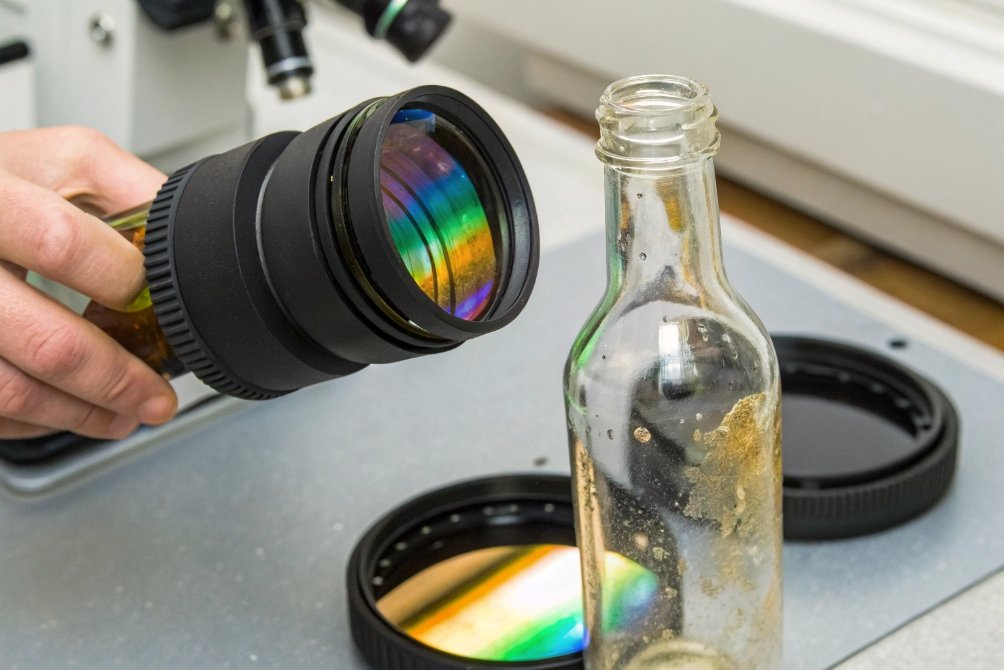
A polariscope makes internal stress patterns visible as colored fringes, showing whether a bottle was annealed evenly or is at high risk for delayed breakage.
How a polariscope works in simple terms
Glass hardens as it cools. If some parts cool faster than others, they freeze in different states of tension and compression. This is residual stress. It can sit “quietly” inside the glass and then show up as:
- Spontaneous cracks on the shelf.
- Unexpected breakage during hot filling or washing.
- Failures at small impacts that should be harmless.
A polariscope uses polarized light to reveal these stress fields. If you want a clear visual explanation of what those fringes mean, this overview of polariscope stress patterns in glass 6{#fnref6} is a useful reference.
What we look for in real inspections
In production, we often use:
- Bench polariscopes for lab checks and sampling.
- Online stress viewers that give a quick go/no-go signal.
We focus on:
- Finish and neck: high stress here leads to ring cracks, finish breakage during capping, or chips when closures are applied.
- Shoulder and heel: high stress in these curved areas increases breakage during impact, pasteurization, and thermal cycling.
- Base / push-up area: for carbonated or hot-fill products, this must be stable.
We also look at overall stress balance. A bottle with one very stressed zone is more dangerous than one with a low, even stress pattern. Balanced stress makes the bottle behave more predictably under load.
Linking stress patterns to performance tests
Polariscope readings do not stand alone. We connect them to strength tests:
- Bottles with heavy stress fringes often fail thermal shock tests at smaller temperature differences.
- They also show lower impact resistance in drop or pendulum tests.
- Under internal pressure, cracks may start in exactly the zones where fringes were strongest.
So we use the polariscope as an early warning tool. If a new mold or a new annealing setting produces bottles with bad stress patterns, we fix that before we send those bottles into full-scale filling. This ties directly to why proper annealing reduces residual stress and delayed breakage 7{#fnref7} in real container production.
| Area we inspect | High-stress risk | Typical field failure |
|---|---|---|
| Finish and neck | Ring cracks, chipping, cap damage | Leaks, broken necks during opening |
| Shoulder | Stress concentration on curves | Cracks in pasteurization or hot filling |
| Heel | High local tension | Breaks from conveyor bumps and impacts |
| Base / push-up | Uneven support under pressure | Bottom bursts under carbonation or drops |
When residual stress is under control, burst strength, impact resistance, and thermal shock performance all become easier to manage. The polariscope gives us a fast visual “map” of how safe the bottle really is inside.
Conclusion
When we combine strict visual inspection, precise neck and finish control, smart weight and wall checks, and polariscope stress analysis, we can judge glass bottle quality with confidence before it reaches your filling line.
Footnotes
-
Explains how AQL sampling works so you can set realistic accept/reject rules for production lots. ↩ ↩
-
Defines common glass defects so teams can classify rejects consistently across supplier and customer. ↩ ↩
-
Helps match closure types, liners, and application conditions to the correct glass finish geometry. ↩ ↩
-
Summarises standard packaging strength tests (pressure, top load, impact) used to predict breakage risk. ↩ ↩
-
Explains coefficient of friction and why it drives conveyor jams, scuffing, and line stability. ↩ ↩
-
Shows how polariscope fringe patterns indicate internal stress that can cause cracks and delayed breakage. ↩ ↩
-
Practical explanation of annealing (lehr) and how it reduces residual stress in glass containers. ↩ ↩






