
Choosing a glass food container supplier can eat months and still give you surprises on the line. A simple, checklist-based shortlist saves time and protects your brand.
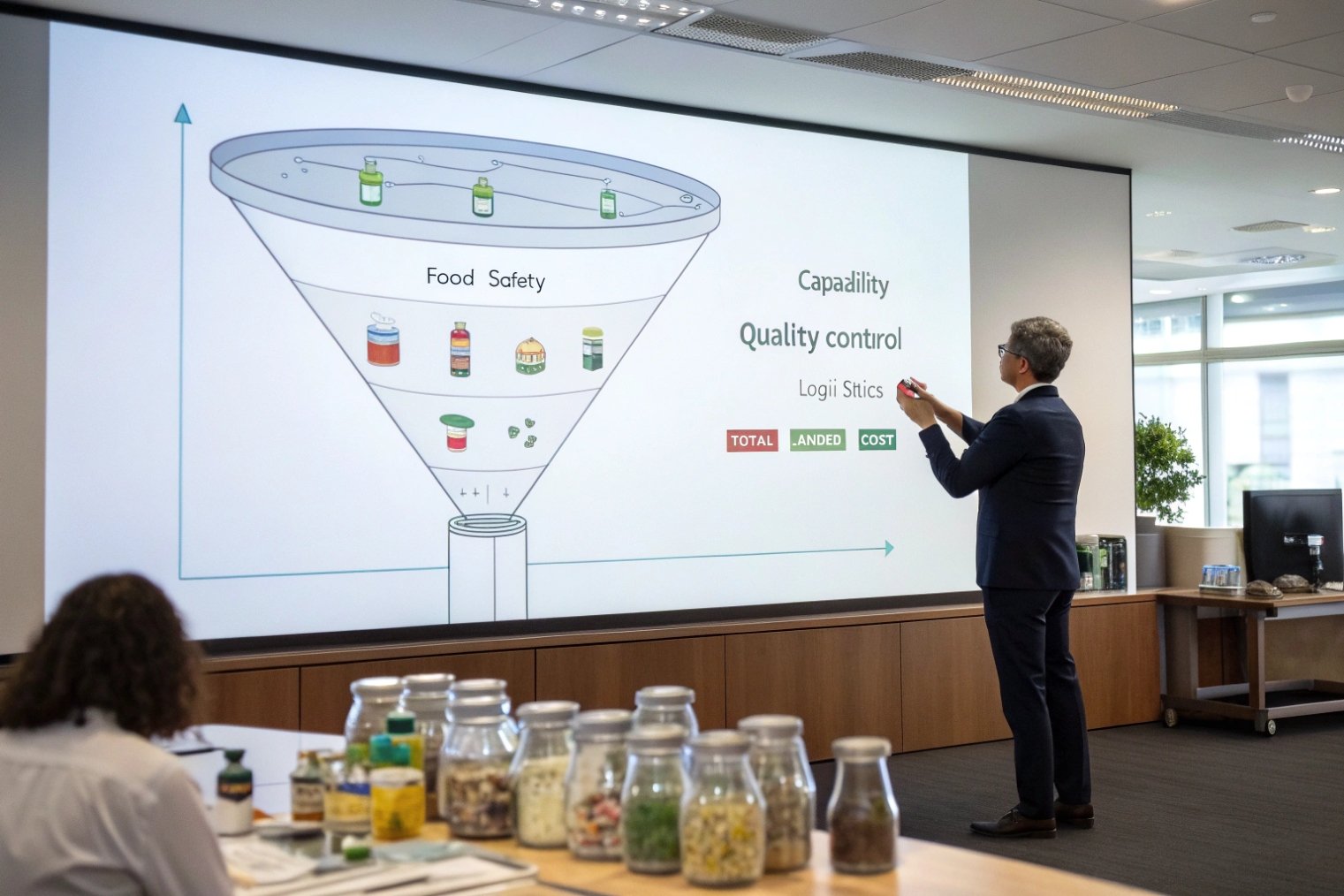
You shortlist wholesale glass food container suppliers efficiently when you turn the process into a filter: certify food safety first, then test capability, quality control, and logistics fit, and only then compare total landed cost and digital collaboration.
Most teams start with price or beautiful product photos. This usually leads to missed risks in food safety, mold control, sealing quality, and delivery performance. A better way is to build a fixed evaluation grid and move suppliers through it, step by step, until only the ones that fit your real needs remain.
What certifications (ISO, FDA, REACH, SGS) should be non-negotiable?
Many factories say they are “food grade” but cannot show any paperwork. This gap is where recalls, customs holds, and retailer delistings begin.
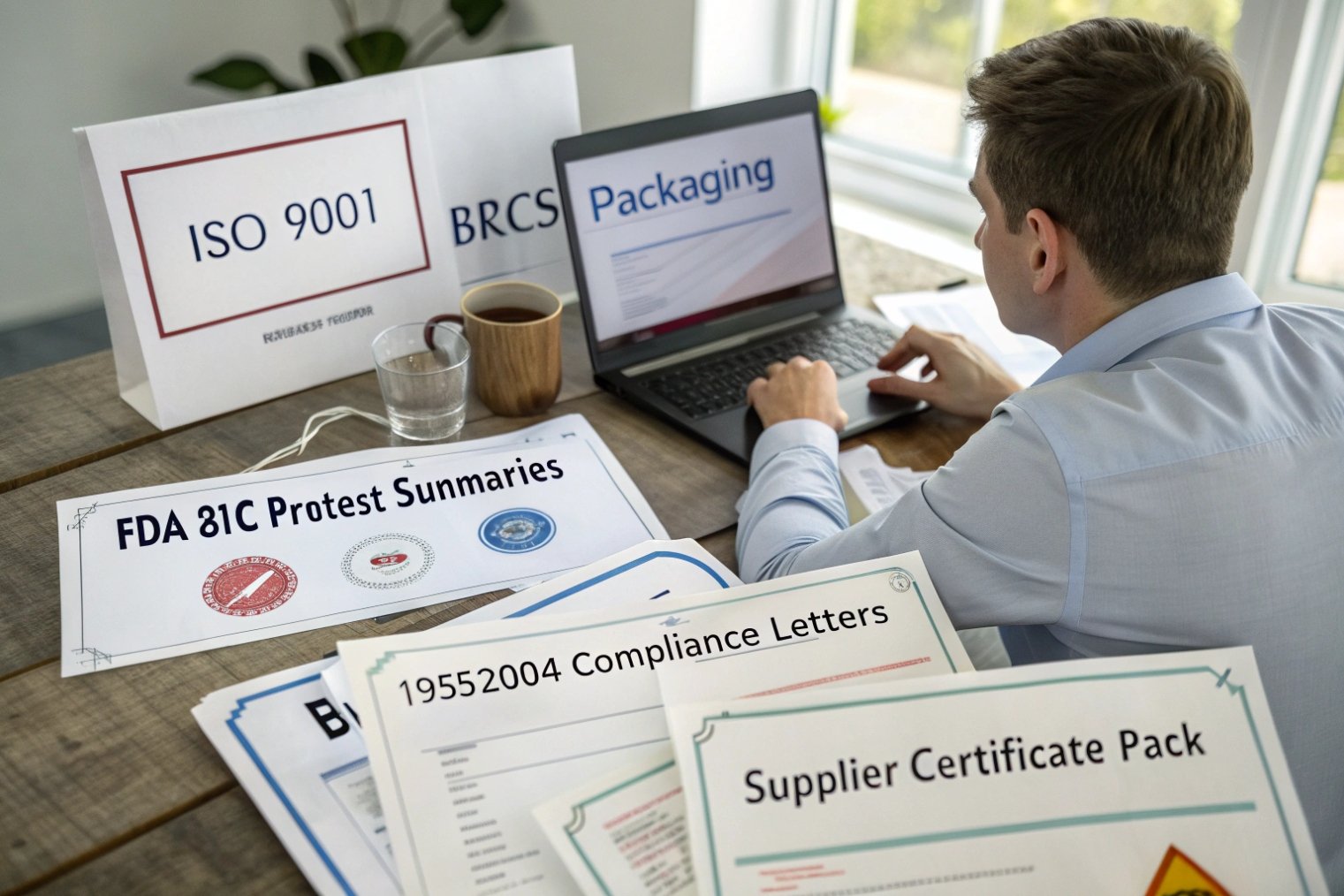
Non-negotiable certificates are a documented quality system plus food-contact compliance. At minimum I ask for ISO 9001, FDA or EU food-contact reports, REACH compliance, and recent third-party test reports from labs like SGS or TÜV, plus BRCGS Packaging for retailer projects.
Core system and food safety certifications
For the shortlist, certifications are a fast risk filter. Many suppliers can blow glass, but not many can prove consistent, safe production for food.
First, there is the quality management backbone. ISO 9001 quality management system standard 1 is basic. It shows the plant has controlled processes, document control, and corrective action. Without it, every other certificate stands on weak ground.
Then you need food-contact compliance matched to your market. For the US market, I ask for test reports against FDA 21 CFR Part 174 (Indirect Food Additives: General) 2 for food-contact glass and for the closure and liner system. For Europe, I look for compliance with Framework Regulation (EC) No 1935/2004 3 and sometimes country rules like LFGB in Germany. For the Middle East or Latin America, importers often follow EU or FDA frameworks, so these reports still help.
Chemical compliance matters because decoration, coatings, and colors may contain heavy metals or solvents. Here, the EU REACH regulation 4 and sometimes RoHS come in. I ask for a declaration plus recent test reports, not just a one-page statement.
For large retailers or co-packers, schemes like BRCGS Packaging Materials standard 5 or FSSC 22000 show a stronger food safety culture in the packaging plant, not only in the filler’s factory. These standards check hygiene, pest control, glass and brittle material control, and foreign body risk.
Here is a simple way to read the certificate set:
| Area | Minimum to ask for | Nice to have for big customers | What I avoid |
|---|---|---|---|
| Quality management | ISO 9001 | ISO 14001, ISO 45001 | No system, only “internal rules” |
| Food-contact glass | FDA or EU 1935/2004 test reports | Country-specific (LFGB, etc.) | No recent tests |
| Chemical / decoration | REACH declaration + lab reports | Heavy metal full panel, migration maps | “All safe” with no data |
| Food safety culture | Internal HACCP | BRCGS Packaging, FSSC 22000 | No documented HACCP |
| Third-party lab evidence | SGS / TÜV / Intertek, etc. | Regular annual renewal | Reports older than 3 years |
How to verify certificates in practice
In real projects, certification checks can drown buyers in PDFs. So I use a simple checklist.
First, I ask for a “certificate pack” in one email: ISO 9001, any food safety standard, three latest food-contact reports, and one decoration or coating report. I check if the legal entity name and plant address match my supplier’s contract details. Any mismatch triggers more questions.
Second, I look at issue dates and scope. A test from eight years ago for a completely different bottle means nothing. A BRCGS certificate that only covers “plastic containers” does not protect a glass line.
Third, I ask who ordered the tests. If the supplier invests in routine testing under their own name, they take responsibility. If every report belongs to a trading company, then the real manufacturer may stay hidden.
Finally, I connect this step with sample review. When samples arrive, I confirm the exact bottle drawing and color code shown in the test report or declaration. This ties paperwork, product, and process together so the certificate is not just a logo in a slide deck.
Which capacity range and mold library cover 80% of your SKUs?
Many brands jump straight into custom designs and private molds. This looks exciting, but it locks cash in tooling and slow-moving inventory long before demand is stable.
For most food brands, 80% of SKUs sit between 100 ml and 1,000 ml with standard neck finishes. A wide standard mold library plus flexible closures lets you cover the bulk of your assortment before you invest in custom molds for a few hero SKUs.

Map your real demand before talking molds
The smartest shortlist work happens in Excel before any factory visit. I export the last 12–24 months of sales and group SKUs by filled volume and neck finish. This simple step shows which volumes really matter and which ones are noise.
In most food projects, the picture is clear. There is a cluster of small jars for condiments, sauces, spreads, or baby food. There is a middle band for jams, pickles, ready meals, or nut butters. Then there are a few large sizes for horeca or club stores.
A typical pattern looks like this:
| Capacity band | Common use cases | Share of SKUs (rough) | Neck finishes to target |
|---|---|---|---|
| 30–60 ml | Samples, mini jams, gift packs | 5–10% | 38 mm, 43 mm |
| 100–120 ml | Honey, sauces, premium condiments | 15–20% | 43 mm, 48 mm |
| 180–250 ml | Jams, pickles, spreads | 25–30% | 58 mm, 63 mm |
| 300–500 ml | Pasta sauces, pickles, nut butters | 25–30% | 63 mm, 70 mm |
| 720–1,000 ml | Horeca, family packs, bulk | 10–15% | 82 mm and larger |
With this map, I ask each supplier for their existing mold list in those capacity bands and neck finishes. A strong manufacturer will cover most of these with standard molds. If they propose a new mold for every line in my catalog, that is a red flag for both cost and lead time.
At this stage, I also ask clear questions about mold ownership. Who owns the private mold if we invest? Where is it stored? What happens if we change suppliers? Having these answers in the shortlist stage prevents lock-in later.
Use standard molds first, then customize where it pays
Standard molds are not boring. When the mold library is big enough, you can combine many body shapes, shoulder forms, and heights with different closures and decoration.
Here is how I balance standard and custom in real sourcing projects:
First, I protect operational speed. For the top 80% of volume, I choose molds that already run well on the supplier’s lines. It cuts startup risk and tooling delays. It also makes it easier to move volume between lines or even between plants inside the same group.
Second, I protect brand needs. For a few hero SKUs, like a flagship jam or a premium sauce line, I consider semi-custom or full-custom molds. Semi-custom means small changes on a standard body. Full-custom means new tooling. I ask suppliers to model the payback: tool cost vs expected extra margin or shelf impact.
Third, I check closure compatibility early. I ask the supplier to suggest matching lids, lug caps, or twist-off closures, with liner options suited to my product’s pH, oil content, and processing method. This is the moment to avoid special neck finishes that force me to depend on rare closures.
Finally, I track flexibility. In my shortlist sheet, I note how many existing molds each supplier can offer for my main capacity bands and finishes. The supplier with the broadest relevant library usually wins, even if unit price is a little higher, because it cuts future design constraints and tooling spend.
How do you audit quality controls for size, capacity, and sealing?
Most quality problems in glass jars do not show in catalog photos. They appear as leaky lids, hard-to-close jars, or small dimensional drift that kills your fill-line efficiency.
To audit quality, do three things: inspect samples for clarity and defects, review in-process checks for dimensions and capacity, and run sealing tests with your own closures, backed by SPC data and AQL reports from a pilot order.
What to ask for in the supplier’s QC system
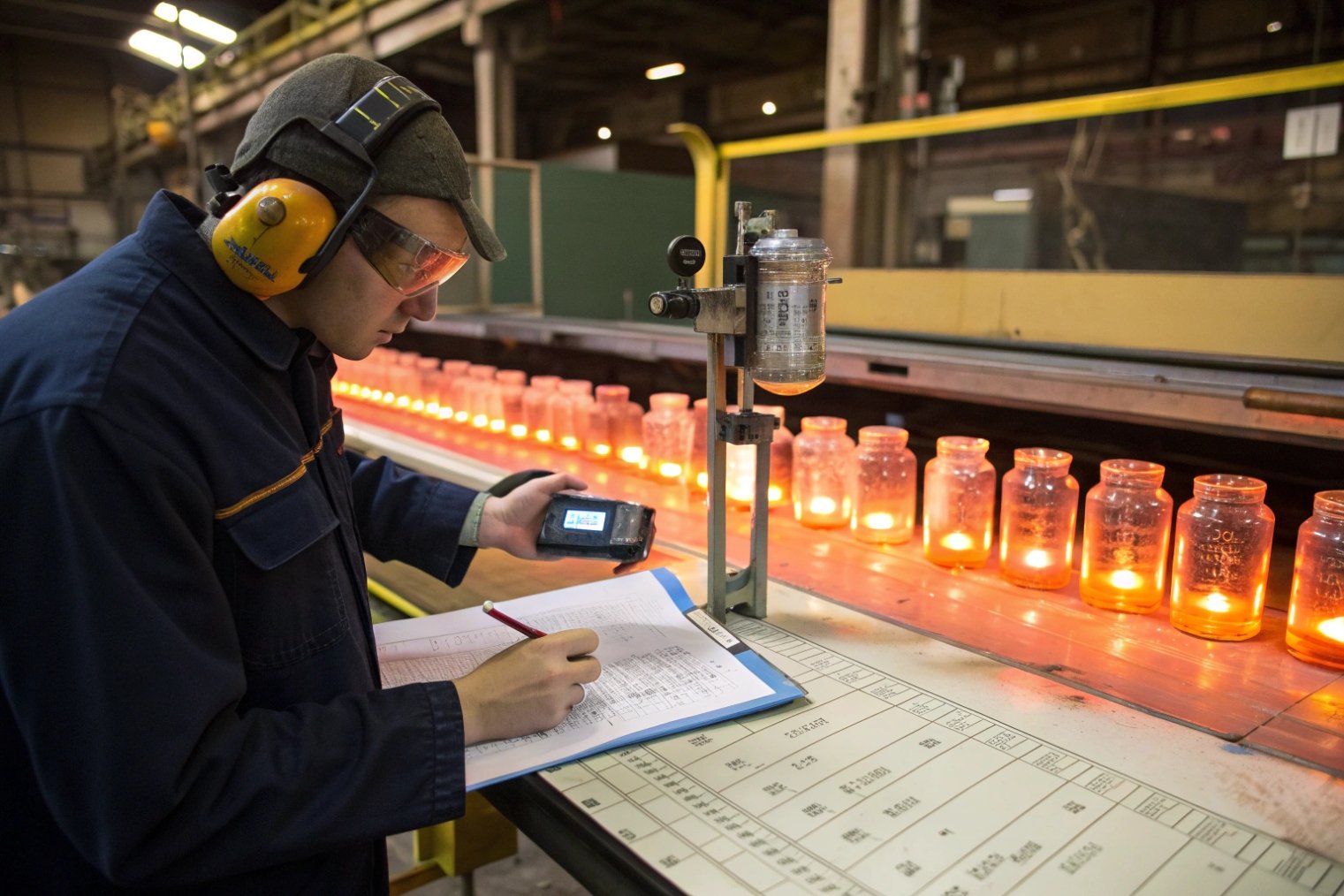
On paper, most factories say they do 100% inspection. In reality, only some have structured control plans. During shortlisting, I look at three layers: incoming raw material, in-process checks, and finished product inspection.
For size and shape, I ask for drawings with full tolerances and gauge plans. I want to see which dimensions they measure, how often, and with what instruments. Key dimensions are total height, outer diameter, neck finish, and thread details. If they have dedicated go/no-go gauges for the neck, it is a good sign.
For capacity, I ask how often they perform brimful volume and nominal fill checks during a shift. I ask them to share recent Statistical Process Control (SPC) 6 charts or at least data summaries, like Cp/Cpk values for brimful volume on recent runs. If they cannot show any data, it usually means capacity is only checked at lab approval, not continuously.
For sealing, I ask which tests they run. Simple vacuum tests, torque tests, and hot-fill simulations are enough at the start. Later, I bring my own closures or specify closure types and ask them to run joint tests.
A basic audit checklist looks like this:
| QC area | What I look for | Practical questions to ask |
|---|---|---|
| Dimensions | Drawings, tolerances, neck gauges | Which dimensions every 30 minutes? |
| Capacity | Routine brimful tests + SPC summaries | What are Cp/Cpk and last three batch results? |
| Sealing | Vacuum, torque, leakage tests | How do you simulate my filling process? |
| Visual defects | AQL sampling with clear defect catalog | What is your current PPM for key defect types? |
| Records | Traceable logs per batch for at least 2 years | Can you show me a recent full QC report? |
Validate on real product: samples, pilot orders, and transit tests
Paper systems are only half of the story. Before final selection, I always test real product from the same plant that will produce my orders.
First, I request pre-production samples from standard running molds. I check glass clarity, color consistency, and obvious defects: blisters, stones, cords, and mold seams. I also test neck gauge with standard closures and quickly see if there is any tight or loose fit.
Second, I run small filling and sealing tests in-house or with a partner. We track sealing torque, vacuum after cooling, and leakage under inversion or mild pressure. For hot-fill or retort products, we simulate the full process. Any recurring leakage or chipped finishes goes back to the supplier with photos and counts.
Third, I place a pilot order with third-party inspection. Before shipment, an inspector uses defined AQL levels to check dimensions, visual defects, and packaging. I ask them to do random sealing tests too. Based on this, I get a real defect PPM and a sense of the supplier’s transparency. If they argue with every finding, I think hard before moving to higher volume.
Finally, I test logistics. I send at least a pallet or a container on the intended route and monitor breakage. I check palletization, corner protection, and inner dividers. Some factories adjust packaging once they see my transit damage photos. Suppliers who respond fast and update their packaging become long-term partners. Those who blame only the carrier usually drop off the shortlist.
What Incoterms, lead times, and defect policies lower procurement risk?
Even with good product, wrong commercial terms can wipe out margin. Hidden freight, duties, and defect costs often appear only after launch.
To lower risk, match Incoterms to your logistics strength, lock realistic lead times in the contract, define defect PPM targets, and agree upfront on credit, rework, or replacement rules so there are no surprises later.
Choose Incoterms that match your control and resources
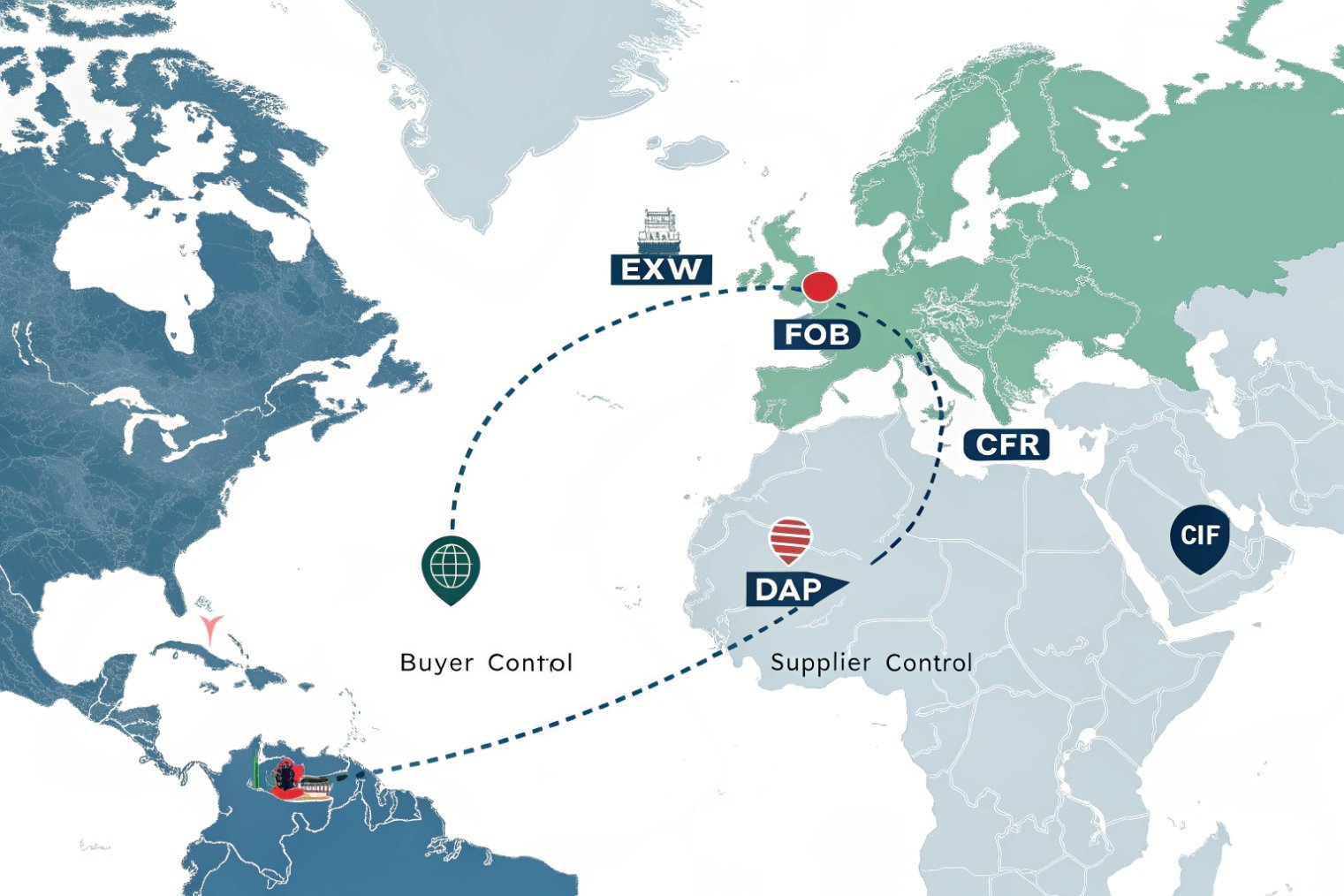
Incoterms® rules 7 are not just trade jargon. They decide who controls freight, insurance, and risk at each point. For glass, which is heavy and fragile, this matters a lot.
When a buyer has a strong freight setup, I often see them prefer FOB. The supplier delivers to the port, handles local charges and export customs, and risk passes when the goods cross the ship’s rail. The buyer then controls ocean freight and can optimize routes and rates across many suppliers.
When a buyer is new to international shipping, CIF or CFR can make sense at the start. The supplier books the freight to the destination port. This reduces internal work. The risk is less transparency and less leverage on rates. In that case, I always ask for a breakdown of freight and local charges to avoid hidden margin.
For door deliveries, terms like DAP shift almost all logistics to the supplier. This is comfortable but expensive. It may still be right for small or urgent orders.
Here is a simple view I use when shortlisting:
| Term | Who controls main freight | Good when… | Risks |
|---|---|---|---|
| EXW | Buyer | You have strong local agent in origin country | You carry all risk and coordination workload |
| FOB | Supplier (to vessel) | You manage ocean and insurance well | Need internal logistics expertise |
| CFR | Supplier | You want port delivery and simple paperwork | Less control on freight and schedule |
| CIF | Supplier | You want port delivery + insurance bundled | Insurance scope must be checked carefully |
| DAP | Supplier | You want door delivery, small volumes | Highest landed cost if unchecked |
Lock in lead times and defect policies before volume
In many projects, lead time and defect handling remain vague. Later, every delay or defect turns into negotiation. I prefer to make these topics part of the shortlist scoring.
For lead times, I split the timeline: new mold development, first article approval, and repeat orders. I ask for typical working days for each step and then compare with their historical on-time delivery rate. For new molds, I add buffer because artwork and sample approval often take longer than we plan.
For repeat orders, I ask suppliers to share their usual planning rules. For example, how many days they need to confirm a purchase order, how often they schedule each mold on the line, and whether they can support rush orders. I give extra points to factories that can also support digital tools like EDI, collaborative forecasting, or even VMI on steady SKUs, because this reduces my safety stock.
Defect policy is the last shield. I define defect categories (critical, major, minor) and set target PPM for each. Then we agree what happens if actual defect rates in a shipment exceed that target. Options include price credits, rework at the supplier’s cost, or free replacement in the next order. All of this goes into the supply agreement.
A simple negotiation sheet looks like this:
| Topic | What to define clearly | Target for shortlist suppliers |
|---|---|---|
| Lead time (new) | Mold build + sample + first order | Clear timeline, realistic buffers |
| Lead time (repeat) | Order confirmation to shipment | Stable cycle, emergency slot options |
| Defect targets | PPM per category, measurement method | Written targets and review schedule |
| Compensation | Credit %, replacement, or rework rules | Automatic once threshold is exceeded |
| Reporting | Monthly KPIs (OTD, PPM, claims) | Shared dashboard or regular review call |
When these points are clear, total landed cost becomes transparent. Now I can compare unit price, mold and decoration cost, packaging, freight, duties, and expected defect cost. The cheapest quote on paper is often not the lowest real cost. The supplier that wins my shortlist is the one with the best balance of risk, service, and long-term value, not just the lowest starting price.
Conclusion
Shortlist glass food container suppliers with a clear filter: hard certifications, flexible mold coverage, proven quality controls, and clean commercial terms. Then test everything with real samples and pilot runs.
Footnotes
-
Official ISO overview of ISO 9001 requirements, certification, and benefits for supplier quality management. ↩ ↩
-
Reference for U.S. FDA food-contact rules commonly cited for packaging materials and additives. ↩ ↩
-
EUR-Lex text of EU food-contact framework regulation used in compliance declarations. ↩ ↩
-
ECHA overview of REACH obligations and restrictions relevant to coatings, inks, and accessories. ↩ ↩
-
Official BRCGS resources for Packaging Materials audits, scope, and preparation guidance for retailer-facing suppliers. ↩ ↩
-
ASQ explanation of SPC concepts that support process stability reviews and Cp/Cpk capability discussions. ↩ ↩
-
ICC overview of Incoterms® rules and what each term changes in freight, risk transfer, and responsibility. ↩ ↩






