
A whisky can taste perfect and still lose the sale. If the bottle feels cheap, tips in the hand, or leaks in transit, the brand story breaks before the first sip.
Choose a whisky bottle by aligning four things: shelf signal (shape/weight/punt), sealing reliability (finish + closure + liner), protection (glass color + light strategy), and logistics proof (drop, leak/pressure, ΔT).
The decision framework that prevents expensive mistakes?
Start with “where will it live” instead of “how should it look”
A bottle that looks premium in a studio can fail in the real world. Whisky bottles live in very different places: retail shelves, duty-free airports, speed rails in bars, or e-commerce cartons. Each place creates different failure points.
- Retail shelf: the bottle must win attention fast and look trustworthy.
- On-trade bar: the bottle must grip well, pour cleanly, and survive knocks.
- Export logistics: the bottle must survive vibration, heat swings, and long storage.
- DTC shipping: the bottle must resist breakage and label scuffing.
The right bottle is the one that meets those conditions without forcing you to overpay for glass weight or accept leakage risk.
Translate brand positioning into physical cues
Premium is not one thing. “Heritage premium” and “modern premium” look different. A clear decision table helps avoid design drift.
| Positioning goal | Shape cue | Punt/base cue | Weight cue | Décor cue |
|---|---|---|---|---|
| Heritage Scotch | tall, sloped shoulder, classic round | moderate punt, strong heel | medium-heavy | emboss + paper label + foil |
| Bourbon / bold American | broad shoulders, stout body | wide stable base, shallow punt | heavy | large label panel + deboss |
| Craft modern | clean lines, square/oval | flat stable ring, functional punt | medium | direct print + matte coating |
| Ultra-luxury | sculpted silhouette, signature angles | deep punt + thick base ring | heavy (controlled) | engraving, medallion, microtext |
Premium cues work only if the closure, label panels, and logistics all work at scale. A bottle that looks expensive but runs poorly on the line becomes an expensive headache.
Lock three “non-negotiables” early
1) Legal volume and market fit 1 (700 ml vs 750 ml spirits sizes 2, duty-free sizes, local labeling needs). If you export into the EU, the Directive 2007/45/EC nominal quantities 3 issue is non-negotiable.
2) Closure system (T-top vs screw cap vs hybrid) with a finish spec that can be gauged, and a tamper-evident closure requirement 4 plan that fits your channels.
3) Case pack and pallet logic (dimensions, weight, breakage risk, carton strength).
Use mockups before tooling
A 3D print or decorated mock can answer the most important shelf questions:
- Does it read as whisky at five feet?
- Does it feel stable when lifted with one hand?
- Does the label panel stay clean and flat?
- Does the closure look premium in photos?
A short mock phase is cheaper than a mold revision.
This is the point where a decision becomes clear: the bottle must look like your whisky, and it must behave like a professional package.
Now the details matter: shape, punt, weight, closure tolerances, glass color, and testing.
The next sections break each piece into simple choices that reduce risk.
A whisky shelf is crowded. Most consumers do not read. They scan shape, color, and weight cues in seconds.
Premium positioning is signaled by a coherent silhouette, a stable base (often with a punt that supports glass distribution), and a weight that feels intentional without punishing freight and breakage.
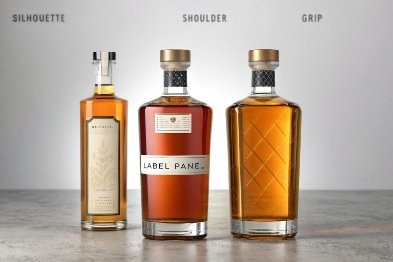
Shape: the fastest category signal
Shape is the first “yes or no” cue. It should match the segment you want people to assume.
Tall and shouldered for “Scotch” and aged sophistication
A taller bottle with a gentle shoulder slope signals restraint and tradition. It also creates a long label panel that looks elegant.
Broad and grounded for “bourbon” and bold flavor
A broader stance signals strength. It looks confident on shelf and stable in the hand.
Square or oval for modern craft
Square or oval silhouettes stand out. They also create clear faces for labeling. Still, very sharp corners can chip and scuff more in distribution, so radii matter.
Punt and base: stability first, then theater
For whisky, a punt is not about internal pressure. It is about:
- moving glass where impacts happen (heel and base ring)
- improving perceived premium feel
- supporting base stability and reducing wobble
A deep punt can look luxurious, but it can also narrow the base contact ring if designed poorly. Stability comes from the contact ring and the center of gravity, not from depth alone.
Heavier glass creates a “handshake” moment. People equate mass with value. Still, weight multiplies cost:
- more glass cost per unit
- higher freight cost
- higher breakage risk in e-commerce
- harder sustainability story
A smart approach is controlled heaviness: keep the base confident, keep the walls balanced, and avoid dead weight where it does not improve durability or feel.
| Design choice | Premium upside | Real risk | Practical guideline |
|---|---|---|---|
| Heavy base, balanced walls | strong hand feel | freight + breakage | add weight where grip and stability benefit |
| Very deep punt | luxury theater | wobble or narrow ring | keep ring wide and radii smooth |
| Sharp corners | modern standout | chips and scuffs | use softened radii and protective cartons |
| Tall slender | elegant and classic | tip risk | widen base or add heel strength |
A bar does not care about your mood board. Bartenders care about:
- secure grip at the shoulder
- neck that does not drip
- stable base in a speed rail
- label that stays readable under low light
A premium bottle that pours badly becomes a bottle that gets hidden.
Do T-top tolerances and liner choices ensure zero leaks?
Leak complaints destroy trust fast. Even a tiny weep can ruin labels and cartons, and the smell of спирт in a box feels like “bad quality.”
Yes, but only when the finish spec, bore tolerance, shank material, and liner system are treated as engineered parts. A premium T-top can be near leak-free with a synthetic shank and controlled insertion/pull force.
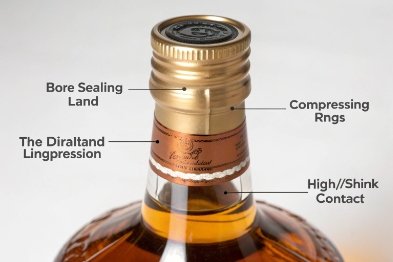
“Zero leaks” comes from the interface, not the cork head
The top can be wood, metal, or fancy resin. The seal comes from the part that touches glass.
Bore, chamfer, and surface finish
For T-top systems, the bottle’s mouth and bore must be consistent:
- bore diameter tolerance
- lead-in chamfer to prevent shaving
- rim quality and roundness
- surface finish that supports compression without tearing
If the bore varies too much, the closure must “over-compress” to cover worst cases. That increases insertion force, raises consumer frustration, and can still fail on the loose side.
A practical way to align drawings, gauges, and cap sourcing is to standardize neck finish and thread dimensions 5 early, then lock the torque/insertion windows around real production tolerances.
Shank material: natural vs synthetic
Natural cork shanks can feel authentic, but they vary more. Synthetic shanks are more repeatable and less sensitive to humidity swings, especially since spirits are stored upright.
A clean premium solution is:
- premium head (wood or branded top)
- synthetic shank engineered for the bore
Liner choices: protect flavor, not only seal
Some T-tops and screw caps include liners or sealing layers. With whisky, liner choice should focus on:
- ethanol resistance
- low odor transfer
- low flavor scalping (do not absorb top notes)
- stable compression after heat aging
If a liner picks up a “plastic” note, it can flatten a delicate finish. This matters most for high-end whisky where aroma is the product.
The tests that prove leak control
A T-top system should be validated with:
- insertion and pull-force windows
- inversion leak tests
- heat hold (warm storage simulation)
- vibration simulation in cartons
- repeated open/close abuse tests
| Component | What to control | Why it fails | What to specify |
|---|---|---|---|
| Bottle finish | bore + chamfer + roundness | variable compression | drawing + gauges |
| T-top shank | diameter + surface treatment | shrink, creep, shaving | insertion/pull spec |
| Liner/seal layer | material compatibility | odor pickup, swelling | aging + sensory checks |
| TE system | band/shrink fit | tears, poor adhesion | closure + capsule match |
A simple rule that avoids most leakage
If the brand sells into hot routes, duty-free, or long storage, treat T-tops like a premium look option, not a reliability shortcut. If reliability is the first KPI, consider:
- screw cap with a premium overcap
- hybrid closure that hides the thread look
- T-top with synthetic shank and strict bore control
Premium ritual is valuable, but only when it survives logistics.
What glass colors protect flavor without hiding liquid?
Whisky is more stable than olive oil, but light can still fade color and shift delicate aroma over time, especially under strong retail lighting.
Use glass color to balance protection and visibility: extra-flint for showing color, light tint for mild protection, and amber/smoked for stronger protection when shelf exposure is harsh or turnover is slow.
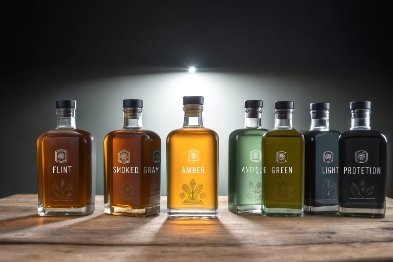
What light actually changes for whisky
Whisky does not go rancid like oils, yet light can still:
- reduce vibrancy of natural color over long display
- dull some aroma compounds in flavored or finished whisky
- warm the bottle under strong lighting, which increases volatility after opening
Protection matters most for:
- slow-moving premium SKUs
- gift packs with long shelf time
- bright store environments
- window-facing displays
Color options and what they communicate
Flint and extra-flint (clear)
Clear glass shows the whisky’s color. That color is a quality cue. It also supports gifting because people love seeing the liquid.
Risk: higher light exposure. This can be managed with:
- strong label coverage
- secondary carton
- storing away from windows in retail programs
Amber
Amber provides stronger light filtering. It signals heritage in many spirits categories, yet it can hide subtle color differences.
Antique green and smoked
Smoked or deep green can look luxury and modern. It also reduces light transmission while still allowing a “peek” at the liquid, depending on depth.
“Protect without hiding” strategies that work
If the brand insists on clear glass but needs protection, the easiest solutions are:
- more label coverage or wrap label
- carton or tube packaging
- UV-blocking coatings or sleeves (for premium tiers)
| Glass color | Visibility | Protection | Best fit |
|---|---|---|---|
| Extra-flint | high | low | fast turnover, color-focused whisky |
| Light tint (subtle smoke) | medium-high | medium | premium shelf with mild protection |
| Amber | medium | high | export, slow shelves, heritage look |
| Dark smoked / opaque | low-medium | very high | ultra-premium, gift tubes |
A quick decision rule for whisky brands
- If the whisky color is a selling point and turnover is strong: choose extra-flint, then protect with label/carton.
- If the whisky will sit long under bright light: choose amber or smoked.
- If the story is ultra-luxury: dark smoked or opaque plus a strong décor plan can look intentional.
Glass color should match the shelf story, not just the liquid.
Which tests certify global logistics drop, pressure, and ΔT?
A bottle that survives local delivery can still fail in global shipping. Heat cycles, vibration, and handling shocks are the real test.
Certify global logistics by testing the bottle system, not only the glass: drop/impact in packed cases, leak testing under pressure/vacuum and inversion, and ΔT thermal shock to validate glass and décor durability.
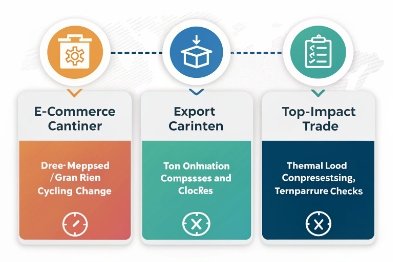
Drop and impact: test the packed product
Single-bottle drop tests are useful, but most failures happen in cartons. A strong program includes:
- case drops on edges and corners
- vibration simulation that matches long truck or sea routes
- compression tests for pallet stacking
- scuff and abrasion tests for decorated bottles
This catches label scuffing, shoulder chips, and base cracks that lab glass tests miss. For a widely recognized menu of transit simulations, reference the International Safe Transit Association (ISTA) test procedures 6.
Pressure and leak: think “seal integrity,” not carbonation
Whisky bottles are not pressurized like sparkling products, yet pressure and vacuum tests still matter because they:
- reveal weak seals and liner creep
- simulate altitude and temperature-driven expansion
- detect slow weeping that becomes sticky cartons
Practical methods include:
- inversion hold tests
- vacuum decay or pressure decay leak checks
- warm storage hold, then retest torque/pull force
ΔT thermal shock: validate glass and décor together
ΔT tests simulate rapid temperature changes:
- cold warehouse to warm truck
- hot container to cooler receiving area
- chilled back bar to warm room
Thermal shock can trigger cracks at the heel or shoulder if glass distribution is weak. It can also crack coatings or reduce print adhesion. That is why décor should be included in validation, not added after testing. A common reference method is ASTM C149 thermal shock resistance of glass containers 7.
| Test type | What it proves | Common failure it catches | What to record |
|---|---|---|---|
| Case drop | packing + glass durability | base cracks, shoulder chips | drop height + orientation |
| Vibration | long-route wear | scuffing, label lift | time + frequency profile |
| Compression | pallet stacking | carton collapse | top load limits |
| Leak (vac/pressure) | seal integrity | weeping, torque drift | pass/fail + leakage rate |
| ΔT thermal shock | glass stress tolerance | heel cracks, coating failure | temperature steps + cycles |
A clean “global-ready” validation checklist
- PPS samples from the real mold
- closures from the real supplier batch
- decorated samples (final ink/coating)
- packed cases with final dividers
- repeat tests after warm hold to capture creep
If the system passes these tests, global distribution becomes predictable. That is the real definition of premium. Premium is not only how it looks. Premium is how reliably it arrives.
Conclusion
The right whisky bottle is a system: silhouette and weight for premium cues, controlled closure tolerances for leak-free sealing, smart glass color for shelf stability, and logistics tests that prove it survives the world.
Footnotes
-
Official TTB rule on allowed bottle volumes for wine and spirits, preventing compliance mistakes. ↩ ↩
-
Current U.S. distilled spirits standards-of-fill list, including 700 mL and 750 mL. ↩ ↩
-
EU directive listing permitted nominal quantities for spirit drinks, explaining why 700 mL is standard. ↩ ↩
-
Explains U.S. requirement for tamper-evident closures on distilled spirits bottles to reduce fraud and returns. ↩ ↩
-
Quick reference for neck finish thread measurements so closures fit and seal reliably. ↩ ↩
-
Choose transit tests (drop, vibration, compression) that match distribution routes using ISTA procedures. ↩ ↩
-
Defines ASTM C149 method for thermal shock resistance of glass containers—useful for validating ΔT performance. ↩ ↩






