
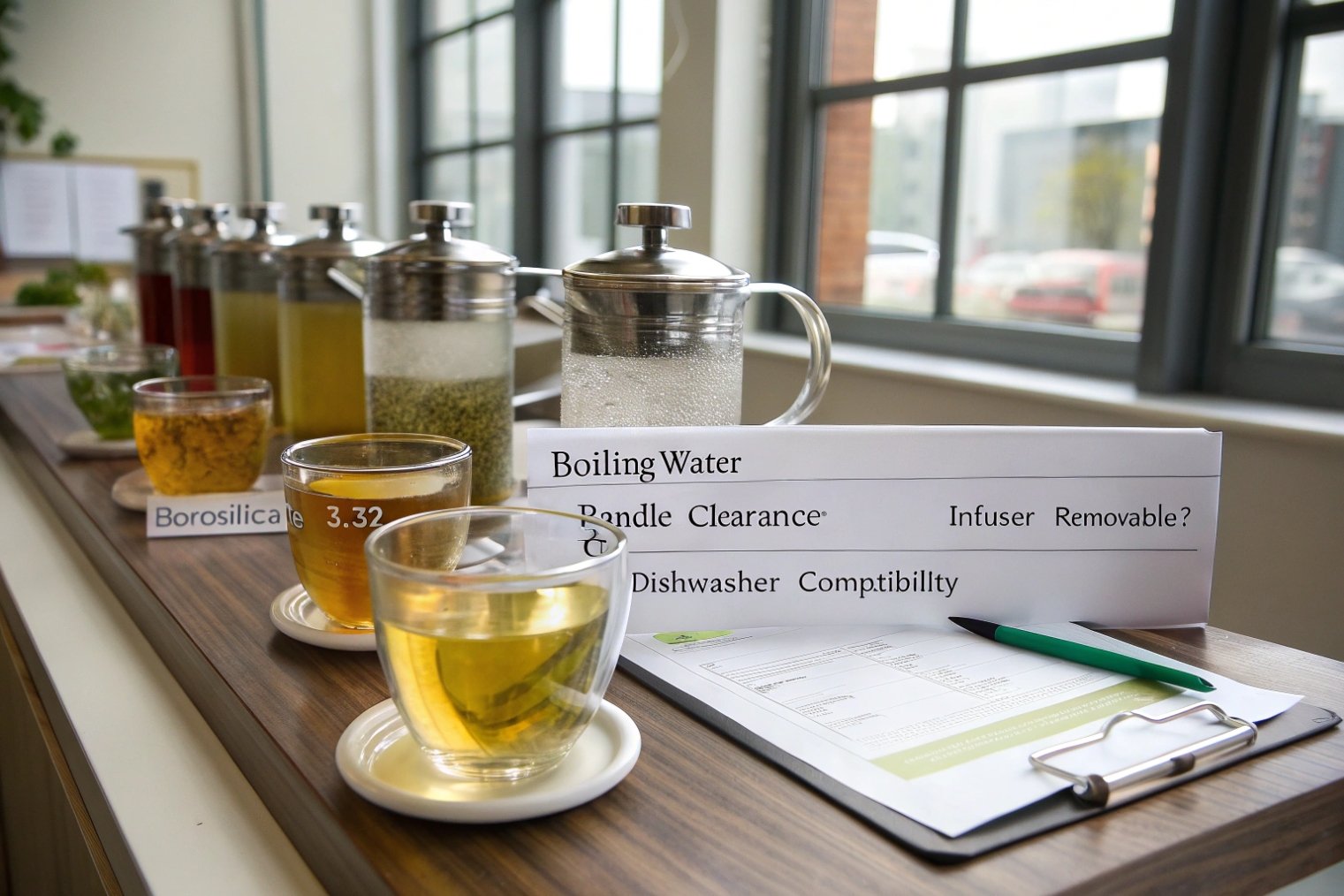
A glass teacup looks delicate, but boiling water is not. If you choose the wrong cup, you risk cracks, burns, and a lot of spilled tea.
For boiling water, the best glass teacup uses borosilicate, a stable shape that controls aroma and heat, a safe handle or sleeve for grip, and dishwasher-compatible lids and infusers that come apart for cleaning.
When I evaluate teacups, I start from physics, not from decoration. First I check whether the glass can handle true boiling water. Then I look at lip shape, handle geometry, and infuser design. Only after that do I worry about how it looks in photos.
Should you prefer borosilicate glass for boiling-water tea?
Boiling water exposes every weakness in a cup. If the glass cannot survive thermal shock, no amount of pretty design will save it.
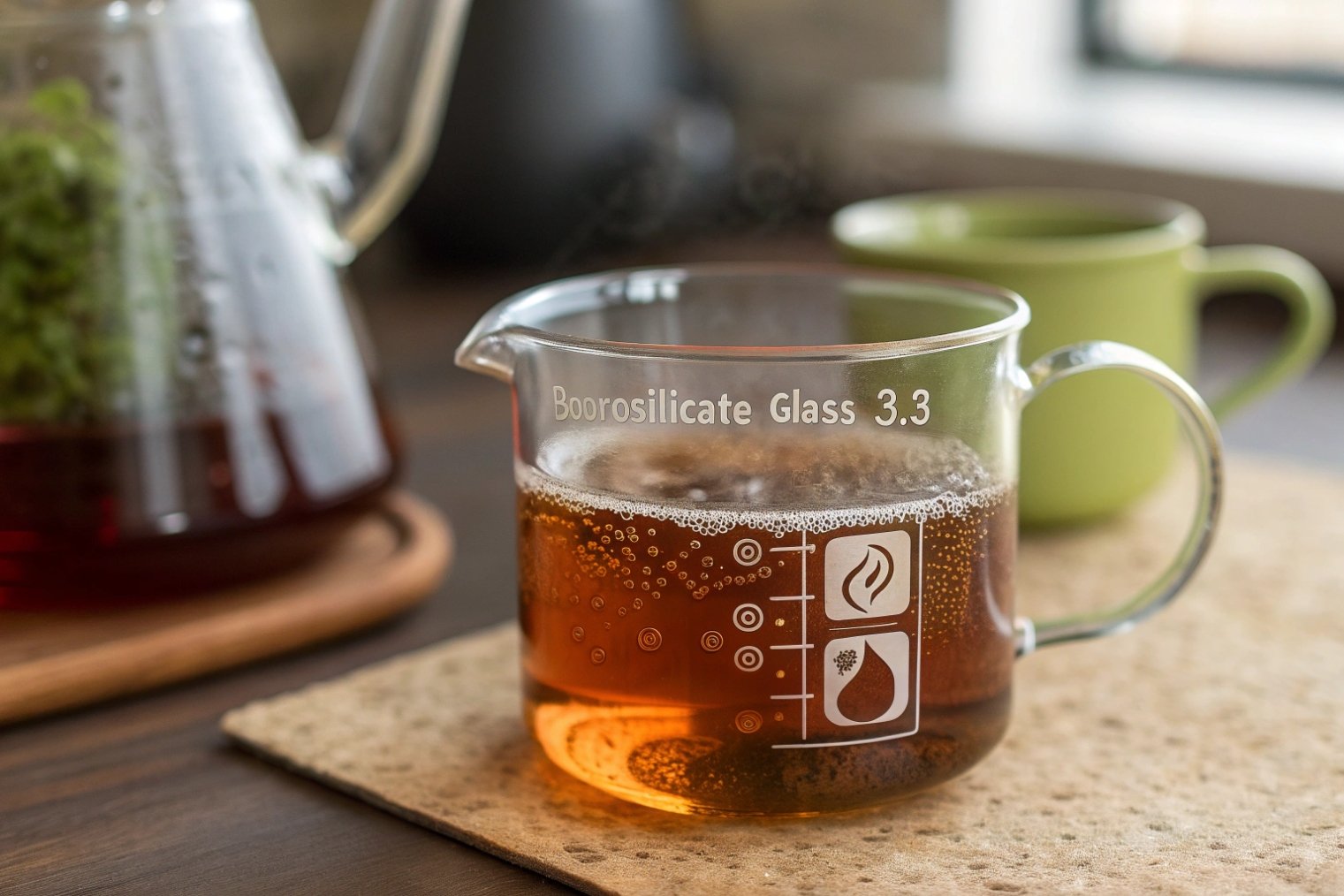
For direct boiling-water use, borosilicate (often marked “3.3” or “Borosilicate glass 3.3”) is the safest default; ordinary or even tempered soda-lime glass may survive sometimes but has less thermal-shock margin.
Material choice: what really survives boiling water?
Borosilicate earns its reputation because of its low thermal expansion 1. It expands and contracts far less than ordinary glass when heated or cooled. That means lower internal stress when you pour 100 °C water into a room-temperature cup. In labware, this is the same reason beakers can sit on a flame.
Soda-lime glass, the material for most cheap mugs and tumblers, expands more. Tempering increases its impact strength, but it does not magically give it the same thermal-shock resistance as borosilicate. A tempered soda-lime mug might survive many hot pours, then one day fail suddenly when the stress field finds a weak point. For daily boiling-water use, that is not a risk I like.
You will often see borosilicate signaled by:
- “Borosilicate glass” or “high borosilicate” in the description
- A “3.3” or “33” expansion reference
- Mentions of ISO 3585 borosilicate glass 3.3 — Properties 2 or lab-grade glass
If a product never mentions borosilicate, I assume it is soda-lime, even if it looks similar.
Double-wall cups are a special case. Double-wall only helps if the inner wall is borosilicate and the cavity has a proper vent hole to equalize pressure when the air inside heats and cools. If there is no vent, trapped air can expand under dishwasher or boiling-water conditions and push on the weld, creating stress cracks. For boiling-water use, I want either:
- Single-wall borosilicate, or
- Double-wall borosilicate with a visible, tiny vent hole and clear boiling-water / dishwasher approval
Even with good glass, simple habits still matter:
- Pre-warm the cup with a little hot water before a full boiling pour.
- Do not take a cup straight from the fridge and blast it with boiling water.
- Avoid pouring boiling water into a cup sitting on a metal surface that is much colder.
Here is an at-a-glance comparison:
| Glass type | Thermal shock with boiling water | Impact strength | Boiling-water teacup verdict |
|---|---|---|---|
| Borosilicate 3.3 | Excellent | Good | Strong yes |
| Tempered soda-lime | Moderate–good | Very good | Cautious; not my first choice |
| Non-tempered soda-lime | Poor–moderate | Moderate | No for direct boiling water |
| Lead crystal / decorative | Unpredictable, not tested | Heavy, still brittle | Avoid for daily boiling-water use |
So for true kettle-to-cup brewing, I strongly prefer a cup that clearly states borosilicate—ideally with a real datasheet reference like Corning® borosilicate 7740 material properties 3—paired with sensible handling, rather than gambling on anonymous tempered glass.
Do open-lip vs. tulip-shaped glass cups change aroma and heat?
The same tea can seem flat or layered depending on the cup shape. Glass does not hide that; it amplifies it.
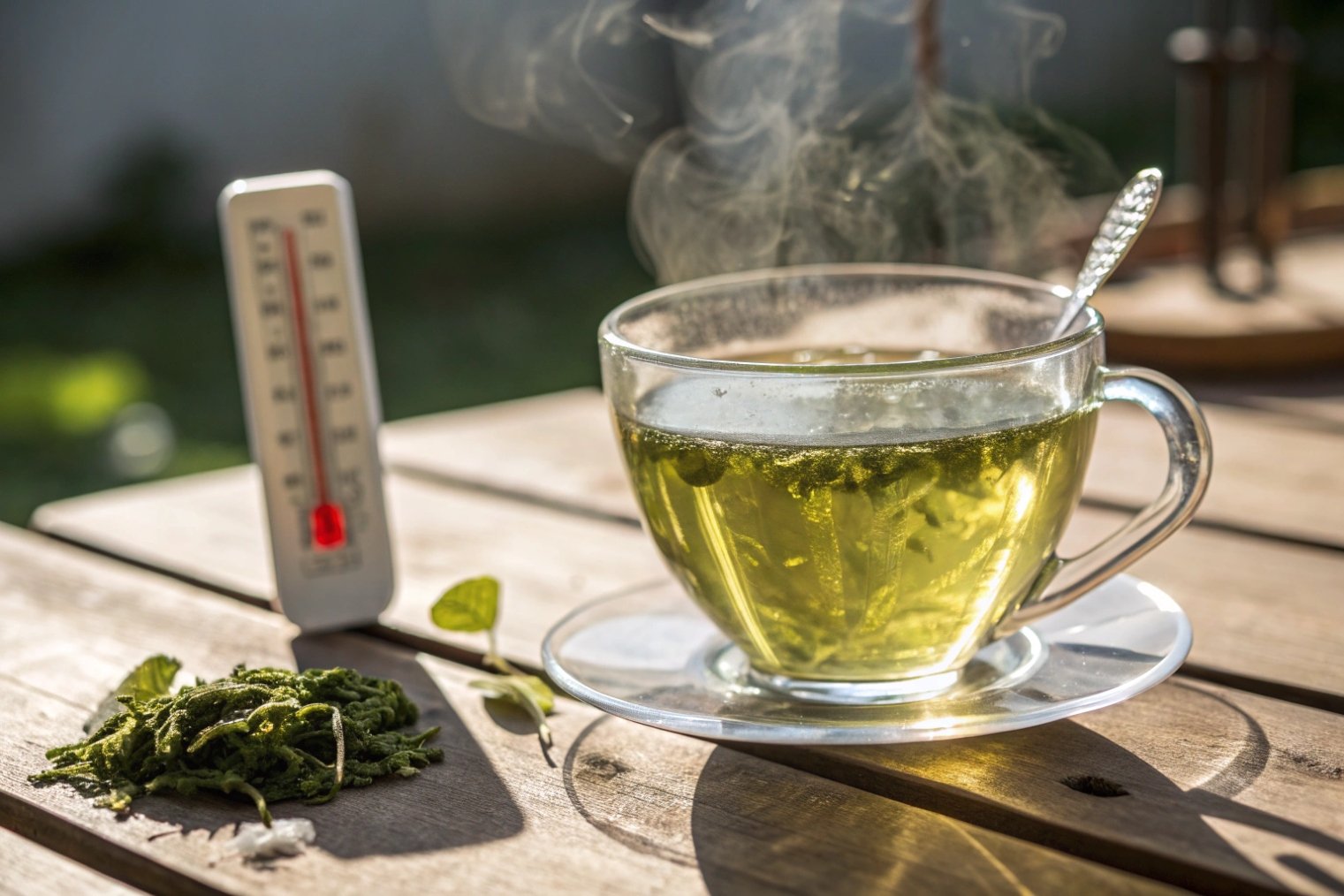
Open-lip cups release aroma faster and cool tea quickly, while tulip-shaped cups with a narrower opening hold heat and concentrate aroma; both can be useful, but they suit different teas and drinking habits.
Shape, aroma, and temperature: how the cup “tunes” your tea
Glass lets you see the liquor, but the geometry above the liquid decides what reaches your nose and how fast your tea cools.
Open-lip cups have wide mouths and walls that go almost straight up or even flare outward. They:
- Let steam and aromatics escape quickly.
- Cool the surface faster, which reduces burn risk but shortens the “hot zone” window.
- Feel casual and easy to drink from, especially for green tea or herbal infusions that you sip frequently.
For heavily scented blends that can feel overwhelming when trapped, open-lip shapes can be more forgiving.
Tulip-shaped cups narrow toward the rim. The body is rounder, and the opening slightly smaller. They:
- Capture more aroma inside the cup and direct it towards the nose as you drink.
- Reduce heat loss at the surface, so the tea stays hot longer.
- Work well with teas where aroma and top notes matter, like oolong, black, and some high-end green teas when you are sipping slowly.
If you drink slowly, a tulip shape paired with a small lid can make a big difference in both fragrance and temperature.
Wall thickness also matters. Thicker walls store more heat and cool more slowly, but they also add weight. Double-wall cups further slow heat loss because air’s low thermal conductivity 4 acts as an insulator layer, but they change the visual proportion and sometimes feel less “direct”.
A quick shape guide:
| Cup shape | Aroma behavior | Heat retention | Best for |
|---|---|---|---|
| Wide, open-lip | Fast aroma release | Faster cooling | Green tea, herbal infusions, quick drink |
| Straight cylinder | Balanced aroma and cooling | Medium retention | Everyday tea, office use |
| Tulip / inward lip | Concentrated aroma | Better retention | Oolong, black tea, slow sipping |
| Double-wall tulip | Strong aroma + insulation | Highest retention | High-end teas, winter use, slow sessions |
For boiling-water use, I aim for 250–350 ml volume. This size balances aroma, weight, and handling. Smaller cups (80–150 ml) are fine for gongfu sets but less practical for casual all-day drinking. Larger cups above 400 ml hold so much boiling water that they become heavy and stay too hot near the rim, even in double-wall designs.
In short, open-lip cups favor quick, relaxed drinking and faster cooling; tulip-shaped cups favor aroma focus and longer warmth. The right choice depends on your tea and your pace more than on “better” or “worse”.
Which handles and sleeves improve grip and safety with boiling water?
Boiling water changes everything. A cup that feels fine with lukewarm tea can become a burn risk when it is full of rolling-boil water.
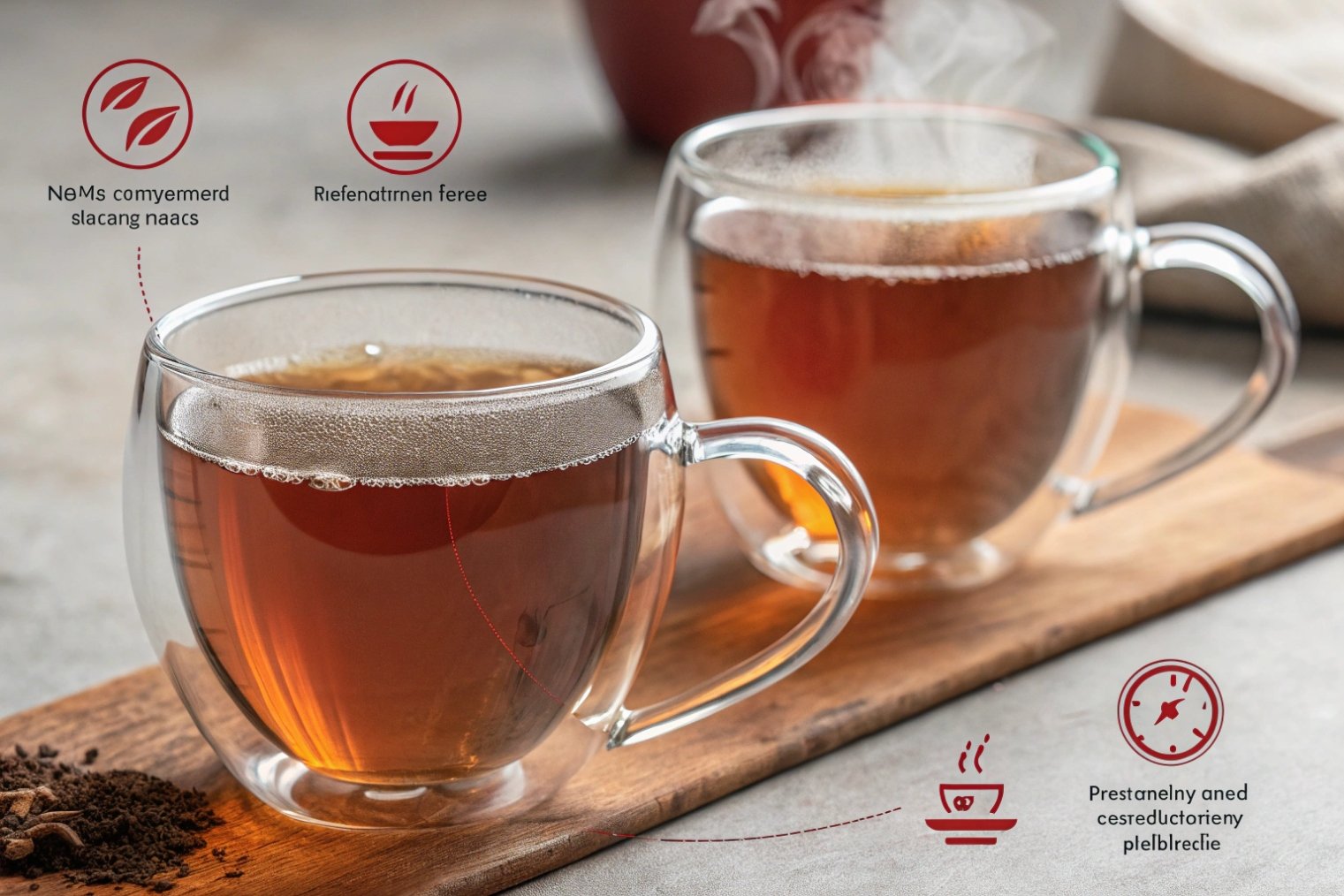
Choose handles with generous finger clearance and strong attachment points, or use sleeves on handle-less cups; both reduce burn risk and help prevent drops when the tea is hottest.
Handle geometry that actually protects you
For boiling water, I want the hand away from the hot wall. That starts with the handle.
Good handle traits:
- Two-finger clearance between fingers and the outer glass wall, even when the cup is full.
- Thick attachment points where the handle joins the cup, not thin “pins” that can crack.
- A shape that keeps your wrist neutral when the cup is full, so you do not fight the weight.
Thin wire-like handles may look elegant, but they concentrate stress and transfer more heat. For daily boiling-water use, a slightly thicker handle is safer and feels more secure, especially when carried from kettle to desk.
I also avoid handles attached very close to the rim. If your fingers end up at the same height as the tea surface, they sit in the hottest zone. Handles that attach slightly lower on the body put your grip closer to the center of mass and away from the hottest vapor.
Sleeves and handle-less designs
Some people prefer the clean look of handle-less glass cups. These can work for boiling water if:
- The cup is double-walled, or
- There is a silicone, cork, or bamboo sleeve around the middle.
Silicone bands add grip and thermal insulation. They are especially helpful on tall cups used for tea and fruit infusions. Cork wraps feel warm and natural but must be kept dry and often are not dishwasher-safe. Bamboo sleeves have a similar limit: they look good, but they need more care and usually hand washing.
A simple design map:
| Design type | Safety with boiling water | Dishwasher notes |
|---|---|---|
| Single-wall with handle | Good if handle is robust and large | Usually safe if marked dishwasher-safe |
| Double-wall with handle | Very good comfort | Top-rack only preferred |
| Handle-less + silicone band | Good, protects grip area | Check band for dishwasher compatibility |
| Handle-less bare glass | Only comfortable if double-wall | Easy to wash, but hotter on the outside |
| Cork / bamboo sleeves | Comfortable, natural feel | Often hand-wash; remove before dishwasher |
For boiling-water use, I treat the handle and sleeve as part of the safety system, not as optional decoration. If someone in the house has weaker grip or slower reflexes, a solid handle and a non-slippery band around the body are worth much more than an extra bit of visual minimalism.
Are infuser lids and filters compatible with dishwasher cycles?
Many glass teacups now include infuser baskets, strainers, and glass lids. These parts make brewing easier, but they add complexity for heat and cleaning.
Infuser lids and filters can be dishwasher-safe if they use borosilicate, stainless steel, and silicone in simple, removable parts; glued joints, thin plastics, and tight crevices often fail or trap residue in hot detergent cycles.
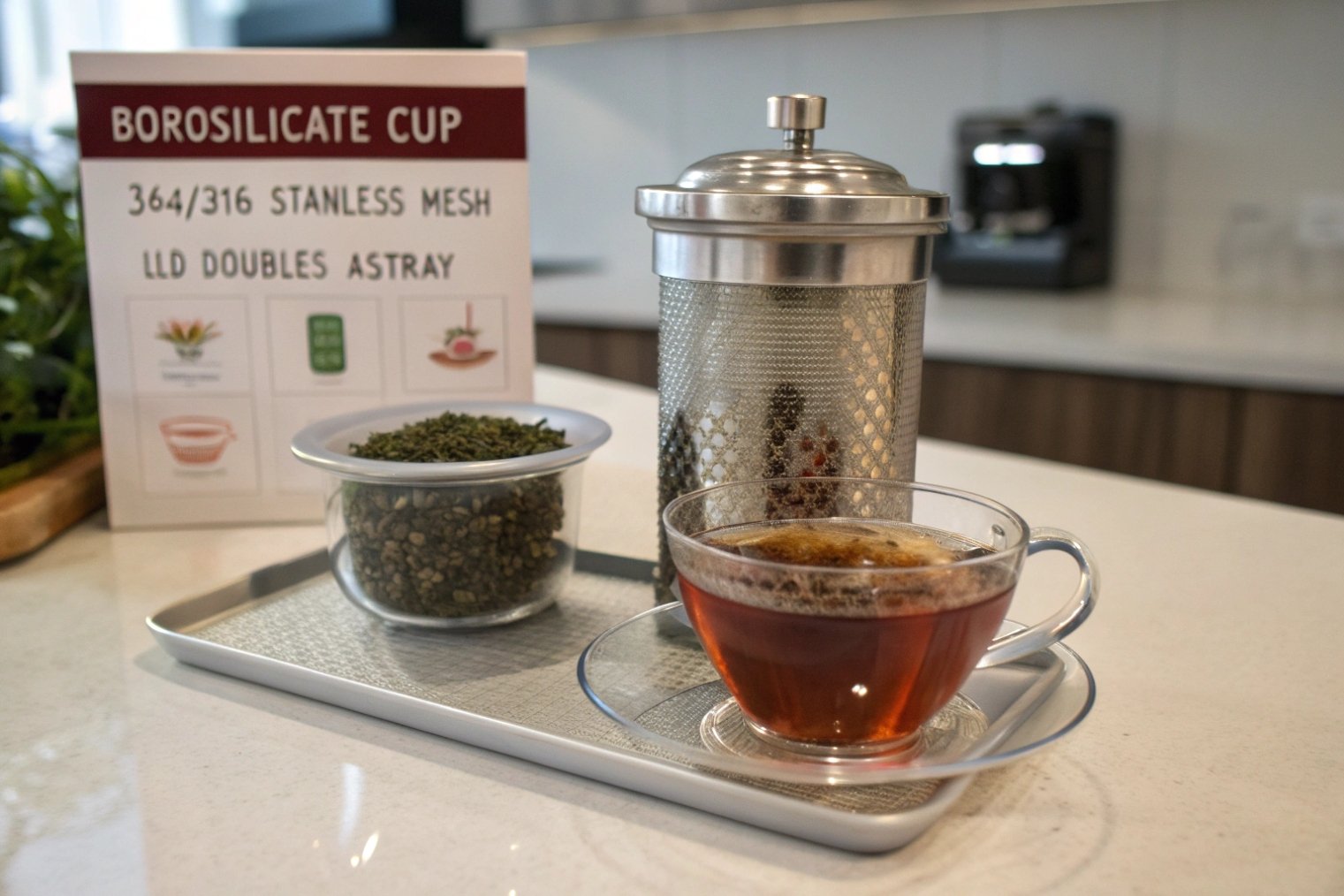
Components and materials
A typical “all-in-one” glass teacup system may have:
- A borosilicate cup
- A stainless-steel infuser basket with fine mesh holes
- A glass lid that doubles as a coaster for the basket
- One or more silicone gaskets or tabs to keep things snug
For boiling water and dishwashers, I prefer:
- 304 or 316 stainless mesh rather than low-grade metal that rusts.
- Glass lids without glued decorations.
- Gaskets that can be removed, washed, and re-seated easily—ideally specified against FDA 21 CFR 177.2600 rubber articles intended for repeated use 5.
If the infuser is made from thin plastic or if the lid uses unknown paints or glued decals, repeated hot cycles and strong detergents can warp, fade, or peel these materials. That does not always make the tea unsafe, but it shortens the useful life of the cup.
Dishwasher behavior and design tips
When I check dishwasher compatibility, I look for:
- Explicit “dishwasher-safe” markers on cup, infuser, and lid.
- Notes like “top-rack only”, which protect double-wall seals and silicone parts from the hottest zones.
- Minimal hidden spaces where tea dust can lodge and grow mold if not flushed clean.
Dishwashers can also cause permanent haze through detergent and water chemistry; the practical overview in Explanation of glass cloudiness & preventive measures 6 is a good reminder to treat “dishwasher safe” as “dishwasher compatible under reasonable conditions,” not “indestructible.”
You can test an infuser system in simple ways:
- Does every part separate without tools? If you cannot remove a gasket, tea residue will slowly build up around it.
- Are there laser-cut or punched holes that are easy to rinse, rather than deep folded seams?
- After a dishwasher cycle, do parts dry fast, or do they hold water in corners?
A quick component table:
| Part | Best material and design | Dishwasher guidance |
|---|---|---|
| Cup body | Borosilicate, undecorated | Usually safe; top rack if double-wall |
| Infuser basket | Stainless steel, rolled edges | Safe if marked; avoid low-grade metals |
| Lid | Plain borosilicate or stainless | Safe if undecorated; avoid glued decals |
| Gaskets / seals | Food-grade silicone, removable | Top rack preferred; check for distortion |
| Plastic elements | High-temp, BPA-free, simple shapes | Only if clearly rated dishwasher-safe |
If there is any doubt, I treat infusers and lids the way I treat espresso portafilters: they can go through the dishwasher sometimes, but a quick manual rinse and brush after daily use keeps them in much better shape.
One more nuance: tempered soda-lime glass can be very durable in a busy dishwasher environment, but that durability is mostly about knocks. For boiling-water thermal stress, borosilicate is still the safer default. (If you want the basic mechanism behind tempering, Britannica’s note on toughened (tempered) glass 7 is a clean summary.)
Conclusion
A good glass teacup for boiling water is not just “heatproof”. It is borosilicate, shaped for your tea style, safe to hold when just filled, and easy to clean even when you brew in the cup every day.
Footnotes
-
Defines thermal expansion and coefficient, clarifying why borosilicate resists thermal shock better. ↩ ↩
-
Official ISO page describing borosilicate glass 3.3 properties and the ISO 3585 standard scope. ↩ ↩
-
Datasheet with expansion and softening points for borosilicate 7740—useful for verifying “boiling-water safe” claims. ↩ ↩
-
Learn why air insulates, explaining double-wall cups’ comfort and condensation control. ↩ ↩
-
FDA regulation reference for food-contact rubber/silicone parts like gaskets used with tea infusers and lids. ↩ ↩
-
Shows why dishwashers can cause permanent clouding/etching and how to reduce it for glass tea sets. ↩ ↩
-
Explains how tempering strengthens glass and why impact resistance differs from thermal-shock resistance. ↩ ↩






