
Most people focus on grapes and barrels, then load a finished wine into whatever bottle looks pretty. But packaging is not neutral. It quietly rewrites the wine’s future.
Packaging materials shape wine quality by controlling light exposure, oxygen ingress, temperature swings, and contact with coatings or liners; bottle color, closure choice, barrier systems, and glass mass all interact with the wine as it ages.
A useful way to think about it is: wine style + expected shelf life + sales channel → packaging decisions. If these are aligned, the bottle becomes a safe cellar. If not, light-strike, oxidation, reduction, or cooked aromas can appear long before any consumer reads the label.
The four packaging levers that most change wine quality
| Lever (what you choose) | What it controls most | What can go wrong if mismatched |
|---|---|---|
| Bottle color / light shielding | UV + violet–blue light | Light-strike, aroma flattening |
| Closure system + application | Oxygen transfer + leaks | Oxidation or reduction, variability bottle-to-bottle |
| Barrier sleeves / secondary pack | Light + handling + in some formats oxygen | “Protected in the box, ruined on shelf” |
| Thermal exposure management | Temperature history | “Cooked” notes, premature aging |
Does bottle color mitigate light-strike and UV damage?
Aromatic white or rosé, clear bottle, sunny shelf – that combination is a quiet recipe for light-strike and customer complaints.
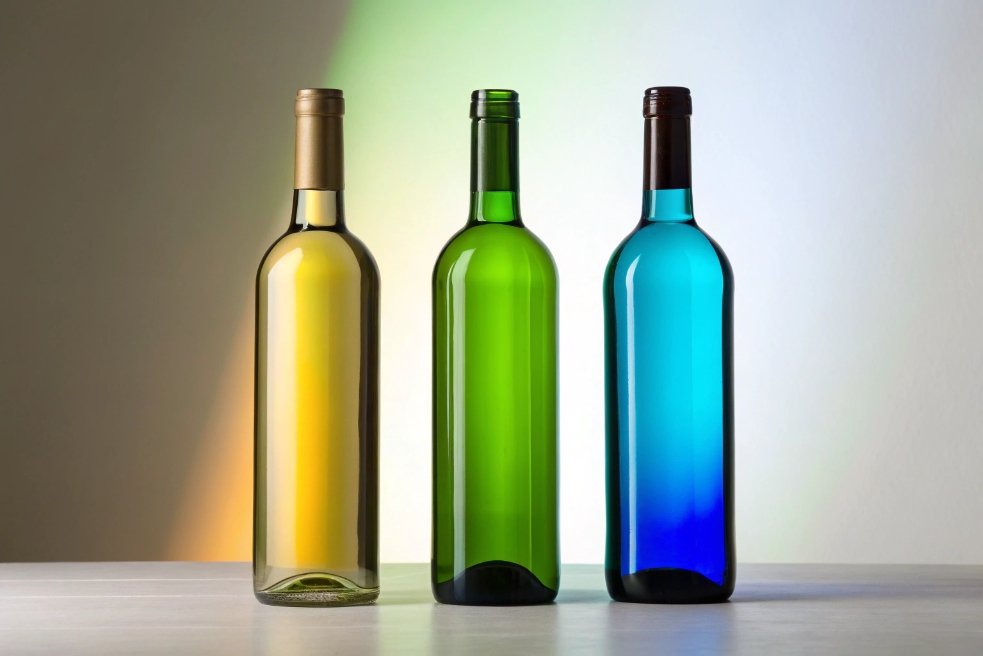
Darker glass—especially deep green and amber—blocks far more UV and high-energy visible light than flint (clear), dramatically lowering the risk of light-strike.
How light damages wine—and how glass color helps
Light-strike is driven mainly by UV and violet–blue light 1. These wavelengths can trigger reactions involving riboflavin and sulfur compounds, creating “wet wool / cabbage / skunky” notes in sensitive wines—especially pale, low-tannin styles.
The practical hierarchy is simple:
- Flint (clear): highest risk (max visibility, minimal protection)
- Green: moderate protection (good compromise for many wines)
- Amber: strongest protection (best insurance under bright retail lighting)
Matching color to wine style
| Wine style | Light risk | Recommended protection |
|---|---|---|
| Aromatic whites, rosés, pét-nat | High | Amber or deep green; add carton/sleeve if flint |
| Sparkling marketed in clear glass | High | Opaque sleeve, over-label, or box/carton |
| Tannic reds | Medium | Green often acceptable; amber if long bright exposure |
| Oxidative styles (e.g., Sherry-type) | Lower | Color helps but is less critical |
If marketing insists on clear glass, your real shield becomes secondary packaging:
- Opaque/printed shrink sleeves
- Boxes or cartons for retail display
- Opaque shipper cartons for logistics
How do cork vs. screw-cap choices change oxygen ingress?
The same wine under different closures can taste like two siblings grown up in different homes. One may stay tight and fresh; the other may evolve faster and round out sooner.
Natural cork, technical corks, and screw caps allow different oxygen transfer rates (OTR), which strongly influence oxidation/reduction balance, SO₂ loss, and flavor evolution over time.
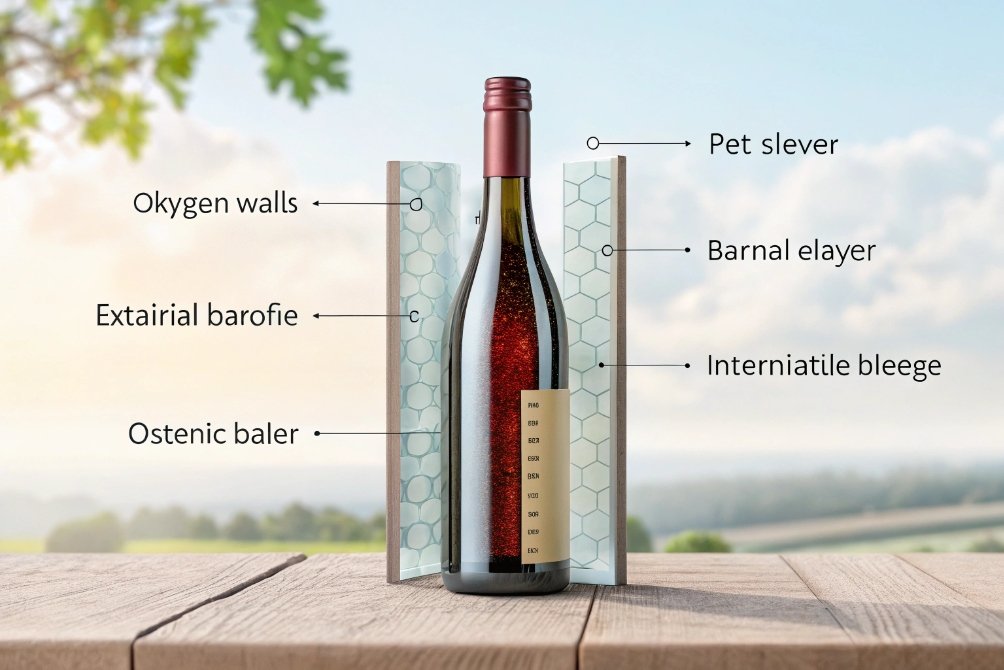
Closures are oxygen valves, not just stoppers
Closures are never perfectly “off.” They behave like controlled leaks—sometimes controlled well, sometimes not.
Key points by closure type:
-
Natural cork
- Wide natural variability in oxygen transfer rates (OTR) 2 unless very tightly screened/spec’d
- Often associated with classic long aging trajectories in premium reds
- Has cork-specific risks (taint risk; aroma scalping depending on wine/closure)
-
Technical / micro-agglomerated cork
- More reproducible OTR than natural cork
- Good for brands that want “cork ritual” with less bottle-to-bottle scatter
-
Screw cap
- The liner largely controls OTR (not the metal shell)
- Very low OTR can preserve freshness—but may increase reduction risk if the wine is already reductive
- Strong option for aromatic whites and early-drinking styles when chemistry is tuned for low oxygen
Important reality check: the glass–closure interface (finish quality, application, compression, torque) can dominate performance. A micro-leak can overwhelm the “OTR spec” on paper, and long-term outcomes depend on real-world closure oxygen ingress 3 as well as bottling practice.
Practical closure selection mindset
| Target shelf life & style | Typical closure strategy |
|---|---|
| 0–2 years, fresh aromatic whites/rosés | Screw cap with low-OTR liner or tight technical closure |
| 2–5 years, structured whites and lighter reds | Technical cork or specified natural cork |
| 5+ years, age-worthy premium reds | High-quality, screened natural cork + tight bottling oxygen control |
| Very reductive wines / low buffering capacity | Avoid ultra-low OTR unless wine is tuned (SO₂, copper management, TPO discipline) |
Also: bottling oxygen (TPO) 4 matters. Even the “best” closure cannot undo high dissolved oxygen or sloppy headspace control at the filler.
Can barrier coatings or sleeves extend shelf life?
Packaging teams increasingly add coatings, sleeves, or multi-layer systems and expect shelf life to improve automatically.
Yes—barrier systems can extend shelf life by reducing light exposure (in glass) and reducing oxygen ingress (especially in alternative packs)—but they can’t fix high TPO or poor line practice.
Where barriers actually help (in practice)
1) External sleeves and wraps (glass bottles)
- Biggest benefit is light shielding, especially for flint or light-green glass
- Can also protect labels and improve scuff resistance
- Watch recycling goals: heavy multi-material sleeves may conflict with sustainability targets
2) Barrier layers in alternative formats (PET / bag-in-box 5 / some composite systems)
- These are where oxygen barriers and scavengers can materially change shelf life
- The main wins show up as slower oxidation and better aroma retention over time
3) Closure liners and scavengers
- Certain liners can fine-tune OTR and reduce oxygen pickup post-fill
- Useful when style needs a specific oxygen “dial setting”
In formats like wine in a can 6, barrier performance and liner compatibility become part of shelf-life planning in the same way glass color and closures do for bottles.
Simple decision map
| Problem you see | Best packaging move |
|---|---|
| Light-strike on clear bottles | Opaque sleeve + retail carton / display rules |
| Oxidation in PET or bag-in-box | Upgraded barrier layer + scavenger system |
| Fast aging in hot retail environments | Improve thermal control + light shielding + reduce shelf exposure time |
Does bottle mass improve thermal stability in transit?
Heavy glass feels premium in the hand, and many people assume it protects wine from heat. The reality is more subtle.
More glass mass slightly slows temperature change and buffers short spikes, but it cannot protect wine from sustained high temperatures. Logistics and insulation matter far more than a few extra grams of glass.
What heavier bottles really do (and don’t do)
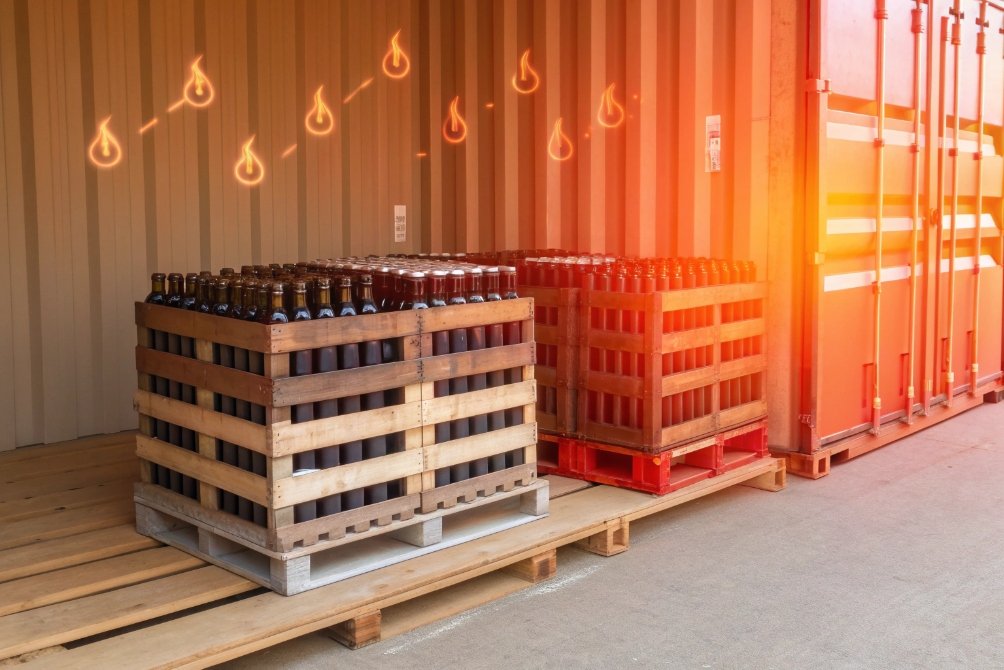
Heavier bottles can damp short heat spikes (loading dock sun, brief staging). But if a pallet sits in high ambient heat for days, both heavy and light bottles will eventually approach the same temperature.
Wine chemistry and aroma can shift faster at higher storage temperatures 7, so time-at-temperature matters more than bottle weight.
The biggest thermal drivers are:
- Ambient temperature and exposure time
- Container/warehouse heat load and airflow
- Pallet position (near walls/roof vs center)
- Carton insulation and pallet ventilation pattern
So bottle mass is a minor buffer, not a heat-protection strategy.
More effective than weight:
- Insulated liners, reefer/controlled routes for premium SKUs
- Avoiding direct sun during loading/staging
- Carton design that reduces wall-heat gain and protects from radiant spikes
- Clear “max temp / max dwell time” handling rules for distributors
Conclusion
Glass color, closure oxygen behavior, barrier systems, and temperature history all nudge a wine’s path after bottling. When these choices are treated as one system, packaging protects the winemaker’s work instead of quietly rewriting it.
Footnotes
-
Background on UV wavelengths most responsible for photochemical reactions that can trigger light-related wine faults. ↩︎ ↩
-
Quick primer on oxygen transmission rate terminology used when comparing closures and barrier materials. ↩︎ ↩
-
Example industry data on how closure OTR and bottling decisions influence sensory outcomes and wine development. ↩︎ ↩
-
Practical guide to measuring and reducing total package oxygen (TPO) during bottling to limit premature oxidation. ↩︎ ↩
-
Overview of bag-in-box packaging and common barrier considerations relevant to oxygen-sensitive beverages like wine. ↩︎ ↩
-
Technical overview of can liners, oxygen control, and shelf-life considerations for wine packaged in cans. ↩︎ ↩
-
Open-access study showing how elevated storage temperature accelerates chemical changes tied to aroma evolution in wine. ↩︎ ↩






