
Many homes struggle with heavy plates, chipped rims, and pieces that fail under heat. The wrong glass type or design creates stress in daily cooking.
To choose the right glass tableware, match the glass type to your heat use, look for basic safety certifications, pick practical shapes that stack well, and choose surface treatments that stay safe in washing and heating.
When tableware fits your kitchen routine, you stop worrying about cracks, stains, and awkward stacking. The right pieces work quietly in the background while making cooking and serving easier.
What thickness and weight indicate durable, everyday dishes?
Thin plates feel fragile. Thick ones feel safe but may feel heavy and clumsy on the table. Good everyday glassware lives somewhere between these two extremes.
For everyday use, a moderate thickness—around 5–7 mm for plates and bowls—offers a good balance between strength and weight. Lighter tempered 1 or triple-layer pieces also work well because the strength comes from the glass process, not the thickness.
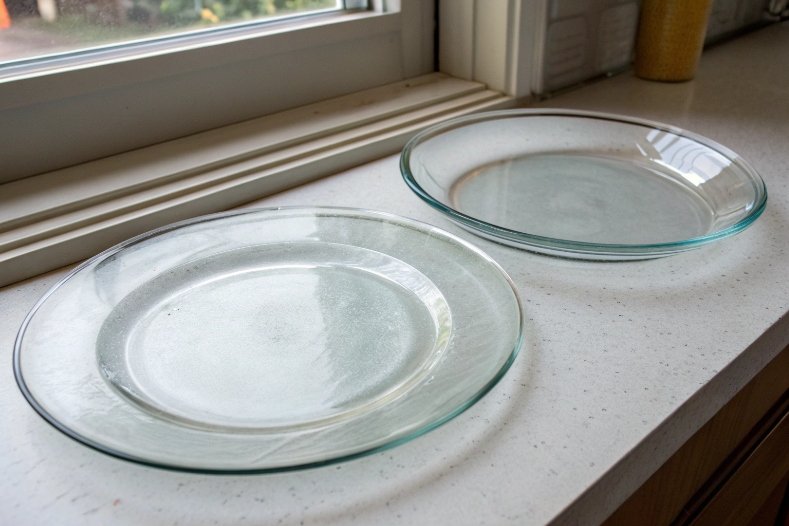
What makes a plate feel durable in real use
Thickness is only one factor. The weight, shape, and glass type work together. A plate that is too heavy tires your hands and makes stacking loud. A plate that is too thin feels risky when you tap it on the sink edge.
Here is a simple way to think about durability:
| Feature | Why it matters | What to choose at home |
|---|---|---|
| Thickness | Helps resist impact and chips | 5–7 mm for daily plates, slightly thicker for serving |
| Weight | Affects handling comfort and stacking | Medium weight; not too heavy for kids or elderly |
| Rim design | Rims protect edges from chips | Slight raised rim for protection and clean plating |
| Plate curve | Distributes force better when stacked | Smooth curve instead of sharp transitions |
Tempered glass and opal glass (which is also tempered) change the rules a bit. These materials gain strength from the tempering process, so they can stay thin while staying strong. Triple-layer tempered designs feel very light but resist chips well. They stack well and suit families who need durable, low-maintenance pieces.
For mixed-use kitchens, a blend of tempered plates for daily use and slightly thicker borosilicate 2 pieces for hot dishes works well. This mix gives both impact resistance and heat tolerance without making every piece heavy.
Which certifications (FDA, REACH, LFGB) should I look for in suppliers?
Certifications matter because glass touches food every day. You want materials that stay stable, safe, and consistent after repeated washing and heating.
Look for FDA 3, REACH 4, or LFGB compliance from reliable suppliers. These standards verify that materials are food-safe, non-toxic, and stable under heat.
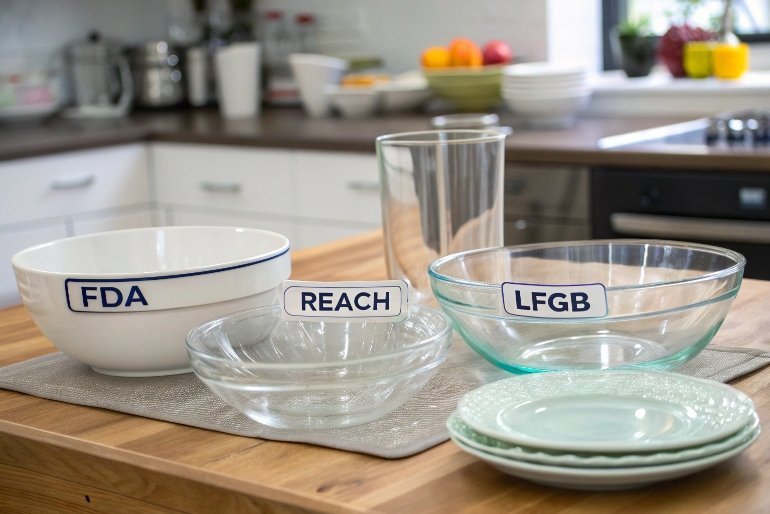
Understanding which certifications matter at home
Labels can be confusing, so it helps to group them by what they protect:
| Certification | Mainly covers | Why it matters for tableware |
|---|---|---|
| FDA | Food-contact safety in the U.S. | Ensures materials do not leach harmful substances |
| LFGB | High-standard German food testing | Stricter sensory and migration limits |
| REACH | EU chemical safety | Limits hazardous substances |
For home buyers, you do not need every certification on every item. What you need is confidence that the manufacturer follows a known, tested standard. That means the glass has passed checks for chemical stability, heavy metals, and long-term contact with food.
Look for additional simple marks that affect daily handling:
- Microwave-safe
- Oven-safe
- Dishwasher-safe
- Thermal-shock-resistant
These are not legal certifications, but they tell you how the glass will behave. If a piece has metallic rims or decals, assume it is not microwave safe unless clearly labeled. For oven use, always look for borosilicate or oven-safe tempered glass. Standard soda-lime glass risks cracking in high, direct heat.
When buying from international suppliers, check if they provide test reports. Many can share inspection results for temperature resistance, impact test, and migration tests. This helps you verify that the product matches the claims.
Do I need tempered, oven-safe, or stackable designs for my kitchen?
Different homes have different needs. If you cook often, heat resistance matters. If you have a small kitchen, stackability matters even more.
Choose tempered glass for everyday impact resistance, borosilicate for oven or microwave use, and stackable designs when you want to save cabinet space and reduce rim wear.
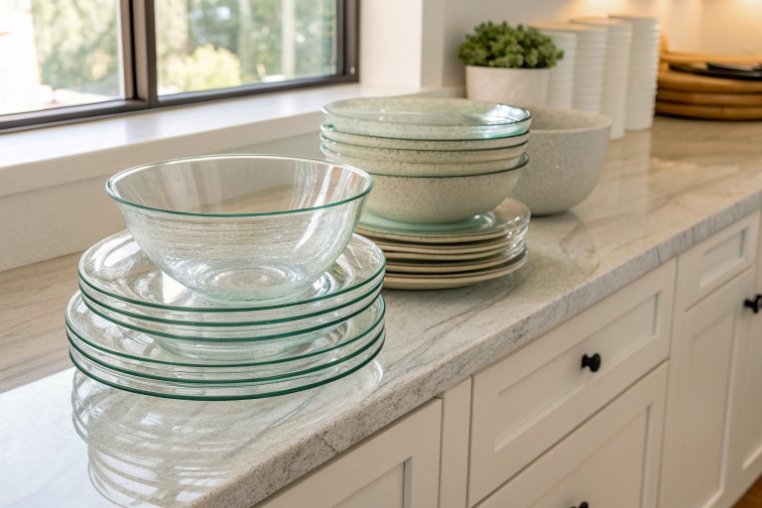
How to pick the right features for your lifestyle
A kitchen with fast heating and cooling routines benefits from heat-smart materials. A kitchen with kids benefits from impact resistance. A kitchen with limited storage benefits from clean, stackable shapes.
Here is how each feature helps:
| Feature | Best for | Why it helps |
|---|---|---|
| Tempered glass | Families, daily meals, kids’ use | Strong against impact; safer break mode |
| Borosilicate | Oven, microwave, hot-fill baking dishes | Handles thermal shock better |
| Stackable shape | Small cabinets, large families | Saves space and reduces rim chipping |
| Opal glass | Light daily dishes | Chips less and stays bright |
Tempered glass shines in impact situations. It does not prevent all breaks, but when it breaks, it tends to break into small pieces, not sharp shards.
Borosilicate glass is a great choice when you go from fridge to oven or pour boiling soup into a bowl. It stays stable under quick temperature changes, as long as you still avoid extreme shock like pouring cold water over a hot dish.
Stackability is often the forgotten feature. A plate that nests cleanly protects rims from grinding. Clean walls and smooth curves help dishes slide in and out without scratching. Check your cabinet depth before buying large dinner plates so the stack fits without hanging over the edge.
If you want a simple, multi-purpose set, a tempered everyday set plus a few borosilicate baking dishes covers almost every task.
How do customization options (frosting, coating, printing) affect care and safety?
Decorations change how you wash, heat, and store glass. Some finishes handle heat well; others only work for cold or room-temperature uses.
For daily kitchen use, choose designs where the frosting, coating, or printing stays safe in dishwasher and microwave use. Avoid metallic trims in the microwave and check that decorated surfaces resist scratches.
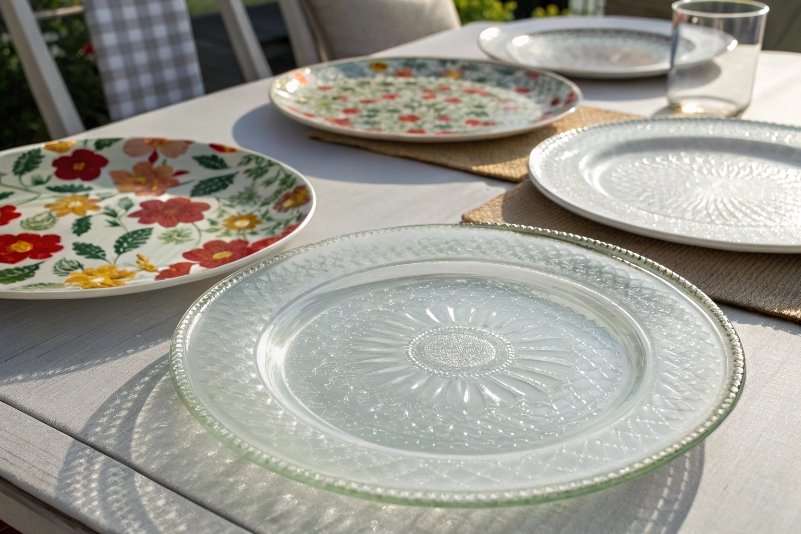
What each decoration means for daily care
Every surface treatment changes the rules slightly:
| Decoration type | Heat behavior | Cleaning notes | Best use cases |
|---|---|---|---|
| Frosted/matte | Usually safe unless coated with paint | May show fingerprints; wash gently to avoid wear | Modern, minimal home sets |
| Painted coating | Not microwave safe if metallic | Hand wash recommended for long life | Decorative plates, serving |
| Decal printing | Heat depends on ink type | Some decals scratch; check dishwasher-safe label | Patterned dinner plates |
| Full-surface tint | Often part of the glass itself | Usually dishwasher safe | Everyday use, color themes |
Frosted surfaces look soft but sometimes show oil smudges. They usually tolerate heat well if the frosting is etched, not coated. Coated frosting uses a thin layer of paint or spray that may wear faster.
Printed decorations vary a lot. Some are baked into the glass and stay stable for years. Others sit on the surface and fade quickly in dishwashers. The safest choice is a baked-on decoration that lists dishwasher safety.
Metallic gold or silver rims look beautiful but are almost never microwave-safe. They heat unevenly and may spark. Use them for serving rather than reheating.
For long-term safety, choose designs where the decoration stays off the food-contact surface or is fully fused into the glass. This keeps the eating area smooth, clean, and durable.
Conclusion
Pick glass tableware by matching glass type, thickness, stacking shape, and decoration to the way you cook and store food every day.
Footnotes
-
Learn about the benefits of tempered glass, which enhances durability and impact resistance. ↩
-
Discover the advantages of borosilicate glass for oven-safe, heat-resistant tableware. ↩
-
The FDA ensures the safety of materials in contact with food, confirming no harmful substances leach into food. ↩
-
REACH compliance ensures glass materials are free from hazardous chemicals, ensuring safety during use. ↩






