
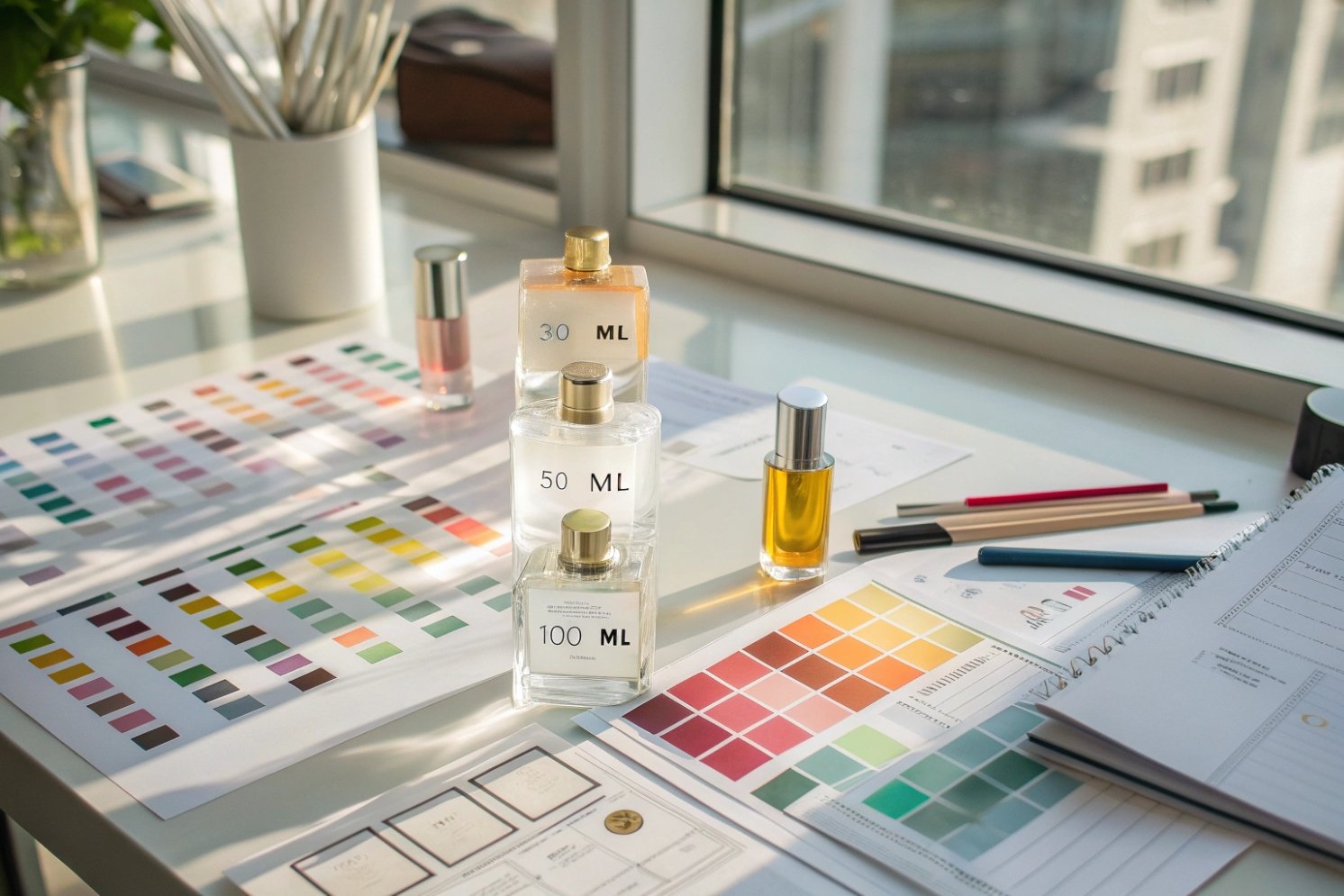
Launching a fragrance is exciting, but the wrong bottle can kill shelf appeal, squeeze your margins, and confuse your target customer before they even smell the juice.
The best perfume bottle for your brand balances story, price, spray experience, and operations: right capacity, right pump, right glass color and cap, and realistic MOQs and lead times so your launch stays beautiful and on time.
A good bottle is not only a nice shape. It is a silent salesperson, a technical container, and a supply-chain decision in one object. When these parts line up together, your fragrance line feels coherent, profitable, and easy to scale.
Which perfume bottle capacities work best for pricing tiers and retail planograms?
Many brands start with a favorite size “because that is what others do” and then discover the math does not work for their niche or channels.
30/50/100 ml are still the core capacities, but each one plays a different role: entry trial, core hero, and value tier. Picking the wrong mix can hurt both shelf visibility and margin.
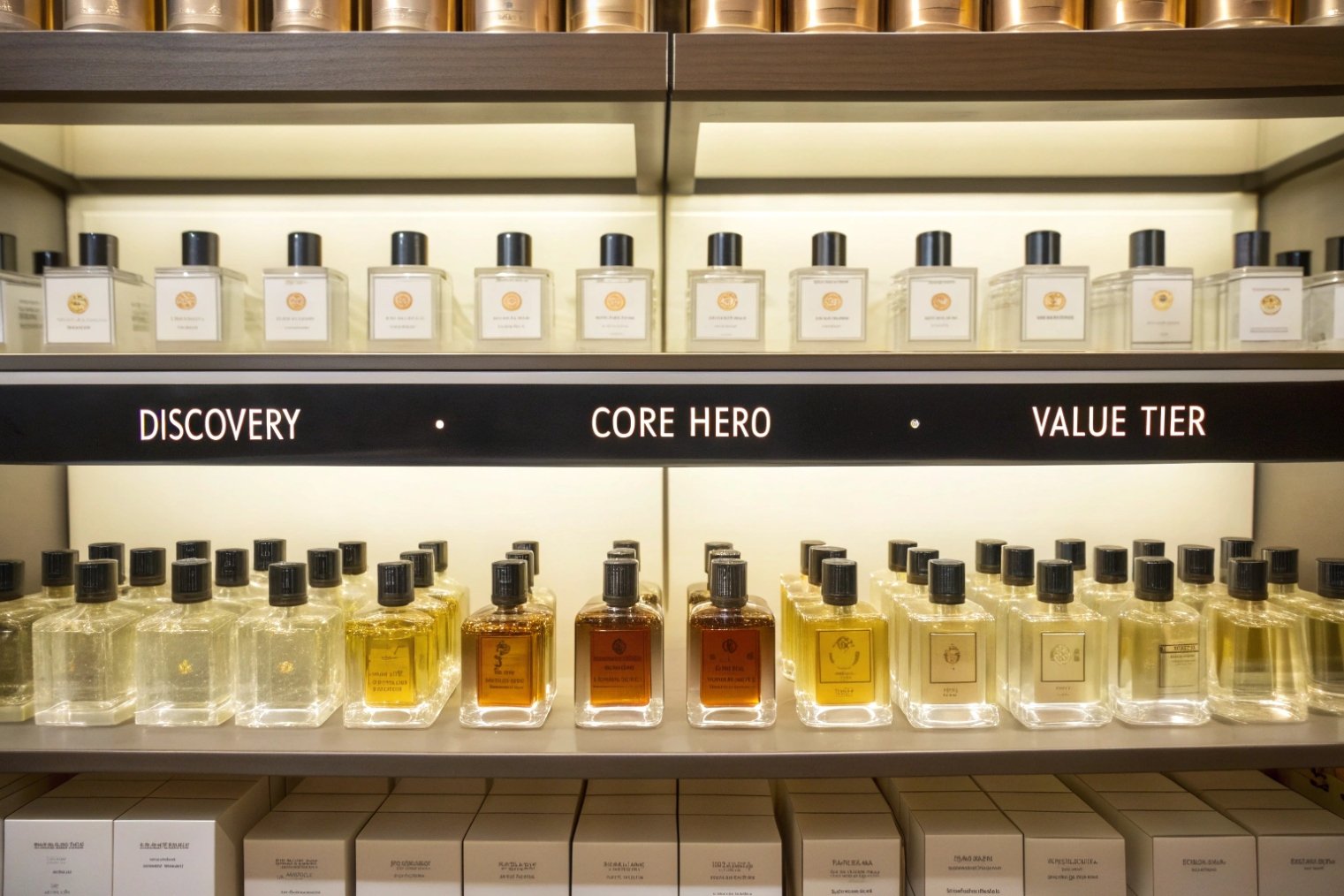
How to map bottle size to pricing, customers, and shelves
When capacity is clear, it becomes much easier to plan price ladders, margins, and retail space. A simple way is to give each size a job.
Typical roles for 30 / 50 / 100 ml
| Size | Main role | Pros | Cons |
|---|---|---|---|
| 30 ml | Discovery / entry / travel | Lower ticket, giftable, less risk | Higher packaging cost per ml |
| 50 ml | Core hero size | Balanced price and margin, good for sets | Needs clear value vs 30 and 100 ml |
| 100 ml | Value / collector / flagship | Best cost per ml, strong shelf impact | Higher unit price, slower to turn |
For a new brand, a two-size strategy often works best at first. For example:
- 30 ml for DTC and gifting
- 50 or 100 ml for retail shelves where bigger fronts better
Later, a third size can fill a gap once you see real demand patterns.
Think like a planogram
Retailers care about retail planograms 1 because they affect shelf fit, facings, and how your range reads in a row.
Retailers care about:
- Height: bottles should align in a clean row
- Width: how many facings fit on a shelf
- Depth: how many pieces per facing
A tall thin 50 ml may look great alone, but if it does not match your neighbors in height, it can disappear in a busy fixture. When the bottle height and box footprint match common standards, your line is easier to slot in and less likely to be rejected or pushed to side positions.
Balancing capacity with margin
Larger bottles normally mean:
- Higher glass and juice cost per unit
- Lower cost per ml
- Stronger “value” perception
Small bottles mean:
- Higher margin per ml
- Easier entry price
- More SKUs per shelf meter
A simple rule many brands follow: build margin around the 50 ml or 100 ml as the main profit engine, and let the 30 ml work harder as a discovery tool and marketing hook.
What neck finish and pump output create the right mist and feel?
Consumers judge spray quality in seconds. A beautiful bottle with a harsh or leaky mist will feel cheap, no matter how good the fragrance is.
Neck finish defines which pumps and caps you can use, and pump output defines how the spray feels. Matching neck standard, actuator, and dosage is the quickest way to make your perfume feel expensive in the hand.
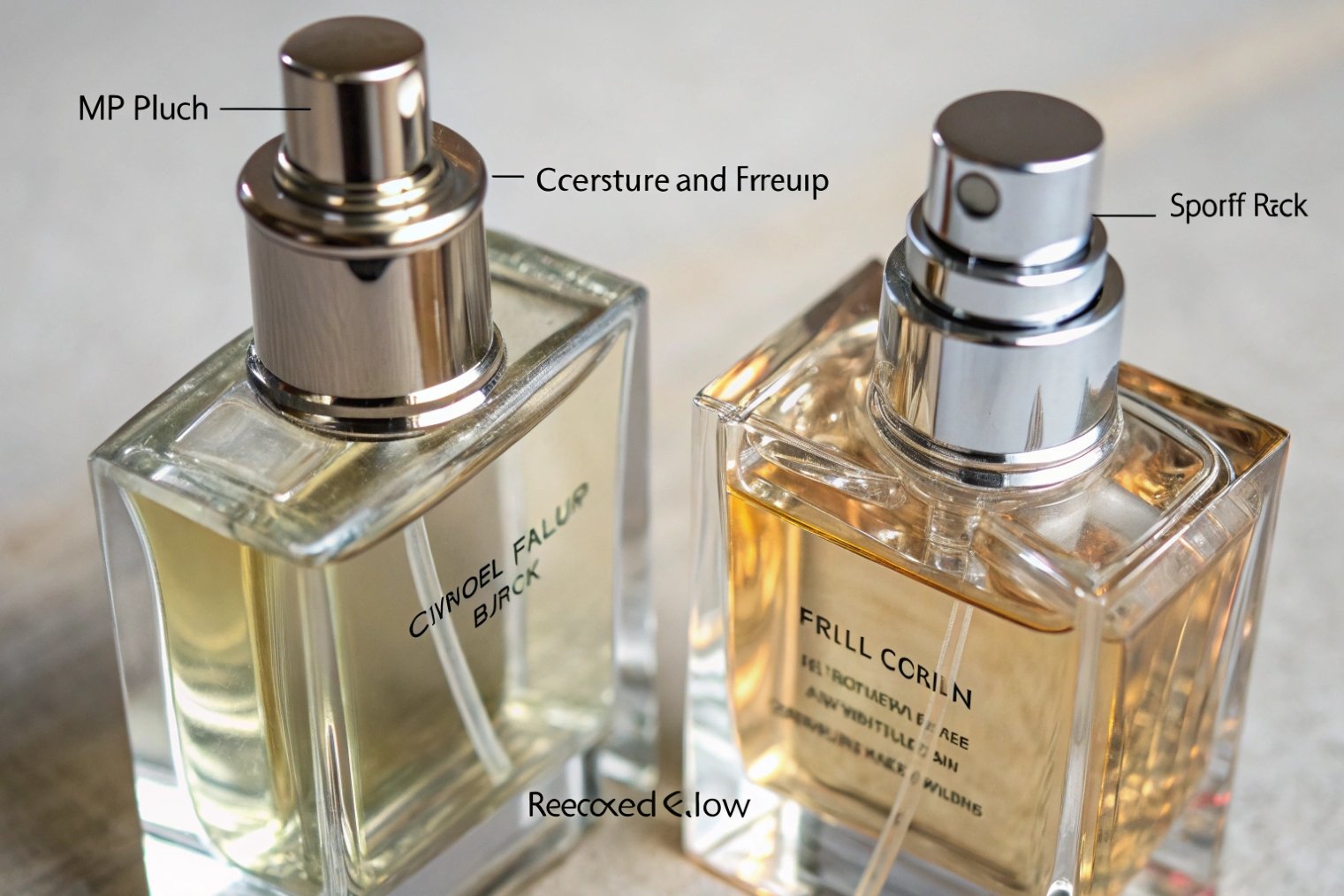
How neck and pump choices shape user experience
Think of the neck as the “socket” and the pump as the “plug”. Once you set that socket, you lock in many future options, so it is worth a careful choice.
Common neck finishes
For perfume, two families dominate:
| Type | Features | When it fits |
|---|---|---|
| Crimp neck | Metal shell crimped around glass finish (see the crimping process 2) | Tamper-resistance, classic prestige look |
| Screw neck | Threaded, accepts screw pumps and caps | Flexible, easy to rework or refill |
Crimp systems:
- Feel more “sealed” and premium
- Are harder to open, which helps with counterfeits and returns
- Need dedicated crimping in filling lines
Screw systems:
- Are simpler to fill at small scale
- Support refill and reuse concepts
- Offer more flexibility for future cap and pump changes
For niche and indie brands, a standard screw neck can make pilot runs and hand-filling much easier. For high-volume prestige, crimp is still very common.
Pump output and spray character
Typical fine fragrance pumps deliver about 0.06–0.12 ml per spray 3. Lower outputs give a lighter cloud and suit intense scents. Higher outputs can feel more generous for softer formulas.
Key variables:
- Output (ml per stroke)
- Actuator shape and hole size
- Valve stability and priming
The goal is a fine, even mist with no big droplets and reliable performance from the first spray. This depends on both pump quality and bottle neck precision. If the neck is out of tolerance, even a good pump can leak, sit crooked, or feel loose.
Do not forget seals and leakage
Good atomizers also protect:
- Ethanol loss
- Air ingress
- Accidental pressing in bags or shipping
This is where well-matched gaskets, proper torque, and correct crimp settings matter as much as design. Planning pump and neck together early lets you test functions before full production, rather than fixing leaks later.
How do glass colors, coatings, and cap styles express your brand DNA?
The silhouette catches the eye first, but color, finish, and cap decide if someone believes the story behind your brand.
Glass color, surface coating, and cap style together carry most of your emotional message: clean, edgy, warm, natural, or ultra-luxury. When these three speak the same language, your brand feels clear and memorable.
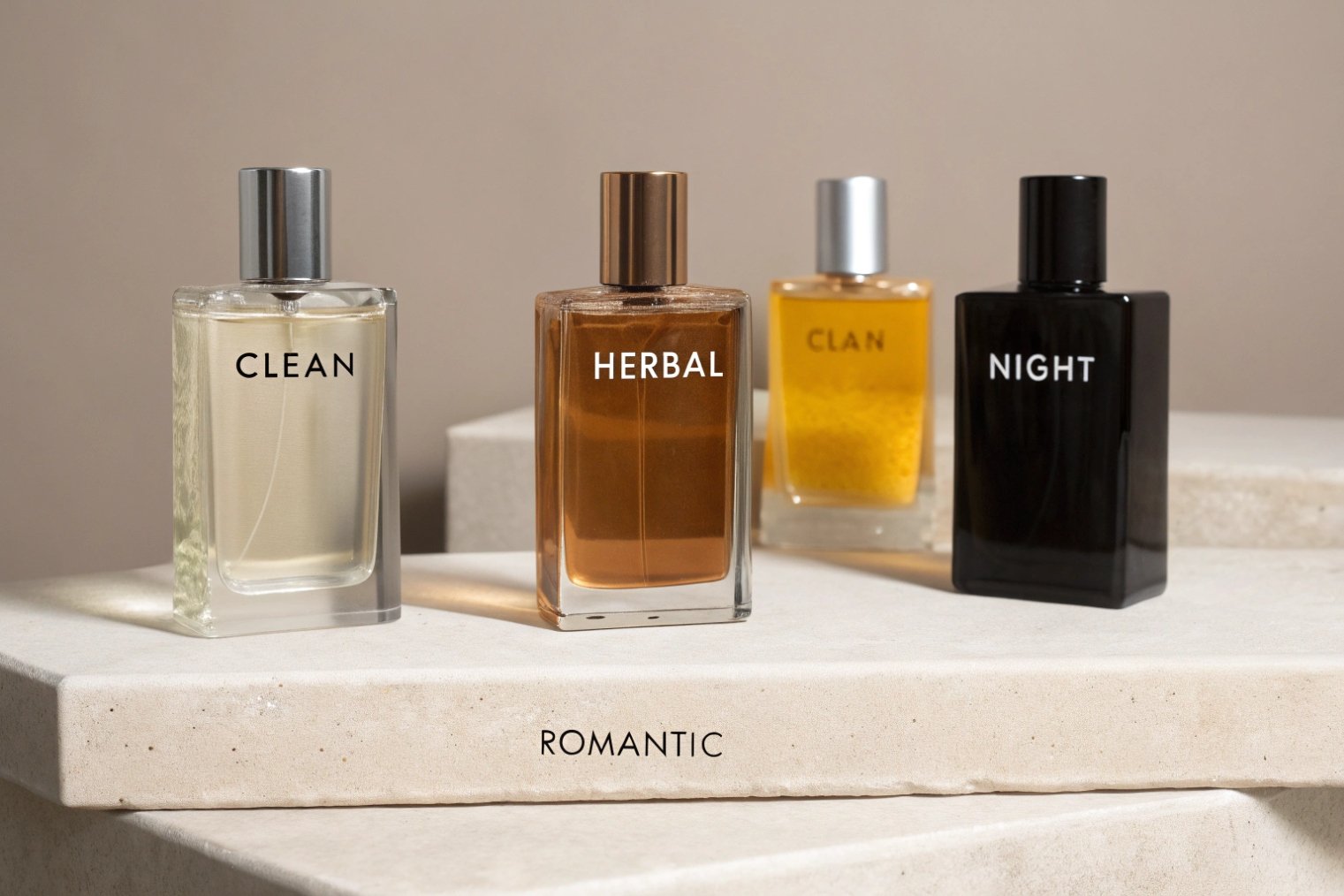
Turning brand positioning into glass and hardware
It helps to translate words like “minimal”, “artisanal”, or “avant-garde” into simple visual rules.
Glass color and finish
Some common directions:
| Brand mood | Glass choice | Notes |
|---|---|---|
| Clean / clinical | Clear flint, sharp shoulders | Works well with black or white print |
| Natural / herbal | Amber or green, soft curves | Adds UV protection and apothecary cue |
| Night / intense | Smoky, black, or deep colored glass | Signals depth, mystery, longevity |
| Soft / romantic | Frosted or pastel-tinted glass | Diffuses light, feels gentle and dreamy |
Frosting and coatings can also hide minor color variation in natural formulas and give a more stable shelf look. At the same time, they must stay compatible with your decoration and pumps, so process choice matters.
Coatings and decoration
Common decorating options include:
- Silkscreen printing
- Hot foil stamping 4
- Full or partial spray coating
- Gradient colors
- Electroplating or metallization
Minimal decoration on clear or lightly tinted glass often supports a quiet luxury or niche mood. Rich patterns, heavy foils, or mirrored finishes speak more loudly and fit bold or fashion-driven brands.
The trick is to pick one or two main effects and do them very well. Too many finishes on one bottle can make it look cheap or confuse the message.
Caps and collars
The cap is often the “jewelry” of the bottle. It can be:
- Heavy ZAMAK alloy 5 for weight and cool touch
- Wood for natural and eco cues
- High-quality plastic with soft-touch or lacquer
Magnetic closures and a clean, firm “click” are small details that strongly affect perceived value. Cap style should also match your refill or recyclability goals. For example:
- A solid metal cap with no insert feels great but is harder to recycle
- A wood cap with removable plastic inner can offer a more “eco” story
You can often refresh a line later with new cap colors or finishes without changing the glass. This gives room for seasonal drops or special editions at lower cost.
How do MOQ, tooling cost, and lead time shape your launch plan?
It is easy to fall in love with a custom sketch. The real question is: can this idea be produced in time, at volume, and within budget?
Custom bottles, caps, and pumps come with MOQs, mold fees, and long lead times. Balancing stock components and custom parts lets you protect cash flow and hit launch dates without losing your design vision.
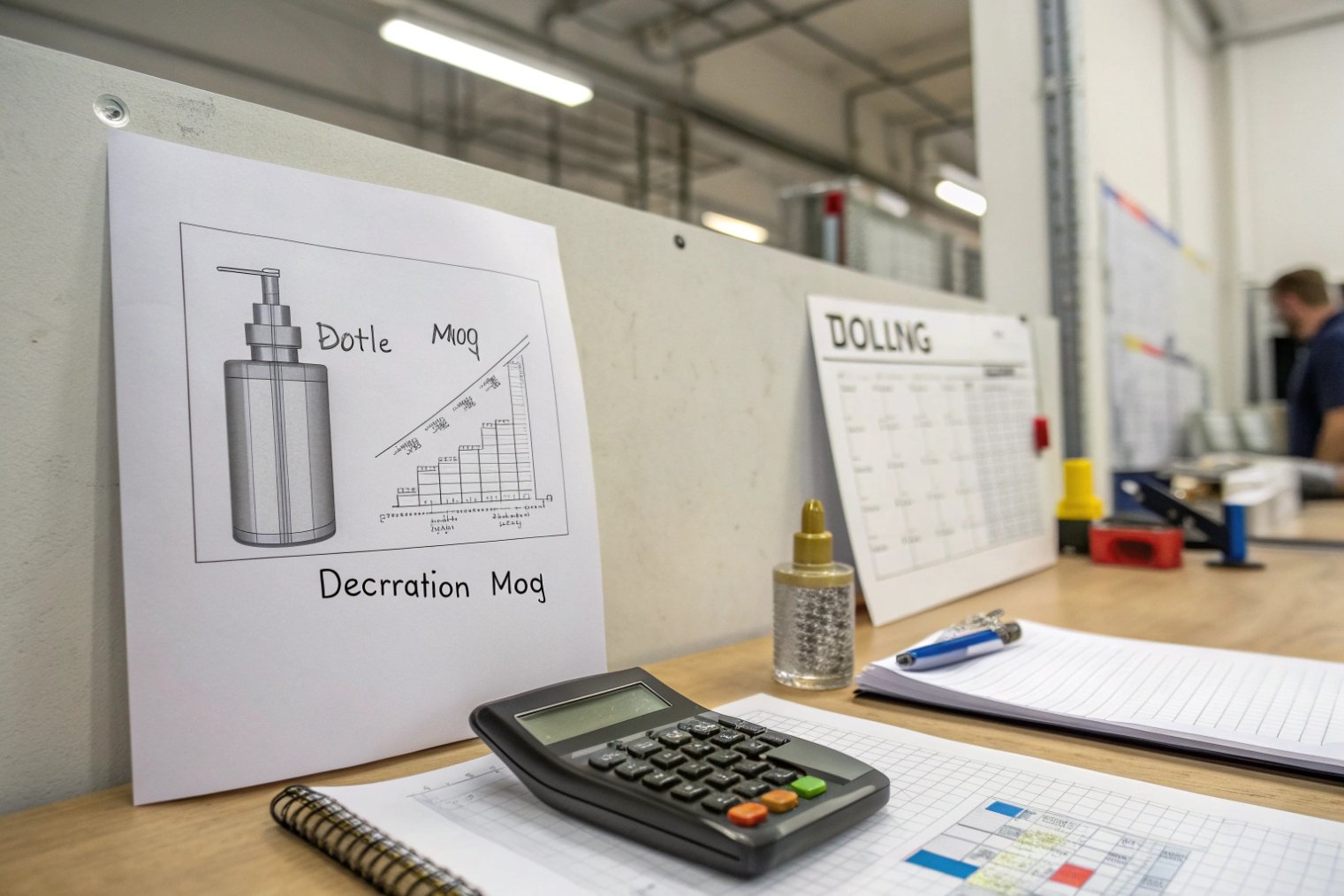
Custom vs stock: where to invest first
You have three main cost levers:
- Glass bottle
- Cap / collar
- Decoration
A practical approach for a first launch:
- Use a stock or slightly modified bottle
- Invest more in decoration and cap to build a unique look
- Keep tooling investment focused on the most visible element
Later, once the line proves itself, a fully custom bottle and mold can make sense.
Understanding MOQs and tooling
Key points to review with any supplier include your minimum order quantity (MOQ) 6 and how that MOQ changes by color, decoration, and component.
Key points to review with any supplier:
| Item | Typical impact |
|---|---|
| Bottle MOQ | Often 5,000–30,000+ per shape |
| Tooling / mold fee | One-time cost, recovered over many runs |
| Decoration MOQ | Can be higher than plain glass MOQs |
| Pump / cap MOQ | Often 5,000–10,000 per color or finish |
Higher MOQs lower the unit price but lock more cash in stock. If your brand is new, it is usually safer to accept a slightly higher unit cost and lower volume at first.
Lead time and launch timing
For a new shape or custom color, you need time for:
- 3D design confirmation
- Mold making and line trials
- Sample approval
- Main production
- Ocean or air freight
This can run from several weeks to a few months, depending on complexity. On top of that, pumps, caps, and cartons have their own timelines. A realistic project plan often starts packaging decisions at the same time as juice development, not after.
Risk and backup planning
It is smart to:
- Lock clear specifications early (neck finish, height, weight, color)
- Confirm quality standards and inspection plans
- Prepare at least one backup option (for example, a stock bottle that can replace a delayed custom one in an emergency)
Clear communication around ISTA 3A drop tests 7, shipping tests, and filling-line trials will also prevent surprises. A perfect bottle that fails in final packing will cost more than an early, honest compromise.
Conclusion
The best perfume bottle for your brand is not just beautiful. It fits your price ladder, sprays like a dream, speaks your brand’s story in glass and metal, and can actually be produced on time, at the right scale, with healthy margins.
Footnotes
-
Shopify planogram guide — Planograms affect shelf space and SKU selection in stores. ↩︎ ↩
-
Perfume bottle crimping process — Understand crimp sealing and how it prevents leakage and evaporation. ↩︎ ↩
-
Fragrance pump dosage options — See typical dosage ranges to match spray feel and positioning. ↩︎ ↩
-
Hot stamping overview — Learn how metallic foil decoration is applied with heat and pressure. ↩︎ ↩
-
ZAMAK alloy reference — Background on zinc alloys used for heavy, premium perfume caps. ↩︎ ↩
-
Minimum order quantity (MOQ) — Define MOQ and why suppliers set minimums for efficient production. ↩︎ ↩
-
ISTA 3A overview — Reference parcel testing that simulates drops, vibration, and shipping stress. ↩︎ ↩






